


College of Charleston Magazine Winter 2026
After transforming Charleston, hotelier
Michael Bennett makes a transformative
gift to the School of Business.


WINTER 2026 Volume XXX, Issue 1
College of Charleston
Office of University Communications
Charleston, SC 29424-0001
-
Living Legacy
28
Celebrating 160 years, the Avery Research Center for African American History and Culture helps preserve the Lowcountry’s ties to the African diaspora. -
Mr. Hospitality
34
Michael Bennett helped transform Charleston. Now he’s helping to transform the College with the Michael and Amy Bennett School of Hospitality and Tourism Management. -
Aquatic Symbiosis
42
How an ecosystem of mutual support between a local nonprofit and the College of Charleston benefits Charleston’s waterways and CofC students.
-
Departments
- Around the Cistern 3
- Life Academic 7
- Making the Grade 15
- TEAMWORK 23
- Impact 51
- Alumni Notebook 55
- LAST WORD 72
- on the cover: Michael Bennett
- illustration by: Brian Lutz
Intelligent Approach
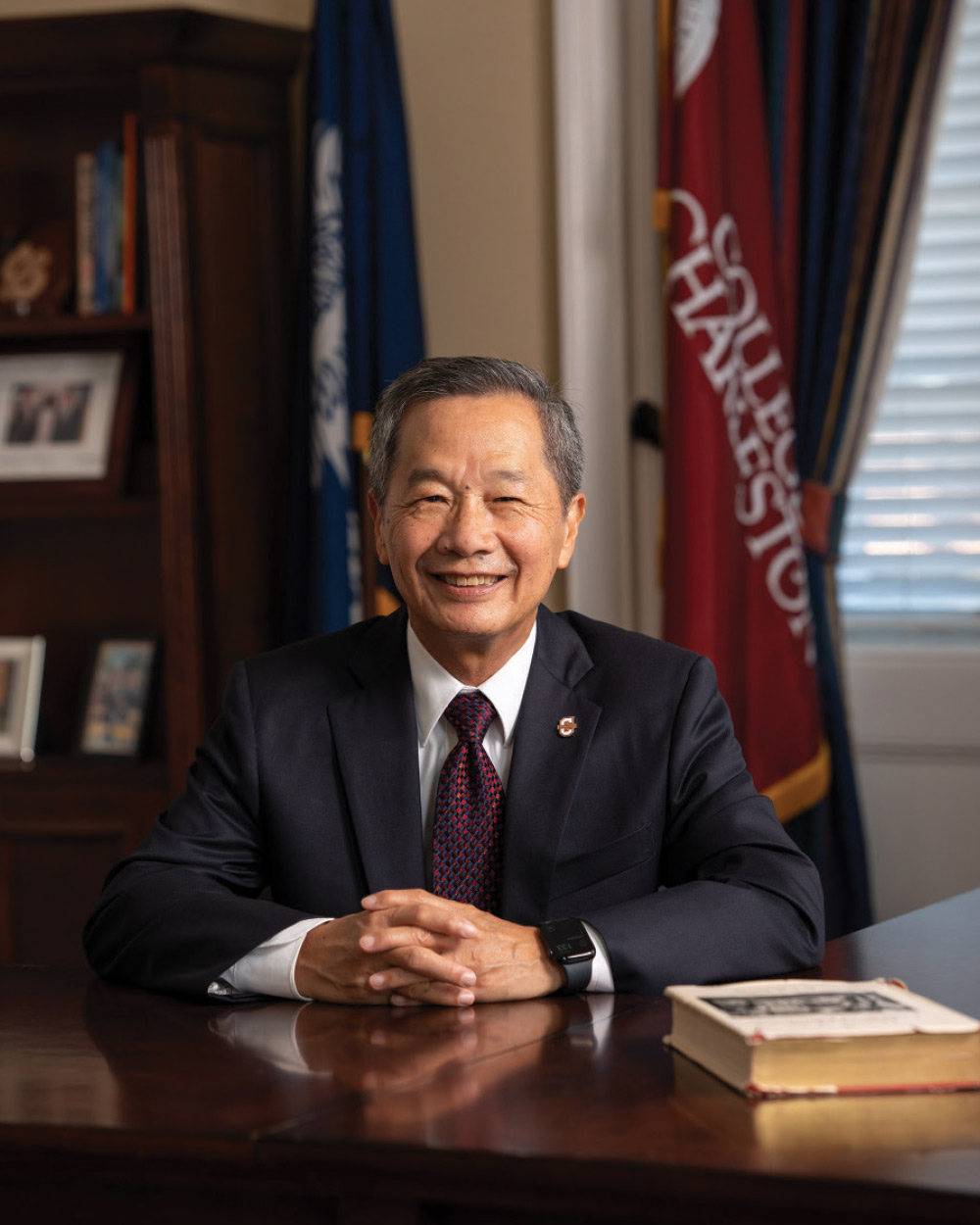
Today, I use AI both professionally and personally. It has been a go-to for looking up answers on questions of the moment as well as getting quick-hit summaries from some lengthy reports. On the homefront, I have used AI to get ideas for family trips and activities. Simply put, it is an incredible resource. And with the next iteration becoming more agentic, where AI can carry out tasks for you (like driving a car or taxi, delivering a package, making travel arrangements, paying bills or taking notes in a meeting), its everyday usefulness is developing exponentially.
But the pitfalls are real, too. On the education front, some students use AI to complete assignments, passing off AI-generated content as their own. In some courses, it has become a game of cat-and-mouse between faculty and students in how AI is used and detected. While I don’t want to diminish the issues around academic integrity, banning AI from the academic experience is not really an option either, especially if we want our students to be competitive with this tool once they graduate.
That is why the College selected “Intentional AI” as its most recent cross-campus, cross-disciplinary project. Every 10 years, the College is reaccredited in order to be eligible for federal and state funding, and part of that reaccreditation process includes something called a Quality Enhancement Plan (QEP) – basically a 10-year project that will help enhance the overall university experience. Twenty years ago, we created the first-year experience to help students better acclimate to campus; 10 years ago, we focused on sustainability literacy. I believe Intentional AI as a QEP will be vastly more important for our students.
Since 2023, our Center for Excellence in Teaching and Learning, directed by Margaret Hagood ’92, has been leading working groups and hosting workshops for faculty to get a better handle on how AI might be incorporated into their coursework and teaching practices. This fall, Calvin Blackwell, a professor of economics and former department chair, was selected to lead our QEP efforts to embed AI literacy and its ethical engagement across the curriculum (see “Five Questions” here). This work will be vital to the institution responding to student needs.
Each year, the world changes faster and faster. While some may fear that we are marching toward a Blade Runner–like dystopia driven by powerful technologies such as AI, it is the College’s place to be a center for optimism and preparation, showing students a way forward and developing skills for the present and future. That is how the College of Charleston has thrived for more than 250 years, and that is how we will continue to be successful for centuries to come.

AROUND THE CISTERN
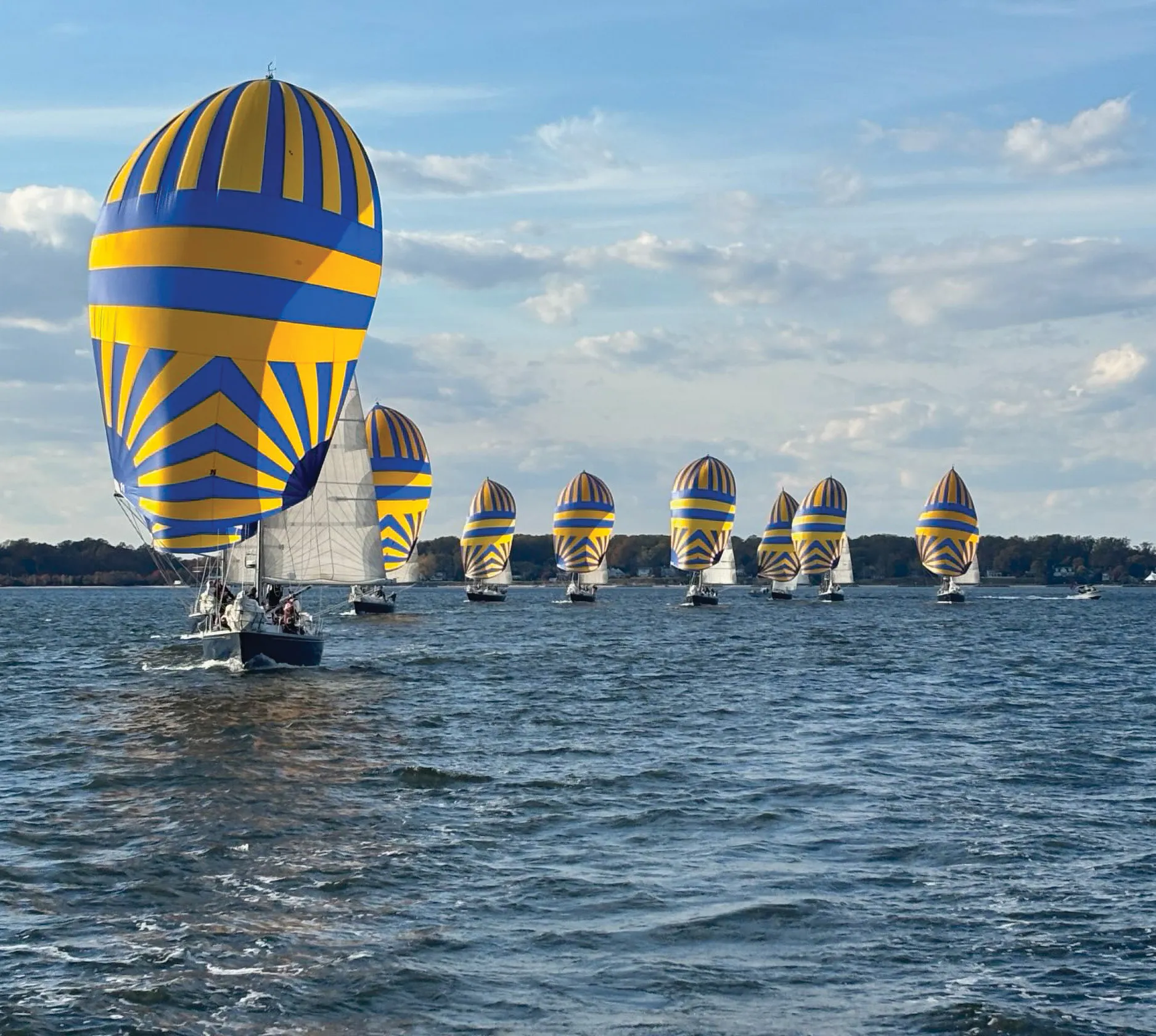
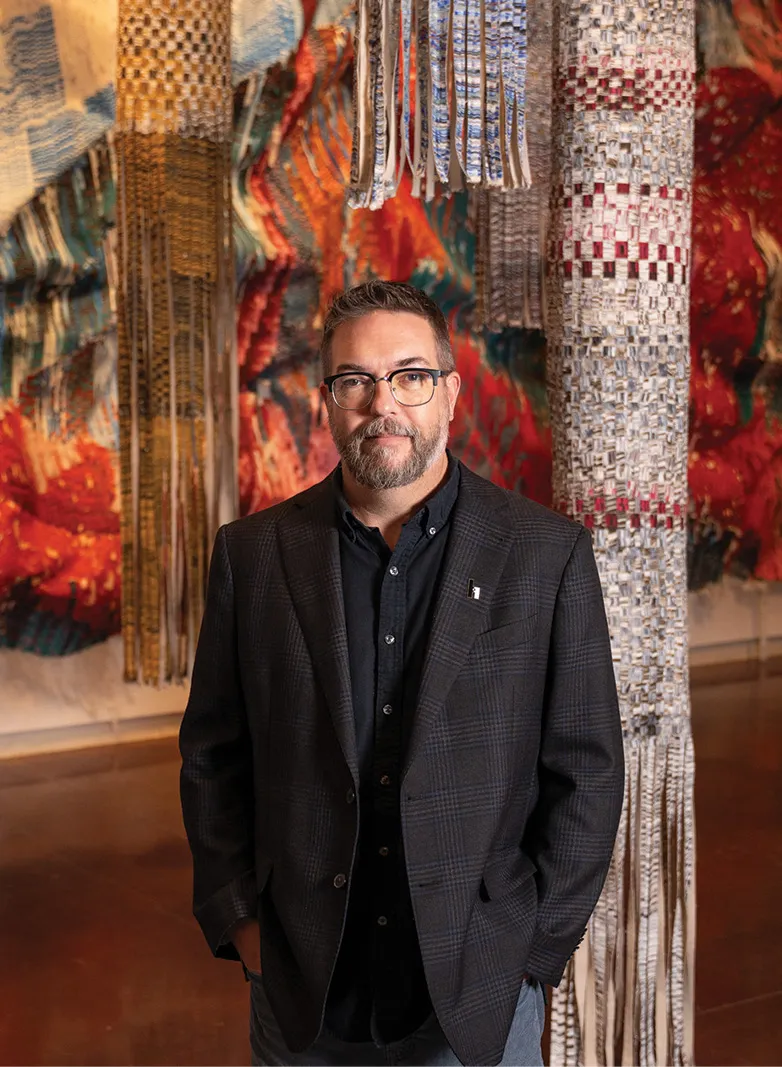
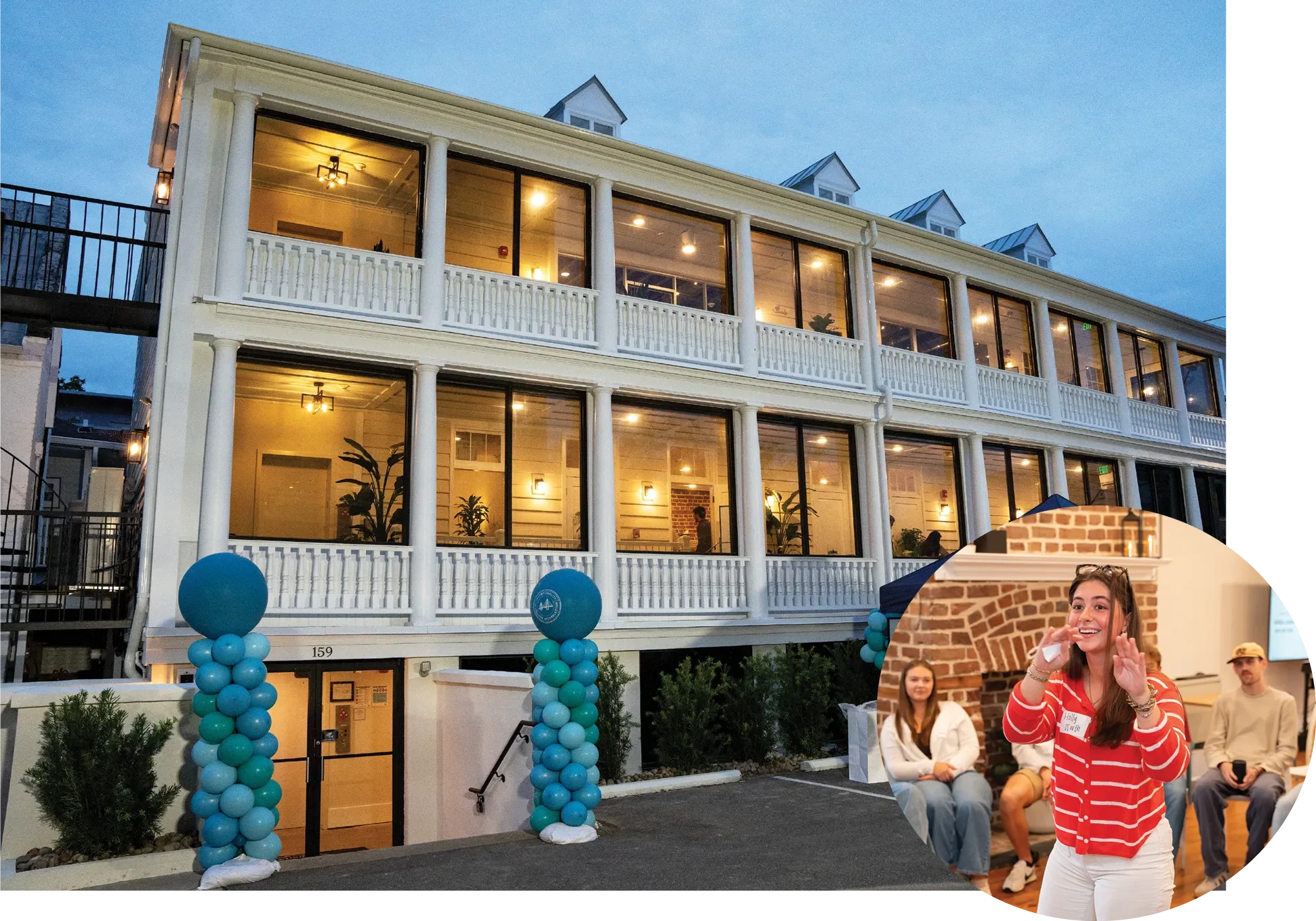
Five Questions for Calvin Blackwell
What is intentional AI?
AI is already a part of everyday life. I recently read a research paper reporting that 700 million people use ChatGPT weekly. That is 10% of the world’s adult population! When you add other AI platforms like Google’s Gemini and Anthropic’s Claude, you can see how ubiquitous these technologies have become. AI will continue to spread exponentially, and individuals and institutions need to adapt. It means selecting and using AI tools to contribute to the College’s mission instead of allowing hype and inertia to determine our use of AI.
What is your role as director of intentional AI?
At a simple level, my role as QEP director is to help guide the QEP, which is a component of our reaccreditation process. More broadly, my role is to help our community adapt to AI.
What drew you to serving as director?
I have been interested in AI ever since a student used the technology to cheat on one of my (economics) exams. That was a wake-up call! As I learned more about AI, I came to believe that it will significantly impact society in general and academia in particular. In economics, we talk about “creative destruction” as the process by which new technology and industries supplant the old. I didn’t want to be “creatively destroyed” by AI, so I started learning more about it and even taught a course on generative AI. I want to help the College adapt to this new technology, and I thought I could help in the role of QEP director.
Why do you think taking an intentional AI approach is the right course of action?
AI opens up vast new capabilities for all members of the College community. Unfortunately, some of these capabilities inhibit our ability to fulfill our mission. Intentional AI attempts to adapt to this technology while staying true to the College’s core mission and values.
How do you think AI is going to impact the campus community?
As Yogi Berra famously said, “It’s tough to make predictions, especially about the future.” I don’t know how AI will impact our community, but I am certain it will. One of the many challenges in adapting to the technology is that its capabilities constantly change and are subject to what Ethan Mollick has called the “jagged frontier.” I hope this QEP will help the College adapt to the changes AI will bring.
LIFE ACADEMIC
Class Act
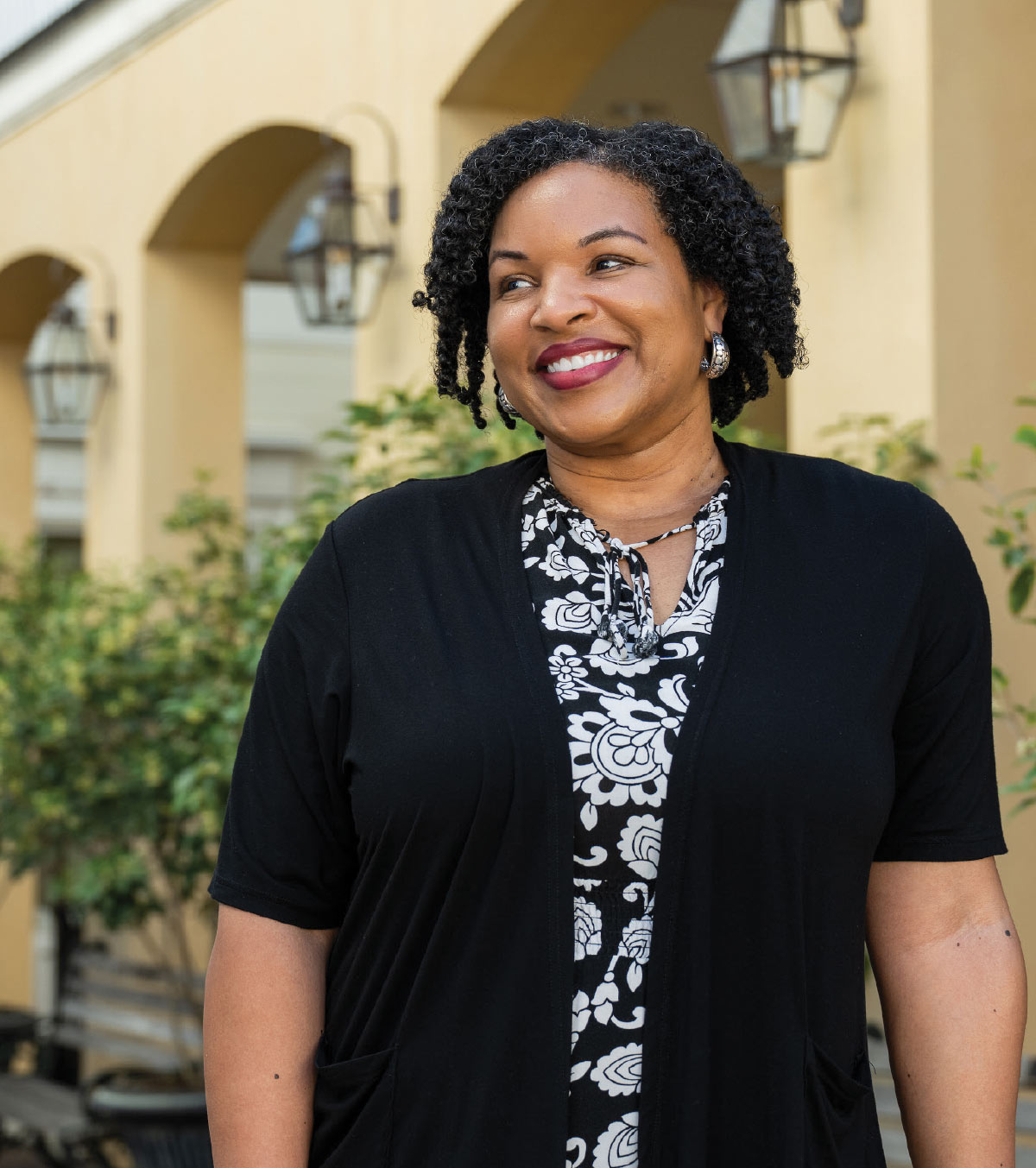
“I have education in my bones,” says Booker, whose mom was a kindergarten teacher and whose dad was an elementary school principal before both became school district administrators in Lynchburg, Va. “My parents both really impressed upon me the importance of educational achievement.”
The educational fortitude instilled in her by her parents helped push her, but there was still something missing. In many instances, Booker was one of the few African American girls in her classes.
“It was this quandary where I felt like I was achieving at a high level,” she says, “but I did not necessarily feel what we call in the research literature a sense of belonging.”
“I remember talking to my adviser, and I was kind of in this word salad, trying to figure out what I wanted to study, what to write for my dissertation, and beyond. My adviser said, ‘I think what you’re trying to explore is school belonging.’”
Twenty years later, Booker’s research and personal experiences have helped her flourish in her career focusing on just that. She examines the feelings students experience in the classroom in a qualitative way across multiple developmental age points, highlighting learning environments where students are valued, respected and welcomed.
“When I look at school belonging, I’m looking at the student, how they feel about their teachers, how they feel about their peer group and then how they feel about the content,” she says.
Finding a sense of belonging has not been an issue for Booker at the College, where she started in 2013 as an adjunct in teacher education. She is now a full professor in the School of Education who has also served as associate dean and interim dean in the Graduate School. (Husband Anthony Greene is the director of African American studies.)
Last summer, the School of Education launched its online Doctor of Education degree program, with Booker serving as its director. A total of 38 students made up the program’s first cohort.
“We knew we wanted it to be a cohort model,” says Booker. “The reason we did that is because we wanted people to feel a sense of belonging, a sense of community right from the beginning.”
The program focuses on learning and inquiry and is designed for professionals working in various environments who are ready to reimagine learning, improve educational systems and develop new solutions to complex educational challenges.
“We all have multiple problems, concerns and issues that bubble up in our organizations,” says Booker. “We want to equip our students with the ability to see that problem, name it, define it and bring to bear unique perspectives on how we can improve dynamic work settings.”
Leisure Pursuits
-
Name:
Emily Skinner, associate professor of literacy education and director of middle grades and secondary education
-
Hometown:
Grand Rapids, Mich.
-
Hobby:
Fostering puppies
-
Total Puppies Fostered:
94
-
When She Started:
2018
-
Getting Involved:
My daughter went to a Charleston Animal Society summer camp when she was 12 and came home saying we had to get foster puppies as part of the camp. The next day when I picked her up, I was prepared to foster. They had these adorable pitties that were about 5 pounds. I wondered where all the other parents were. Well, there were no other parents. It wasn’t part of the camp; they just shared the information with the kids. So, we took them home and really loved it.
-
Why She Loves It:
Constant serotonin. They bring joy, and having them around just makes you happy. If I take them to the beach for an hour, I can make 10 people’s day. When else do you get to spread joy like that?
-
Greatest Challenge:
Giving them back. But I know how many animals it saves, and as soon as I see them in pictures with their new families, it’s so heartwarming.
-
Her Favorite Pup:
Whichever one I have in my arms!
-
Community Engagement:
Fostering is how shelters save lives. It takes the entire community to really be able to save them all.
Brainstorming
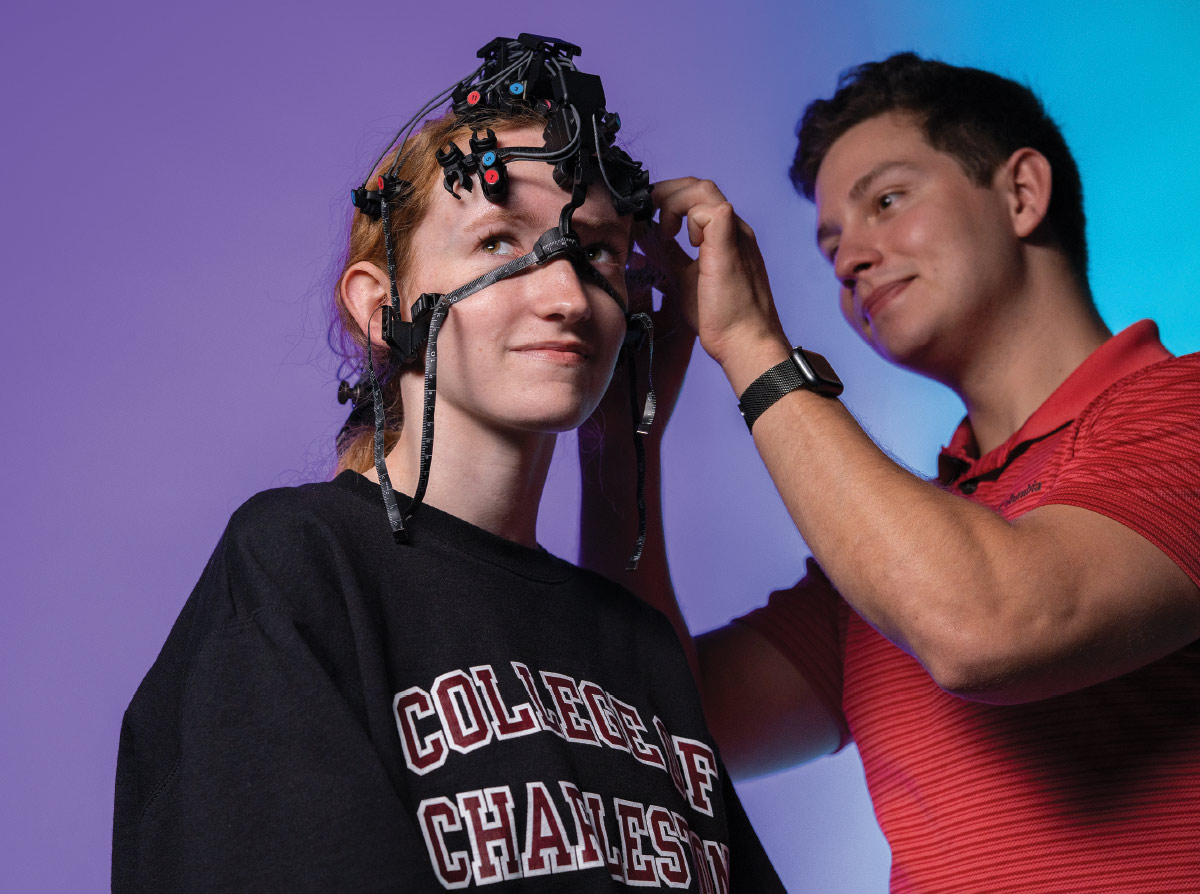
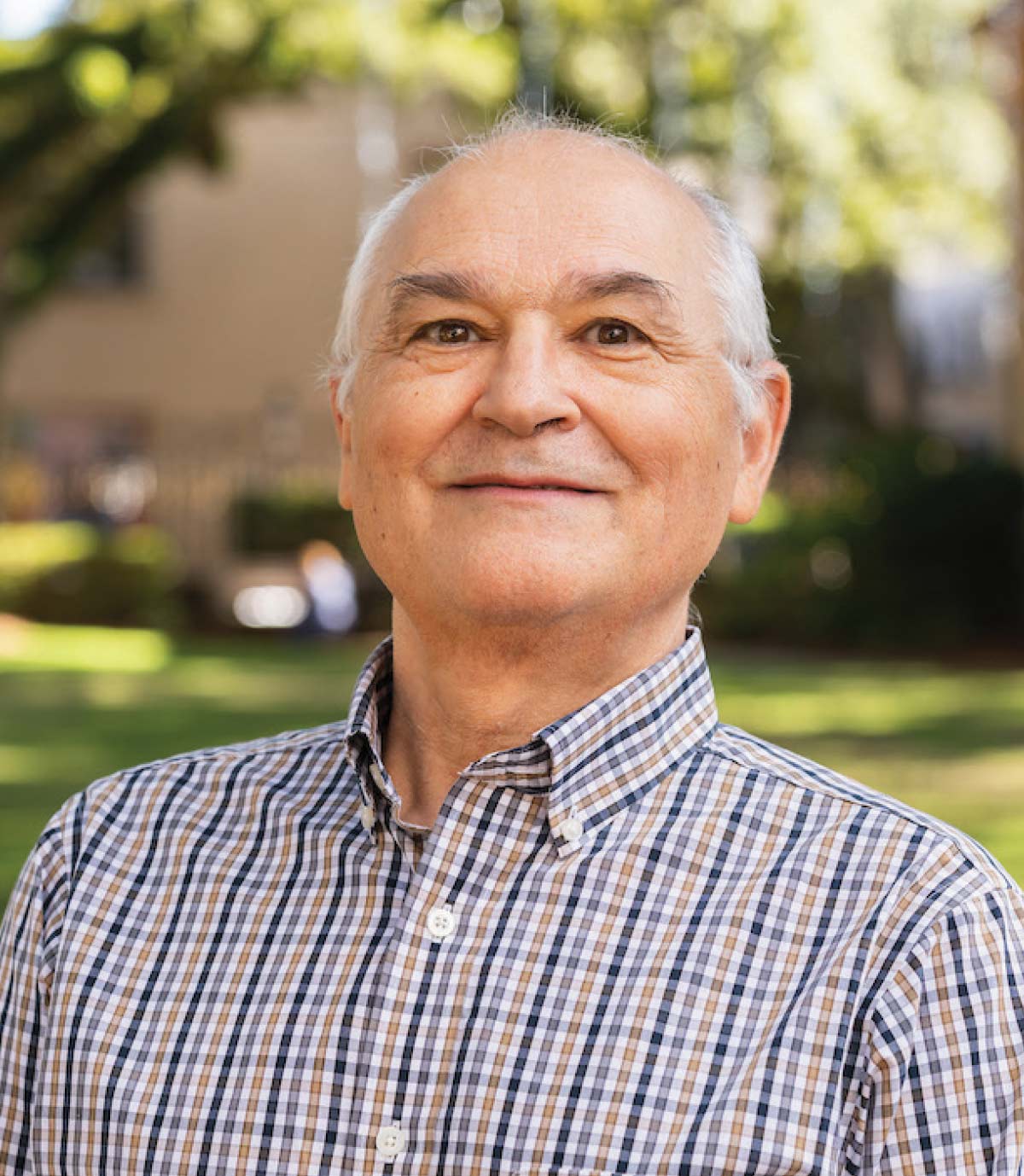
To conduct their research, Reynolds and Ice are using functional near-infrared spectroscopy (fNIRS). There are only a few fNIRS systems in the world, and Oprisan obtained one through a grant. Given the complexity of the project, Reynolds and Ice determined that they could not execute it on their own and enlisted experts and resources to help set up the device, interpret data, create surveys and choose the optimal music to elicit responses.
Dwight Krehbiel, professor emeritus of psychology at Bethel College, designed the psychometric instrument. Bill Manaris, professor of computer science and director of the College’s Computing in the Arts program, selected three distinct music pieces to help Reynolds and Ice map a subject’s musical preferences: Beethoven’s Piano Sonata, Oscar Peterson’s C Jam Blues and Yuja Wang’s Schoenberg Suite for Piano Op. 25.
It took Reynolds and Ice five months to figure out how to operate the fNIRS effectively. The fNIRS sensors, which sit on the skull like a cap, emit infrared light into the brain and detect when parts of the brain are activated.
Reynolds and Ice studied nine subjects with mixed results. They discovered that the sensors struggled to read the scalps of people with dark hair and that their ideal candidate was bald. Despite the challenges, they had results.
“Zack and Chip definitely saw the change in the power of gamma bands; I knew they could do it,” says Oprisan, who hopes more students will join the research project. “This type of research is usually done by postdoc fellows, but here the research is conducted by undergrads — amazing.”
While more research is required, the long-term goal is to see AI incorporated into a more mobile and wearable fNIRS that could be worn on a day-to-day basis by people living with neurodegenerative diseases.
My Favorite Reads
The Unraveller
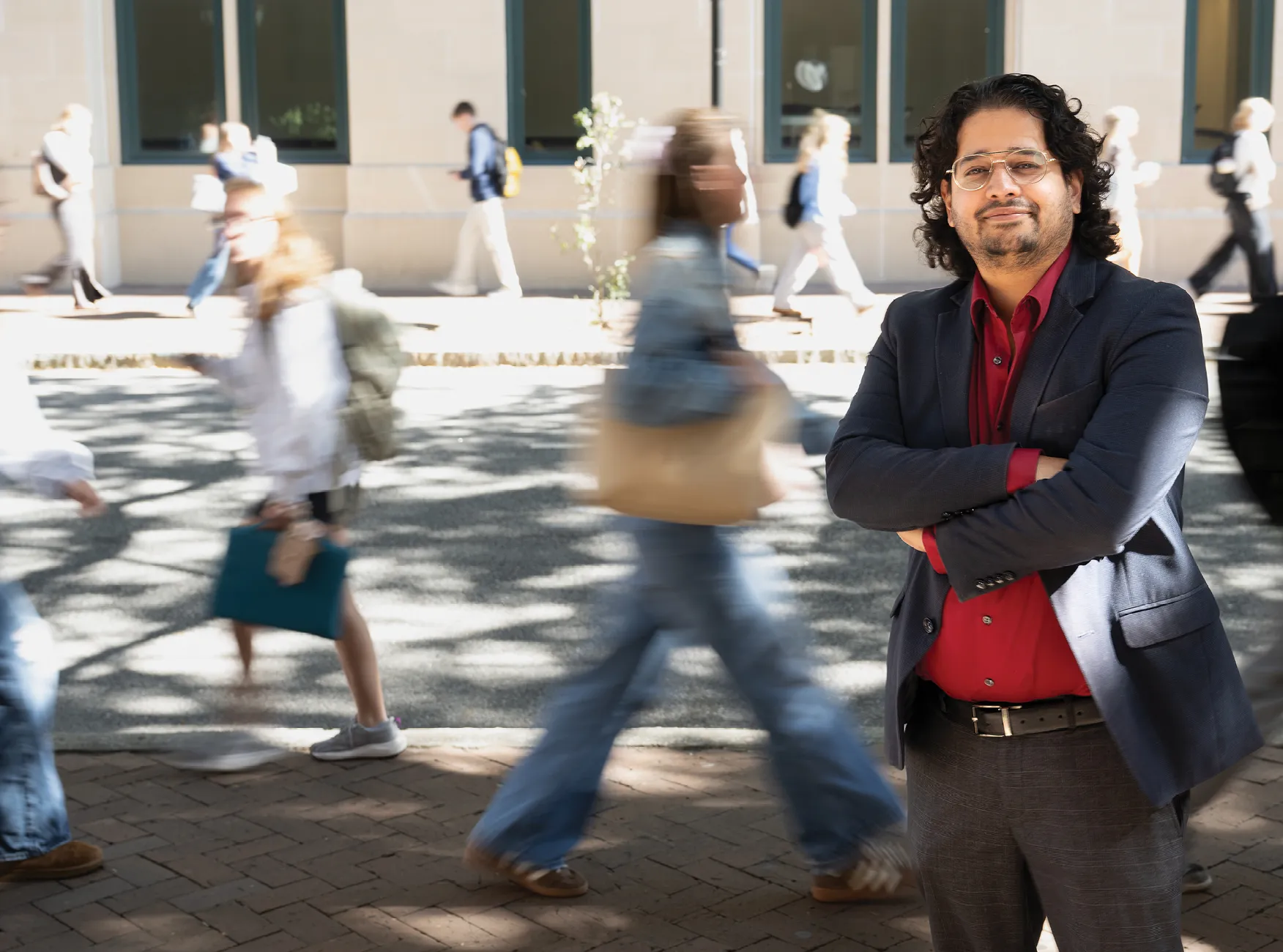
One that Shaon Lahiri is attempting to unravel.
An assistant professor in the School of Public Health, Lahiri addresses global health issues by probing the human behavior that causes them – or that resists easy resolution.
Lacking understanding of women’s behavior in rural Kenya that leads to high teen pregnancy rates, Western-based philanthropic organizations might be tempted to helicopter in and provide modern contraceptives. But Lahiri’s research found that legal and social forces, not a lack of supply, are what inhibit the use of contraception. By leveraging gender norms that highly value female mentors, Lahiri and his cohort of women’s groups could provide contraception and encouragement for positive results.
“Simple supply-side approaches are likely to fail without considering the social forces,” he says. “The beauty of the field is that it applies to so many things.”
Combining elements of psychology, economics and public health, Lahiri has investigated diverse issues around the globe – how to reduce tobacco use in China, drug abuse in the U.S. and domestic partner violence in Rwanda, to name a few.
That diverse experience and global reach is a metaphor for Shaon (rhymes with town) Lahiri’s life. Born in India to English-speaking Bengali parents, he moved to the Arab sultanate of Oman as a child, just as women there secured the right to vote. While he was attending the American International School, Lahiri’s English lost most of its Indian lilt and reinforced a social dilemma: Not quite Indian nor Omani nor American, he was the quintessential “other.”
Coming stateside for college at the University of Michigan, Lahiri studied psychology, focusing on what makes serial killers tick.
Following an epiphany about the power of social determinants in shaping individuals’ behavior, Lahiri switched gears and earned a master’s degree in public health from Imperial College of London and a doctorate in social and behavioral sciences in public health from George Washington University. During and since, he has hunted cultural underpinnings to construct strategies for behavior change.
That kind of science leads to surprising conclusions. Research on the ubiquitous DARE (Drug Abuse Resistance Education) program, in which police helped youth improve their decision-making to avoid drug abuse, found 40 years of ineffectiveness – or worse.
Why? “Backfiring scare tactics and cringe,” Lahiri says, referring to lame authenticity, awkwardness or embarrassment. “The canonical example is when parents try to use cool slang and fall flat. It can have a boomerang effect in public health.”
The idea of cringe brings to mind the 1938 movie Reefer Madness, in which wildly exaggerated claims about the effect of marijuana transformed the film into a comedy about the idiocy of authority figures – or the oft-parodied “This is Your Brain on Drugs” public service announcement, to which teens shrugged. Research has demonstrated, too, that cringey videos for charitable causes can significantly reduce a person’s intention to talk to family and friends about mental health.
For Lahiri – who peppers his undergraduate public health, global health and health promotion courses with snippets of his research – addressing the cultural challenges underlying public health boils down to three words: Other people matter.
Taking Center Stage
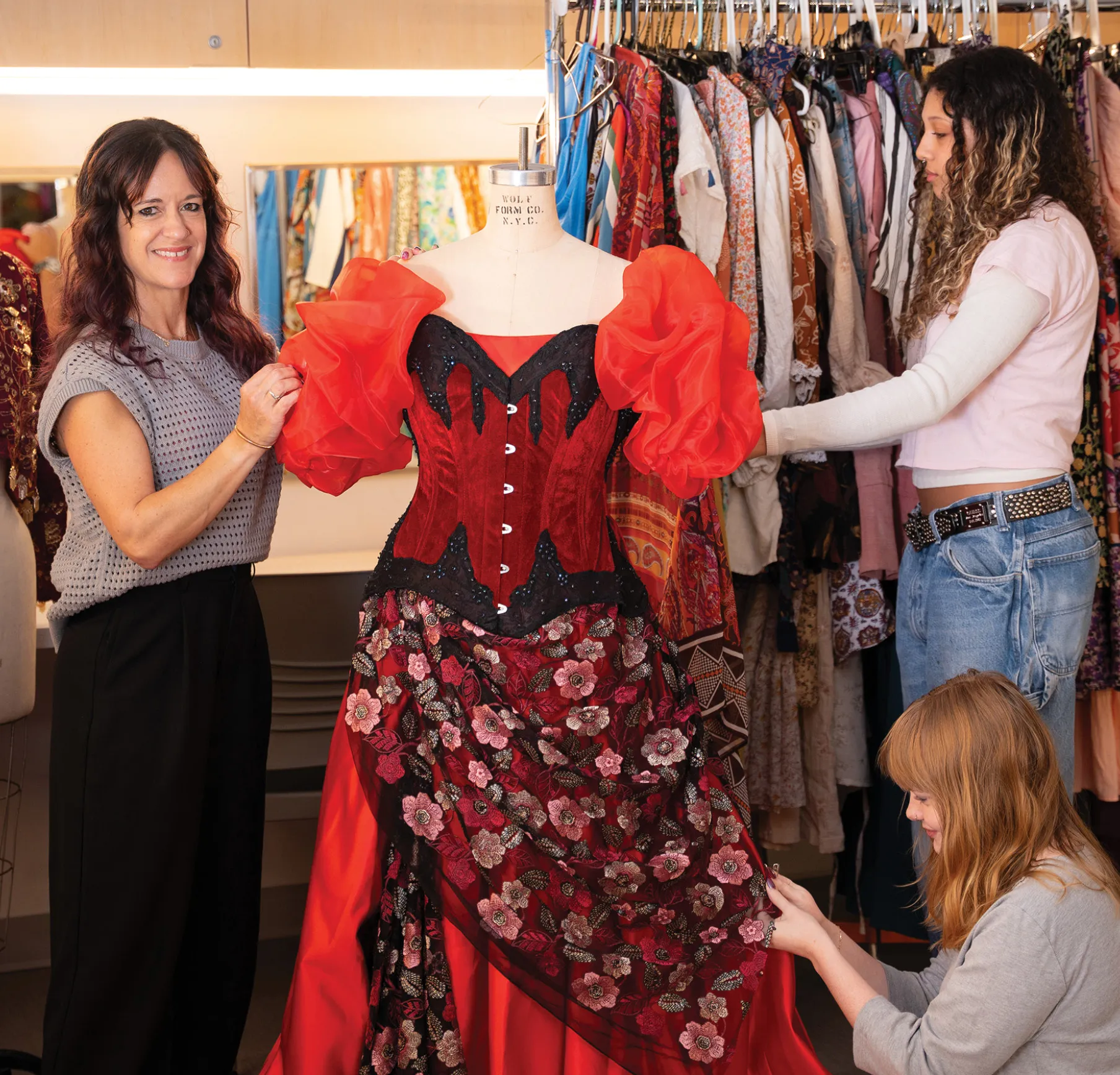
“After all this time, the thing that continues to fill me is seeing that spark in a student’s eyes – that moment of epiphany when they connect with their passion,” says the artistic director of CofC Stages, the live-performance arm of the Department of Theatre and Dance, for which McCabe has designed more than 100 productions. “That never gets old.”
For McCabe, that moment came when she found her way to the College after her parents relocated to Charleston, and she spent a year studying engineering at Drexel University in Philadelphia.
“My heart just wasn’t in it,” she says, adding that an Introduction to Theatre class at the College was a catalyst. “I wasn’t a theater kid growing up, but I was a dancer, and I learned how to sew very young with my mom and grandmother’s help.”
She discovered the costume shop and learned that students could be hired to work there.
“I was the first in my family to attend a four-year institution, and I had to pay my way through school,” she says. “No one goes into theater for money, but I did!”
Following graduate school at the University of Virginia, where she received a masterʼs in costume design, she became an assistant to the late Tony Award-winning designer Martin Pakledinaz, who was working on Thoroughly Modern Millie on Broadway. One of McCabe’s most memorable experiences with Pakledinaz was assisting him in designing the more than 40 tutus and many other costumes that appeared in San Francisco Ballet’s Nutcracker in 2004.
“They’re still wearing those same costumes today,” boasts McCabe, who worked on more than 16 major Broadway productions with Pakledinaz and about 20 off-Broadway and festival productions in the early 2000s.
As much as she thrived in the fast-paced culture of Broadway, she missed Charleston and started teaching as a visiting assistant professor in 2006. The following year, when she was offered a tenure-track position, the joy she found working with students was the deciding factor in choosing College Way over Broadway.
She loves to help students discover their passion and then follow their dreams, which is why she gives them opportunities to work in CofC Stages to understand the realities of the work itself. It’s not easy.
“It takes more than just getting the work done,” she says. “It takes a special drive and passion and a desire to be part of the whole collaborative environment.”
She makes teamwork a cornerstone of the program. This hands-on environment gives students opportunities to try out different parts of the production. One semester, a student might be designing costumes for Romeo and Juliet, and another, they could be the spotlight operator for A Chorus Line.
This “lab” work leads to well-rounded students who are more marketable but more importantly have an appreciation for each other’s roles in the whole production process. McCabe has been intentional about this structure, pulling from her professional experiences to create a top-notch theatre and dance program with her colleagues.
She is still a student herself in many ways. After two decades of teaching at the College, McCabe says she’s still learning and still loving it.
“It’s all about allowing mistakes to happen,” she says. “That’s what keeps it interesting.
Wired In
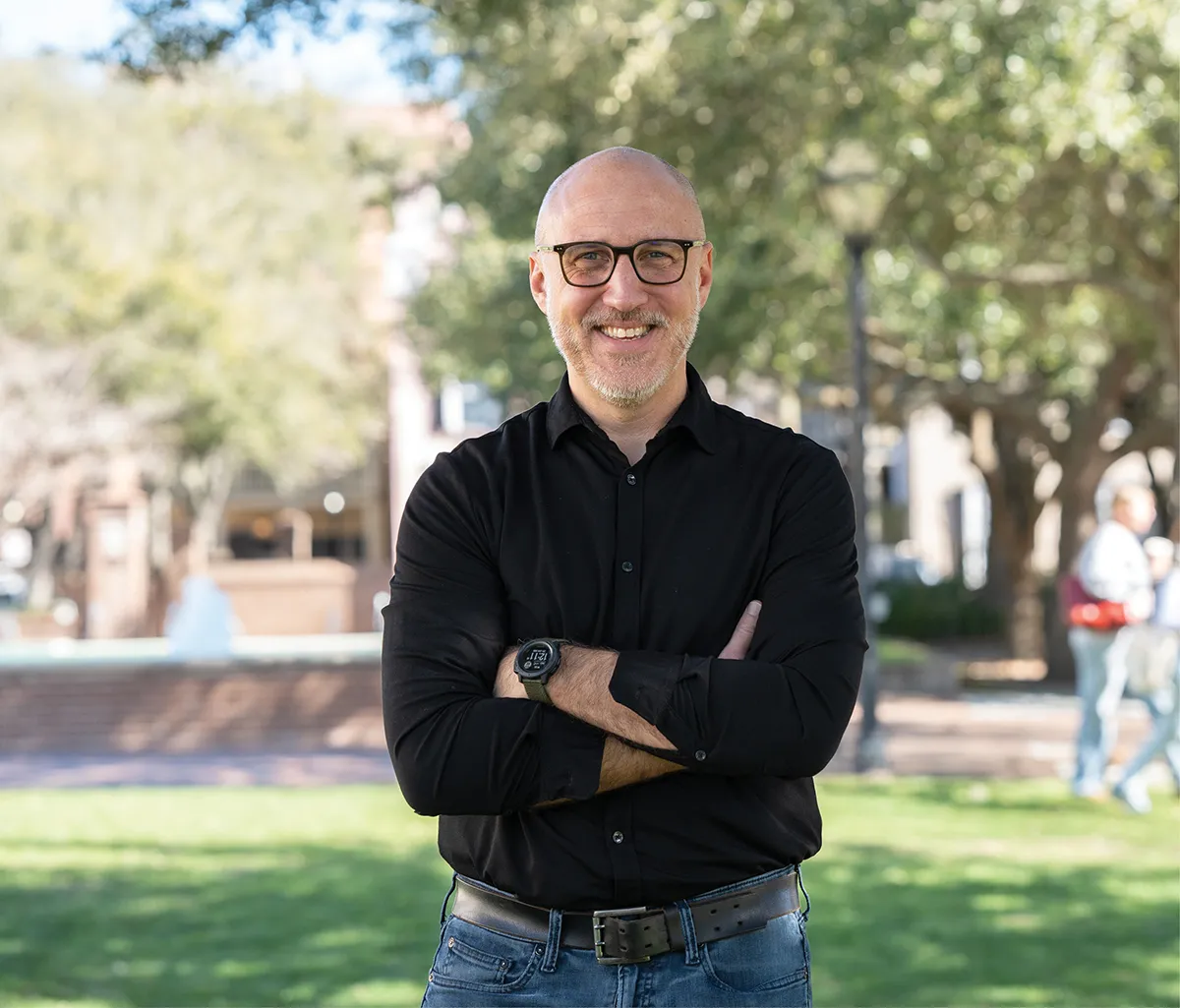
“In my second or third year of teaching, a colleague mentioned it,” he recalls. “We all thought, That’s a silly name; that’ll never catch on.”
Today, as an associate professor of literacy education at the College, O’Byrne spends his days teaching, researching and pondering how we use technology to read, write and think. His focus? How to be more thoughtful about what and how we communicate, minding the impact of technology on our everyday lives.
O’Byrne, who describes himself as a college dropout who worked his way back up through community college, says it’s important to share his personal journey with students at the start of each semester.
“I tell them, ‘For some of you, being in college is the norm and even expected. For others, it’s a minor miracle. You’ve already won.’”
Sharing his own story is O’Byrne’s way of connecting with students who live in a digital world. He finds his their perspectives on AI and other rapidly evolving technology fascinating.
“AI can be used to create funny videos, but it can also cause fear because sometimes you can’t believe what you see,” he says.
A prolific creator, O’Byrne manages his own website, blog and “digital garden,” where he shares thoughts and works in progress. He helped build the Mozilla Web Literacy Framework and cowrote the definition of digital literacy for the National Council of Teachers of English, shaping the frameworks used by organizations worldwide to navigate digital transformation.
O’Byrne notes that the one constant in education – like in life – is change. “The recent buzz is all around AI, but we’ve been here before. Whenever technology changes society, we have an opportunity to make adjustments – or not. Are we redefining how we work? Some of us are. Others are sharing cat GIFs.”
Not that there’s anything wrong with that. O’Byrne is hyperaware of his responsibility as an educator to embrace technology, including AI. “If we do not give students the opportunity to use these tools and think critically about them, they’ll be left behind.”
His passion isn’t limited to just helping students understand tech tools; it extends to faculty and staff, as he advocates for using AI to harness, not hinder, students’ learning experiences.
O’Byrne is the director of the Initiative for Literacy in a Digital Age, which named him the winner of its 2021 Divergent Award. He’s quickly scaling up work that focuses on supporting both educators and learners, recognizing the importance of honoring diverse perspectives.
“A lot of my work,” he says, “explores how we can use digital tools and platforms to give students a voice and empower them to advocate for themselves and their communities.”
Making the Grade
Secrets of the Deep
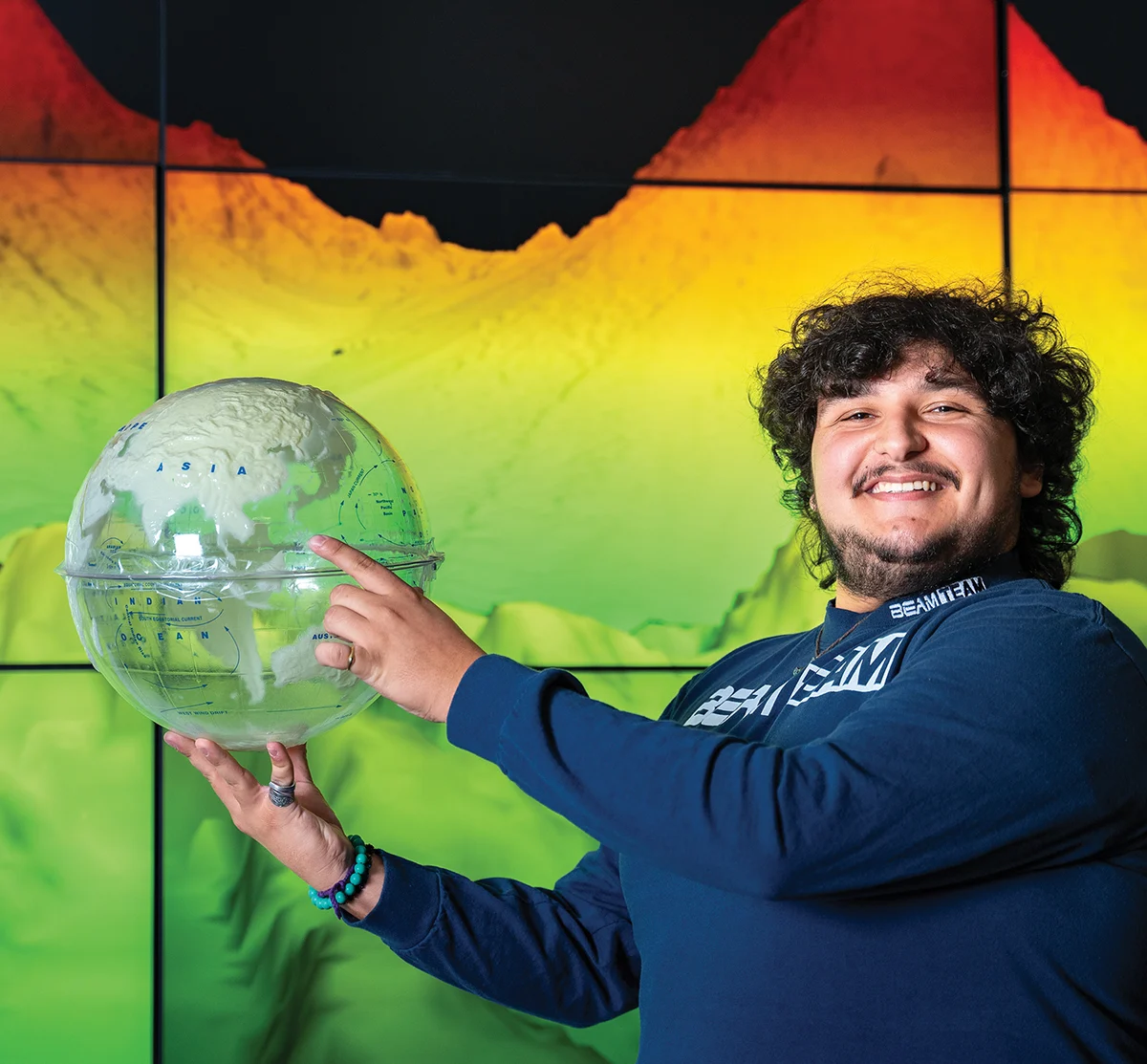
Sarlo was excited about the five-day trip aboard the Nancy Foster, but the first day wasn’t what he imagined.
“I was seasick,” he says. “It was overwhelming at first. I only knew two people, so I was nervous – but everyone was welcoming. The crew answered all my questions, and the food was great. I got to explore parts of the seafloor no one’s seen before and take a big step toward my future career.”
The group also surveyed the seafloor for deep-sea corals 100 nautical miles off the South Carolina coastline.
“The moment we found the corals was different for almost every person on board,” says Sarlo, who is from Greer, S.C. “For the students, myself included, it was a great moment of wonder and excitement. There was something special about the first time discovering something on the seafloor in real time.”
In addition to discovering deep-sea corals, Sarlo learned more about seafloor mapping, which involves several steps, starting with determining depth. For this, a multibeam echosounder is often used, as it covers wide areas while the boat moves — like mowing a lawn in stripes. The collected data is then processed using software to create detailed maps of the seafloor.
“On top of learning so many skills and working on one of the coolest boats in the NOAA fleet, I made lifelong connections with students from around the country that I will cherish for the rest of my life,” says Sarlo. “I would deeply encourage any student who can get this opportunity to fight tooth and nail for it. It was one of the most valuable things I have done during my academic career.”
Conducting research on a NOAA ship was part of Sarlo’s Summer Undergraduate Research with Faculty grant. He continues to work alongside Haley Cabaniss ’15, assistant professor of geology and environmental geosciences and director of the Benthic Acoustic Mapping Program, to expand a submarine volcano database and identify traits that help determine which ones pose a threat and which do not. Their work involves significant mapping and comparison with an existing satellite survey, which revealed about 43,000 submarine volcanoes.
Sarlo chose the College for the opportunities it would provide him to establish a firm foundation for his future. His experiences have been more than what he expected, and he looks forward to more opportunities.
“Nikolai has a passion for maps that is contagious,” says Cabaniss. “This, paired with his curiosity about submarine environments and his desire to engage in science that benefits society, makes him the perfect student to take on this work.”
Test Drive
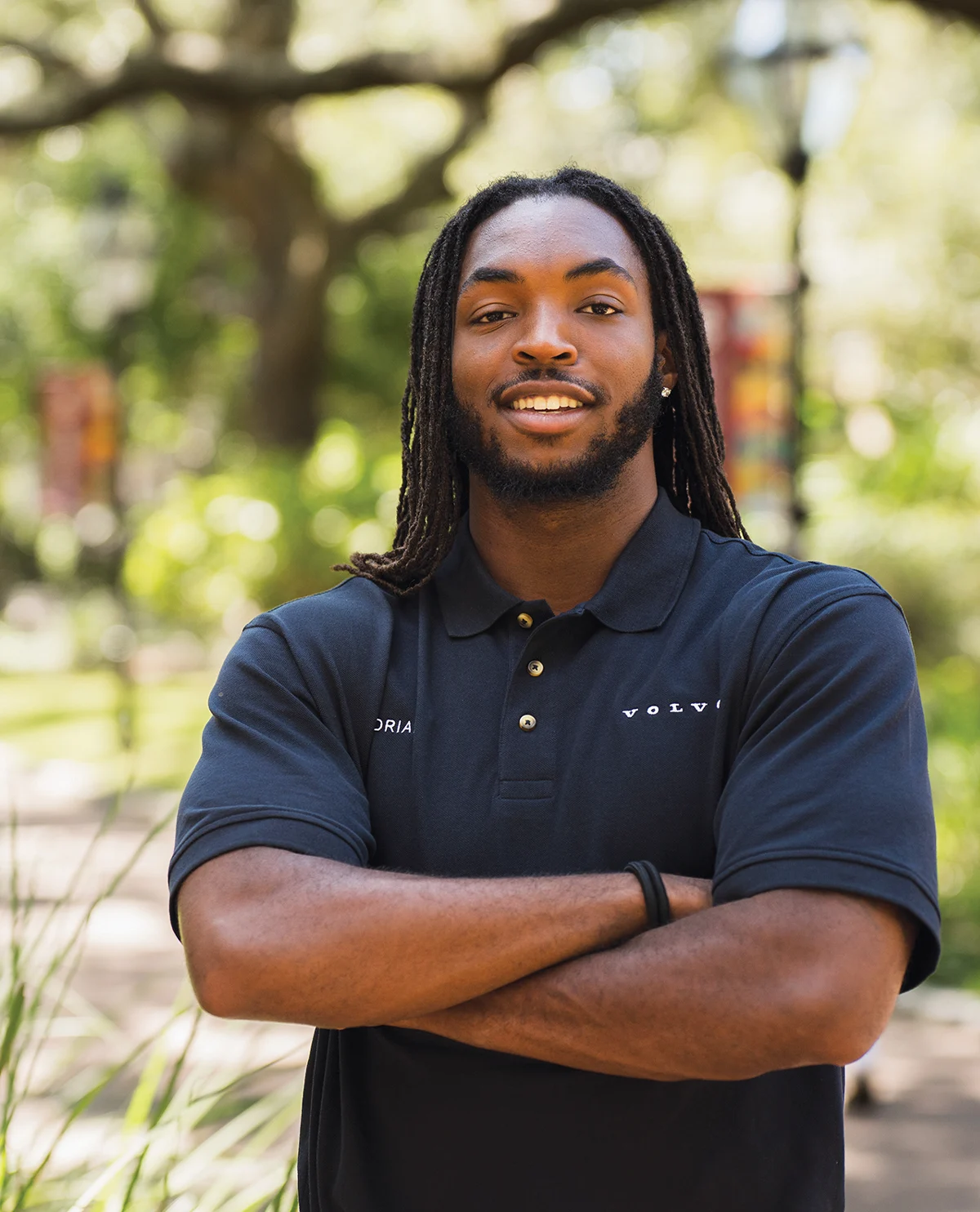
“I didn’t really know exactly what field of engineering I wanted to do,” says the senior from Rock Hill, S.C., who decided to major in systems engineering at the College. “Systems engineering was able to give me a wide variety of options and potential career paths to kind of let me continue to figure it out and find who I was in the whole process.”
The major came with several other benefits, too.
“The College of Charleston allows for a very intimate, close connection with your teachers and your mentors and advisers – and they are motivated for you to succeed through all sorts of opportunities to get hands-on experience in the industry,” says Smith. “They really give you the best advice for you to pursue your dreams and aspirations.”
Take, for example, Qian Zhang, assistant professor of engineering, who helped Smith get an internship with a Siemens lighting panel assembly plant in Roebuck, S.C., during his sophomore year and into the following summer.
“She’s been with me the entire way, giving me advice on entering the workforce, showing me potential directions I could take,” he says. “She definitely helps me narrow down and pick the best opportunities that are going to be best for myself.”
It was a great choice. Working on the Siemens assembly line optimization project pushed him to step up in ways he didn’t expect. By ensuring clear communication with the line workers and the material handlers, he recognized early on that their insights and collaboration were essential to making the improvements successful.
“Building trust through relationships while keeping lines of communication open allowed our process enhancements to really spark change,” he says.
The importance of communication was reiterated in his summer 2025 internship at Volvo in Ridgeville, S.C., which makes the fully electric EX90 and Polestar 3.
“System engineering requires a lot of teamwork, just for the simple fact that you’re working with such a wide variety of different teams and components – anything from assembly line workers to the stakeholders in the company,” he says. “It’s really important to have those communication skills and be able to work very well in teams and hold everybody accountable at the same time – including yourself.”
And, because he worked with several different teams, he was able to explore the various aspects of systems engineering.
“It showed me a different perspective on my career, and I was able to explore different options,” says Smith, who discovered his love for solving real-world problems – whatever those may be. “As a systems engineer, you can go anywhere – from automotive to civil to industrial – so you really have a very wide variety of options and career paths.”
Regardless of the path he takes after graduating in May, Smith knows his systems engineering degree will get him where he wants to go – with a lot of money.
Giving Students Agency
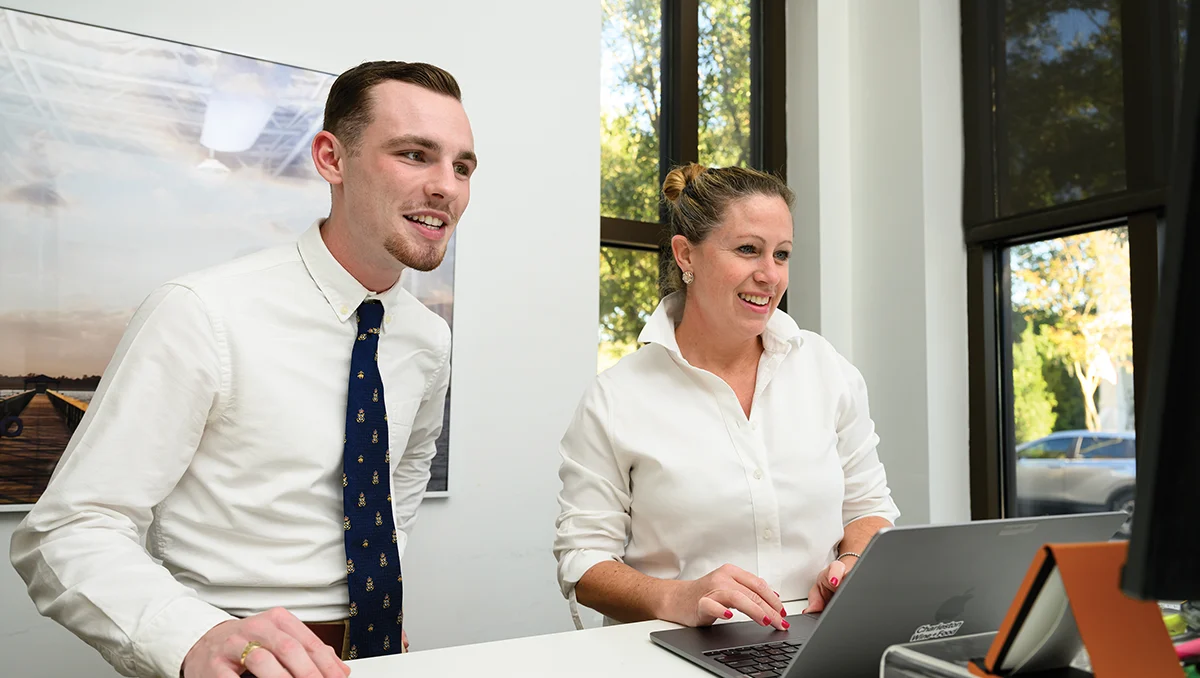
And, when the Charleston Wine + Food Festival (CHSWF) and the College of Charleston’s Strategic Communication Campaigns capstone course first got a taste of how they’d work together back in 2015, they knew they’d created the perfect pairing.
The partnership began when Amanda Ruth-McSwain, associate professor of communication, met up with her former graduate student Alyssa Maute Smith ’13 (M.A.), who was working on some marketing ideas for Charleston Wine + Food.
“Hey, I think we have an opportunity here to involve students in a much more significant way than just an internship,” Smith told Ruth-McSwain, who was in the midst of transitioning her Strategic Communication Campaigns capstone from one semester to a yearlong course.
“My idea was to hopefully find an opportunity where we could actually execute a campaign from start to finish,” says Ruth-McSwain, explaining that the capstone course provides a hands-on experience for communication students to take an integrated communications plan from the research phase through campaign execution and post-campaign measurement and evaluation. “And so, that’s how it was born. It has been an amazing opportunity for our students, but also deemed a success by Charleston Wine + Food.”
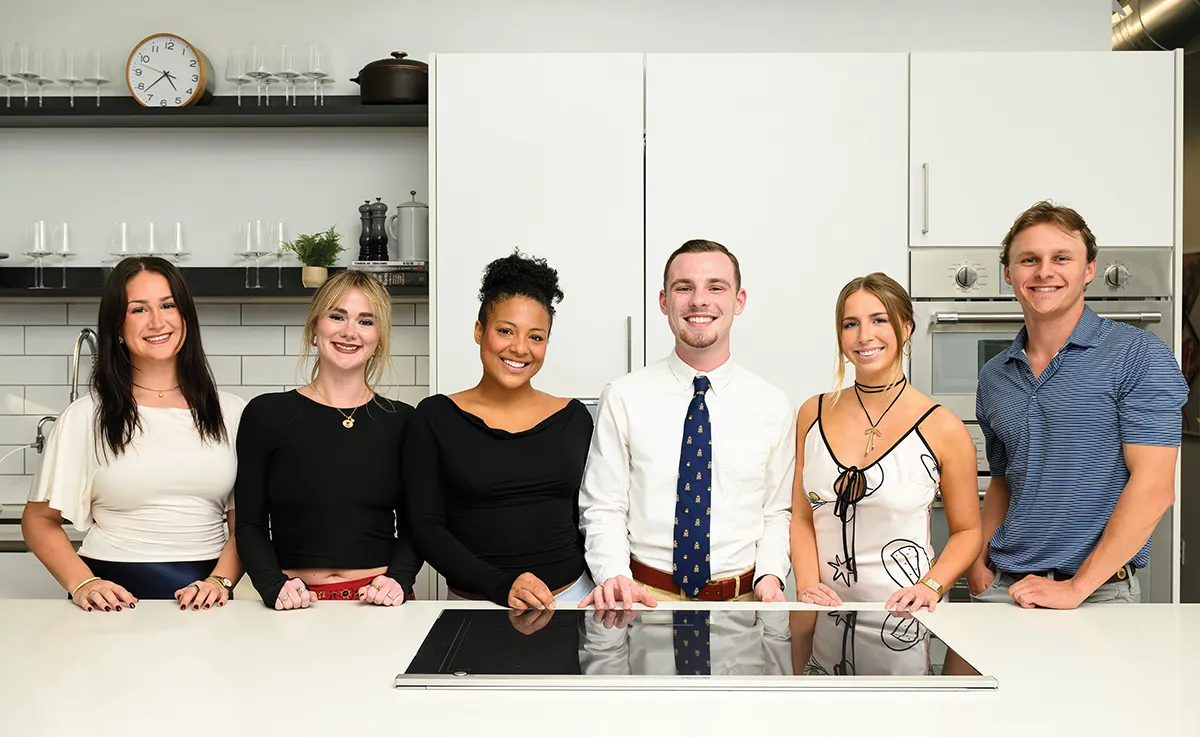
Ten years later, the partnership is still going strong – so much so that the capstone has transitioned from being the local agency of record for just CHSWF to The COMM Agency, a full-service, student-run agency with multiple clients, including CHSWF.
“What’s fun about our partnership is that Charleston Wine + Food knows the drill,” says Ruth-McSwain. “But they give so much agency and autonomy to the students. It’s pretty incredible. The Charleston Wine + Food team looks for the students to jump in, conduct client discovery and formative research, develop a strategic direction for the campaign and then pitch their ideas, so there’s a lot of client interaction throughout the process.
“Even during the first client meeting of the year, Charleston Wine + Food loves to hear the strengths and experiences present on the student team,” continues Ruth-McSwain. “There’s a real and special commitment to understanding how the student team can fill in the gaps that they’re experiencing on the Charleston Wine + Food side.”
Kate Hanlon appreciates the kind of attention that CHSWF gives her and her classmates as they work on the campaign for the 20th CHSWF this spring.
“The CHSWF team has been so generous and enthusiastic about sharing their work with us,” says Hanlon, the account manager for the client. “It’s truly a once-in-a-lifetime opportunity.”
But the collaboration provides a unique opportunity for CHSWF, too.
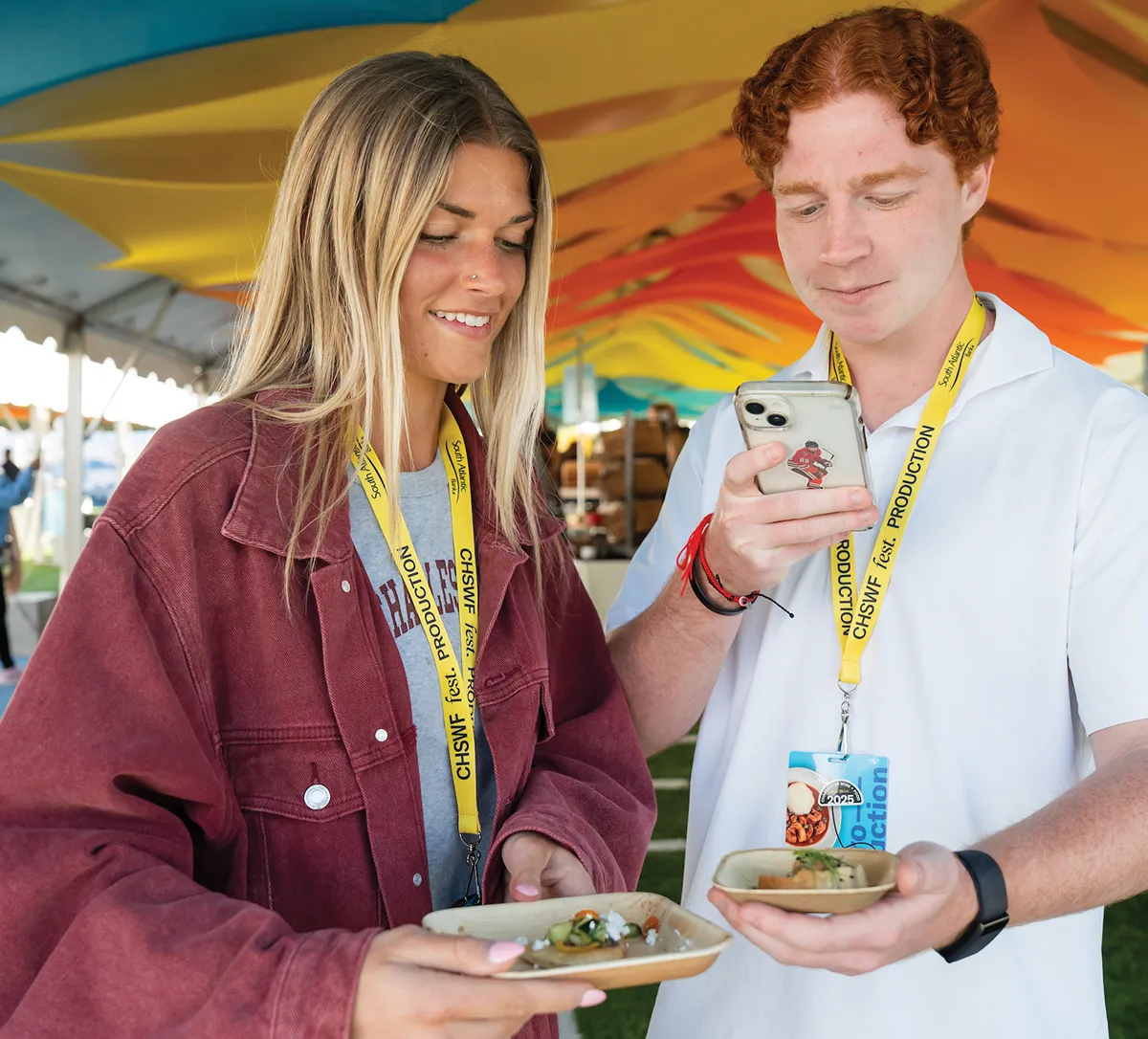
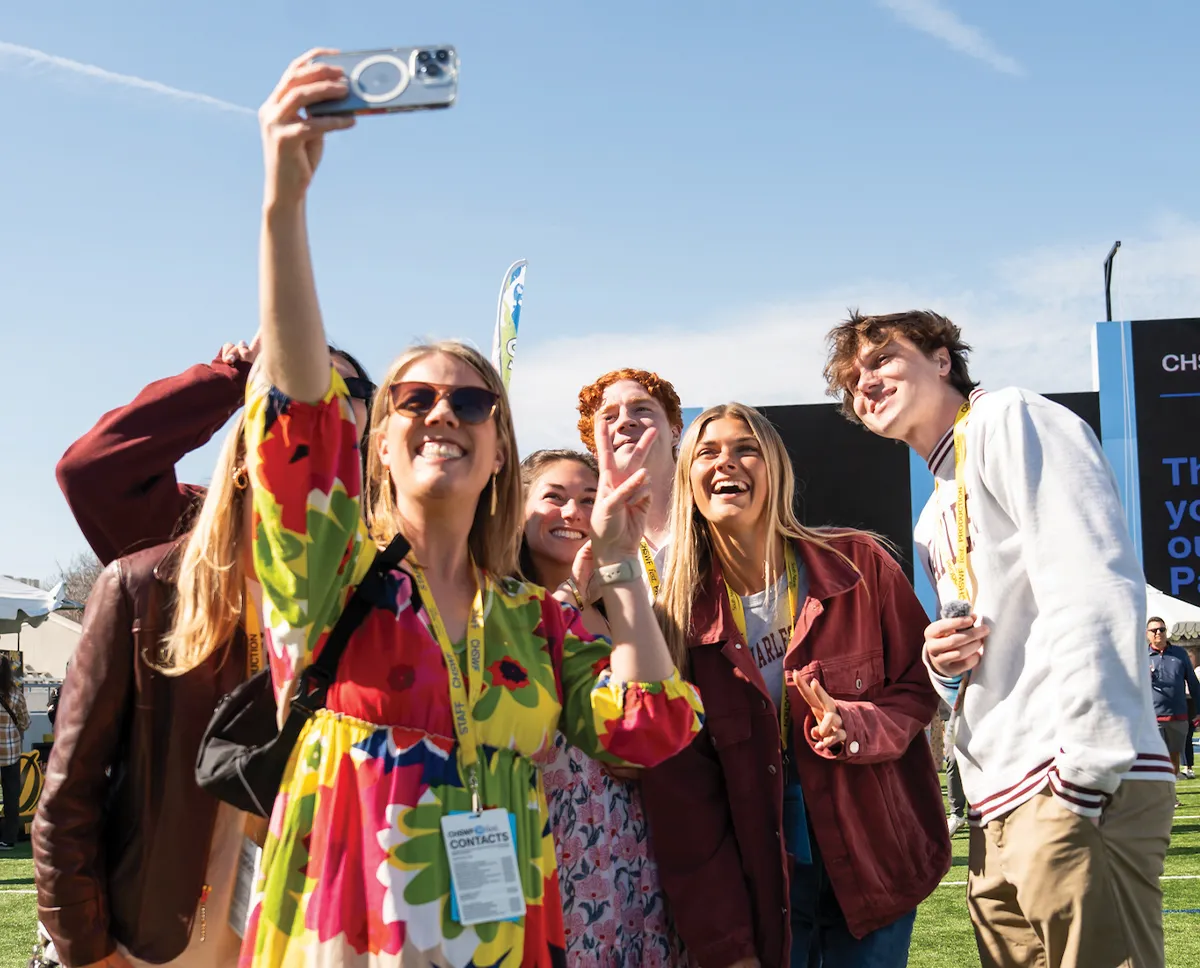
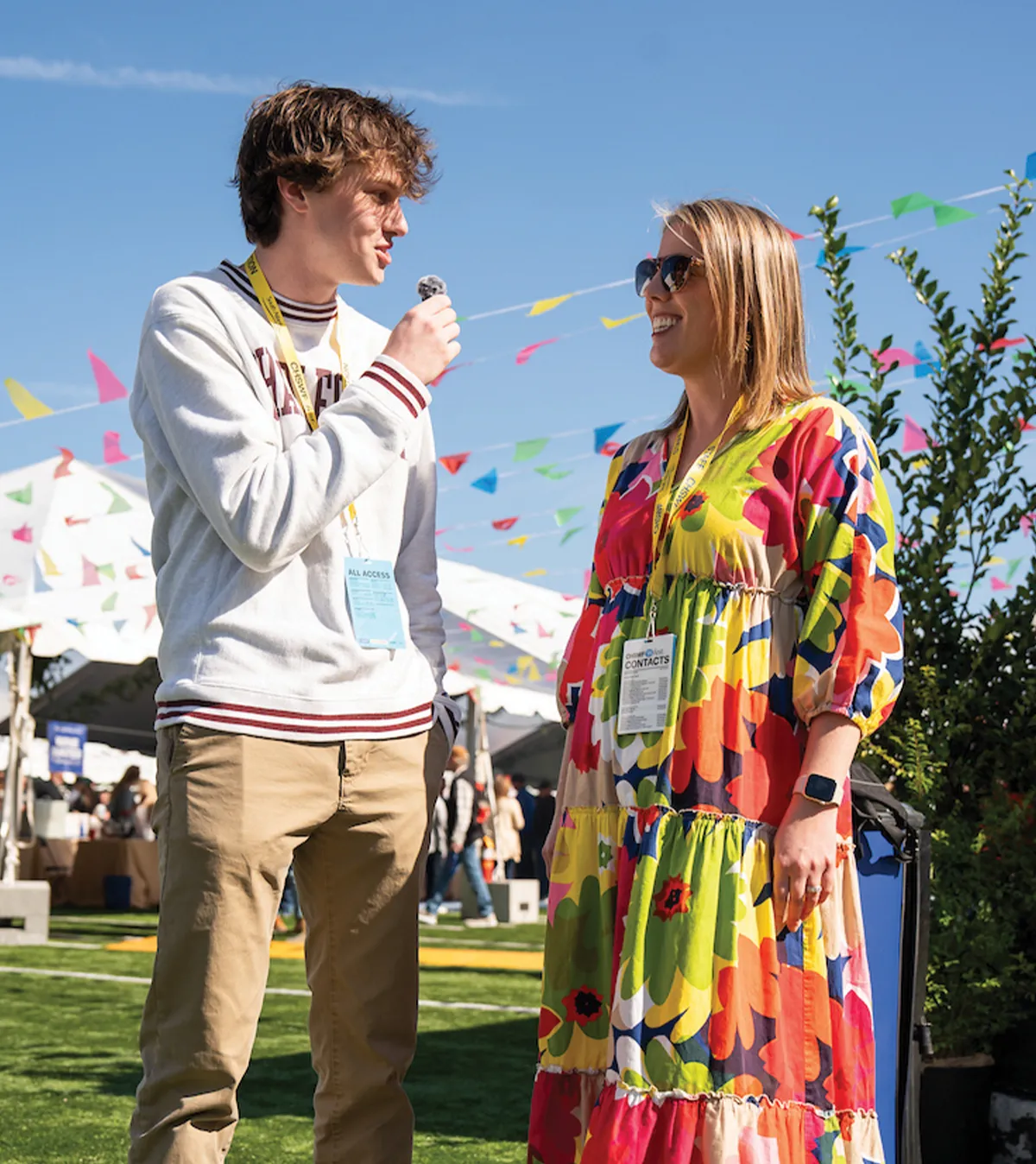
The students bring more than just a young perspective to the table – they’ve been gearing up for this moment for their four years as communication majors.
“What’s fairly unique and neat about the capstone is our students learn that, in all these different contexts and in different classes, this field theyʼve been studying boils down to their ability to read their audience, craft a message and deliver that message in the most efficient and effective way,” says Ruth-McSwain. “It brings the strategic planning process of communication to life. This one experience shows them these key concepts of communication that are present in everything they do.”
Seeing theory put to a real-world test is exciting for the students.
“This program was designed to give students the rare opportunity to apply their marketing and creative skills in a true client setting,” says Smith. “They produce work that is not only conceptual, but actually implemented by our nonprofit organization.”
At the end of the first semester, the students present their research and develop a campaign brief that includes their proposed strategies and tactics bef0re they pitch the campaign. And, says Ruth-McSwain, even if it doesn’t go well, it serves as a valuable learning opportunity for the students.
“The actual portfolio of work is secondary to the fact that the students are in a working environment that holds them accountable to something very real,” she says. “They can feel proud that they stepped into and worked through the highs and lows of professional situations and eventually came out of a pretty rigorous professional experience that helped them test the waters in a safe place.”
Confidence is key.
“Beyond building their portfolios, students gain invaluable professional experience: learning how to lead and participate in client meetings, present and pitch ideas, incorporate feedback, pivot creative concepts and navigate the dynamics of real-world collaboration,” says Smith. “These are lessons that can’t be taught in a traditional classroom but are essential for success in any career.”
Going the Distance
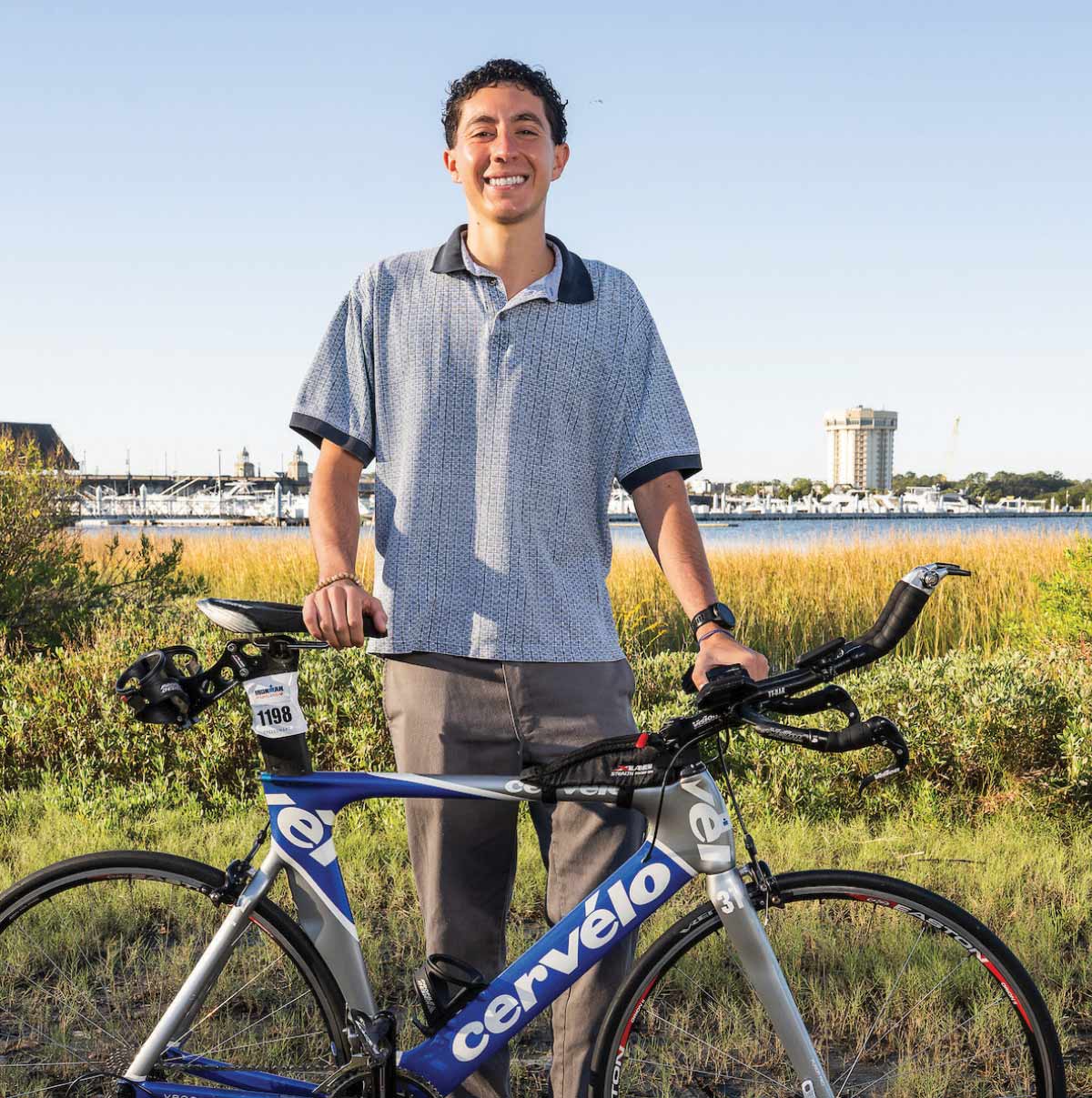
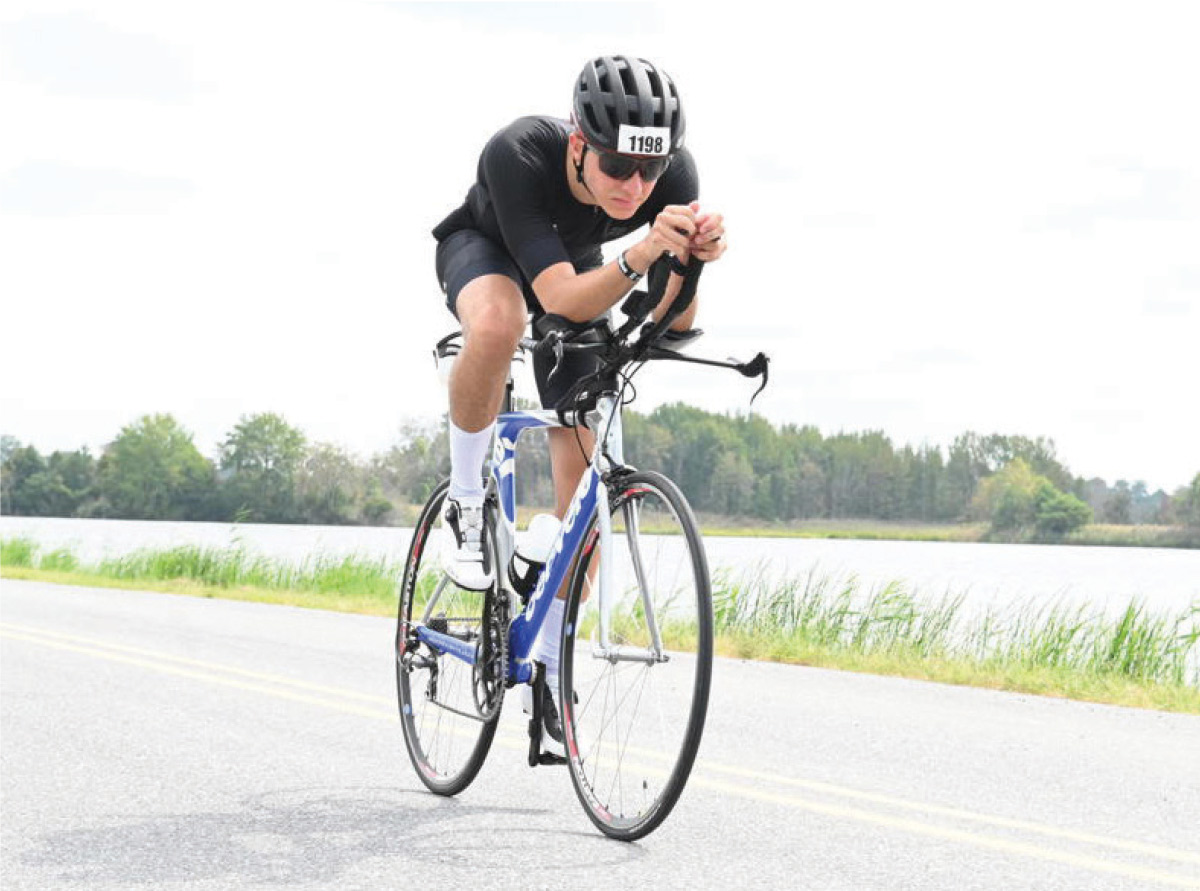
“I went for the fullest, biggest thing possible,” says Desjardins, who completed the most intense version of a triathlon in September 2025 in 12 hours and 26 minutes. “I just wanted to go for it.”
Desjardins transferred to the College in 2024 to major in environmental and sustainability studies. He found community through the M.A.R.S.H. Project, a local grassroots organization committed to restoring and preserving marshland in Charleston; friends on campus; and co-workers at Ethos Athletic Club, where he works part-time.
But as a former, longtime soccer player, he felt something was missing off the pitch. Many of his co-workers were training for races and athletic events, inspiring him to find his own project.
“I decided to sign up, and I got the fundraising idea from one of my old high school soccer teammates,” says Desjardins. “He was in Charleston training for an Ironman at the same time and decided to raise money for cancer awareness. I realized there was nothing stopping me from doing this for a good cause and to do the race not just for me but for a bigger purpose.”
An aspiring environmental conservationist, Desjardins raised more than $1,500 for the M.A.R.S.H. Project. He learned about the organization through associate professor of international studies, Blake Scott, a co-founder of the group, which regularly hosts cleanups, sustainability lectures, gardening sessions and more.
“They’re also advocating for being a good neighbor,” says Desjardins. “It’s not the most glamorous process picking up trash, but when you’re doing it, people are going by on golf carts beeping at you. The first time I went to a cleanup, a mom and daughter drove by, and the little girl said, ‘That looks like fun,’ and I was like, ‘Yeah, it is fun.’”
After a summer internship with the M.A.R.S.H. Project, Desjardins decided to channel his energy into raising money and awareness for the cause and training for the race, which he did for three months. As a soccer player, running came naturally to him and he felt confident in his long-distance ability, but he knew the swim segment would be a challenge.
“Swimming is definitely the hardest, especially in a triathlon setting,” he says, noting the dunks, kicks and hits competitors take from other swimmers. To ensure he felt prepared, Desjardins trained for every possible scenario. “I would swim by the dock and have my friends hit me with a paddle,” he adds, laughing. “It worked though!”
Desjardins completed the event after racing along the Choptank River, swimming in its brackish tidal waters and cycling through the Blackwater National Wildlife Refuge before reaching the finish line, where his family waited, cheering him on.
“I was super happy with the experience,” he says, “and I’ll definitely be signing up for another one in the future with hopes of finishing with a time that will compete with the best.”
family business
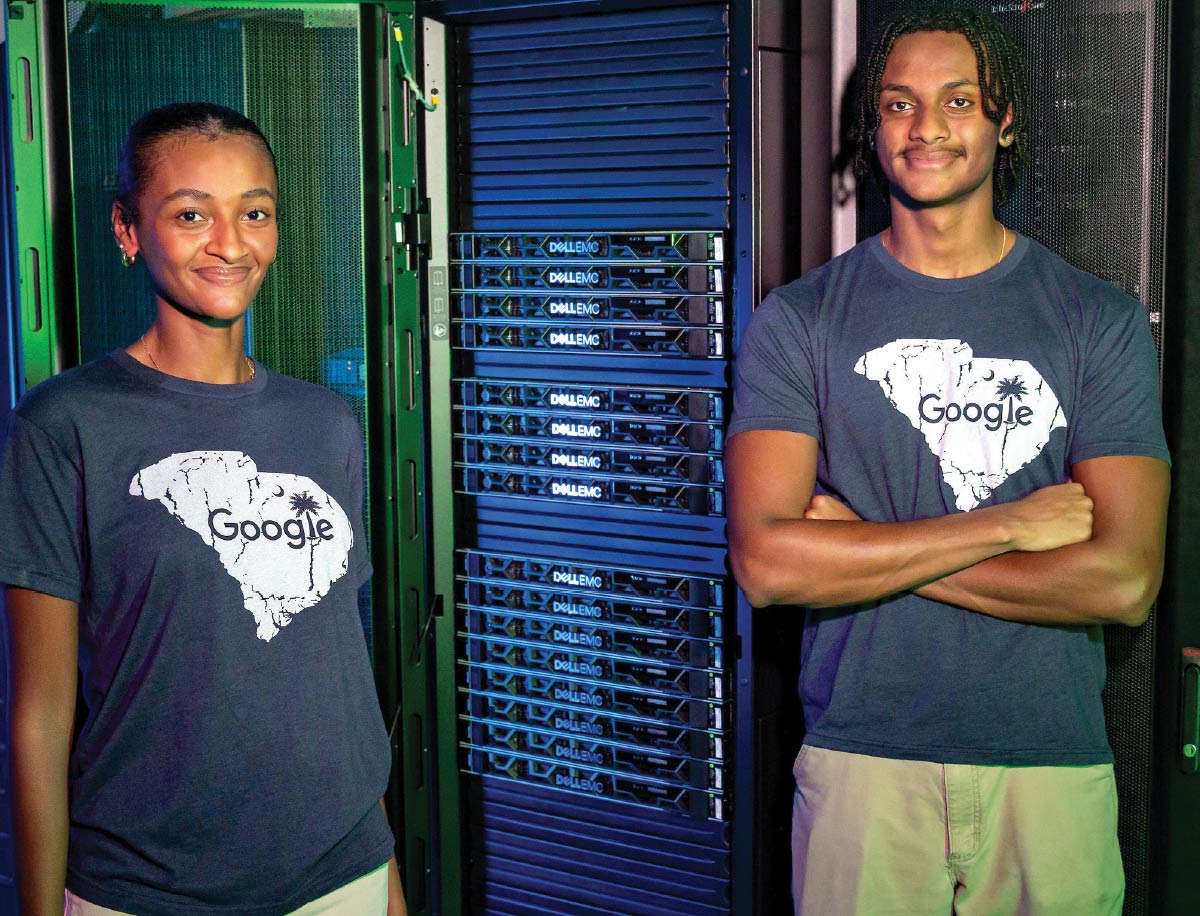
“Professor (Lancie) Affonso told us to have a ‘big, hairy audacious goal,’” explains the computing in the arts major. “Mine were to travel more and to get accepted into the Google Data Center Summer Immersion Program.”
Michael, a computer science major and data science minor, learned about the program through an email.
“I want to give a shout out to Rebecca Utz,” says Michael of the administrative coordinator for the Department of Computer Science. “Several of the experiences on my résumé are because of her emails about opportunities, like Google.”
The siblings, who are from Myrtle Beach, S.C., teamed up and helped each other apply to the program. At the Career Center, they participated in AI interviews to get tips on presenting themselves, got help crafting their résumés and learned how to better market themselves.
In addition, Michael and Gabrielle worked on tech projects. At DigSouth, they participated in an AI short film competition and received a free trial of OpenArt AI. Michael attended the IBM Call for Code event in Columbia, S.C., where his group won second place for the chatbot they designed on WatsonX AI to bridge the food insecurity gap. The siblings also volunteered in the Harbor Hacks Hackathon.
Their hard work paid off. They were both accepted into the competitive program.
“I loved getting immersed in different fields and learning the diverse career paths that are available,” says Michael. “Everyone, no matter their field of work, had some wisdom to pass on.”
Despite all the career paths at the data center, Gabrielle’s area of interest – user experience – was not represented. After connecting with interns at other Google locations, she managed to speak with the director of user experience design, who recommended what she should do in school and shared resources she could utilize.
Michael and Gabrielle appreciated Google’s supportive work culture, which encouraged wellness breaks, game room visits and inclusive events celebrating their employees.
“I also liked learning what it means to be ‘Googly,’” says Gabrielle. “It’s all about being personable and bringing good energy. Google wants people to bring their personality, so desks often look like a kid’s desk with all sorts of toys.”
They also appreciated how no one is off limits at Google.
“Everyone is equal; everyone is humble,” says Michael. “You can go to the top leadership, and they will lend an ear. There’s someone for everyone at Google: There are people from many different paths and disciplines. We now have people who have offered to help us with future opportunities, because they took a similar path.”
Participating in the program helped the Manns narrow their scope of interest. Gabrielle is now exploring a career in project management, and Michael has eliminated a couple of areas from his list of career possibilities.
Meanwhile, they are ready to help CofC students who wish to participate in the Google Data Center Summer Immersion Program.
“We learned so much in the application process, so we can lend a hand to anyone interested,” says Michael.
That’s exactly what any Google employee would do.
Carving a Niche
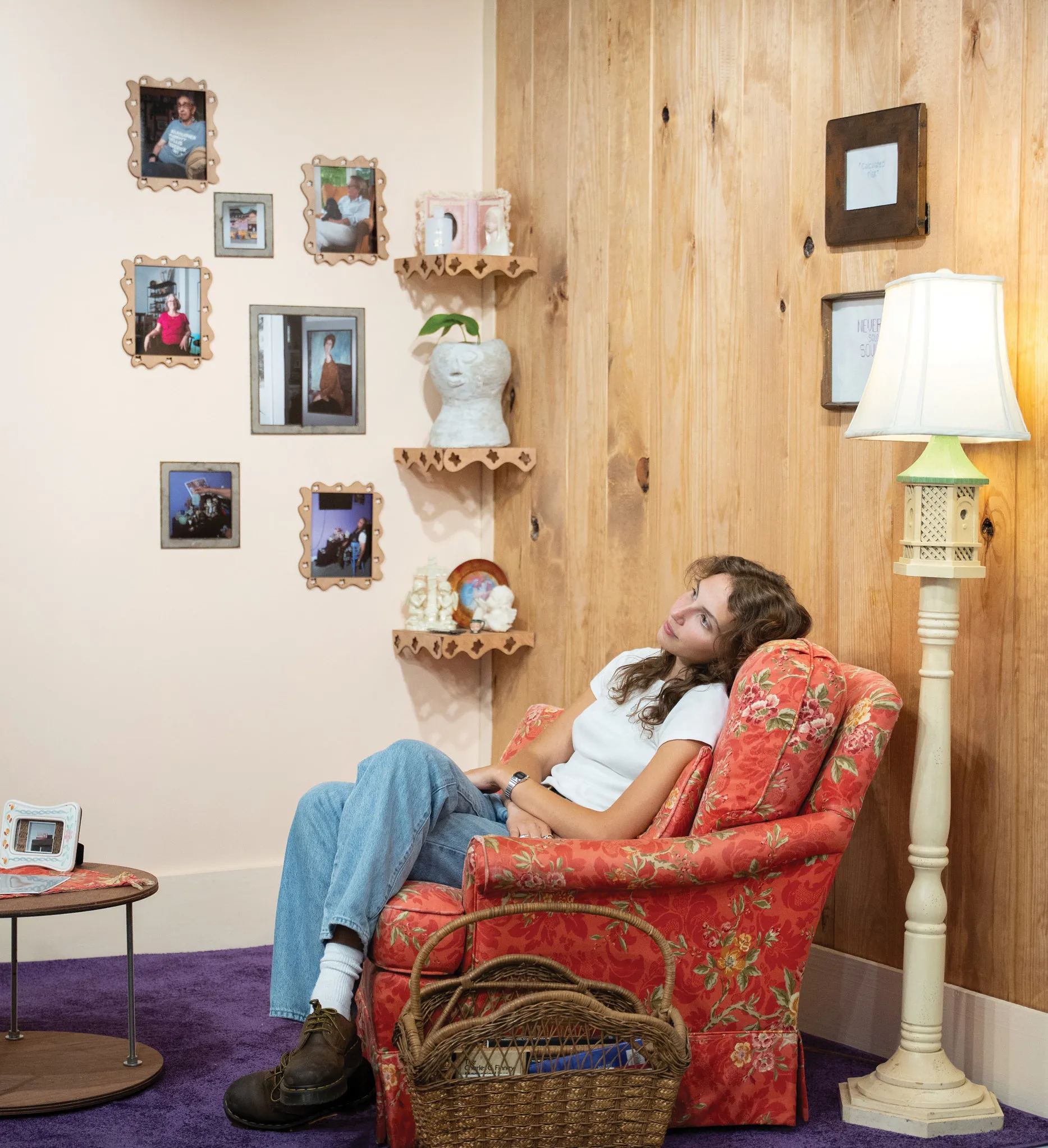
To bridge technology and art, Martini developed a research project, Human Contributions to Digital Fabrication, transforming digital photographic images into three-dimensional sculptures using 3D printing, laser and plasma cutting, and experimenting with materials like plastic, plywood, plexiglass, steel and aluminum.
The project was supported through a Summer Undergraduate Research with Faculty grant and was designed “to explore how technology can enhance the human experience often consumed by the digital world.”
“Art is about connection, so I did want to bring that human element into it,” says the senior studio art major, who is fascinated by environmental portraiture because of how personal and intimate it can be to capture someone in their own space. “It often leads to deeper and more valuable conversations when they are in a comfortable and familiar space.”
And so that’s where she started – by visiting people in their own spaces. Specifically, she connected with women over the age of 65 who have lived in Charleston their entire lives. Using the Nextdoor app, she found six women who allowed her to visit them in their homes, where she interviewed and photographed them.
“I was surprised how open the women were,” says Martini, who grew up in Mt. Pleasant.
Connecting the women’s homes to technology was the more challenging and exciting part.
Martini, whose focus had always been photography, was introduced to the cutting-edge technology and expanded possibilities in the new Simons Center Sculpture Studio while taking sculpture classes with Jarod Charzewski, assistant professor of studio art. Intrigued by the art form, she wanted to take the familiarity of photography and manifest it through sculpture.
“Once I had the photography portion, I thought, I’m going to create a fictitious living room,” says Martini, who – after compiling her photography into a book, The Women Who Stayed – used the highly technological equipment in the Sculpture Studio to make replicas of items she photographed in the women’s homes.
The installation she created (pictured) combines the homes and interviews of all the women through things like tables, knickknacks, clocks, wood paneling and shelving. From the fabric of the chair inspired by the wallpaper in one of the women’s houses to the framed cross-stitched quotes (“Calculated Risk” and “Never Sold My Soul for a Job”) in others: everything she created connected to the women. “I was able to work with older women and technology and connect the two in an unexpected way.”
Because of the new studio and technology, if you can dream it, you can build it, says Charzewski. “So much more is at our fingertips.” And it’s becoming more and more second nature to use this equipment and technology – something that’s much more intuitive to younger generations.”
Notes Martini: “I had never done any of this before. I was ready for something new. I was a novice sculptor, but now I have the confidence to work with all sorts of equipment and technology, and I know I can build pretty much anything.”
TEAMWORK
Riding High

Last season, after 40 years competing in Intercollegiate Horse Shows Association (IHSA) events, head coach Natasha “Tash” Vitkovic decided to add NCEA meets. The key differences between the two: Elite women riders go head-to-head in NCEA under NCAA guidelines, while the IHSA provides more inclusive, tryout-based meets for both men and women of various skill levels.
In its first-ever NCEA meet, the team defeated No. 1-ranked University of Lynchburg in single discipline, ultimately finishing the season as national runners-up in the NCEA Single Discipline Championship.
Assistant coach Hope King emphasized that the team, with 10 of the 32 members competing in NCEA, would not have had such immediate success without having first been a competitive IHSA team.
“We are all one,” she says. “Our motto last year was, ‘Two formats, one team.’”
Team captain Olivia Welsh was on the IHSA roster for three years before moving over to the NCEA format this season.
“I’m hoping we can pull off the win,” says the senior business administration major from outside Chicago, referring to the national title. “That’d be a really cool way to finish out my journey at the College.”
No matter the season’s outcome, the coaches cultivate a culture of positivity.
“We want the girls leaving here every day feeling like they’ve contributed to something worthwhile,” says King, who likes the momentum they have built from last season. “In the spring, we got into our groove. It was a real confidence boost. We can do this.”
Captain Fantastic
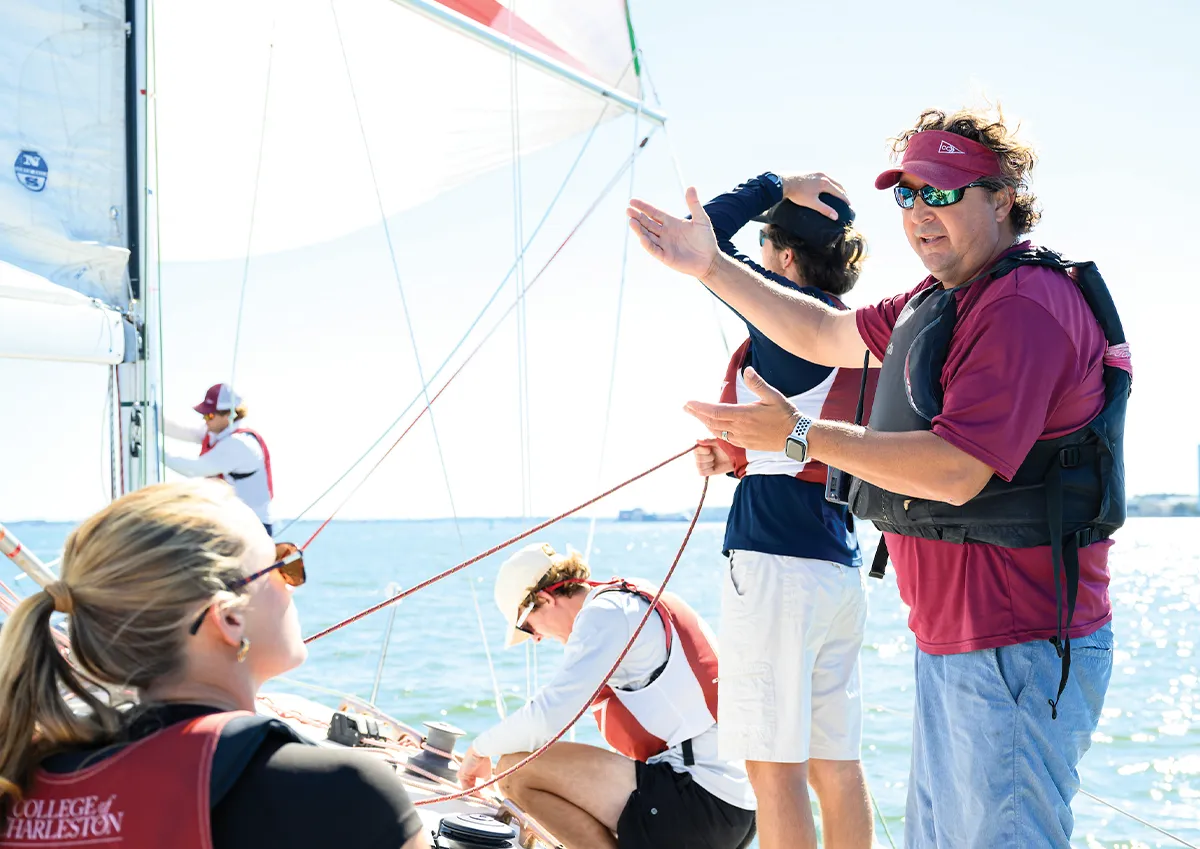
Goss was in his element as he raised the spinnaker, the sails filled and the vessel picked up speed.
“Being present when you’re sailing and not worrying about the bills you have to pay or the chaos of the day is where the power of sailing can take you because,” as he reminds his students, “real life hits hard when you’re not sailing.”
Severe dyslexia was the left punch life threw at Goss, who grew up in Madison, Conn. But, on the water, Goss felt normal. “Sailing was my out to fitting in and feeling included and not different,” he says.
He doubted he would ever be able to graduate college, but then he came to CofC, which has a robust support program for students with dyslexia. After graduating with a studio art degree, he joined the U.S. Sailing Team in the high-performance 49er class, competing in 2004 and 2005 and winning five national championships and three North American titles in the Fireball class. He also set a world speed record in the Moth class at an astonishing 36.6 knots/42 mph in 2012, the year after he started coaching at the College.
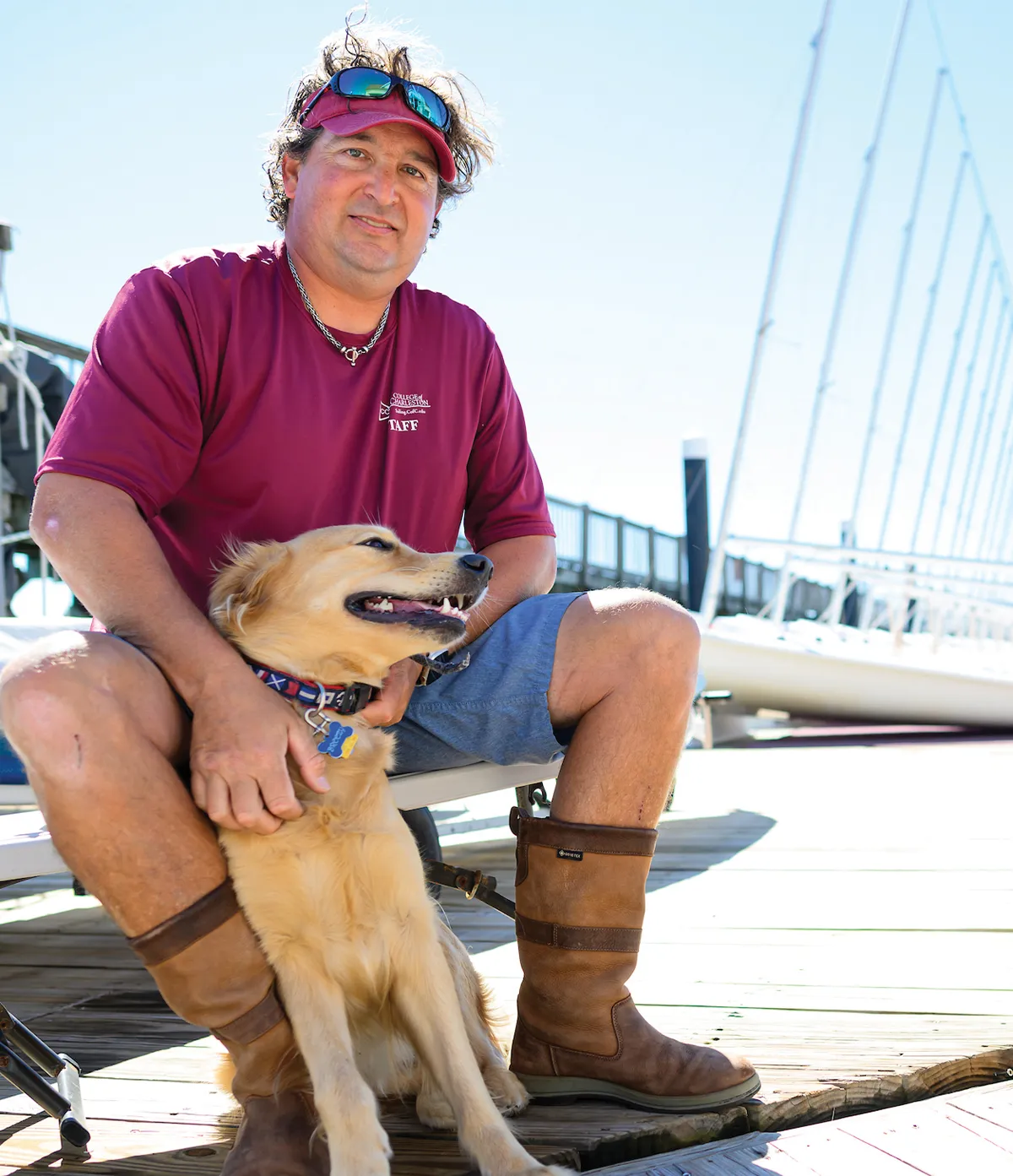
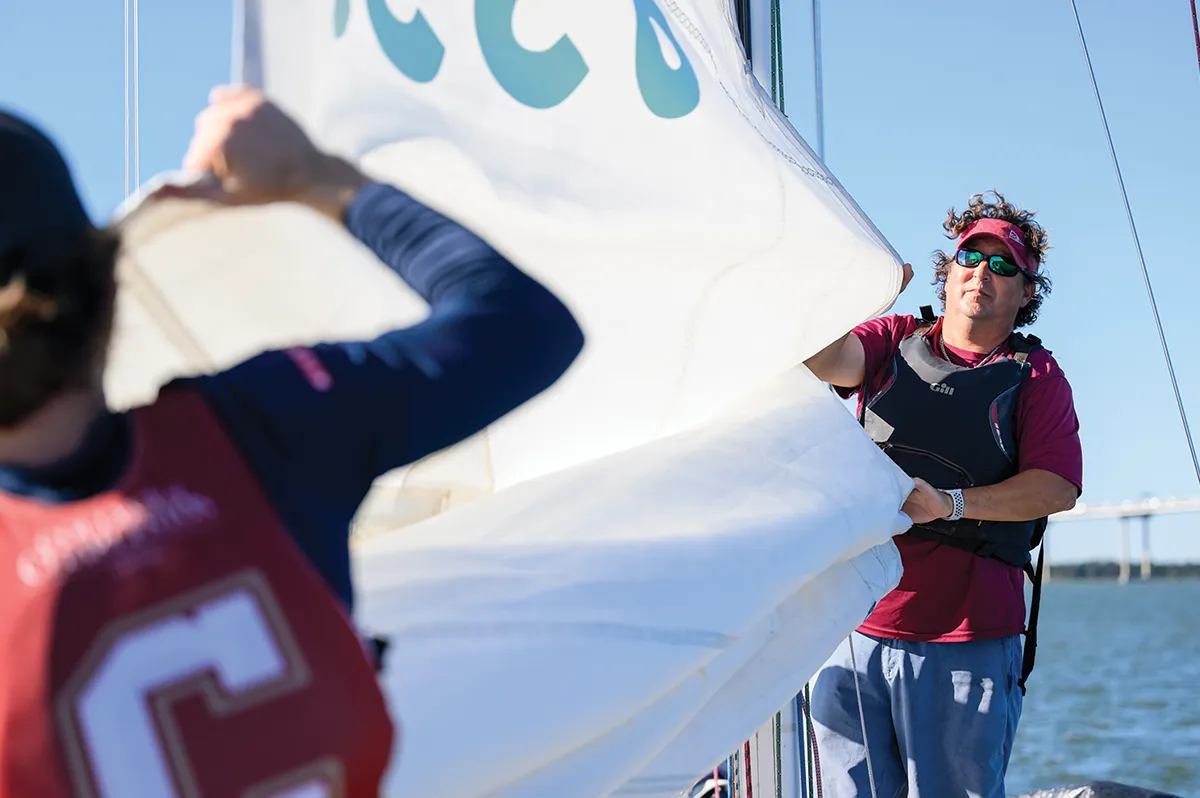
He is also the newest member of the Intercollegiate Sailing Hall of Fame and won one of the sport’s most meaningful honors – the Graham Hall Award for Outstanding Service to College Sailing.
“I’m embarrassed, nervous and excited,” he says. “I much prefer to be behind the scenes and building the team to get things done. But I’m excited to see what the future of sailing looks like at the College.”
The Graham Hall Award celebrates a lifelong dedication to the sport’s growth, to mentoring young sailors and to preserving the values that make college sailing special.
That mission defines Goss’ career and passion for the sport of sailing.
“It’s about more than speed,” he says. “It’s about connection with the water and nature, your teammates and the next generation.”
In many ways, Goss’ induction into the Hall of Fame isn’t a capstone, but a continuation. Goss fits that legacy perfectly. He guides sailors with a simple tenet: “Sail calm. Sail confident. Sail for fun. If we can do these three things, the results will come.”
Indeed, his mix of humility, craftmanship and competitive drive has helped the College of Charleston sailing program remain one of the most respected sailing programs in the country.
It’s a reminder that, while races may be won in seconds, the life lessons learned through sailing last a lifetime.
Holding Court
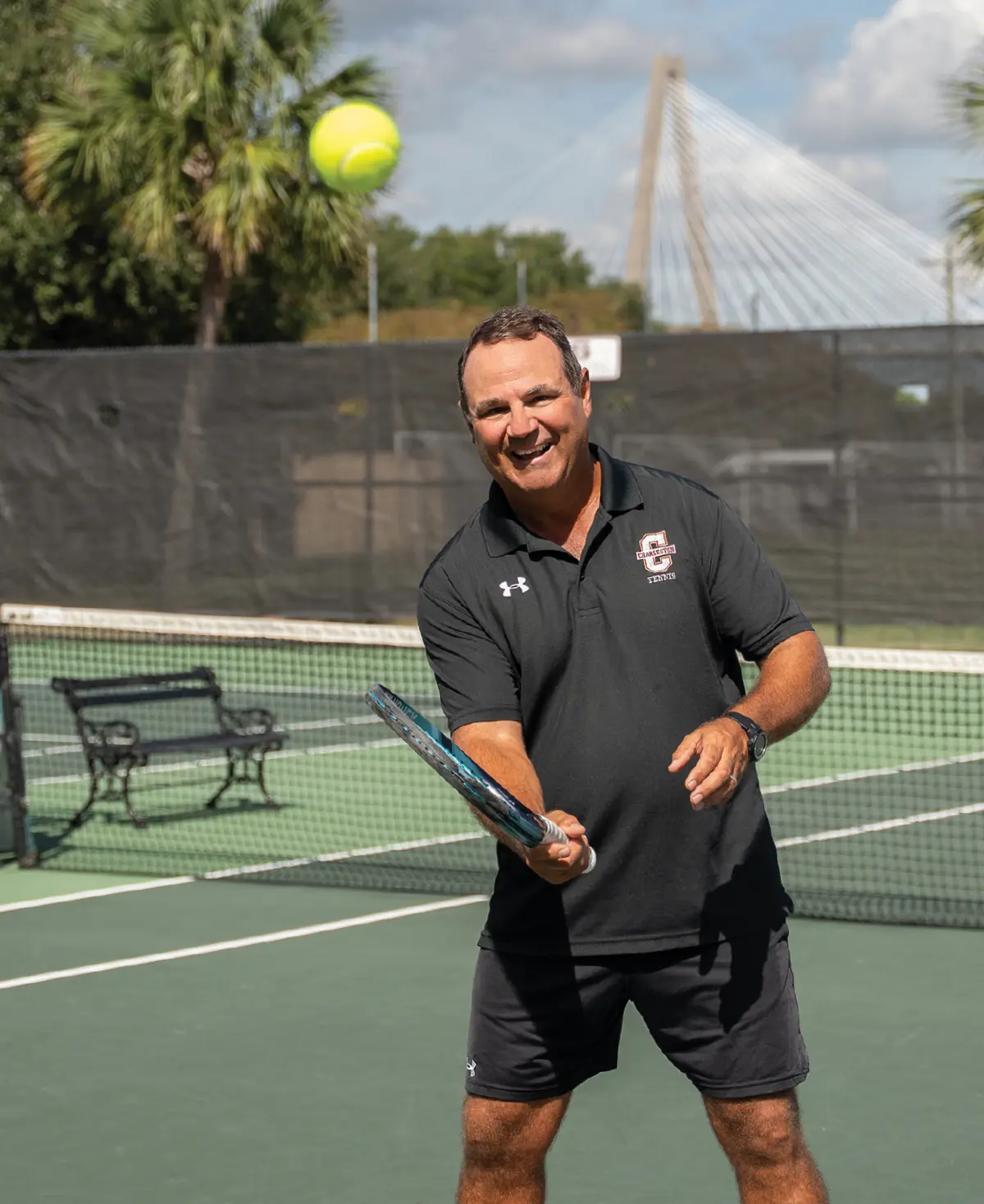
“My singing was so bad that Darius used to have to drown me out,” cracks Anastopoulo. “That’s the way he developed that voice.”
That light touch is a trademark of his coaching.
“He made everything so fun,” says former player Kate Earnhardt ’22. “On Valentine’s Day, he’d give roses, at Halloween, chocolate and costumes. And on court, when you were really nervous, he’d say something offbeat just to break the tension.”
When the College hired him at age 24 in 1991 after playing for The Citadel, he was so young, he couldn’t rent the team van. Now he’s the longest-tenured coach in the College’s history and one of Division I’s winningest in women’s tennis. With more than 600 career wins in the program (plus 172 as men’s coach from 1991 to 2001), he’s fourth among active coaches and ninth all-time in Division I.
Ask him what he loves about coaching and he’ll talk about teaching — literally. As an adjunct professor for 32 years, he’s introduced more than 3,000 beginners to the sport, which he calls “as rewarding as winning a conference championship.”
That dual lens is one reason he’s lasted so long. “I get a chance to see somebody hit a ball for the first time all the way to these elite athletes,” he says. “It keeps you young. There’s never a dull day.”
He also credits outstanding assistants (many now head or associate head coaches at Power Four programs), administrators who “took a risk on a young 24-year-old,” the guidance of predecessor Billy Silcox and the daily collaboration with men’s coach Jay Bruner. He’s grateful, too, for his wife, Paula, who came from an athletic family herself, and for the role models his players have been to his sons: Ted, pursuing a doctorate in history at Princeton, and Stratas, a tennis teaching pro at Seabrook Island.
He’s coached 13 sets of siblings and one mother-daughter combo. Marcy Cenkovich-Bruce, the mother of current CofC team member Marra Bruce, played on one of his first teams.
He relishes alumni visits (“Everybody remembers their time in college as being the best time of their lives,” he says) – and the life milestones that increasingly eclipse trophies: weddings, babies, careers taking off. He remembers the night in a Hampton Inn lobby in Johnson City, Tenn., when men’s team member Matt Czuchry ’99 asked whether to start law school or try acting.
“You can always go back to law school,” Anastopoulo told him. Czuchry is now a star of stage and screen — and, in his coach’s words, “one of the quickest and fiercest competitors we’ve ever had.”
One constant is the standard he set on Day 1, after calling his sister Patti, a member of Charleston’s first women’s tennis team in 1974. Her advice has been his North Star ever since: “Don’t mess it up.”
“For the last 35 years, that’s what I’ve been trying to do,” says Anastopoulo, “not mess it up.”
Living Legacy
Living Legacy
ingerprint-sized holes dimple the rough surfaces of copper-red bricks in the walls of the Avery Research Center for African American History and Culture’s third-floor auditorium. A typical characteristic of 19th-century bricks in the Lowcountry, these marks are signatures of the creators, who were often enslaved people prior to emancipation.
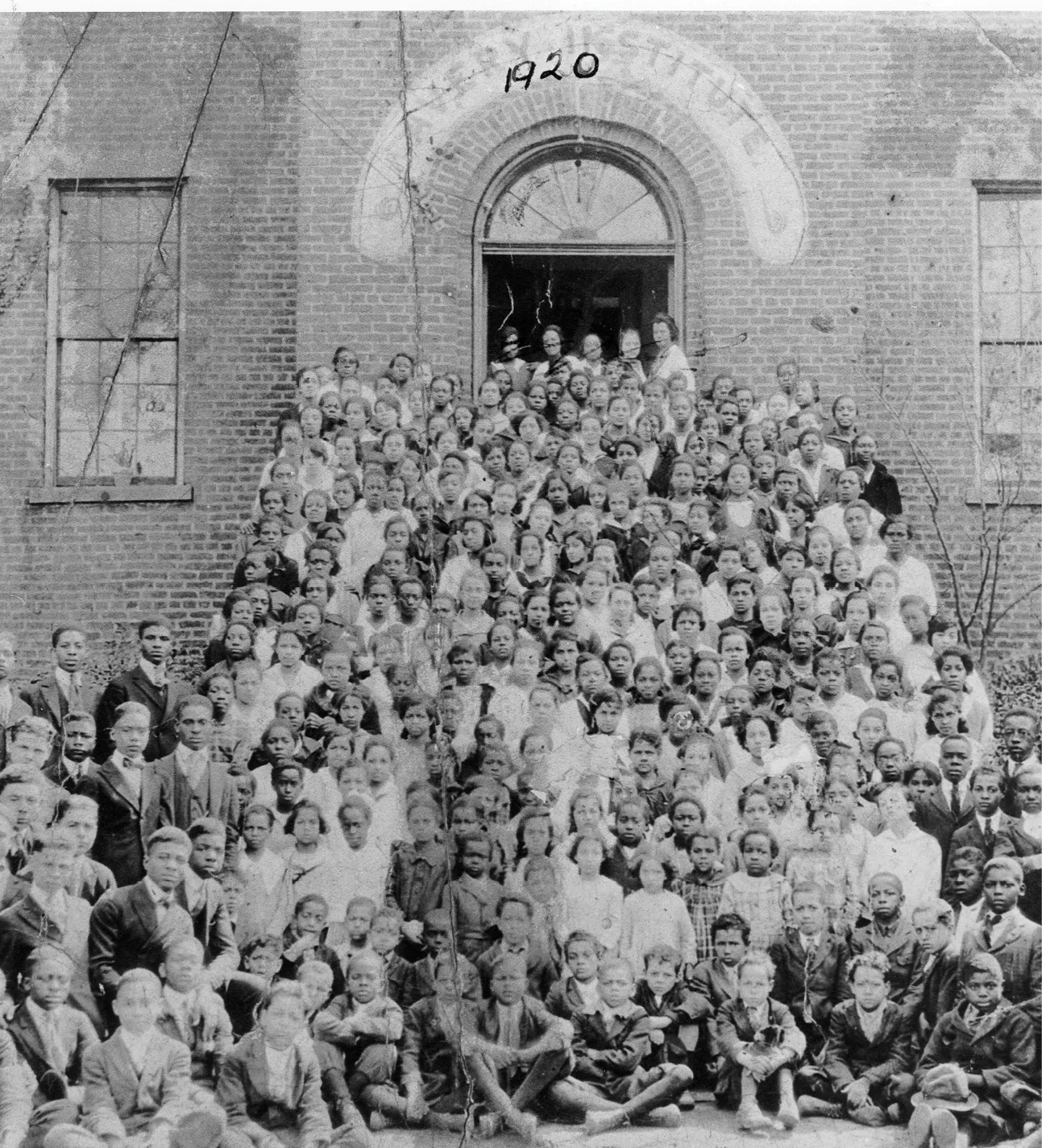
For 158 years, these bricks have held the story and structure of Avery, established in 1865 as the Avery Normal Institute, the first accredited school for Black Charlestonians.
“It’s a story I usually tell when we look at the building,” says Tamara Butler, the centerʼs executive director. “It’s quite liberating when you look at the artifacts that we have here to think of what people survived and desired more. We had just gotten out of the institution of slavery, and we saw the best way to make our mark in this world was through education.”
Now part of the College of Charleston’s library system, the Avery Research Center preserves and promotes the histories and cultures of the African diaspora. And much of the original structure and founding mission remains. An archive, library, museum and community hub, Avery embodies the pursuit of knowledge and education.
“Thinking about all the folks who walked through this building with the dream of educating a new American citizenry gets me every single time,” says Butler, “because they came with all this intelligence and technology, and they decided to use that ingenuity to put into a building that’s still here.”
Many prominent figures passed through Avery over the years, including T. McCants Stewarts, a South Carolina educator and attorney who later served as a Supreme Court justice in Liberia; Septima Clark, a well-known educator and Civil Rights advocate; Arthur J. Clement, Jr., Charleston NAACP president; and John Henry McCray, an activist, politician and journalist.
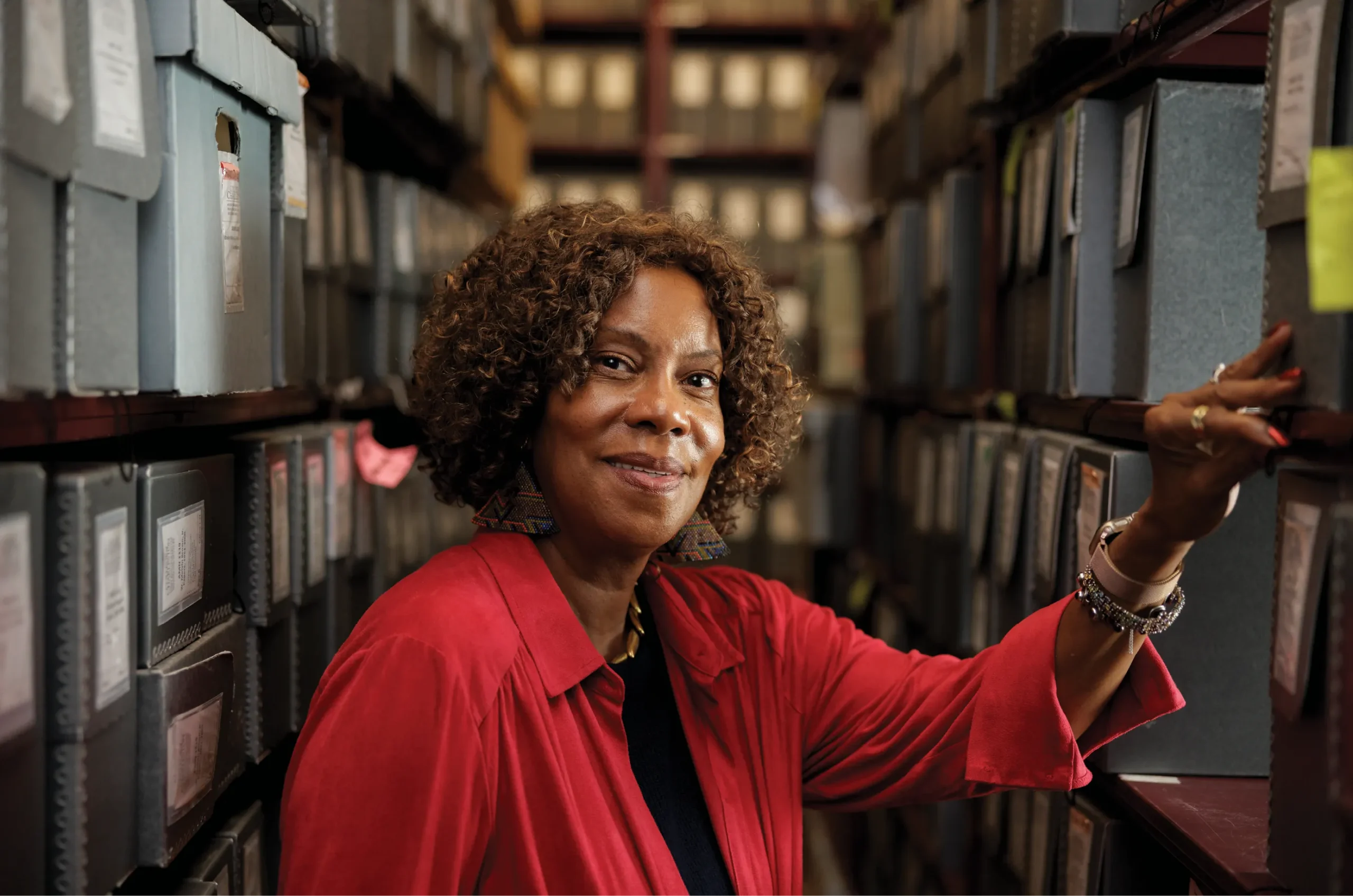
“I think what makes Avery so unique is that this is literally hands-on history,” says Butler. “I’m not talking about replicas; you can put your hands on things that are older than you. It’s the idea that Langston Hughes breathed on this sheet of paper, or Septima Clark wrote in this notebook. It gives me chills because I’m touching things from people I only know of in books, but these items actually lived in their hands and homes. I think that moves people.”
This remarkably rich collection continues to evolve as people donate new material, adding layers to a living record of community history.
“People may think they do not have anything to donate to an archive, but we all have archives,” says Georgette Mayo, Avery’s processing archivist. “It’s the things that people take for granted. If you have a hobby in which you collect and organize objects, that’s your archive!”
Mayo wants to expand people’s concept of archival material to encourage more donations, as they are within Avery’s collection development policy and mission, and creative use of the Research Center’s resources.
“I love seeing how our archives are being used,” she says. “Researchers always surprise me when they come into the Reading Room with their topics.”
Preserving Perspectives
As part of Avery’s mission, the Avery Institute of Afro-American History and Culture, a nonprofit that supports the Research Center’s mission, embarked on a documentary project to steward the stories of Avery students and graduates.
Avery Institute board member Gwendy Harris and President Tony Bell ’91 teamed up to locate and document these stories. Bell is also working on a documentary with Avery project director DaNia Childress about Avery’s directors over the years.
“For so many people, Avery meant the difference between what the future would be for them. This was a really pivotal point of people’s lives,” says Harris.
The Avery Normal Institute was founded in 1865 by abolitionist group the American Missionary Association as part of a nationwide effort to establish schools for African Americans after emancipation, though some early Averyites and their families were free people of color before the Civil War.
The current location on Bull Street was secured as a permanent place for the school in 1867. AMA funded the school until 1945, when it became Avery High School as part of the public school system.
Through its first 80 years, Avery taught various grade levels – at times supporting elementary through secondary with an optional additional year of teacher training, known as “normal training.” It served as a high school once merged with the public school system. The city closed the school in 1954, after Brown v. Board of Education, the Supreme Court case that reversed the separate but equal doctrine.
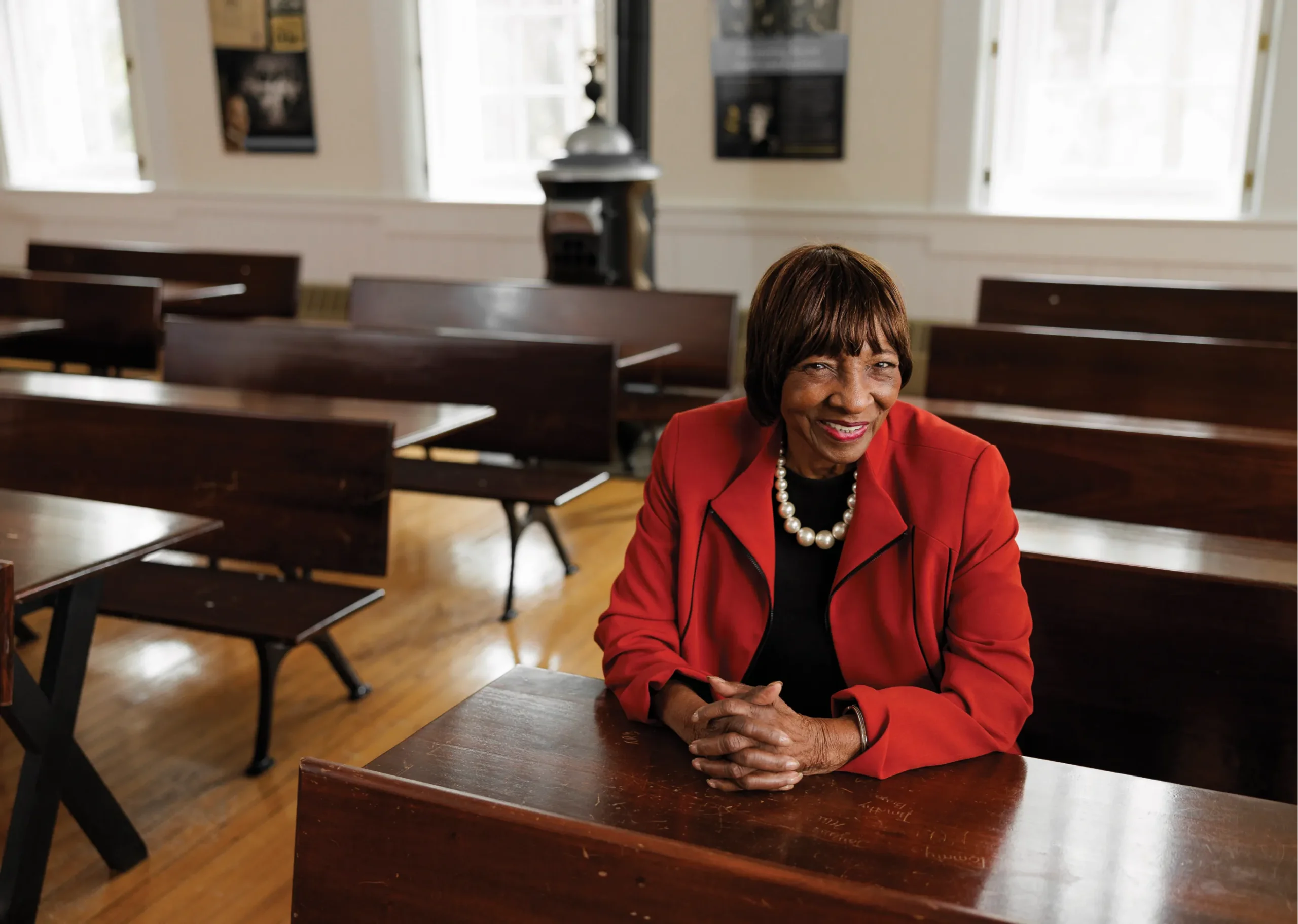
Retired College of Charleston political science professor Marguerite Archie-Hudson, a graduate of the 1954 class, participated in the documentary, sharing fond memories of her experience.
“The curriculum at that school was just astounding,” she says. “Their intention was, when you leave Avery, you should be able to go any place that you want.”
For Archie-Hudson, this led to a life of education and public service. She earned a bachelor’s degree in psychology from Talladega College, a master’s degree in education and counseling from Harvard University and a Ph.D. in higher education administration from the University of California, Los Angeles.
After graduating from UCLA, she served in the California State Assembly from 1990 to 1996, chairing the Assembly Committee on Higher Education. In 1998, she became president of Talladega College; she was the first female president in the school’s 134-year history and first African American woman to lead a university in Alabama.
Reputation for Greatness
Renowned for its academic excellence, Avery created a pipeline of highly educated teachers. Many students who opted for normal training later taught future Avery students in rural areas, including Sugar Hill Elementary on Yonges Island, where Archie-Hudson attended primary school.
“The teachers and administrators at Avery were always extremely well-educated,” says Archie-Hudson. “It meant several things for us. One is that we got to see people we never would have seen. Langston Hughes came and gave a lecture and read one of his poems.”
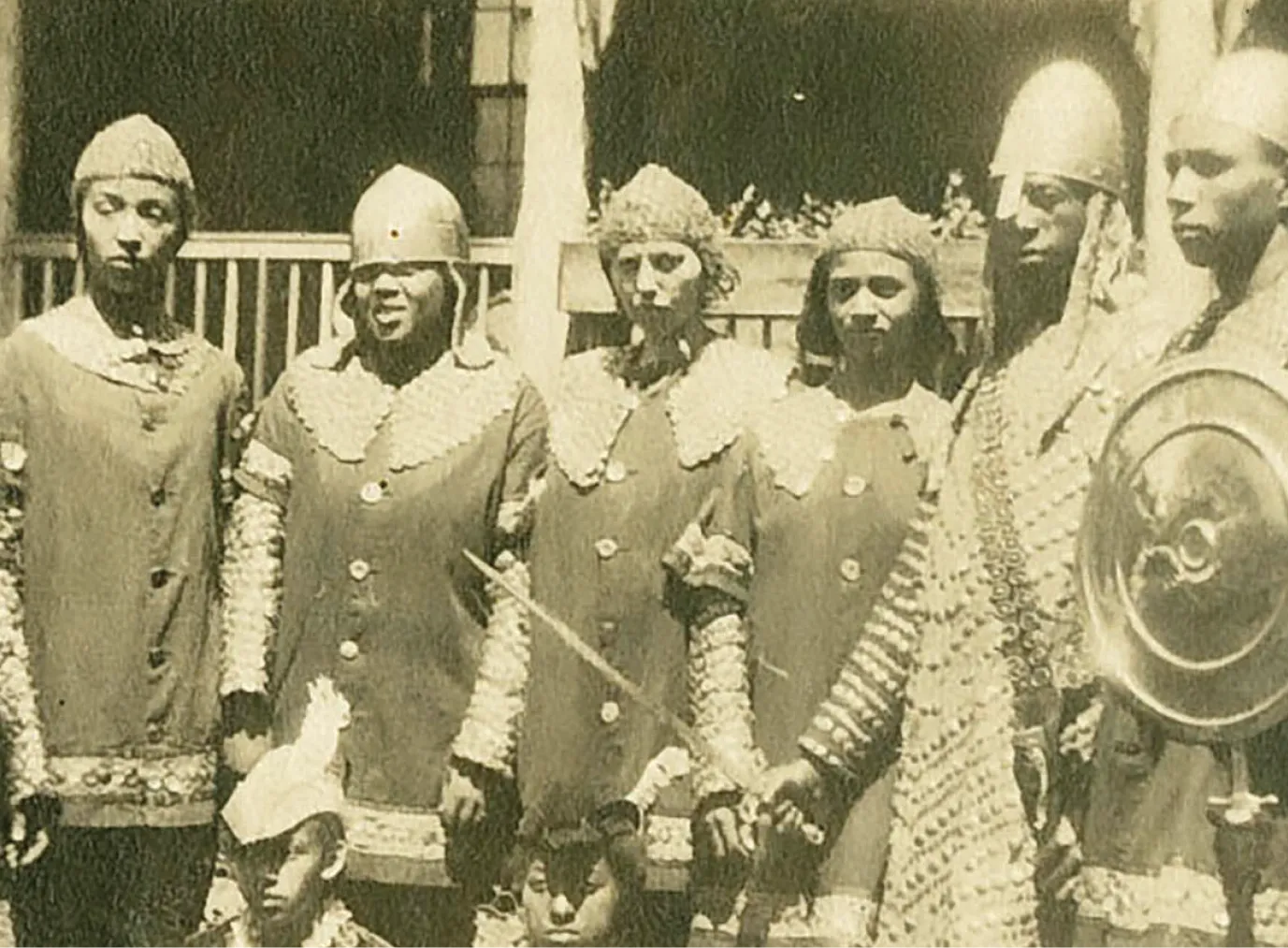
Students received rich instruction in college preparatory classes, classical studies like Latin, vocational training and a highly touted music program along with theater and choral clubs.
Archie-Hudson also reminisced about happenings in the auditorium, where plays, musical events and school dances were often held.
“We had to build sets for whatever we wanted to have: a ballroom, park, circus, whatever the theme was,” she says. “We were one of the few schools that got to do that.”
The Avery instilled a strong sense of pride and fellowship in its students, which radiated into the wider community.
“They had a tremendous music program,” says Harris. “Their graduation was a big performance, and so people, even if they didn’t have kids graduating, came because it was a major community event, and they wanted their kids to participate.
For many, the school’s closing in 1954 was devastating.
“The classes behind us, of course, were heartbroken, because it was their school,” says Archie-Hudson. “Some people had been there since elementary school.”
After it closed, the building served as Trident Technical College’s Palmer Campus from 1955 through the late 1970s. In 1978, the Avery Institute nonprofit was formed, led by Avery graduate (and state legislator) Lucille S. Whipper, and established a partnership with the College of Charleston to open the Avery Research Center in 1990.
“We’re teaching people not just about African American history but that our history is included when people learn about the classics,” says Butler. “Our history can be curriculum that we use to teach and learn.”
The Avery Research Center encourages faculty in every discipline to utilize the center’s rich collections to enhance and deepen students’ learning. The center is also available to students for research, tours and more.
“My time at Avery taught me that it doesn’t matter who you are, what your occupation is or what you study, Black history will always be part of our history,” says Patricia Washington ’25, who worked at the Avery as an undergraduate assistant while earning a bachelor’s degree in accounting from the College.

“Students come in, and they get to look at and touch shrimp nets that were handwoven on Johns Island in the ’60s, or they get to put their hands on carvings from Guinea that were brought here in the ’80s or ’90s,” says Butler.
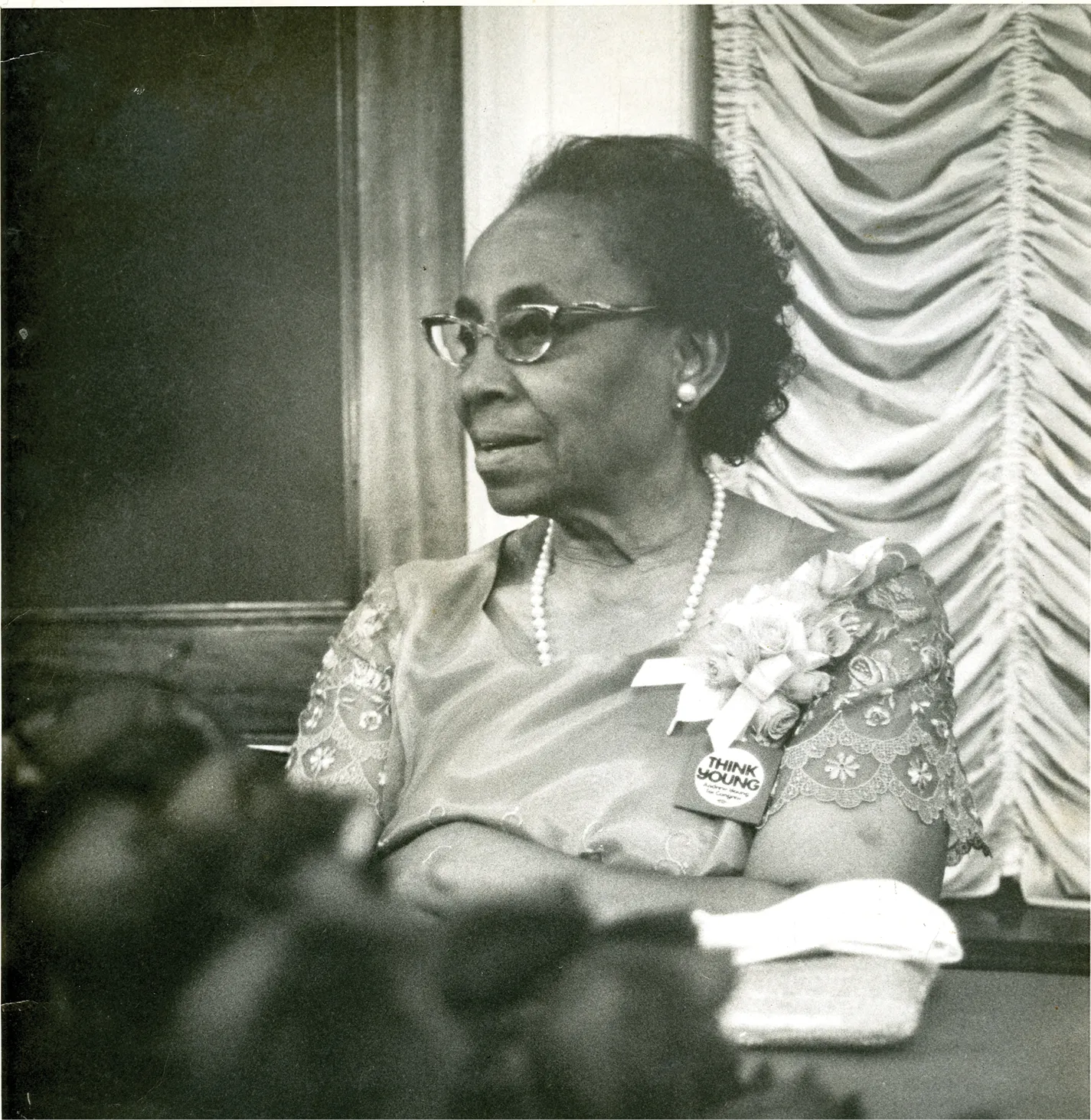
Avery’s archival materials offer intimate glimpses into local and national history. The Craft and Crum family collection, for example, traces the journey of formerly enslaved abolitionists William and Ellen Craft, whose living descendants continue to visit and enrich the archive with new material.
“Our mission is to cultivate, so we really like to think about building community, giving community members tools they would need to preserve their own communities and collect stories from their own communities as well,” says Butler.
Other items, like Ain’t You Got a Right to the Tree of Life?, a book filled with photographs of Johns Islanders from the late 1800s through 1960s, have helped recover names and stories. For visitors with ties to the area, flipping through its pages can be a powerful experience as they recognize people in the photos and connect with the community’s shared history.
“It’s a hard job, but a deeply fulfilling one because I’m home,” says Butler, who is from Johns Island. “My impact is at home. These are people I know. They trust me, so it just means a lot to me that I get to lead this place.”
Many items in the archives prompt emotional responses in visitors, says Butler, including yearbooks, where people often find friends and family members, and the 19th century classroom replica, which evokes memories and invites reflection.

Mayo views archival work as a way to educate outside a traditional classroom. This approach extends into community programs and offerings, including the Dr. Conseula Francis Reading Circle, which Mayo facilitates.
Open to students, faculty, staff and community members, this monthly book discussion honors the late Conseula Francis, associate provost and professor of English and African American Studies. The Reading Circle celebrates its 10-year anniversary in 2026.
Other Avery community events include lectures, the annual Avery Family Reunion, Southern Sonics and more. Through all its iterations, Avery continues to play an essential role in the community.
“The Avery is where I found my people,” says Washington, “a community that believed in me, supported me and helped me grow not just as a student but as a person. Being part of this space has shown me what it means to belong to something meaningful.”

The Avery has accomplished a lot in its 40 years as a research center and 160 years as an educational space, but Butler sees even more ahead. She envisions Avery as the go-to place to learn about the African diaspora on this side of the Atlantic.
And she hopes to expand what Avery can offer visitors and students.
Revitalizing the two-story building next to Avery, which used to house teachers, she says could lead to a residency for scholars, researchers and artists who want to stay on the grounds.
“Having them right here in the heart of it, I think changes the way people work, write and create,” she says. “Archives aren’t just what’s in the box. It’s the people – librarians, archivists, curators, artists, researchers – who make sense of those stories. That’s what makes the boxes valuable.”
The chance to engage with a space so layered in history offers a unique lens for reflection and creative inquiry.
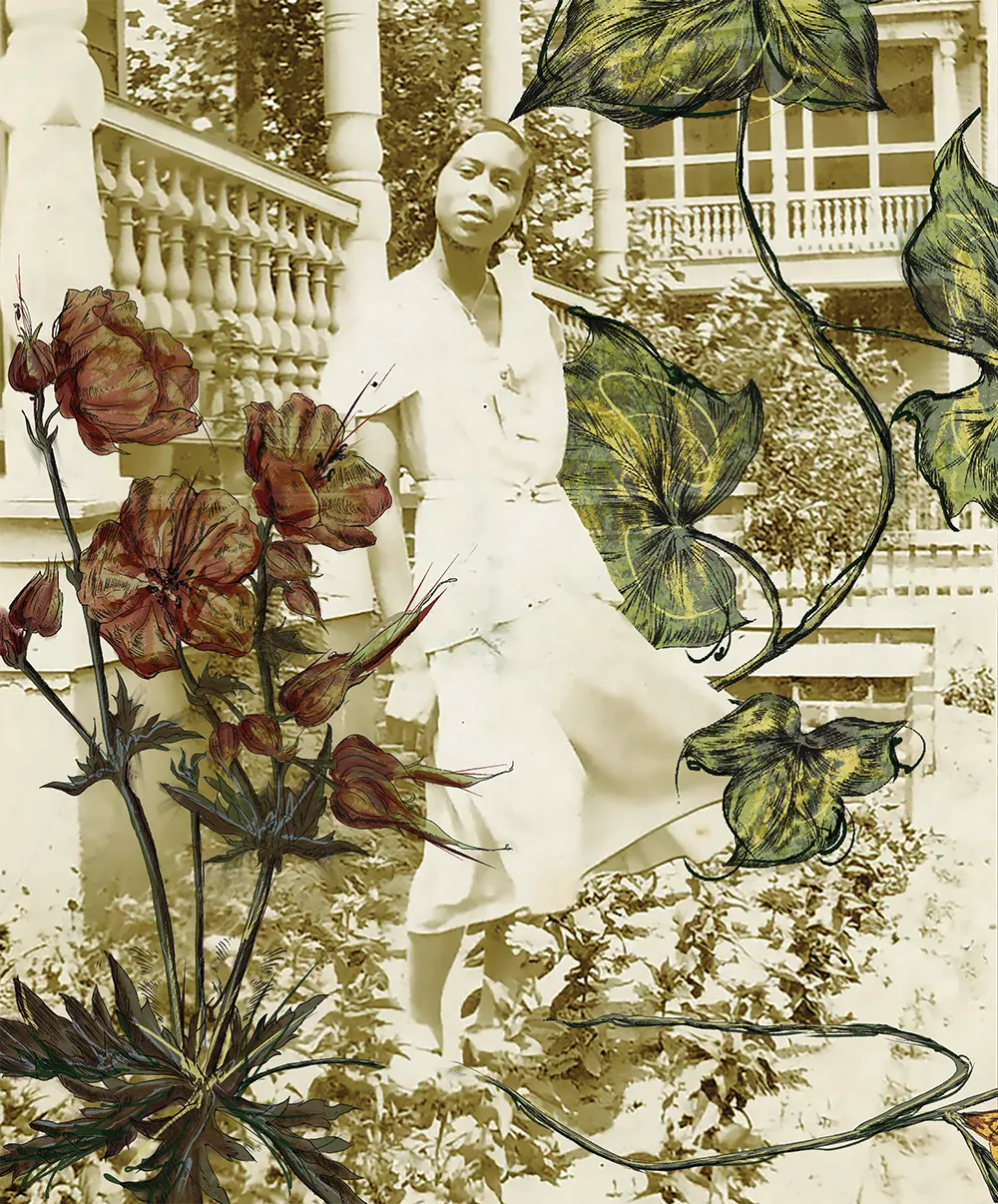
“There’s this really beautiful photo in the archives of a young lady standing in the garden,” she says. “I look at it and wonder what if an artist saw that? Would they try to recreate the garden? Would they just want to take in the space?”
She also wants to continue building students’ connections to the Caribbean and West Africa through opportunities to research and study abroad.
“I hope we can start sending students back into the diaspora, so they can think about what the archives are doing in London. What are the archives doing in South Africa? How can we help those in Barbados? Because we already know what’s possible. We’ve seen it in South Carolina. How can we now help these other communities?”
For many students, the resources at Avery have already launched them on a lifelong journey of discovery and purpose.
“Avery’s legacy lives in the people they have helped,” says Washington. “It’s a place that has always poured into me, believed in me and reminded me that history is living.”

Mr. Hospitality

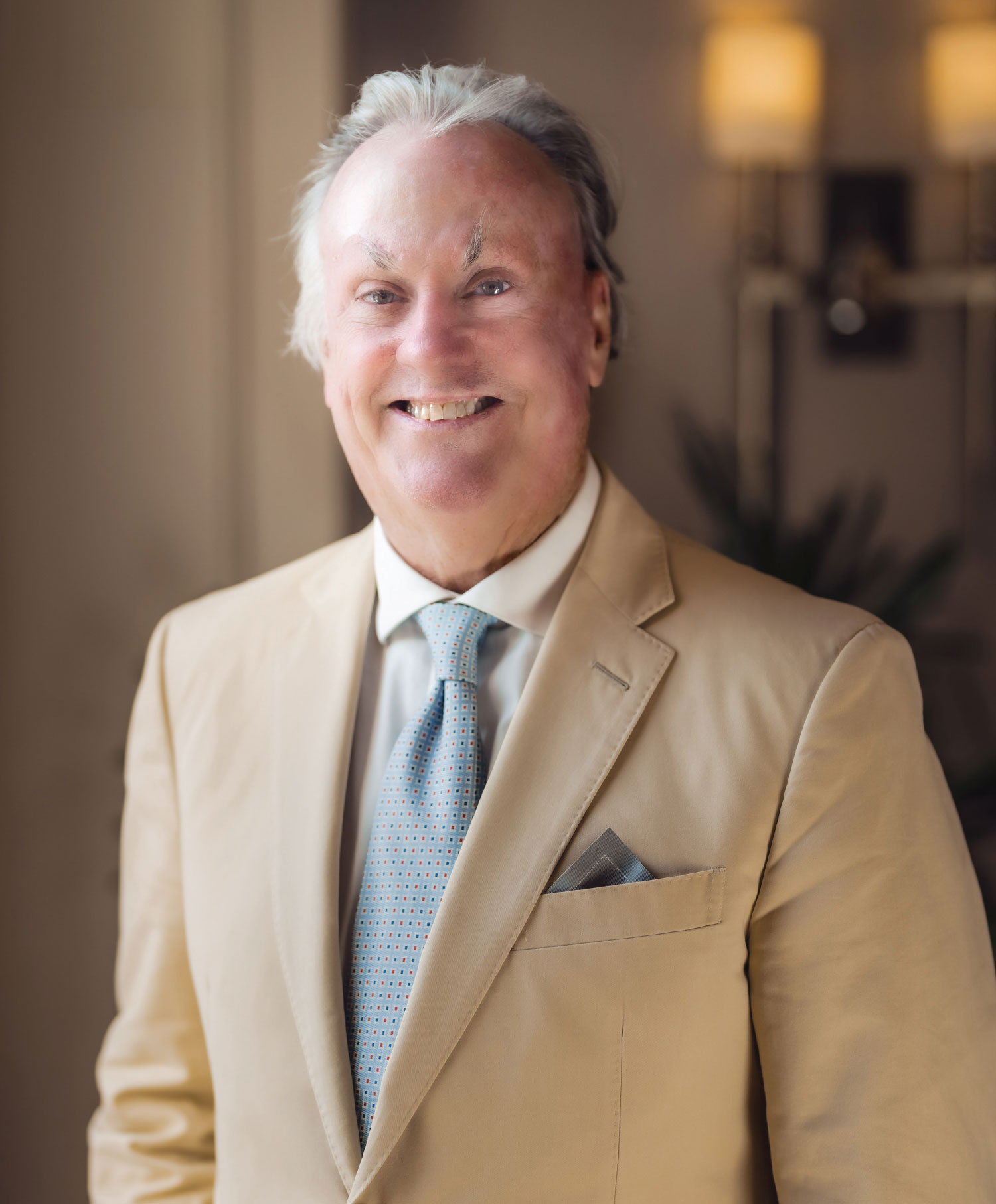
“It’s always a joy to brag on my city,” he says. “People love to hear stories, and I love building and promoting Charleston.”
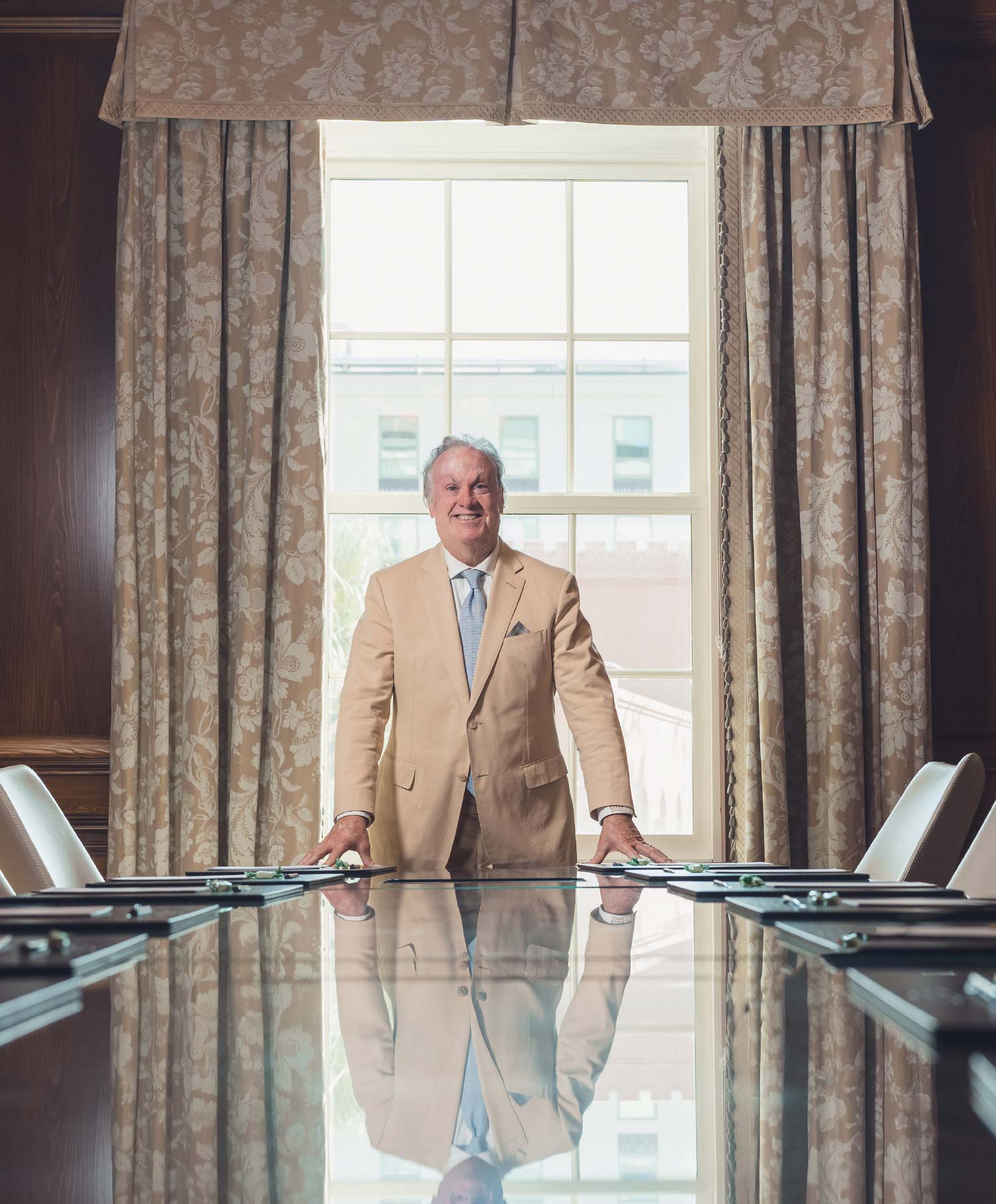
As one of the top tourist destinations in the world, it only makes sense that the city has a world-class hospitality school, so in collaboration with College of Charleston President Andrew T. Hsu, Bennett is funding the creation of the Michael and Amy Bennett School of Hospitality and Tourism Management – the first named school at the College.
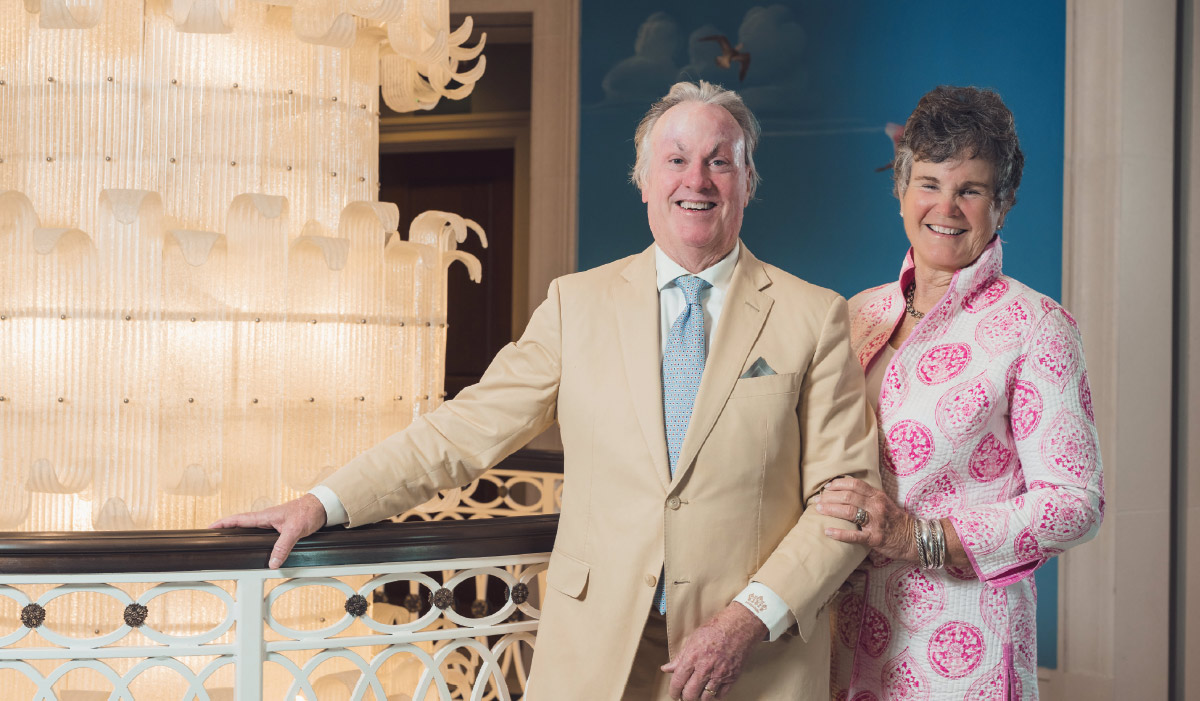
“Charleston is the most hospitable city in America, so there should be a school of hospitality that reflects that,” says Bennett, whose wife, Amy ’82 – whom he met when she was leading a quail hunt – is a CofC alum, as is son Jack ’16, who now heads up Bennett Hospitality with Bennett’s sister, Kim Bennett Brown, one of the founding members of the company. “It really should be the biggest thing at the College of Charleston.”
For Hsu, Bennett’s transformational gift marks a defining moment for the university and its business programs.
“With Charleston’s long and storied tradition as one of the world’s great hospitality and tourism destinations, there is no better home for a top-tier program studying this dynamic, multibillion-dollar industry,” says Hsu. “Michael got his start as a student working at the College, an experience that helped launch his extraordinarily successful career, and it is deeply meaningful to see him invest in future students who may follow in his footsteps.”
Parenting Influence
One such opportunity got Bennett and his brother out of school to raise sunken boats in Charleston Harbor. His father figured out how to raise the boats using inner tubes. They’d tie 50 of them around the vessel and go back with an air hose to fill them up. When the boat reached the surface, they would start pumping out the water. Once they got the boat to shore, the team would get the boat back in shape and ready for sale.
“Dad worked tirelessly,” says Bennett, adding that his father also owned a vehicle repair business. “He found opportunities when others saw none.”
Initially, Bennett’s mother held Sunday family dinners, but the children’s sports often conflicted with suppertime. She moved the supper to Thursdays and welcomed whoever was around to join them – from congressmen to bricklayers. She brought Charleston hospitality to life.
Bennett’s parents gave him a solid foundation and the confidence to take the long view when looking for opportunities, and his education came in traditional and nontraditional ways. He took courses at the University of South Carolina and at the College, but he didn’t feel compelled to complete a degree – he just took the courses he felt he needed.

“I helped renovate buildings primarily on Glebe Street, and what I learned has stuck with me,” he says. “I remember that I would practice swinging the hammer before hitting the nail, and a member of the crew said, ‘Hit it, Son. We aren’t building a piano.’”
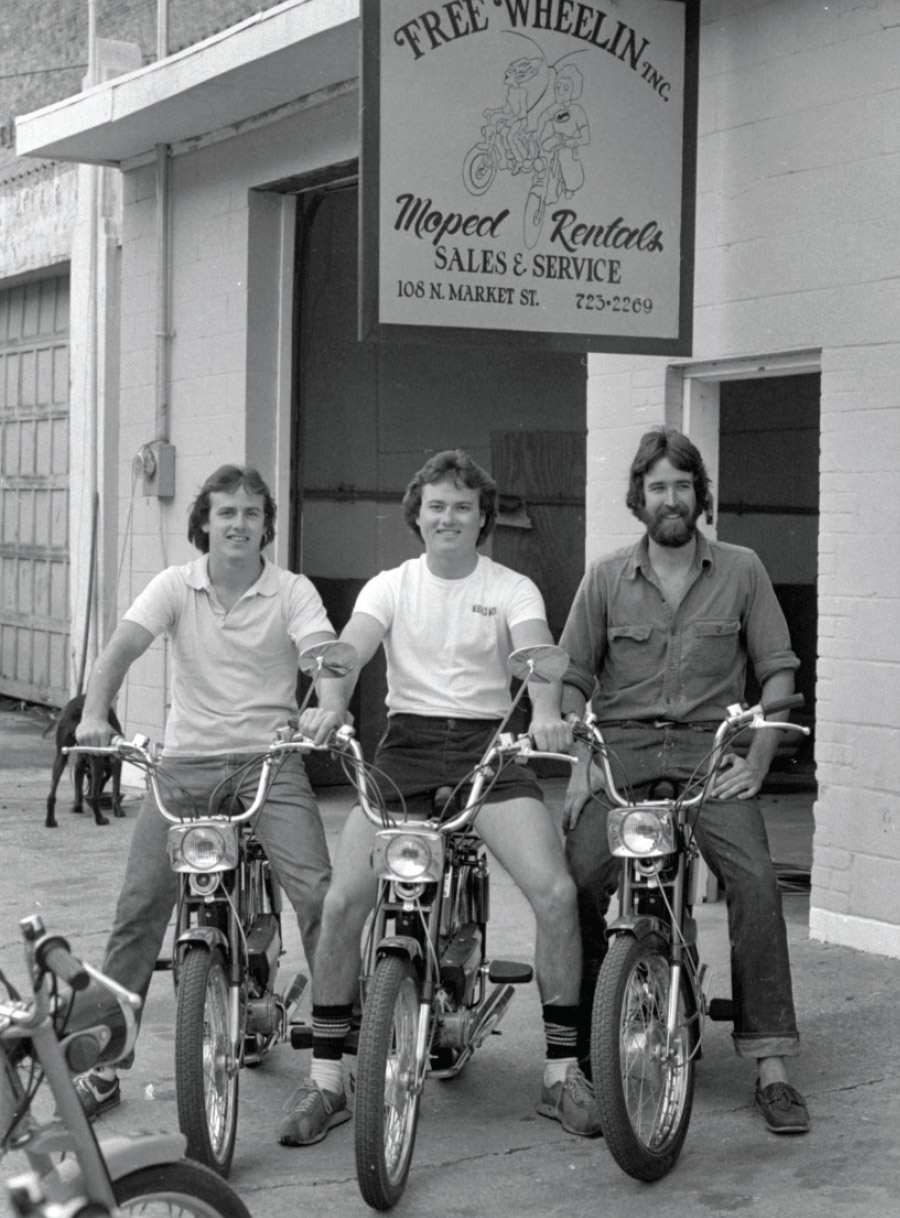
One day Bennett saw American Cruise Lines stop in the harbor and parlayed his way into a job as a deckhand, which gave him insight into what would become his life’s work – hospitality. He learned the importance of making people feel special so they return. He also saw how all the little towns along the East Coast had inns, taverns, and bike and moped rentals. In Charleston, he set up his own bike and moped rental, Free Wheelin’, which proved to be a huge success, but Bennett wasn’t comfortable with the seasonality of the business. After two years, he sold Free Wheelin’ and moved on to home renovations.
Building Tourism
“Downtown Charleston was poor, but we didn’t know it because we had all these beautiful old buildings and the water,” says Bennett. “What we didn’t have was much in the way of jobs. Joe Riley created the hospitality industry that we know today and the many jobs that came about because of tourism.”
Right with Riley was then-College of Charleston President Ted Stern, who was expanding the College (the student population grew from 440 students in 1968 to more than 5,000 in 1978), creating an urgent need for more housing. Bennett’s first venture was buying a place in need of renovation a few blocks from campus that could fit four apartments. Using the rental revenue from that house, Bennett bought the next place to house students and continued his process of acquire, renovate, rent.
When Riley brought annual events to the Holy City, including the Spoleto Festival and the Southeastern Wildlife Exposition, Bennett was in lockstep with him and began to set his sights on hotels.
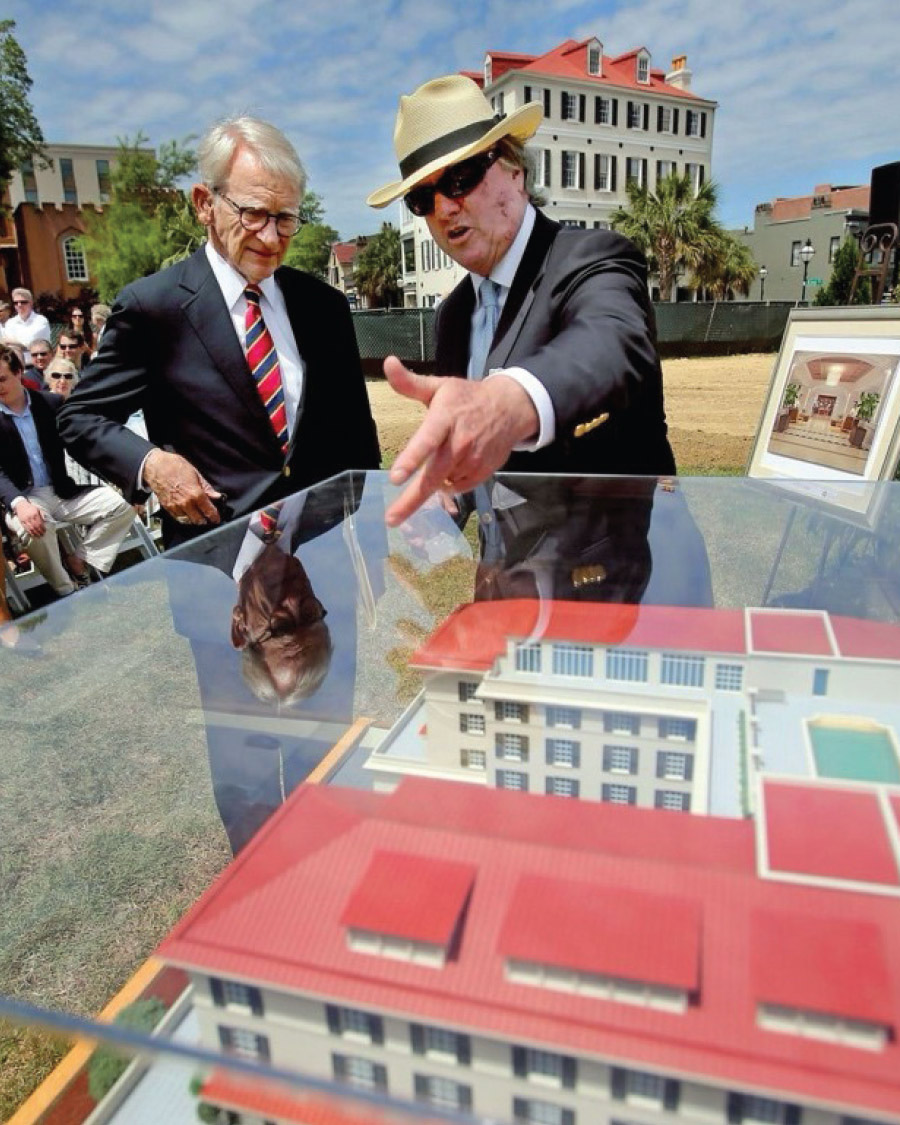
Bennett embraced Riley’s 100-year plan, which centered on preserving the city’s beauty and history while revitalizing its downtown. Riley’s vision fit perfectly with Bennett’s idea of multigenerational wealth – he wanted his properties to be standing and glorious for the next 100 years and beyond so that his investments today generate income for his family for years to come.
“Joe Riley created the renaissance of the last 50 years,” says Bennett. “In the early ’70s, there were few jobs, but Joe Riley revitalized Charleston and attracted the big companies like Boeing, Mercedes Vans and Volvo, just to name a few.”
Giving Back
“It has been my great fortune to watch you create your most remarkable gifts to our city,” says Riley in a letter to Bennett. “And I have watched you from your childhood, as I knew not only you but your wonderful, loving family. The sparkle in your eye, your natural kindness and never-say-die spirit have been a joy to witness. You made this world-class city even more so.”
That natural kindness came through in 2015 after the tragic shooting at the Mother Emanuel AME Church. Bennett knew he had to do something. The day after the shooting, he went to then–College of Charleston President Glenn McConnell’s office and told him he wanted to create the Mother Emanuel AME Church Endowed Scholarship.
“It was pretty spontaneous; it was purely emotional,” says Bennett. “I was so overwhelmed by the forgiveness with which the community handled the shooting that I wanted to do something for these beautiful, forgiving people. The idea of helping the children of the people from Mother Emanuel is moving to me. I know the people I used to work with at the College all those years ago attended Emanuel AME, and if it helps one of their relatives, that would be a beautiful thing.”
Breaking Ground
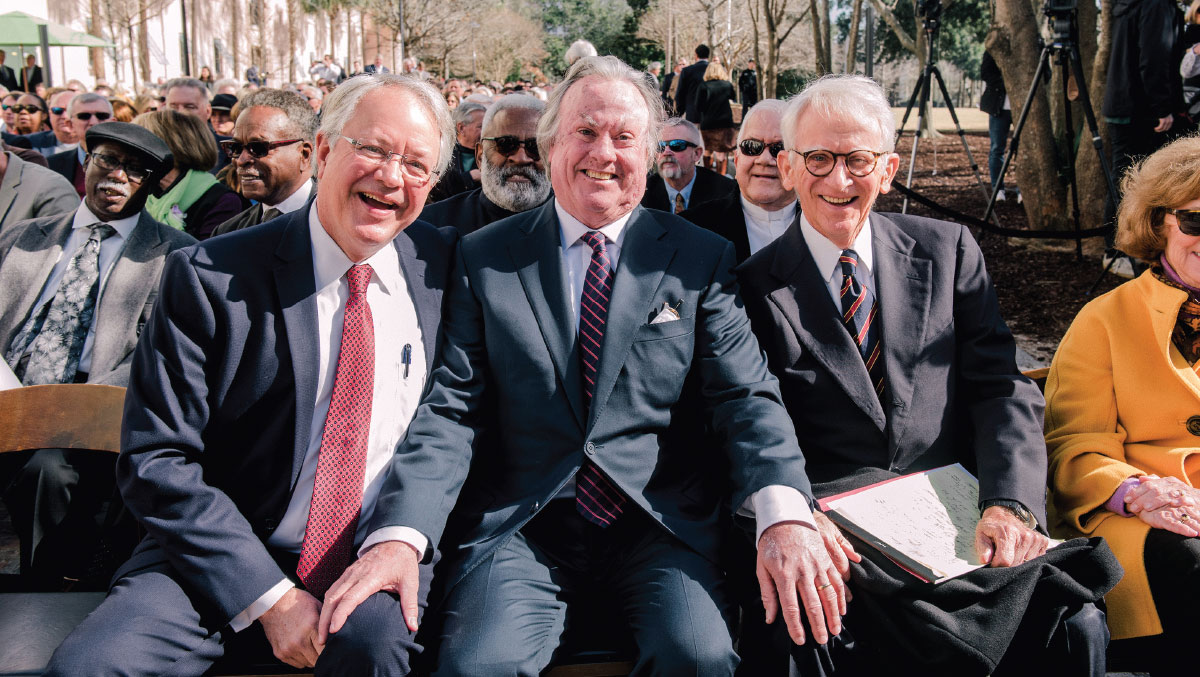
“I gave numerous bank presentations with Mike, and I always told them that I would leave my nonprofit and go work at the hotel because it was a slam dunk,” says Hill. “Back then it was so hard for people to see what we have here, but we were finally successful, and Mike opened a Hampton Inn, which was a new brand back then.”
After opening the Hampton Inn one block from Marion Square on Meeting Street, Bennett snapped up the South Carolina State Arsenal, also known as the Old Citadel, which abuts Marion Square on Meeting Street, and converted it into an Embassy Suites.
The success of these two hotels inspired Bennett to build an heirloom hotel to anchor Marion Square. The site sat across King Street from where his father shined shoes during the Great Depression. The hotel took 20 years from concept to completion, but, as an avid hunter and fisherman, Bennett had learned patience, a quality that has reaped benefits in all aspects of his life.
“It’s been very positive for tourism,” says Hill. “Incoming visitors have no idea that the hotel is new. Mike did a great job making it look like it’s always been there.”
Training Students
Since it opened, Hotel Bennett has won numerous awards. Bennett attributes the awards to the hotel’s philosophy – B Kind. Named in his son Brennan’s memory, B Kind is about being kind to oneself, family, co-workers and guests. For Bennett, making people feel at home, relaxed and enveloped in love and kindness is serious business. He wants everyone who walks through his hotels’ doors to feel the B Kind vibe.
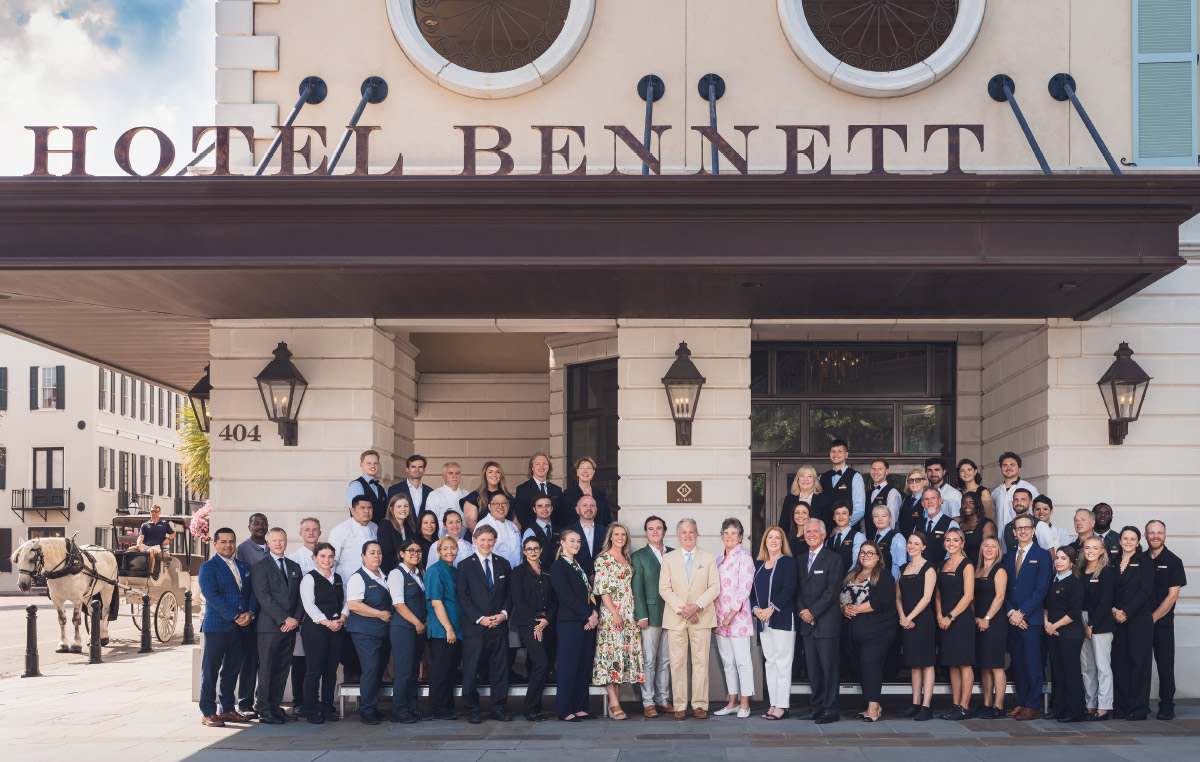
One such exchange in the works is with Dublin City University. Bennett has been bringing students from Ireland for intensive hospitality training for the past 15 years. He introduced President Hsu to the president of Dublin University, and initial discussions have begun.
“Charleston is a living learning lab for our hospitality and tourism management program,” says Schwager. “For more than 25 years, the city has offered our students exceptional internship opportunities, access to world-class resources and meaningful industry connections.”
Connections like the one Bennett has with the College of Charleston will serve as the foundation for the new school.
“Michael’s work ethic, attention to detail and quality will show itself in the school; he has done hospitality in the right way,” adds Schwager. “The school will create the finest hospitality leadership pipeline in the world, and we have Michael Bennett to thank for that.”
Brumby McLeod, associate professor of hospitality and tourism management, worked with Bennett on a project-based learning program with the tall ship Spirit of South Carolina. Through that experience, McLeod got to see just how much Bennett loves Charleston and how the new school will enhance the hospitality and tourism management offering at the College.
“Michael is a brilliant real estate developer whose family business has done great things for the city of Charleston,” says McLeod. “Mr. Bennett is a true service leader, and he does so without fanfare.”
The Michael and Amy Bennett School of Hospitality and Tourism Management will not only raise the stature of the program as the first named school at the College, but also create momentum for the institution and the city.
“Mike’s vision and generosity will ensure that the College of Charleston stands among the very best universities in the nation for educating the next generation of leaders in hospitality and tourism management,” says Hsu.
Aquatic Symbiosis
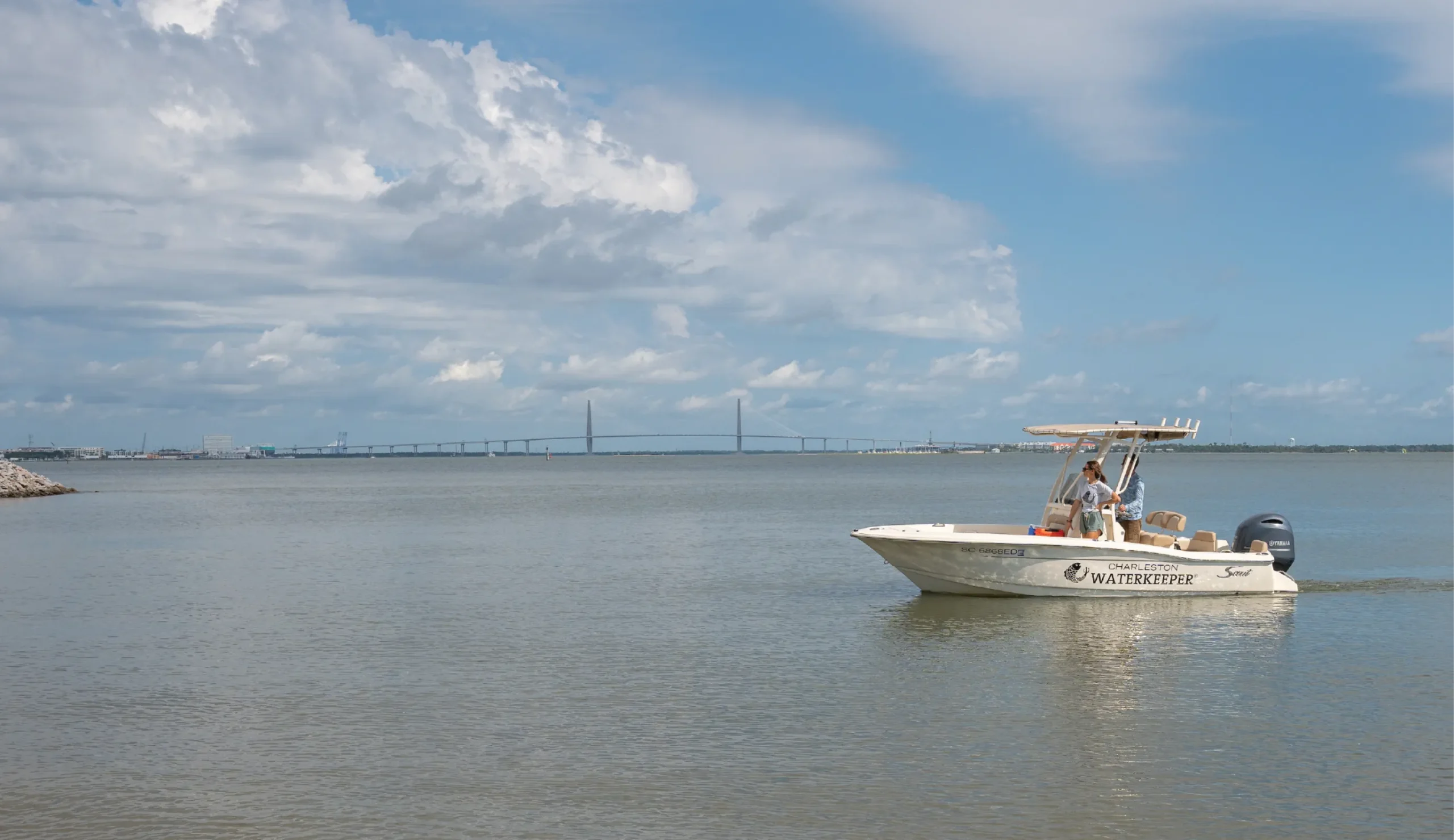
id-tide on a Wednesday morning, a calm Charleston harbor in front of Mt. Pleasant’s Alhambra Hall beckons a quick paddleboard session. The sun glints off the water in tinfoil-like shimmer as pelicans swoop down on prehistoric wings, gliding so impossibly low their bellies almost touch the glassy surface. Twenty minutes paddling out and 20 minutes back is the perfect way to start the workday, and enjoying moments like this is one of the perks of living in a city surrounded by – and yes, sometimes inundated by – water. A shrimp boat chugging out from Shem Creek is the only other traffic until a small motorboat slowly cruises by, careful not to cause a big wake. I wave, recognizing the crew – Andrew Wunderley ’05 (M.S.), Charleston Waterkeeper, and his team, headed out on “Water Quality Wednesday,” the day they go collect water samples at various testing points to ensure our local waterways are safe for swimming, fishing and people like me, who try not to take a dunk while paddleboarding but aren’t always successful.
“Come join us one morning,” Wunderley says as they boat off on their sampling mission. It’s an invitation he issues earnestly and widely, encouraging people from the broader community, especially College of Charleston students, to dip their hands in and learn more about our watery world and about his small nonprofit’s mission to “protect, defend and restore the health and integrity of Charleston’s waterways for people and nature.” In fact, Charleston Waterkeeper’s ongoing engagement with the College of Charleston student body and faculty has been a key part of the nonprofit’s growth and success since its founding by Cyrus Buffum ’06 in 2009.
“The College of Charleston has been instrumental every step of the way,” says Wunderley, a former competitive swimmer from Ohio who came to the Lowcountry in the mid-ʼ90s to coach swimming. Wunderley earned his master’s in environmental studies at CofC. An environmental law class inspired him to pursue his law degree from the Charleston School of Law. After law school, he clerked for the Court of Appeals and then for a judge for a few years and was looking for ways to combine his interests in environmental advocacy and law when a posting on the Charleston School of Law job board caught his eye.
“The opening was for legal affairs coordinator for Charleston Waterkeeper, and the posting was so ridiculously irreverent – something about low pay, ‘but hey, a boat is your office!’ – it was intriguing,” he recalls. Wunderley had never heard of Charleston Waterkeeper at the time, but he happened upon a story about Buffum and his nascent organization in this very magazine soon after seeing the posting. “So that made it feel legit and further intrigued me,” he says. “I realized the concept of a Waterkeeper brings together all my personal passions – swimming, surfing and my fundamental belief in the public’s right to clean water – so I applied.”
Though the global Waterkeeper Alliance provides a resource network for its far-flung affiliates, Charleston Waterkeeper, like all individual Waterkeepers around the country, operates as a stand-alone nonprofit, and when Wunderley was first introduced to it, “it was super-duper startup. I think I sat on an overturned recycling crate for my interview,” he recalls. Buffum was the only employee, “and may have still been only part time, and the board of directors had just been cobbled together.” That scrappiness, and what Wunderley saw as Charleston Waterkeeper’s huge growth potential, was much of the appeal. “I couldn’t get it out of my head. It just felt like something I had to take a swing at. I knew if I didn’t try it, I’d always regret it.” Wunderley joined as program director in 2011, and after Buffum stepped away in 2014, he has been at the organization’s helm – and its boat’s helm – since 2015.
“Waterkeeper uniquely uses science, the law and our deep knowledge of local waterways to be effective watchdogs and stewards for clean waterways,” explains Wunderley. “State law is clear that our marshes, rivers and beaches are part of the public trust – these are ours, they belong to everyone. We stand up to ensure existing environmental regulations are enforced.”
Do It Top-Notch
But enforcing regulations and watchdogging water quality is a huge task for a region surrounded by water. “Early on we were strategizing about how to build out our mission-driven work, and to begin doing water quality monitoring like many other Waterkeepers do,” says Wunderley. “So I thought, Let’s try to connect with the College on this.”
He arranged a meeting with Tim Callahan – then-chair of the geology and environmental geosciences department and director of the graduate program in environmental and sustainability studies – and Vijay Vulava, geology professor and current chair of the department, both of whom Wunderley knew from his master’s program.
“I went in all nervous,” he recalls. “I had my salesman hat on, my pitch prepared, and I’m thinking, OK, I’ve got to convince these guys that we need students and laboratory resources, yadda yadda. And, maybe three minutes into my spiel, Tim says, ‘I’ve got the perfect student. Her name’s Cheryl, and she’s in the Peace Corps Masters International Program. She’ll be starting with you next week.’”
Cheryl Carmack-Smith ’14 came to the College after studying biology at the University of Alabama, Birmingham. She loved lab work and wanted to continue in the sciences but also wanted real-world contact with people in the field.
“I had always been interested in water quality and was drawn to the College’s master’s program because it was so interdisciplinary with strong research focus on water quality, but also because it was so connected to the community,” says Carmack-Smith, noting the College’s Peace Corps Masters International Program required a community service internship. As a bonus, her two-year internship was funded – something the fledgling Waterkeeper otherwise wouldn’t have been able to afford.
For her master’s thesis under the direction of Vulava, Carmack-Smith built out Waterkeeper’s signature water quality monitoring program, beginning with 12 testing sites (now 20). She established the sampling and testing protocols, looking at fecal enterococcus contamination and other water hazards, “ensuring we did it top-notch,” she says. Working with Vulava, she set up a state-approved biosafety Level-2 lab at the College, where samples are tested and then data is submitted to the South Carolina Department of Environmental Services and the U.S. Environmental Protection Agency.
“We devised the program, and I convinced my department that it was worthwhile, so we made the resources happen,” says Vulava, who, given his background in environmental geochemistry and pollution, was familiar with similar water quality methodology for freshwater. The timing was opportune: The Department of Geology and Environmental Geosciences’ Hydrochemistry Research Laboratory was moving to the new School of Natural and Environmental Sciences building on Calhoun Street, which meant he could request additional space as well as a new biosafety cabinet that uses negative pressure to protect from bacterial exposure; additional incubators; and a mini autoclave, all of which Charleston Waterkeeper has 24/7 access to.
“The College itself, not just the geology department, saw the value in this and made it work,” says Vulava, a member of Waterkeeper’s board of directors since 2014. “We’re giving students the hands-on experiential knowledge of how environmental contaminants impact us. The impacts are partly geological, as that’s how runoff happens, but it’s also biological and a human health issue.”
His undergraduate and graduate students get to take part in the Waterkeeper field sampling and run the samples in the lab. Carmack-Smith, who became the full-time program director for Waterkeeper in 2014, now holds an adjunct appointment at CofC, teaches students in various classes, gives them leads on fieldwork opportunities and advises those doing independent research projects.
“I get to train them in how to work in a certified lab and give them skills and standard methods that translate to any certified lab,” she says. “It always tickles me that we’re doing microbiology work in a geology lab, but I think it’s so cool for geology students to see that.”
Adds Vulava: “They learn how the kitchen works; they’re not just seeing the final meal. Because of the sophisticated lab skills they acquire, these students are getting hired by our local utilities and local governments right away.”
And for Charleston Waterkeeper, access to the College’s lab and its guidance has been a game changer. Paying a commercial lab to run their samples would be too expensive for the small organization.
“If Dr. Callahan and Dr. Vulava had not connected us to Cheryl, I’m not sure where we would be,” says Wunderley. “The scientific rigor and veracity of the data she helped us create is so strong that we’ve built an organization around it. Our weekly water quality Swim Alert reports are what we are known for – people ask, ‘Is it safe to go swimming?’ And the answer is, ‘Ask Charleston Waterkeeper.’”
Carmack-Smith also created Waterkeeper’s expanding Creek Watcher program (like Adopt-a-Highway, but for creeks), which mobilizes and trains volunteers to monitor waterways near them. Creek Watchers measure air temperature, water temperature, pH, dissolved oxygen, salinity and water clarity, and this data establishes a baseline for waterway health month to month, making it possible for Waterkeeper to identify and act when levels are abnormal. After seeing their success, the South Carolina Department of Environmental Services absorbed Waterkeeper’s protocols into a statewide Adopt-a-Creek program and tapped Carmack-Smith to be one of the early trainers for coastal counties.
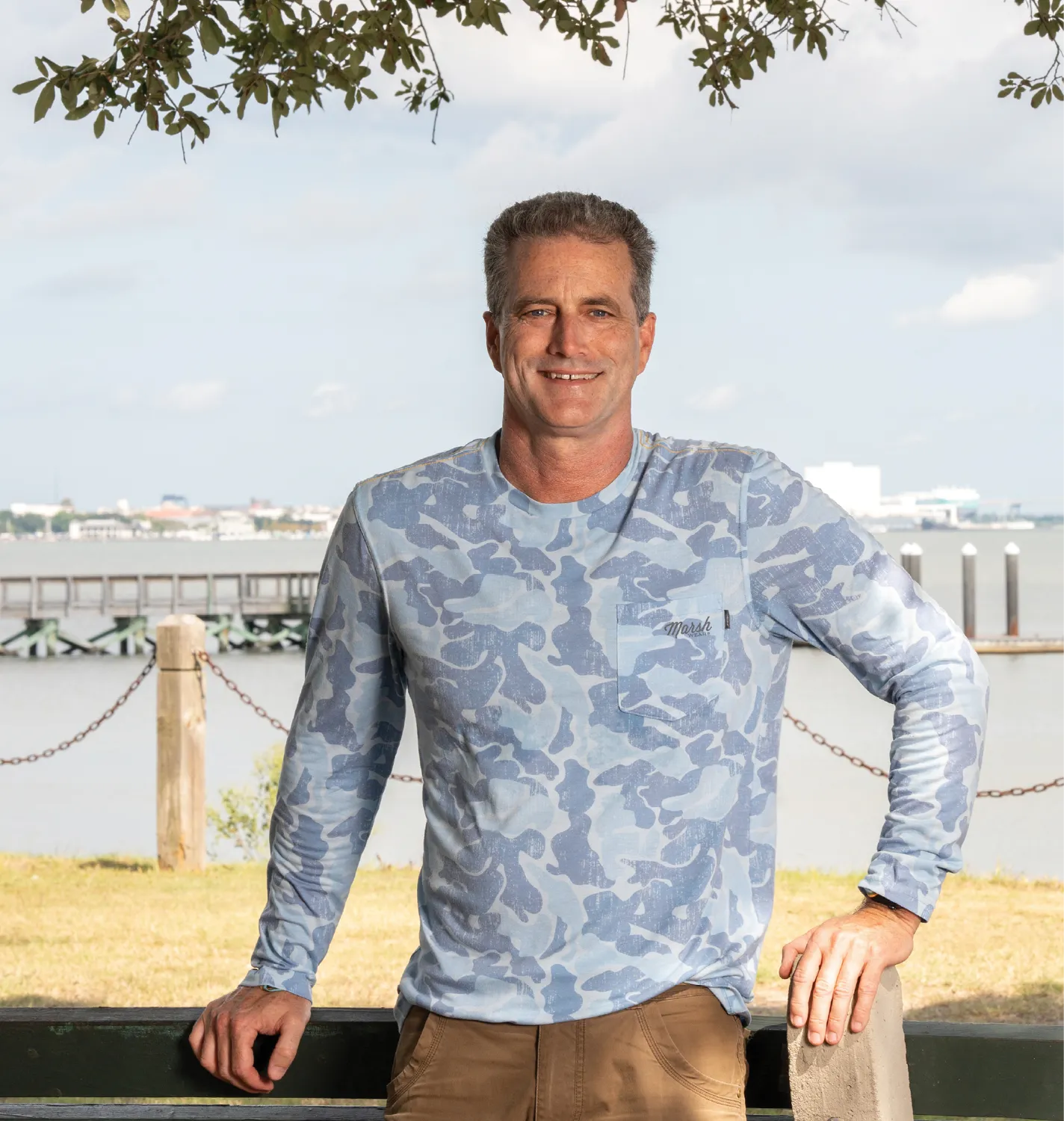
Mounting Microplastics Concerns
The Creek Watcher program is one of many volunteer engagement opportunities with Waterkeeper – more than 1,700 people each year, many of them College of Charleston students, participate in cleanups, oyster reef builds and water quality testing. The nonprofit rallies the public “to get their feet wet and hands dirty for clean water,” says Wunderley. Given the region’s rapid growth converging with rapidly accelerating climate change impacts, “there’s no shortage of places and issues for us to monitor,” he adds. “The science is clear: What we do on land affects our water. When there’s 20% impervious surface cover in the watershed, you see waterway impacts.”
Currently, one of the biggest impacts and concerns for Charleston Waterkeeper involves plastic pollution and microplastics, and once again, the nonprofit’s work in studying and tracking microplastics in our waterways has been directly tied to its ongoing partnership with the College. Britney Prebis ’24 began interning with Waterkeeper in 2022 as a graduate student in the College’s Environmental and Sustainability Studies Program. She worked with her adviser Barbara Beckingham, director of EVSS, to create a Waterkeeper plastics monitoring program much like Carmack-Smith’s water quality one.
A focus on plastic pollution wasn’t new to Waterkeeper. In 2016, the nonprofit used what limited data it had to successfully push for a single-use plastics ban in seven of our coastal communities, and after a 2019 spill of nurdles – tiny pellets used in plastics manufacturing – in Charleston Harbor, it successfully lobbied the South Carolina Senate to pass an anti-plastic pellet bill and prevailed in a federal lawsuit, in partnership with the Coastal Conservation League and the Southern Environmental Law Center, to hold the nurdle polluter, Frontier Logistics, accountable. Despite this track record, the nonprofit needed a more systematic approach to microplastics data collection and identifying microplastics concentrations in the Charleston watershed, which they can then use to drive policy change.
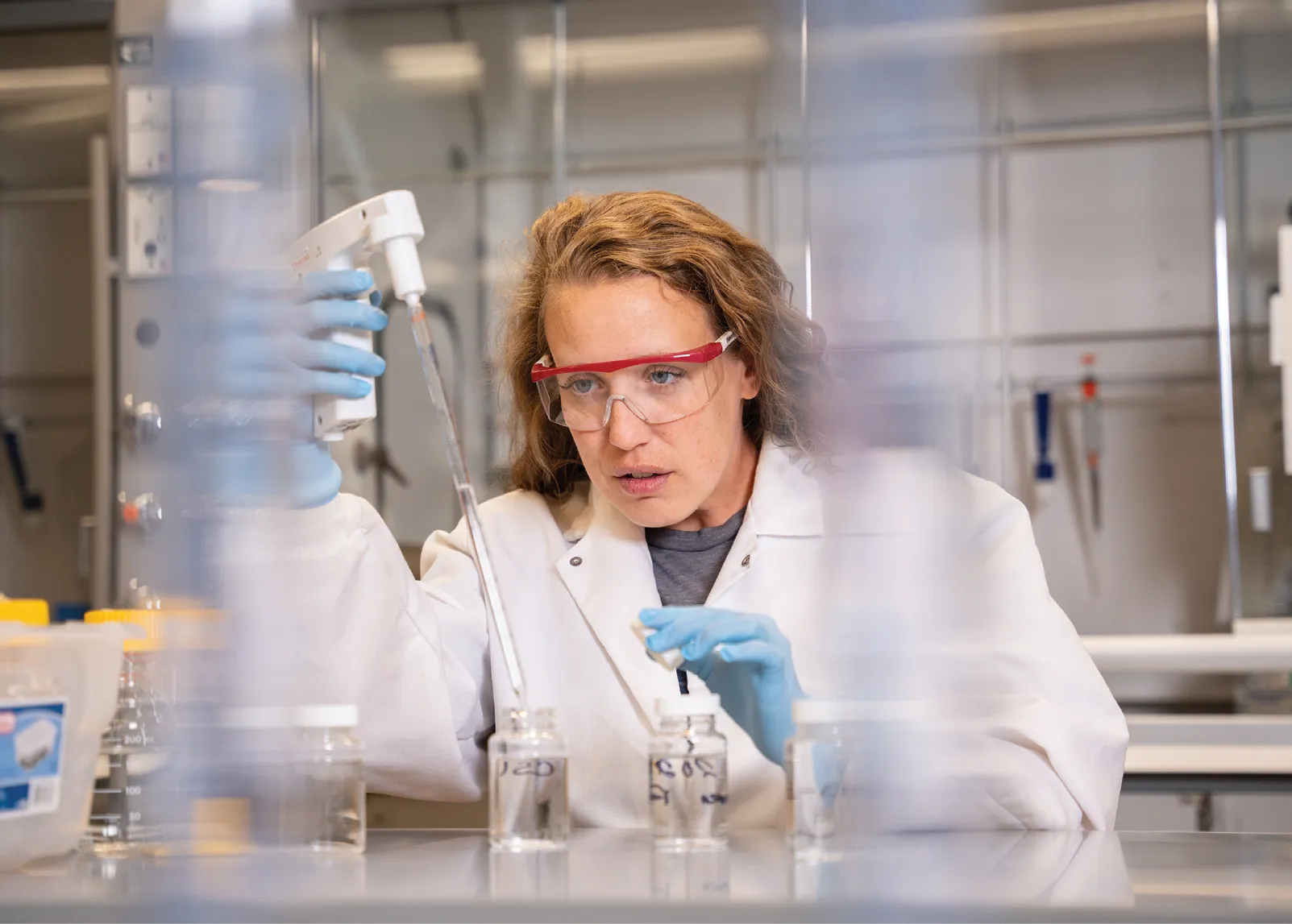
Charleston Waterkeeper has benefited immensely from partnering with graduate students from the College, notes Wunderley. “It’s strategic for us as a small nonprofit to have longer-term commitments from our interns. Thanks to people like Lucy Davis, Dr. Callahan and Dr. Beckingham, we get paired with great students, and then we invest in them. When you have a graduate thesis on the line, students are motivated. It helps that we offer a great mix of academic research and real-world application – everyone has vested interest.”
Charleston Waterkeeper has had an equally excellent track record with CofC undergraduates through the Bonner Leadership Program, a four-year, service-based scholarship program. Bonner Leaders commit to interning with a local nonprofit for three years, and those who have interned with Charleston Waterkeeper have been integral to developing and staffing their initiatives.
Brittnany Graham ’20 worked with Carmack-Smith on water quality testing, waterway cleanups and early microplastics initiatives during her years as a marine biology undergrad and Bonner Leader and now is pursuing her master’s in wildlife and fisheries biology at the University of Tennessee. “Waterkeeper set me up for success,” says Graham. “The data management experience I got at Waterkeeper was invaluable, and it taught me how to use data to guide public policy and long-term waterway management implications.”
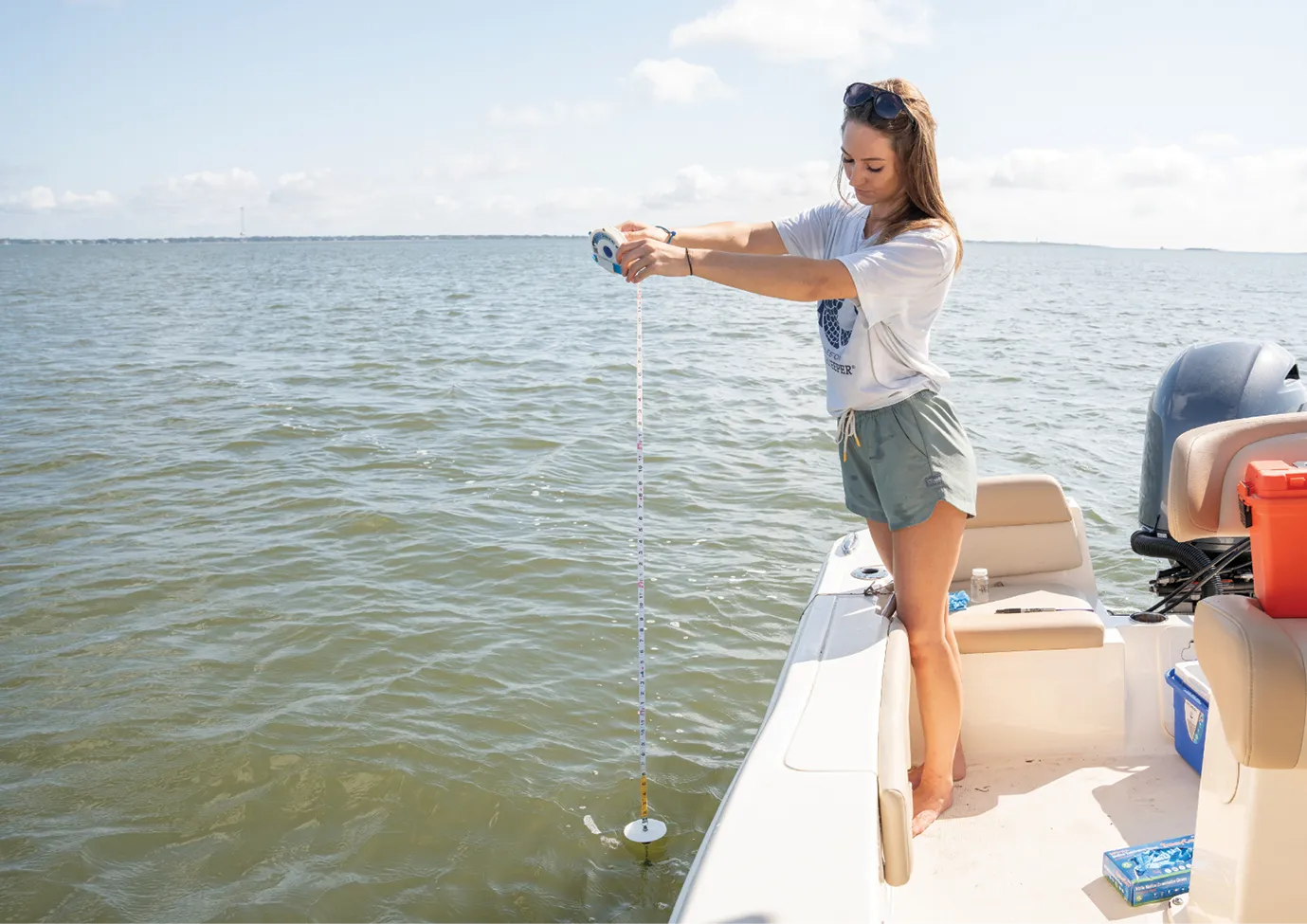
Wunderley would take it a step further, acknowledging that, yes, community volunteer effort is invaluable to Waterkeeper’s success, but the College has been and continues to be the linchpin.
“They’re that key piece that has provided the right level of support, whether it’s a connection to a student or intern or the use of laboratory resources, that allows something to bloom or amplify,” he says. “There’s mutual respect – the professors see the level of work we’re doing, and because the College is a university that’s very aware of the community it belongs to and represents, the faculty want to encourage that, and these partnerships develop. I can’t imagine doing this work without the College of Charleston.”
Impact
A Rare Gift
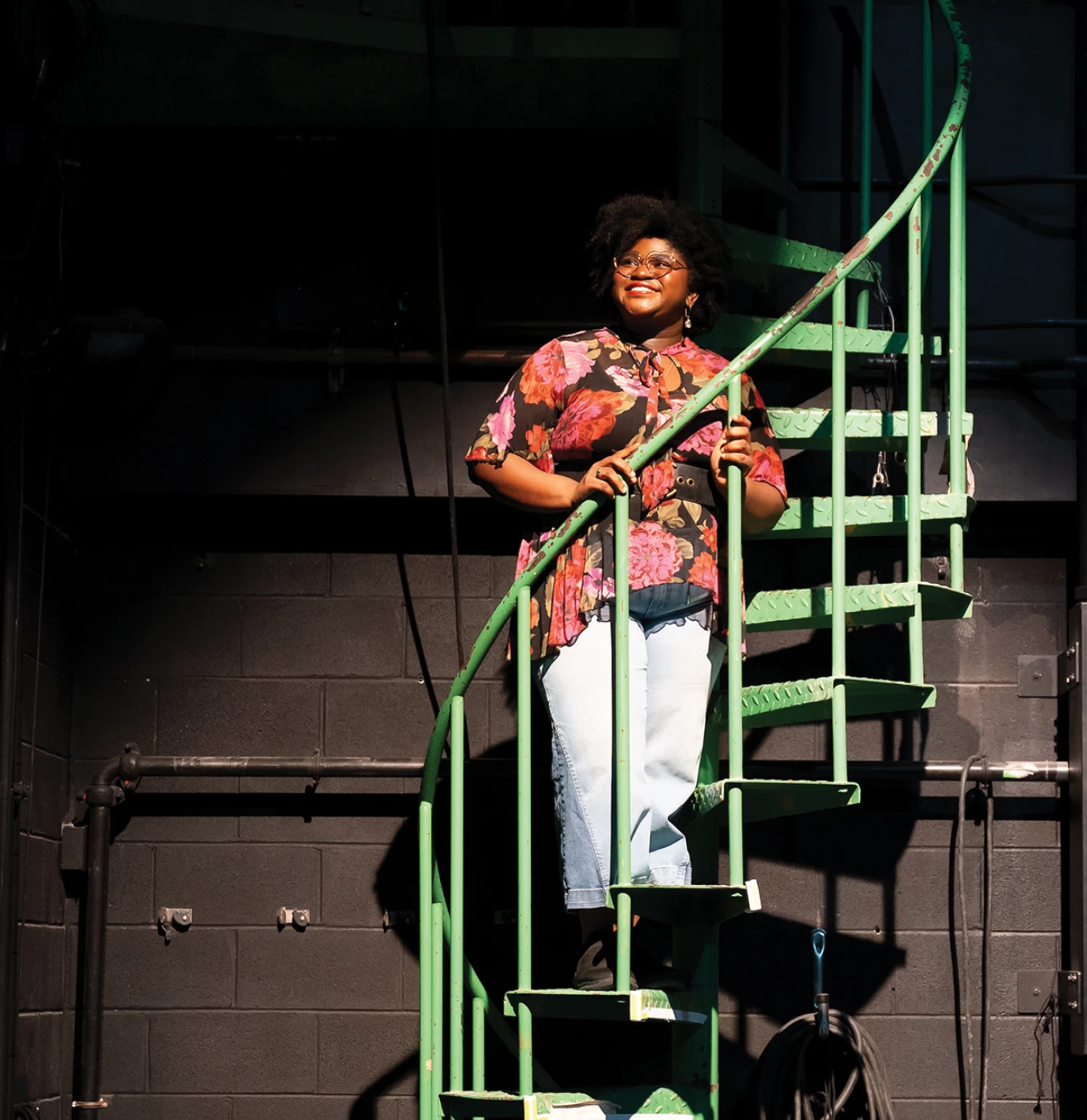
“My mom finally intervened and told me that I can keep this pain or turn it into a passion,” says Brown. “Her words were like being doused with cold water. I suddenly woke up to the fact that I had a household of people struggling with their pain.”
Brown hoped to create a scholarship for students like her who have lost a parent or guardian. “I spent two years trying to get the scholarship off the ground, writing letters, speaking at meetings, pitching at coffee shops,” she says. “Nothing landed.”
Then, at her senior honors night, Brown’s Williston, S.C., community surprised her with the Change of Cadence Scholarship and handed her responsibility of the scholarship’s management. Honored by her community, Brown made it her mission to get funding for the next Change of Cadence scholar.
Brown’s mother taught her the importance of scholarships, and at CofC, she applied for and received the Swanson Family Endowed Scholarship, the Charles C. Swanson Memorial Scholarship and the Mary Kay Holloway Jollensten Memorial Endowed Scholarship, among others.
Supported by scholarships, Brown worked campus jobs to fund the Change of Cadence Scholarship – a challenge for most, but not for Brown. Fortunately, she had banked some credit hours through a dual-enrollment program that allowed her to earn an associate degree by her senior year of high school.
The summer before coming to CofC, Brown joined the Speedy Consolidation and Transition program, which helped her adapt to college.
“Not everything was like I envisioned, so it was helpful to learn the realities of collegiate life,” says Brown. “The College can be intimidating. Coming from a very small town, I didn’t know how to establish a presence.”
Currently a theatre major in the Honors College, she plans to pursue the College’s Master of the Arts of Teaching in the performing arts. Brown has been involved in all aspects of theater, from stagehand to costume crew.
“Cadence is really thoughtful about everything she does,” says Laura Manning Turner, associate professor of theatre and dance. “One of her goals as an educator is to ensure that everybody feels included, from students with physical limitations to those with cognitive issues. She has a heart for all people.”
Making a difference is in Brown’s DNA and includes volunteering in the educational enrichment programs Kids on Point and Charleston Promise Neighborhood.
“Volunteering helps me feel that the College is not just where I’m going to school; it is where I currently live,” she says.
Brown stays busy with extracurriculars but still prioritizes her studies. As a senior, she has already reached the maximum graduate credit hours she can apply to the M.A.T.
At the same time, Brown keeps her eye on awarding the Change of Cadence Scholarship, which has supported four students in Barnwell and Aiken counties since she first received it in 2023.
“I’ve always wanted to be someone who gives back,” she explains. “Now I’m in a position where I can do that. I know it’s not ideal for me to give a scholarship when I am struggling to pay for school, but the connections and difference the scholarship is making are not possible otherwise.”
Timely Reinforcement

Enter the Schoen Foundation, which established the Schoen Foundation Endowed Program Fund for Veteran and Military Students. The influx of $1.1 million has been a game changer. Not only have the program’s resources expanded, but it also has the means to continue its work in perpetuity.
As part of the family-led foundation, Kelsey Sutton ’14 wanted to give back to her alma mater, which had a profound impact on her just as her grandfather’s service in the U.S. Marines had on him and his wife. William and Sharon Schoen established the foundation to support veterans by advancing their education.
“Public service is a gift our veterans and military personnel have given, and our foundation wants to ensure they have access to quality education,” says Sutton. “We are honored and humbled to be able to help make the next step easier for people who have given so much for our country.
“The goals of Veteran and Military Student Services closely align with our mission and my grandfather’s story,” she adds. “Nontraditional students, like returning veterans and military students, often face added responsibilities that can challenge their success. We hope the Schoen Foundation’s support helps them overcome these challenges and thrive in this next chapter.”
The generosity of the Schoen Foundation will be giving veteran and military students access to numerous resources to help them succeed.
The College is also the first university in the Southeast to partner with Warrior Scholars, a nonprofit that holds a summer academic boot camp for veteran and military students.
“We start with the STEM boot camp because we have a lot of students focusing on computer science and engineering,” says Jessica Wilkes, director of Veteran and Military Student Services. “The boot camp is a great way to get ready to be a student again. There are so many differences between the military and academia, from writing style to interactions.”
Another important arena the Schoen Foundation supports is the Veteran Peer Advising program. The grant to pay peer advisers just ended, so the new funding came at the perfect time. The advisers help with everything from how to access resources and mental health training to veteran resources and work-life balance.
“All of our incoming students are paired with a peer adviser to learn how to navigate the College,” says Wilkes. “It can be tough to break in when you are a nontraditional student.”
The Schoen Foundation has also helped with the Veterans Vault, a library of school-related equipment that they can check out from the services’ office, and the Veterans Aid Fund, which helps with unexpected emergency expenses.
“The Schoen Foundation has created a real chance for us to provide what our veteran and military students need to succeed at the College with a strong, supportive community,” says Wilkes. “The Schoen Foundation has completely transformed our program in ways that I know will help our veteran and military students thrive at the College for years to come.”
Note of Appreciation
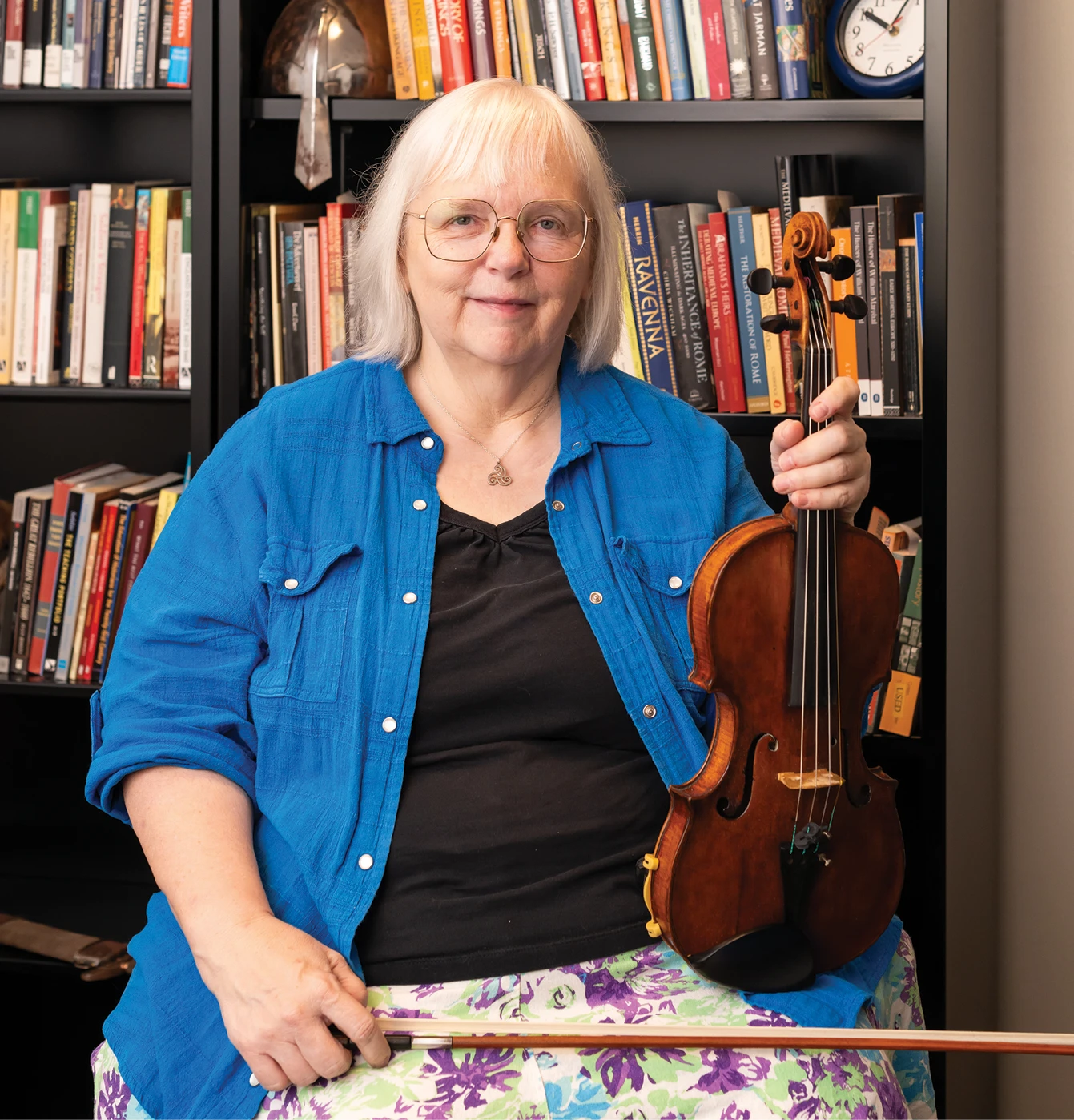
Jestice found her calling when she began playing violin in fourth grade. She received her violin, Alianora, which was made in Germany around 1800 and is named after a 14th-century noblewoman, in 10th grade. Jestice meticulously cleaned Alianora so that it offered a rich tone that she loves to this day.
In college, Jestice’s plans to become a secondary school music teacher ended with hand surgery. She pivoted to history, focusing on medieval European history. Still, she continued to play violin.
“It took me a long time to get past the pain threshold when playing, but I did because I had scholarships and had to play,” explains Jestice. “I just manipulated my wrist and hand differently than other players.”
When she joined the history department in 2012, she also joined the College of Charleston Orchestra, which had less than 20 players, and began one-on-one lessons with Tomas Jakubek, adjunct professor of violin.
“I have slowly and carefully worked with Tomas to be able to bend my wrist,” says Jestice. “Now I am stretching and twisting as I work my way down the neck of the violin. I am almost to the end of the fingerboard.”
With a more agile hand, Jestice finds even greater joy in playing with the orchestra, which has since expanded to 80 players. She enjoys interacting with students as a peer and watching them bloom under Yuriy Bekker, conductor of the CofC Orchestra and violin instructor.
“It’s beautiful to watch them respond and come up to a new level in their playing,” says Jestice, who acknowledges her playing has also improved, though she chooses to remain third chair of the second violins where she can serve as an anchor and students can key off her. She also shares tricks to making a violin tone better and brings students quality strings that offer a richer, complex sound.
“Not only does Phyllis exemplify how music can remain a meaningful part of one’s life journey regardless of career path, she is also a constant source of inspiration and ideas,” says Bekker. “She is a wonderful player, and I know she makes a positive impact on the students around her. Phyllis also has been an angel investor in our students. For Carnegie and now for Boston, Phyllis donated to the Orchestra Fund to cover the travel expenses for two of our students who wouldn’t have been able to make the trip otherwise.”
Jestice wants the orchestra students to feel the camaraderie that develops when traveling to perform.
“Making music together is the ultimate team sport,” says Jestice. “We are so reliant on each other; it’s a dynamic that requires everyone to be on. That is why I want all our students to have the opportunity to go to Boston; it will be a transformative experience that they will carry with them the rest of their lives.
“Music is a way to understand life,” adds Jestice, who hopes her bequest to the Department of Music will allow more people to develop a passion for its intrinsic value. “Life is awfully empty without music.”
ALUMNI NOTEBOOK
-
GOLD HIGHLIGHTED ALUMNI ARE RECENT DONORS TO THE COLLEGE
-
1950
Biemann Othersen is a professor emeritus of surgery at the Medical University of South Carolina. He earned his medical degree from MUSC in 1953. He and his wife reside in Charleston.
-
1977
Randall Rhea retired from Standard Motor Products after a successful sales career. His fraternity, Pi Kappa Phi, recently recognized him for his 50 years of service. He and his wife reside on Johns Island, S.C.
-
1978
William W. Harris retired from behavior health services for Riverside County, Calif. He earned his master’s in prevention science from the University of Oklahoma in 2014. He resides in Spartanburg, S.C.
-
1979
Laura Sloan Crosby co-authored the book A Collection of Lowcountry Baskets: A Living Tradition; Gullah Baskets Then and Now, featuring a basket collection she and her colleague initiated in the 1970s. The collection includes 227 baskets made in coastal South Carolina, Georgia and North Carolina. She and her husband reside in Summerville, S.C.
-
1981
Cheryll Woods-Flowers is a real estate consultant with Coldwell Banker. She was appointed to the Mt. Pleasant Board of Zoning Appeals following her service as chair of the Disabilities Board of Charleston County. Woods-Flowers and her husband reside in Mt. Pleasant.
-
1983
Karen Federspiel is a clinical nurse specialist in the MetroHealth System in Cleveland. Federspiel earned her doctorate in nursing practice in 2015 from the University of Akron. She resides in Akron, Ohio.
- Sam Hawk was named a partner at the law firm Wyatt Hamilton Findlay and resides in Dallas.
-
1984
Kelly Duane Turner is a senior judge at the State Court of Lowndes County, Ga. She and her husband, Warren, reside in Valdosta, Ga.
- Sheila Riley Warren is a logistics management specialist for the U.S. Marine Corps. Warren earned her master’s in athletic training from the University of Redlands. She resides in Woodbridge, Va., with her son.
-
1985
Carol Maynard is a sales director at Presbyterian Manors of Mid-America and resides in Manhattan, Kan.
- Elizabeth Stevens is vice president for mission and communications at the Bishop Gadsden senior living community in Charleston.
-
1988
Jerry Francis is a statewide coordinator of deaf and hard of hearing services for the South Carolina Vocational Rehabilitation Department and resides in Columbia, S.C.
- Wayne Morgan Jr. is a defense lawyer at Wayne R. Morgan, Jr., Attorney at Law. He earned his law degree from the University of Richmond and recently celebrated 35 years of private practice. He resides in Chesterfield, Va.
-
1990
Ellen Hankin Rickenbaker is a partner at Joint Venture Estate Jewelers, where she and her father celebrated 35 years in business in May. She and her husband reside in Mt. Pleasant.
-
1991
Paige Heath is a multilingual learner specialist with the school district of Pickens County, S.C. She earned her master’s in teaching from Clemson University in 2014. She resides in Easley, S.C., with her daughter.
- Billy Howard Jr. is a clinical staff leader for the specialty medicine and acute care unit at MUSC. He and his wife reside in Mt. Pleasant with their two children.
- Marshall Scott Moody is the executive director at Lowcountry Area Health Education Center and resides in Ruffin, S.C.
-
1992
Carlos Thunm is a sales agent for IWG and resides in Orlando, Fla., with his wife.
-
1993
Jeff Getty is the chief tax strategist at Callan Family Office. He and his wife reside in Sewickley, Pa., with their daughter.
- Aimee Chazal McMillin is the director of communications in the advancement office at the University of Tennessee Health Science Center. She and her husband reside in Memphis, Tenn., with their two children.
- Thomas Parlow is the CEO of TP Shipping and resides in Agder, Norway.
-
1994
Amy Gordon Adams is a teacher for the Berkeley County (S.C.) School District. She earned her second master’s in educator leadership from Charleston Southern University in 2020. She and her husband reside in St. Stephen, S.C.
- Topher Davis is the owner of Carolina Surf Brand. He and his wife reside in Wilmington, N.C.
- David Mendelsohn is a computer scientist at the Naval Information Warfare Center Atlantic. In recognition of his contributions to NIWC Atlantic and the U.S. Navy, he was awarded the Navy Civilian Service Achievement Medal. He and his wife reside in Charleston.
- Nancy Seago Priester retired as a human services specialist from Beaufort County (S.C.) Department of Social Services. She and her husband reside in Beaufort, S.C.
-
1995
Jason Adriance was named a 2024 Conservation Professional of the Year by the Louisiana Wildlife Federation. He is a finfish program manager for the Louisiana Department of Wildlife and Fisheries and resides in River Ridge, La.
- Laura Breyer Chalkley is the director of communications at San Mateo Union High School District. She her husband reside in San Mateo, Calif., with their son.
-
1997
Lissa Hoeflich Blankinship is a consultant and advocate in education. She and her husband reside in Moka, Mauritius.
-
1998
Thomas Carraway is the director of sales and business development at Torrecom Partners and resides in Irmo, S.C.
- Sarah Hampshire is a clinical mental health counselor. She resides in Mt. Pleasant with her three children.
- Ron Menchaca is vice president of university communications at the College and a member of President Andrew Hsu’s cabinet. He is pursuing a master’s in creative writing with plans to graduate in 2027. He and his wife, Amy, celebrated their 30th anniversary in May and reside in Charleston. Their two daughters are also proud CofC alumnae.
-
1999
Hollie Pittman Chinn is the director of pharmacy at Bon Secours Mercy Health. She resides in Simpsonville, S.C., with her husband and their four children.
- Regina Radtke Earnest is vice president of business excellence for acute care therapies at the medical technology company Getinge. She and her husband reside in Exton, Pa.
- Caroline Dove Stephens opened Gaston Family Practice. Stephens, a physician, earned her medical degree from the University of South Carolina in 2004. She and her husband reside in Lake Wylie, S.C., with their two children.
-
2000
Kate Howard Arnold is a major gifts officer at the University of Georgia, where she is pursuing a master’s in art education with plans to graduate in 2026. She resides in Athens, Ga.
- Kelly Clark is vice president of business development at Allen Architectural Metals and resides in Denver.
- Chaquilla Jamison Green is a parent and family engagement coordinator at Dorchester School District 4. She and her husband reside in Summerville, S.C., with their two children.
- Brooke MacGregor is the chief executive officer and founder of MacGregor Development. She resides in Windermere, Fla., with her two children.
- Charles Miller is a self-employed real estate agent. He resides on Daufuskie Island, S.C., with his son.
- Allison Welker is a public safety telecommunicator at Monmouth County Sheriff’s Office and resides in Red Bank, N.J.
- Jeremy Williams is a project manager and structural engineer at ADC Engineering. He resides in Mt. Pleasant with his wife and their son.
-
2001
Lara Caulder Byrd is a chaplain candidate program manager for the U.S. Navy and was promoted to the rank of commander. She is pursuing a doctorate in military chaplaincy from Wesley Theological Seminary with plans to graduate in 2027. She resides in Millington, Tenn.
- Kristina Riegle is the owner of Riegle Voice Studio, where she is also an instructor. She and her husband reside in Rochester Hills, Mich.
- Natalie Schwieger is an art teacher for Dorchester School District 2. She earned her master’s in curriculum and instruction from Western Governors University in 2022. She resides in Summerville, S.C., with her two children.
- Kelley McKinney Stovall is an agency recruiting director at MassMutual South Carolina. She and her husband reside in Simpsonville, S.C., with their two children.
- Bobby Weisenberger is the head athletic trainer for the Charleston Battery and is completing his 16th season. He has the longest tenure of any athletic trainer in the USL Championship, the Battery’s professional soccer league. Weissenberger earned his master’s in sport psychology from MUSC in 2019.
He and his wife reside in Charleston. -
2002
Ramona Renita Brown is the director of procurement services for the Charleston County School District and resides in Summerville, S.C., with her son.
- Mary Jane Connor is a marketing director at SupraNet Communications. She earned her master’s in art history from the University of Wisconsin and resides in Madison, Wis.
- Ry Hudnall is the founder and CEO of Hudnall Capital Advisors, a financial firm in downtown Charleston.
-
2003
John Bailey is an attorney at Rhodes Bailey Law. He earned his law degree from USC. Bailey and his wife reside in Columbia, S.C.
- Sean Evans is a director of strategic alliances at the pharmaceutical and biotechnology company GSK. He earned his master’s in biotechnology in 2008 and his doctorate in molecular microbiology and immunology in 2014 from Johns Hopkins University. He resides in Cambridge, Mass.
- Kristen Hensley Melo is the owner of Preserve Pools in Summerville, S.C. In 2021, she received a national pool and spa industry professional award. She and her husband reside in Summerville, S.C., with their two children.
- Sloan Newman is an account-based marketing manager for North America at information technology service provider NTT Data and is publishing a book on marketing. He and his wife reside in Charleston.
- Erin Schauwecker is a real estate agent at Elaine Brabham and Associates. She and her husband reside in Charleston.
-
2004
Laytora O’Neal Dash is an adjunct professor at the University of North Carolina at Charlotte. She is pursuing a doctorate in special education and gifted education at UNCC with plans to graduate in December. She and her husband reside in Concord, N.C., with their two children.
- Juan Londono is the CEO of TTS Group and resides in Valle del Cauca, Colombia.
- Charles Odom is an enforcement project manager at the South Carolina Department of Environmental Services. He earned his master’s in environmental health from Walden University in 2023 and a graduate certificate in herbal medicine from the American College of Health Sciences in 2024. He was accepted into the doctoral program in biomedical sciences at USC. He and his husband reside in Columbia, S.C.
- David Trausneck is director of communications at Optum Health. He and his wife reside in Baltimore.
-
2005
McLaurin Bruce is director of business development at FirstService Residential and resides in Mt. Pleasant.
- Paige Curry Gordon is the founder of HypnoYogaOnline. Gordon earned certification in hypnotherapy in 2009 and recently published Pain Reset Without Pills: A Science-Backed Pain Management Method for Rapid Relief and Healing. She and her husband reside in Roanoke, Va.
-
2006
Pam Corwin is a saltwater recreational outreach biologist with the South Carolina Department of Natural Resources and was nominated for the Marine Resources Division Employee of the Year. She earned her master’s in biology from the Citadel in 2013. She and her husband reside in Moncks Corner, S.C.
- Ron Krauskopf is the director of happiness at Happy Homes Property Manager and resides in Charleston with his wife and two children.
- DeAnna Riha Miller is the managing director of experiential marketing at 82 South. She and her husband live in Charleston with their three children.
- Jennie Barrows Newton is a self-employed comedian. She and her husband welcomed their first child in June 2024. The family resides in Chattanooga, Tenn.
-
2007
AJ Jarvis Barrett is a real estate agent at The Boulevard Co. She and her husband reside in Ravenel, S.C., with their four children.
- Alyssa Rothstein Kesselman is a clinical program manager and pediatric nurse practitioner at Children’s Healthcare of Atlanta. She earned her master’s in clinical nurse leadership at the Medical College of Georgia in 2008 and her doctorate in nursing practice from Georgia Southern University in 2023. She recently was elected president of the Georgia chapter of the National Association of Pediatric Nurse Practitioners. She and her husband reside in Alpharetta, Ga., with their two children.
- Brittany Taylor is a community impact director at the American Heart Association. She earned her master’s in public health from Mercer University in 2012 and is pursuing her doctorate in global health equity from Meharry Medical College with plans to graduate in May 2028. She resides in Decatur, Ga.
- Tony Williams earned his master’s in international relations from Liberty University and resides in Charleston.
-
2008
Hayley Black is the founder of Hayley Black Vintage, a luxury vintage shop in Savannah, Ga. She earned her master’s in professional communication from Clemson University in 2012 and is pursuing a doctorate in communication from the University of North Dakota with plans to graduate in 2027.
-
2009
Katherine Weatherly Alverson is a marketing director at Montgomery Transportation Group. She and her husband are the owners of the Porch restaurant, which has received several industry awards. They reside in Mountain Brook, Ala., with their two children.
- Patrick Fowler works in aortic field sales in the medical products division of W.L. Gore. He and his wife reside in Mt. Pleasant with their two children.
- Andrew Fyfe is an account director at Salesforce. He and his wife reside in Chicago with their two children.
-
2010
Megan Davis is an account executive at Siemens Healthineers. She earned her master’s in health care administration from MUSC. She resides in Washington, D.C.
- Somers Maky Farmer and her husband, Eric, welcomed their second child in July. The family resides in Simpsonville, S.C.
- Maggie Hendricks founded Blue Monarch Consulting, a nonprofit and fundraising consulting company. She resides in Inglewood, Calif.
- Whitnie Eisele Scoggins is a sales operations analyst at Benefitfocus in Charleston.
- Jono Watson is a fisheries biologist with NOAA Fisheries, a division of the National Oceanic and Atmospheric Administration. He earned his master’s in wildlife biology from the University of Maine and has published several articles on migratory fish and tidal wetland restoration. He and his wife welcomed their first child in 2024 and reside in Annapolis, Md.
-
2011
Alison Stinchcomb Bell is a self-employed photographer residing in Kailua, Hawaii, with her husband and their four children.
- Youlia Bolgan is pursuing her MBA from Louisiana State University. She and her husband reside in Savannah, Ga.
- Cody Donofrio is a senior staff geologist at Diamondback Energy. He resides in Midland, Texas, with his wife and their son.
- Caitlin Mason is head of people at the property company WebsterHart. She earned her MBA from London Metropolitan University in 2018 and resides in London.
- James McIntyre is a principal at the investment firm KKR. He earned his law degree from George Washington University in 2018 and resides in San Francisco.
- Nicole Trevisan is a field operations manager at Randstad Digital and recently celebrated her 13th year with the company. She is membership chair for the company’s women’s business resource group and owns two small businesses – a consignment store and a professional home organizing service. She resides in Roswell, Ga.
-
2012
Tyler Canty is a senior consultant at Deloitte and resides in Atlanta.
- Jessica Foxworth is a recruiting operations coordinator at Clemson University’s nursing school. She earned her master’s in teaching and learning from Francis Marion University in 2021. She resides in Greenville, S.C.
- Matt Friedman is a partner at Freight Flex. He and his wife, Laney Talbert Friedman, reside in Charleston with their two children.
- Sarah Miller Gelber is a consultant for the arts in healing department at MUSC. She sold her art gallery, the Miller Gallery, after several successful years in business. She and her husband, Greg, recently welcomed their second child and reside in Charleston.
- Robert Marzullo is a vice president with the global risk and reinsurance company Guy Carpenter in Philadelphia.
- Ricardo Robinson is an assistant principal for the District of Columbia Public Schools. He earned his doctorate in education system improvement science from Clemson University in 2023 and resides in Washington, D.C.
- Allison Jahries Rogers opened a private counseling practice, Still & South Counseling. She earned her master’s degree in social work from the University of Pittsburgh in 2014. She and her husband welcomed their second child in 2024 and reside in Florence, S.C.
- Meg Wallace is an assistant professor at the National Crime Victims Research and Treatment Center at MUSC. She earned her master’s in clinical social work from USC in 2015 and is pursuing her doctorate in advanced clinical practice and leadership at the University of Tennessee-Knoxville with plans to graduate in 2028. She recently co-authored her first book, Treating Traumatic Loss: A Clinician’s Guide to Helping Clients Cope with a Sudden, Violent, or Difficult Death Using the GRIEF Approach. She resides in Charleston.
-
2013
Amanda Cole is an undergraduate program coordinator at Duke University. She earned her master’s in marine biology in 2017. She resides in Beaufort, N.C.
- Damian Nelson is a teacher in the Prince George County Public Schools. He earned his master’s in elementary education from the University of North Carolina at Charlotte in 2021 and is pursuing a master’s in special education from Bowie State University with plans to graduate in 2027. Nelson resides in Alexandria, Va.
- Amanda Jolly Nestor is a senior architectural historian at Vantage Point Solutions. She earned her master’s in historic preservation from the Savannah College of Art and Design in 2014, her doctorate in history from Liberty University in 2024 and a master’s in architecture from Arizona State University in 2025. She and her husband reside in Mt. Pleasant.
- Jeremy Rees is director of the Compassionate Hope Foundation, a charitable organization dedicated to supporting victims of human trafficking. He and his wife reside in Mindanao, Philippines, with their two children.
- Margaret Kapp Smith is an administrative assistant at Smithbuilt Marine Construction. She and her husband reside in Beaufort, S.C., with their daughter.
- Renee Allison Smith is director of global partnership activation for the Atlanta Hawks. She and her husband reside in Decatur, Ga., with their two children.
- Nick Walker married Nicole Walker in 2023, and the couple welcomed their first child in September. The family resides in Pearland, Texas.
-
2014
Kate Healey Dewez and her husband welcomed their first child in June 2024. The family resides in Newburyport, Mass.
- Crystal Lamkin Driggers is a project manager at the Scientific Research Corp. and the owner of The Berkeley Bloom, a community lifestyle magazine. She and her husband reside in Charleston with their three children.
- Jenna Quinn Garza is a senior events manager at Honeywell in Charlotte, N.C.
- Tristan Hawkins is an assistant principal in the Charleston County School District. He resides in Summerville, S.C.
- Lindsay Louise is a catering sales manager at the Four Seasons Hotels and Resorts in Los Angeles.
- Mike Maus is an associate experience product manager at Exact Sciences and resides in Charleston.
- Austin Moede is the founder and principal consultant of Trezmo. He married Alexandra Trezise in September 2023, and the couple reside in New York City.
- Christina O’Boyle is a lead brand advocate at Lowe’s and resides in Charlotte, N.C.
-
2015
Olivia Adams is a self-employed artist residing in Tucson, Ariz.
- Kendall Bickett is director of internal communications at Greystar and resides in Charleston.
- Brent Burrows is vice president of retail and sales at CBS Bahamas. He and his wife married in 2024 and live in Nassau, Bahamas.
- Nick Damm (see Naomi Edmondson Damm ʼ16)
- Caro Davis is a co-founder of North+South Marketing Agency, which was recently featured in Southern Bride magazine. She resides in Charleston.
- Nicole DeMarco is a managing editor at Beyond Noise. She earned her master’s in journalism from New York University in 2017. She resides in New York City.
- Jackie Hazlett is an associate principal analyst at the Financial Industry Regulatory Authority, commonly referred to as FINRA. She earned her master’s in criminology from George Washington University in 2017 and operates an animal outreach organization. Hazlett resides in Charleston.
- Justin Herp (MS ’16) is a tax senior manager at the accounting and audit firm BDO and resides in Charleston.
- Colin Marcelli (see Kaitlyn Hoehn ʼ16)
- Taylor McCarty-Wiley is a diversion investigator for the Drug Enforcement Administration. She and her husband, Eric Wiley, welcomed their second child in April. The family resides in Braintree, Mass.
- Mackenzie Maples Reed (MBA ’16) is a teacher at Milford High School. She and her husband, Devon Reed, reside in Harrington, Del., with their daughter.
- Sabrina Riotto is the director of corporate access and institutional equity sales at Oppenheimer & Co. in New York City.
- Cathryn Schrader is a pediatric critical care pharmacist at Children’s of Alabama. She earned her doctorate in pharmacy from the University of Georgia in 2019. She married Bradley Edmonds in May, and the couple reside in Birmingham, Ala.
- MC Seymour is a social media specialist for Menlo Technical Consulting and resides in Port Orange, Fla.
- Victoria Sferruzza (see Garrett Dunn ʼ16)
- Rachel Spivey Valentine is a manager of strategy at RKD Group. She also owns Pretty Petal Press, a flower preservation service. She resides in Columbia, S.C., with her husband and daughter.
-
2016
Alyssa Burtis is a wealth management client associate for Merrill Lynch in Charlotte, N.C.
- Samantha Connors is the campus communications coordinator at the College. She resides in Hanahan, S.C.
- Naomi Edmondson Damm is a senior grant writer at Elevate. She earned her master’s in art history from Virginia Commonwealth University in 2020. In April, she married Nick Damm ’15, and they reside in Morehead City, N.C.
- Anna Collett Duke is a nurse practitioner at VIO Med Spa. She earned her doctorate in nursing practice from the family nurse practitioner program at the University of Alabama at Birmingham in 2024. She and her husband welcomed a daughter in April, and the family resides in Atlanta.
- Garrett Dunn is the director of sales at Libsyn Ads. He married Victoria Sferruzza ’15 in April 2022, and the couple reside in Charleston.
- Lindsay Wooles Gainey is a self-employed educational advocate. She and her husband welcomed their first child in 2023. The family resides in Clover, S.C.
- Kaitlyn Hoehn is a senior catering and sales manager at Charleston Harbor Resort & Marina. She married Colin Marcelli ’15 in February 2024, and they reside in Charleston.
- Lindsey Hamblet Massucco is a packaging engineer at Twincraft Skincare and resides in Burlington, Vt.
- Daisy Schwarz is a senior infection prevention coordinator at Emory Healthcare. She resides in Greenville, S.C.
- Shannon Summer is a training specialist at Mungo Homes and resides in Columbia, S.C.
-
2017
Noel Anderson is a senior associate at Malk Partners in New York City.
- Anne Cabot is the marketing director at Powell Fine Art Advisory. In August, she married William Fernandez, and they reside in Chestnut Hill, Mass.
- Carrie Hungerpiller Cox is a sales coordinator at Mills House Charleston. She and her husband reside in North Charleston.
- Caroline Coyle is a social media manager at the Home Depot and resides in Atlanta.
- Meagan Dunham is a principal consultant at M. Dunham Strategy & Solutions. She earned her master’s in clinical social work from the Catholic University of America and resides in New Orleans.
- Kaycee Houge Fillbright is an administrative assistant at Carriage Properties. She and her husband, Christopher Fillbright ’20, welcomed their first child to the family in April. The family resides in Moncks Corner, S.C.
- Michael Malec is an outside sales representative at Telephonix. He and his wife reside in Pittsburgh.
- Ariel McShane is a variant assessment scientist at Ambry Genetics. She earned her master’s in bioinformatics and her doctorate in cellular and molecular biology from the University of Michigan in 2024. She resides in Ann Arbor, Mich.
- Sam Myers is a financial adviser at Edward Jones. He and his wife, katherine lowe ʼ20, reside on Johns Island, S.C.
- Neha Penmetsa graduated with her doctorate in clinical psychology from William James College in June. She is a clinical psychology fellow at Massachusetts General Hospital and resides in Somerville, Mass.
- Manuela Zapata Rosenbaum is a teacher at the International School of Luxembourg. She earned her master’s in educational leadership from USC in 2022. She and her husband reside in Strassen, Luxembourg, with their two children.
- Katie Skelly is an assistant marketing director at Film at Lincoln Center and resides in New York City.
- Joey Waxter is an acquisition procurement agent at Boeing. He resides in Philadelphia.
-

The College has a way of forging special connections. Case in point: For 20 years, the founding members of Pi Kappa Alpha fraternity have been taking an annual “trip to nowhere” every late summer or fall. The first trip in 2006 was to Roanoke, Va., and Gorham, N.H., was the site of their latest excursion in October.
Each trip attracts a dozen or so “outdoorsy” alumni, according to Taylor Kemp ’05, who has made 18 of the 20 trips, including Utahʼs Arches National Park in 2019, above (thatʼs him second from right). Highlights over the years to out-of-the-way locales include hiking in and out of the Grand Canyon in one day (2018), whitewater rafting on the Colorado River (2019) and fishing Flathead Lake in Montana (2021).
“It’s called ‘nowhere’ in part because the group doesn’t know exactly where we’re going until just before,” notes Kemp, who works in outside sales for Buck Lumber and Building Supply in Charleston. “The itinerary is a secret until the week before. But 20 years later, here we are.”
-
2018
Chris Bailey is a strategy director at Matchbook. He earned his master’s in communication and media studies from Ohio State University in 2024. He resides in Indianapolis.
- Sydney Wood Gerth is an English teacher at Hanahan High School. She earned her master’s in curriculum and instruction in 2020 and her doctorate in 2025 from Liberty University. She and her husband, Andrew Gerth ’25, reside in Goose Creek, S.C.
- Emily Rees Godfrey is a wealth strategist at UBS. She earned her MBA from the Citadel in 2024. She and her husband, Clay, live in Charleston.
- Cheyenne Meranda is a training coordinator at the Tennessee District Attorneys General Conference. She resides in Chapel Hill, Tenn., with her two children.
- Ian Schenkel (MBA ’20) is a marketing operations manager at Case Status and resides in Charleston.
-
2019
JP DeGross Jr. is managing partner at DeGross Consulting. He resides in McLean, Va.
- Sarah English is a genetic counselor at the Mayo Clinic. She earned her master’s in medical genetics and genomics from Tulane University in 2020 and a second master’s in genetic counseling from MUSC in 2025. She resides in Jacksonville, Fla.
- Ashton Basar Hernandez is the executive director at North Charleston Dental Outreach. She earned her doctorate in molecular pharmacology and experimental therapeutics from MUSC in 2021. She resides in Charleston.
- Jon Knox is a senior consultant at Deloitte. He earned his master’s in accountancy from the University of Georgia in 2021 and resides in Nashville, Tenn.
-
2020
Forrest Brewster is a logistics specialist at Outokumpu Stainless Steel and resides in Mobile, Ala.
- Erin Thigpen Dodd married Daniel Dodd in April, and the couple reside in Leesville, S.C.
- Christopher Fillbright (see Kaycee Houge Fillbright ʼ17)
- Sam Hutchisson is a grants manager at Volunteers of America Mid-States. He earned his master’s in nonprofit executive leadership and public administration from Drake University in 2024. He resides in New Albany, Ind.
- katherine lowe (see Sam Myers ʼ17)
-
2021
Jaymie Amodio is a production coordinator at Holst and Lee and resides in Charleston.
- Hannah Benneche is a medical social worker at Northwell Health and serves in a private practice as a psychotherapist specializing in women and children. She earned her master’s in social work from Fordham University in 2024 and resides in Babylon, N.Y.
- Raphael Geissler is an assistant manager at KPMG. He married Olivia Plyler in June 2024, and the couple reside in Dreieich, Germany.
- Ashleigh Hardwick James married Colin James ’22 in 2023, and the couple reside in Charleston.
- Katelynn Muth is an English language development teacher for the Harrisburg School District. She earned her master’s in teaching English to speakers of other languages in June. She resides in Harrisburg, Pa.
- Connor Olson is an associate at ING. He earned his master’s in mineral and energy economics from Colorado School of Mines in 2022 and resides in New York City.
- Lily Russell is an event specialist at Nationwide Marketing Group. She earned her master’s in hospitality administration from Boston University in 2022 and resides in Charleston.
-
2022
Kalie Clark is a sales associate at Daniel Ravenel Sotheby’s International Realty and resides in Hilton Head, S.C.
- Olivia Daler is an account executive at LinkedIn and resides in New York City.
- Colin James (see Ashleigh Hardwick James ʼ21)
- Justin Le is a supply chain associate in master data management at Toppan Packaging Americas. He earned his master’s in global strategy from USC and his master’s in international management and strategy from Vlerick Business School in 2024. He resides in Greenville, S.C.
- Madison Lee is a community outreach coordinator at the Preservation Society of Charleston. She resides in North Charleston.
- Gabrielle Loue is a licensing executive at the Copyright Licensing Agency in Scotland. She earned her master’s in comparative language from the University of Edinburgh and resides in Edinburgh, Scotland.
- Kirby Nassetta is a business development account manager at Destination South Meetings and Events. She was married in June in Ennis, Mont. The couple reside in Charleston.
- Savannah Young Pacheco is a senior technical consultant at Ignyte Group and resides in Charlotte, N.C.
- Kirsten Sciartelli is a sales manager at SB Expo and Events and resides in Charlotte, N.C.
- Jonathon Silva is a graduate teaching assistant at the University of Iowa, where he is pursuing a doctorate in astrophysics. He resides in Iowa City, Iowa.
-
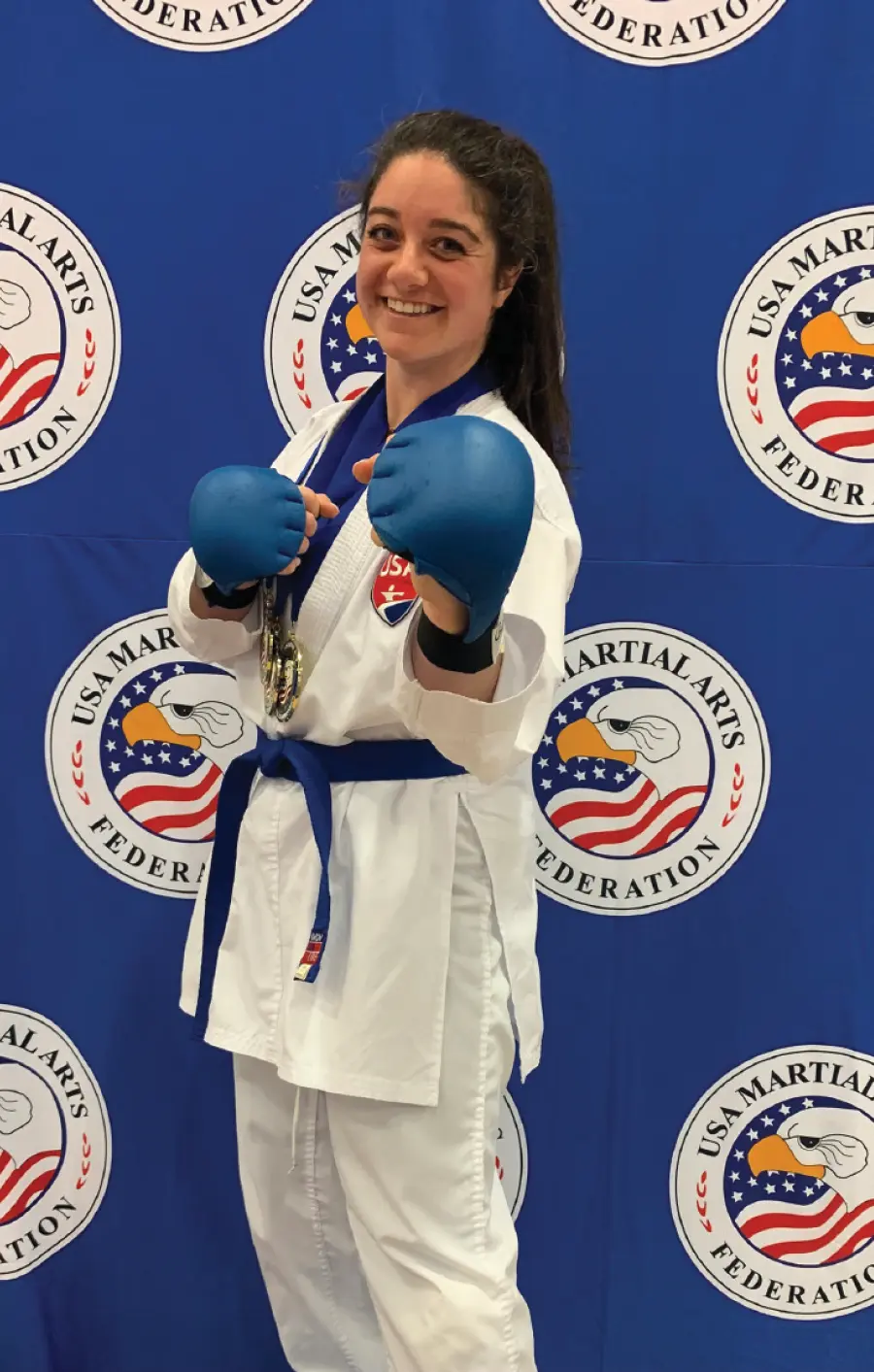
International karate champion Kristina Moss ’18 lives a double life as a teacher and a gold medal–winning martial artist who competes in cities around the world. When she began practicing karate at the age of 25, her instructor, Juan Manuel Rodriguez, a two-time Pan American champion on the Argentinian National Team, encouraged her to compete. Through grit and determination, in just four years she has earned four gold, three silver and two bronze medals on the USA Karate National podium, as well as one gold, one silver and one bronze internationally.
Moss earned her undergraduate degree in hospitality and tourism management and is now a full-time first-grade teacher in Raleigh, N.C. She aims to take her martial arts skills to the next level by achieving her black belt in the Shotokan karate system, but her main goal is to grow in the sport and make connections both within the USA Karate organization and internationally.
“While I fully intend to continue to learn and advance,” she says, “I chiefly aspire to continue coaching and encouraging young women and other athletes.”
– Ugochi Mercy Udochu
- James Williams (MA ’23) is a teacher for Charleston County School District. He is pursuing his doctorate in educational leadership and research from Charleston Southern University with plans to graduate in 2027 and resides in Charleston.
-
2023
Andrew Bartholomey is a junior controller at CTDI Europe and resides in Myrtle Beach, S.C.
- John Broome is an assistant coordinator for admissions communications at the South Carolina Governor’s School for the Arts and Humanities. He is pursuing his master’s in higher education and student affairs from Liberty University and resides in Greenville, S.C.
- Emily Burleson is an assistant ticket office manager at the North Charleston Coliseum and Performing Arts Center. She resides in Charleston.
- Jake Croland is a financial adviser at Prudential and resides in Charleston.
- Rachel Emmet is a product development assistant at Macy’s and resides in Somerset, N.J.
- Katherine Gardner is pursuing her master’s in heritage management from Queen Mary University of London. She resides in London.
- Hunter Haines is a human resources generalist at Volvo and resides in Charleston.
- EB Hornak is an account executive for the Charlotte Hornets and resides Charlotte, N.C.
- Ada Jenkins is a marketing coordinator at Mashburn Construction in Charleston.
- Nicole Killen is director of sustainability at the College and resides in Charleston.
- Andrew Kostraba is a financial accountant at REV Federal Credit Union and resides in Summerville, S.C.
- Sofia Latta is a donor relations and stewardship specialist at the David Eccles School of Business at the University of Utah. She resides in South Salt Lake, Utah.
- Anna McAndrews is a server assistant at City Cruises and resides in New York City.
- Addie Muth is a traveling leadership specialist for the Sigma Kappa and resides in Anderson, S.C.
- Gracie Peck is a real estate agent at Compass Carolinas and resides in Charleston.
- Caitlyn Pellegrini is an associate sales representative at Stryker. She resides in St. Petersburg, Fla.
-
2024
Samantha Brown is a sales development representative at Cvent. She resides in Washington, D.C.
- Meagan Burke is a marketing specialist at MedSuite and resides in Charleston.
- Lucy Dantz is a donor services and data specialist at Trinity Repertory Company and resides in Providence, R.I.
- James Dockery Jr. is a computational science graduate fellow with the U.S. Department of Energy. He is pursuing his doctorate in physics at the University of North Carolina at Chapel Hill with plans to graduate in 2030 and resides in Chapel Hill, N.C.
- Emma Few is a marketing and business coordinator at Hendrick Motorsports and resides in Clover, S.C.
- Brandon Geller is a captain at AMI Dolphin Tours. He resides in Tampa, Fla.
- Riley Haas is a financial analyst at Beemok Capital. She is pursuing her master’s in financial mathematics at the University of Chicago and resides in Charleston.
- Grace Kennedy is a campaign development specialist for the Leukemia and Lymphoma Society and resides in Charleston.
- Molly Moloney is pursuing a master’s in resilient urban design from Clemson University with plans to graduate in 2026 and resides in Charleston.
- Sydney Vitti is pursuing a master’s in museum and heritage studies. She recently published a blog post on behalf of the Scottish Fisheries Museum in Anstruther, Scotland, and completed an internship program at the École du Louvre. Vitti resides in Ponte Vedra Beach, Fla.
- Madison Zucker is a recruiting coordinator at Core4ce and resides in Charleston.
-
2025
Kelli Carter is a real estate agent at Collett. Carter resides in Greenville, S.C.
- Elizabeth Clarke is an operations and events coordinator for the Department of Graduate and Executive Programs at the College. She resides in Charleston.
- Sophia Giovannone is an account manager at TransPerfect and resides in New York City.
- Julia Houghton is a staff assistant for the U.S. Senate.
- Jacqueline Jevtich is a social media fellow at Vox Global. She resides in Bethesda, Md.
- Meghan Lord is a donor relations coordinator at Lowcountry Land Trust. She resides in Charleston.
- Liv Lott is a public relations assistant at Salt and Ruttner Communications. She resides in New York City.
- Evan Malcolm is a communications intern for Brodeur Partners and resides in Boston.
- Charles Nealon is a sales and marketing associate for Maison de Carine. He resides in Hopkinton, Mass.
- Casey Riley is a social media coordinator at Makeready in Charleston.
- Kaitlyn Roemer is a development coordinator at Maryland Hall. She resides in Severna Park, Md.
rising tide

“I turned to him and said, ‘This is exactly where I’m going to go to school,’” she says. “I was drawn by how beautiful it was, the culture, the eclectic mix of students – everything about it. I knew instantaneously that this was the place for me.”
When it came time to look at colleges, Campbell didn’t bother applying elsewhere. Her gut feeling as a 9-year-old was reinforced once she was on campus. She recalls a vivid memory after her freshman orientation of happening upon Tracy Chapman performing on campus.
“I remember thinking, This is the most magical place on Earth.”
Initially, she wasn’t as clear on a career path, but a series of positive experiences at the College helped bring her future into focus. Majoring in English laid the foundation for a career that routinely taps her creative side. Campbell particularly remembers history classes taught by Randy Sparks.
“He was so great at storytelling. He definitely stood out.”
Meanwhile, a part-time sales job at Garfield Jewelers, then on King Street, helped develop her business sense. “I really enjoyed solving people’s problems and being part of these special moments in their lives,” she says. “You have this great opportunity to make people happy.”
To this day, Campbell counts proprietors Carol Garfield ’89 and her late father, Allen, among her mentors.
Back on campus, she cultivated leadership skills as vice president of public relations for her sorority, Kappa Alpha Theta. “I had to plan all these events, and I remember gathering the women in the sorority and saying, ‘OK, who’s going to do what, and how is this going to happen?’ and literally delegating it,” she says. “There was a moment when I was like, Wow, this is how it’s done.”
After graduation, Campbell worked in management at Belk and Macy’s, moving around the Southeast with her husband, Michael Campbell ’97, whom she met at the College, and later, with their daughter, Eleanor, now 25. In 2020, eager to learn more about e-commerce after years of running department stores, Campbell landed at Southern Tide as vice president of direct-to-consumer and was promoted to CEO shortly thereafter.
“I’m responsible for leading the brand and ensuring that everything we do – from our product to our customer experience – reflects our brand identity and our core values.”
Since she started, the brand’s retail business has grown from one store to 38. She likes that every day at her job is different.
“I can go from a planning and allocation meeting to a product and marketing meeting,” she says. “And there’s all this creativity. And a lot of analysis. I can’t imagine doing anything else.”
Chaos Coordinator

“I tell people, ‘Go to Facebook Marketplace and search air filters,’” she says. “People are constantly buying the wrong ones. One wrong set of air filters is more than one month of Propperly.”
Propperly is the property‑management app Fralinger developed to wrangle her own rental portfolio – six properties at its peak, now four – and the thousand tiny details that quietly defeat multiple homeowners, of which there are about 10 million. It’s the binder of warranties, model numbers, passwords and expenses that no longer lives in a dusty closet but in your pocket. It’s also the logical extension of a career spent coordinating a lot of moving parts to create memorable experiences for clients.
As the chief operating officer of Icebox – once a bar catering outfit, now a national experiential marketing firm – she and a small team design and execute large brand activations for spirits portfolio heavyweights like Pernod Ricard and Diageo. Her informal title is “chaos coordinator” because of the seat-of-the-pants nature of each event.
At first, after joining the firm in 2015, Fralinger was on the road much of the time, overseeing all special events, which included batching cocktails on site – five gallons at a time. “I always joke I can make the best margarita you’ve ever had, but only in a five‑gallon bucket,” she says with a laugh.
But as liability insurance crept skyward, Fralinger and her boss made a deliberate pivot in 2018, refocusing on experiential events and big‑ticket weddings, including one in 2022 for two A-list celebrities in Riceboro, Ga.
The spark for Propperly came that same year when she was living in Miami while managing six properties in Charleston. “I couldn’t remember air filter sizes,” she says. “I had 12 filters across houses. Were these 20x20s or 18x20s? I was so frustrated, I sat down and did a mock-up of the app.”
After a lot of research and legal due diligence, such as getting trademarks, she sold one of her properties to fund the initial development with a team in Mumbai, India. Propperly launched last June and now has a host of practical features like AI-assisted onboarding and tap-and-track expenses.
But success involves a lot more than a helpful interface; it takes cash flow and patience. “The fastest way to fail with a startup is to run out of cash,” says Fralinger. “Icebox affords me the ability to do Propperly.”
Though she was raised in southern New Jersey, Fralinger’s Charleston thread runs deep. Her maternal grandmother, Caroline Molony, grew up south of Broad and did a stint at the College before life took her north. Two of Molony’s daughters returned to attend CofC, followed by Emily and three cousins – and, soon, a niece.
Fralinger, who majored in hospitality, bought her first home, in North Charleston’s Park Circle for $220,000 right after graduating. “I cried at closing because they asked me to write a $200 check, and I had $212 left,” she recalls. She still owns it and now rents it as an Airbnb – a cash cow that’s been refinanced and leveraged to fund other investments and, ultimately, Propperly.
No risk, no reward, she believes. But no panic, either. A small tattoo on her left wrist reads memento mori – remember you’re mortal – anchoring a stoic practice she shares with her brother. “You can only control what you can control,” she says. “Outside forces happen. It helps me to stay calm in crazy situations and reminds me to prioritize what matters.”
mike be nimble
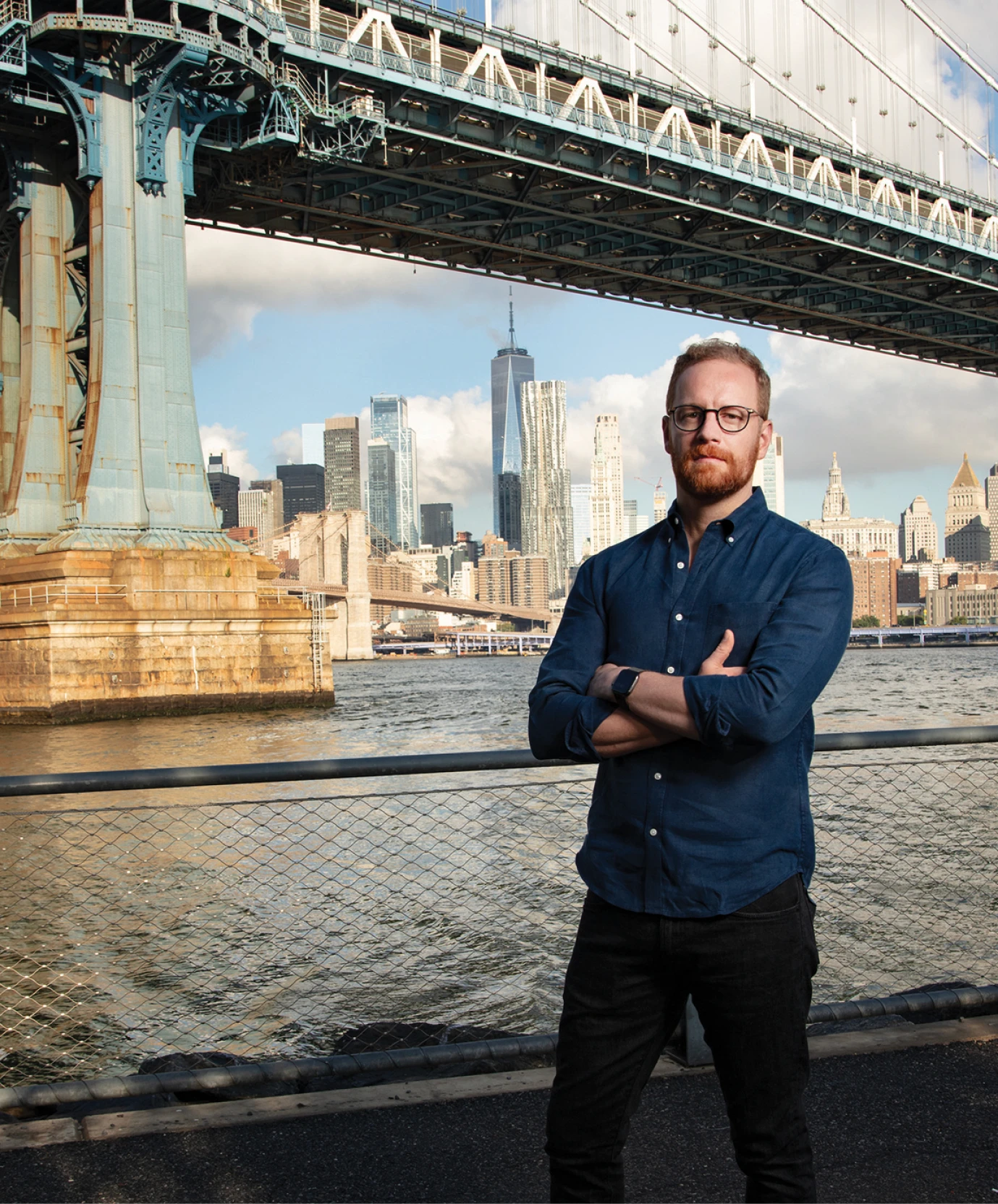
“I was there when they first launched the iPad,” says Broderick. “I remember helping a grandmother connect with her grandkids. She was so happy and shouted, ‘I can finally see them!’”
Technology to build and understand relationships is a North Star that Broderick, now the head of AI and Web3 ecosystem for the NEAR Foundation in New York City, still follows.
But it wasn’t just Apple that shaped his outlook — his majors in anthropology and religious studies at the College also played a pivotal role.
“Anthropology as a means and a lens with which to understand and connect with people fueled a lot of work in my career,” he says. “CofC taught me how to spot the waves and dive into them.”
A study abroad trip to northern India with religious studies professor Zeff Bjerken was also especially formative: “That trip helped me look at problems in the world from different angles and fostered a sense of curiosity about other people and cultures.”
That same curiosity shaped another big life decision.
While at Apple, Broderick had a choice: continue on the company’s leadership track or take a leap of faith and travel across the world to work for the Japan Exchange Teaching Programme. He leapt.
For three years, Broderick taught English in rural Japan, an experience that deepened his interest in cross-cultural connection. That global perspective proved invaluable when Bloomberg business development recruited him to Hong Kong, placing him at the heart of international finance.
“I was this humanities major who didn’t know the difference between a stock and a bond,” he said. “From 2014 to 2019, I was getting a front-row education.”
During his time with Bloomberg, he first saw how technology could disrupt old systems. By the mid-2010s, cryptocurrency and blockchain had captured his attention. Sending money back to the U.S. to pay student loans had been slow and complicated. Thanks to emerging fintech companies, what once took weeks only took Broderick three days.
“Blockchain technology democratized my access to finance,” he says, referring to the underlying technology of cryptocurrencies like Bitcoin.
Broderick came to understand blockchain not just as a technical tool, but as a way to empower and connect people globally. That insight carried him into roles with Fireblocks, Amazon Web Services and now NEAR, where his mission is about more than building products — it’s about building trust.
“Our thesis is that blockchain is trust with a capital T because of its speed and transparency,” he says.
With AI evolving at an unprecedented pace, he must stay nimble. And thanks to his time at the College, he’s ready for the challenge.
“Studying the humanities leads to critical thinking and lifelong curiosity,” he says. “If I didn’t have that, I wouldn’t be able to adapt as much as I do to emerging technologies.”
2025 HOMECOMING WEEKEND 
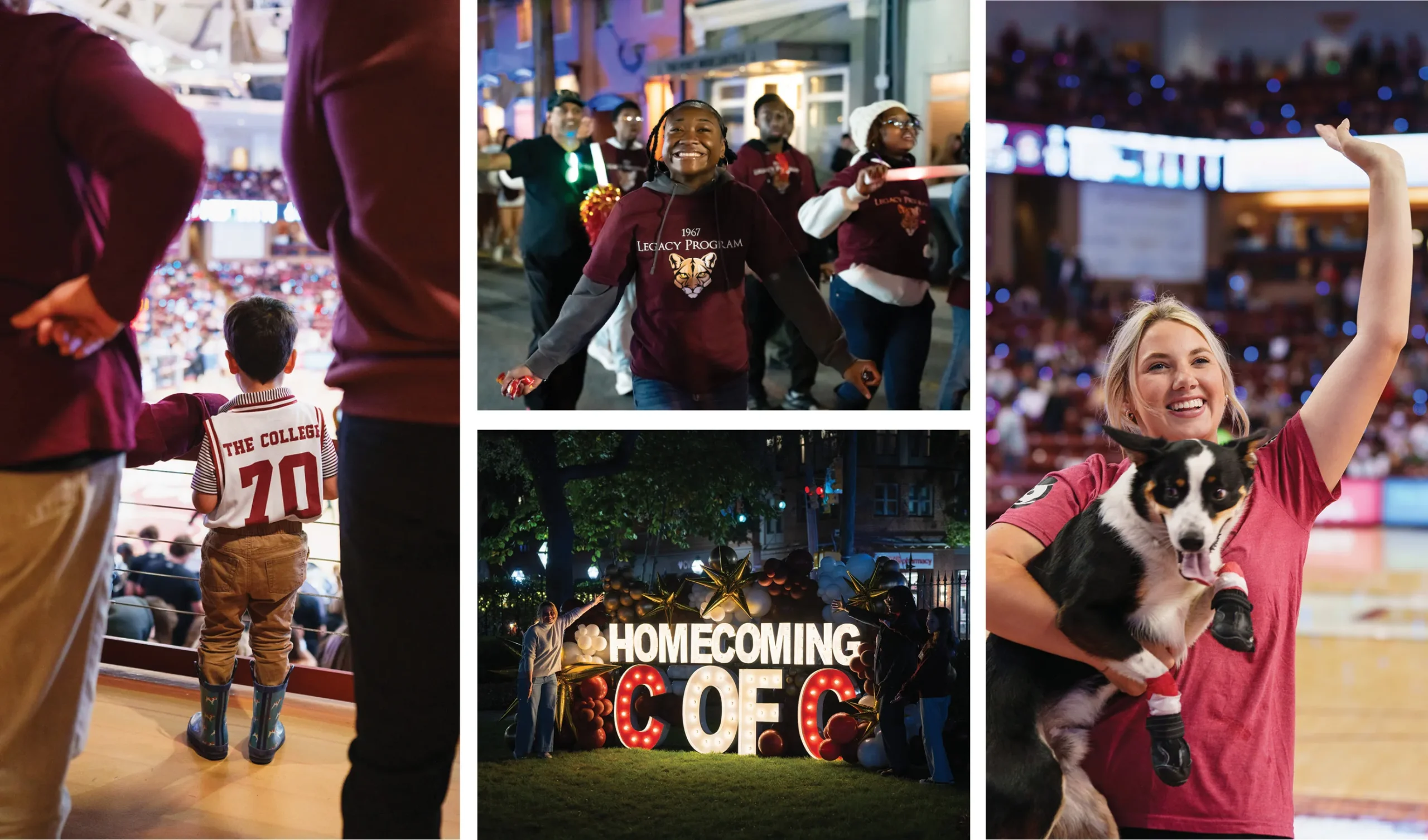
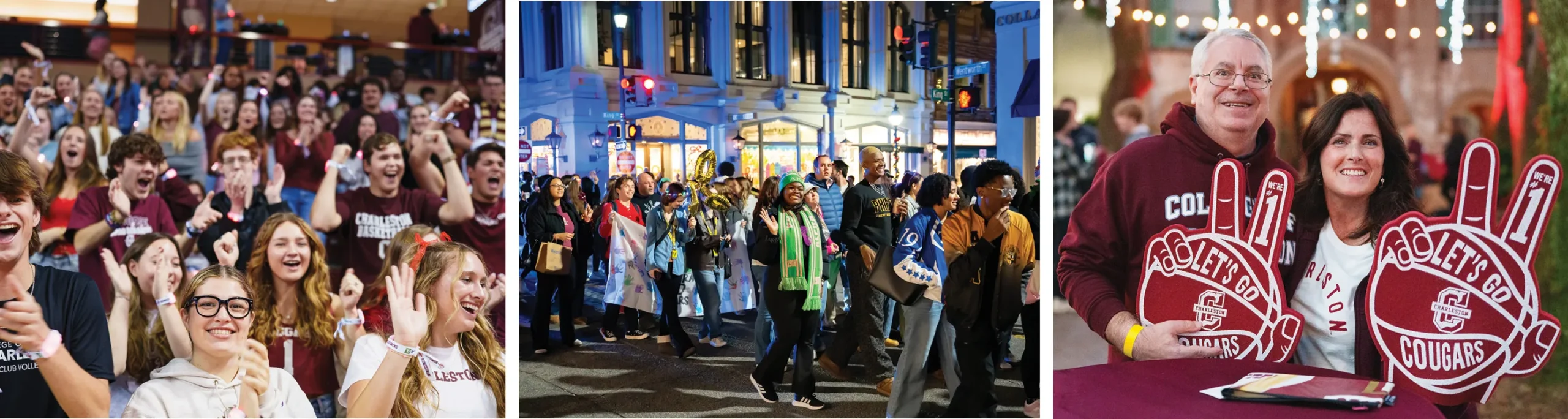
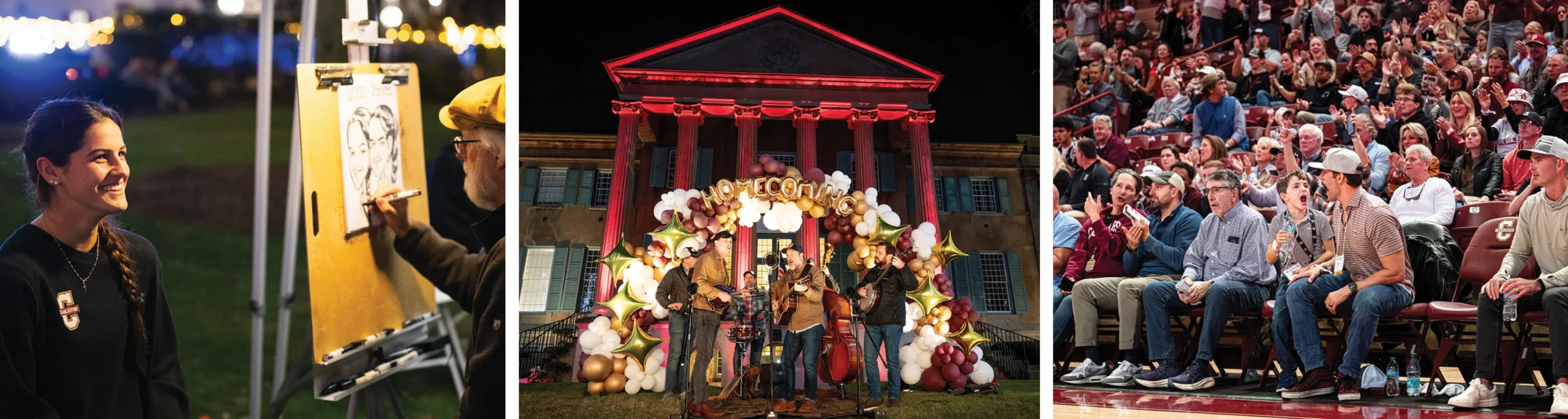
2025 Alumni Awards
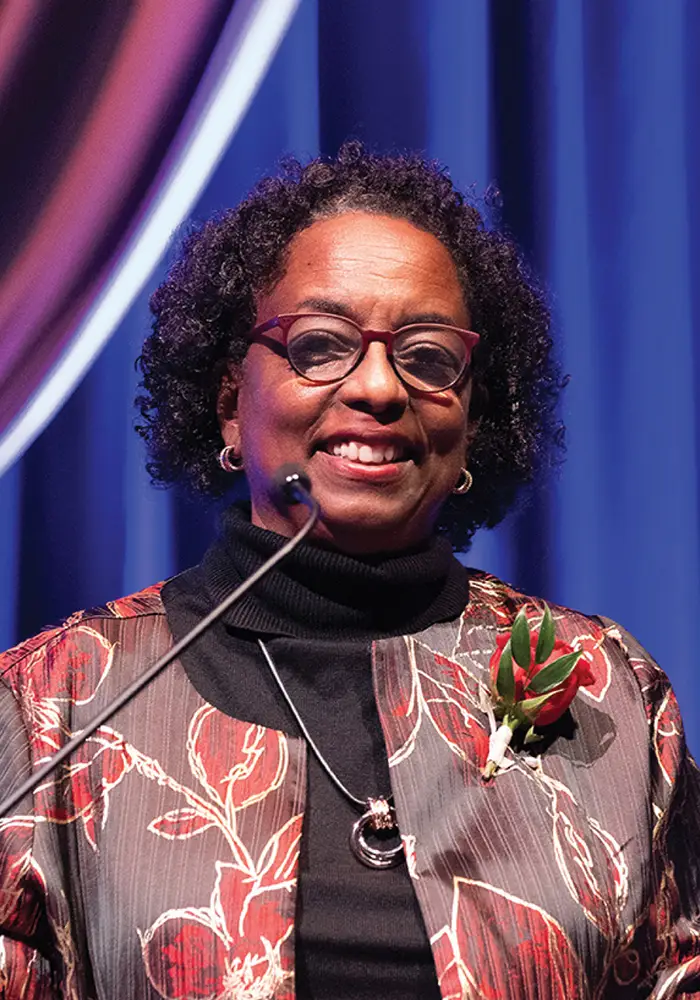
Alumni Award of Honor
Charleston
A Charleston native, Clemons graduated early from high school and enrolled at the College at age 16. Three years later, she walked across the Cistern with a Bachelor of Science in psychology. She earned a Master of Education in counseling from The Citadel and has taken extensive coursework in educational administration from American University.
For her exemplary efforts for the betterment of both the Board of Trustees and the College, Clemons received the Doctor of Humane Letters degree in May 2025. The Excellence in Collegiate Education and Leadership awards program at the College acknowledged her services to the student community by establishing the Demetria N. Clemons Distinguished Mentoring Award. Clemons’ generosity of time, spirit and wisdom has contributed significantly to the past, present and future success of CofC students.
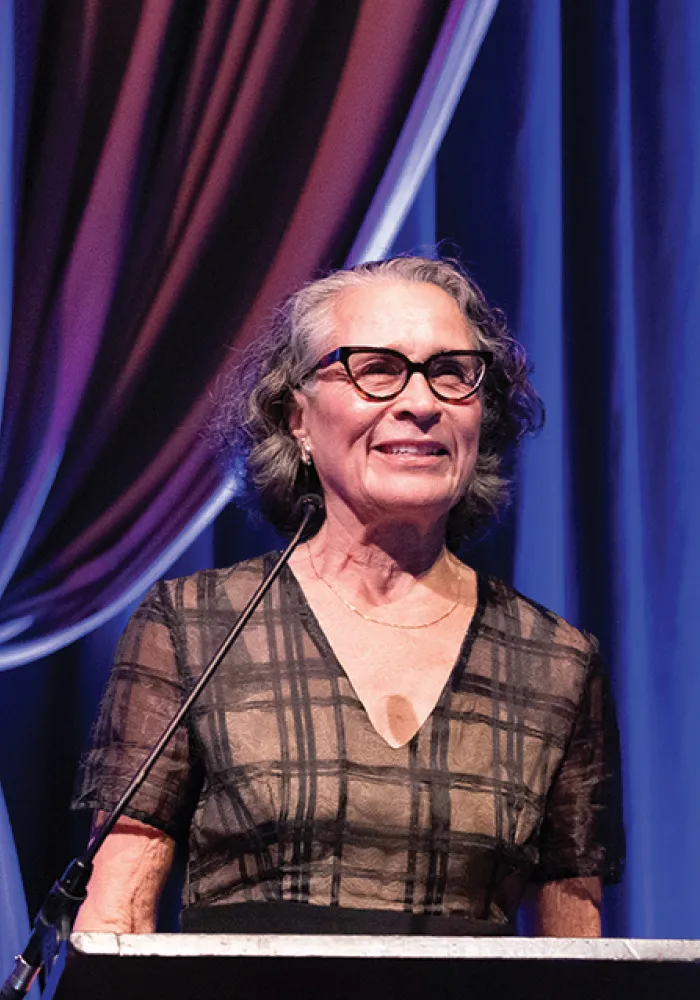
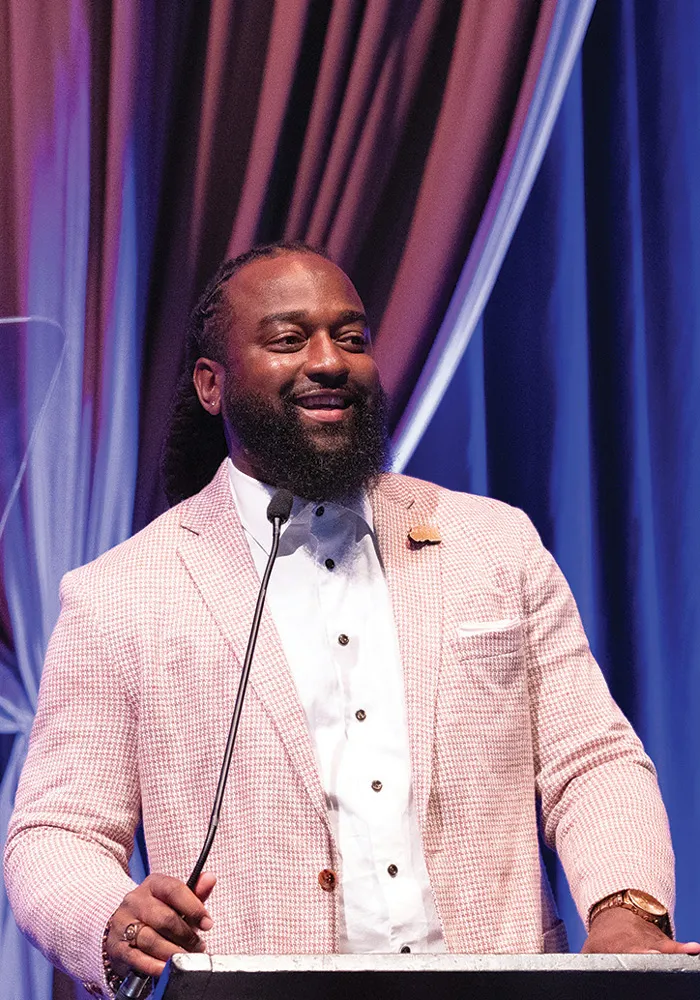
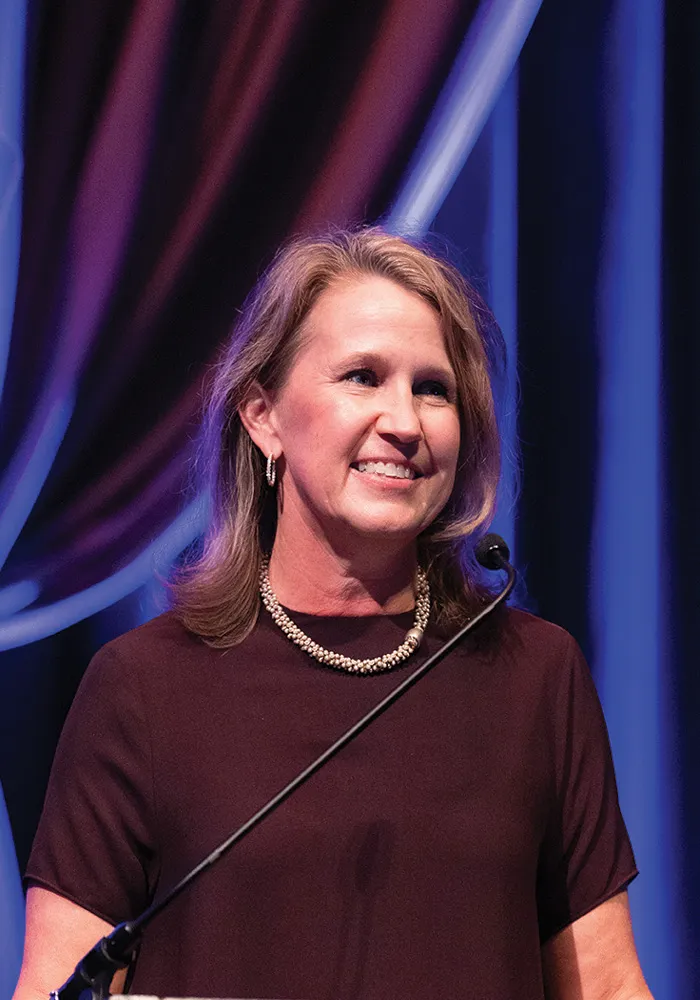
Karen Burroughs Jones ’74 Distinguished Alumni Award
Mt. Pleasant, S.C.
Alumnus of the Year
Melbourne, Fla.
Howard F. Rudd Jr. Business Person of the Year
Chapin, S.C.

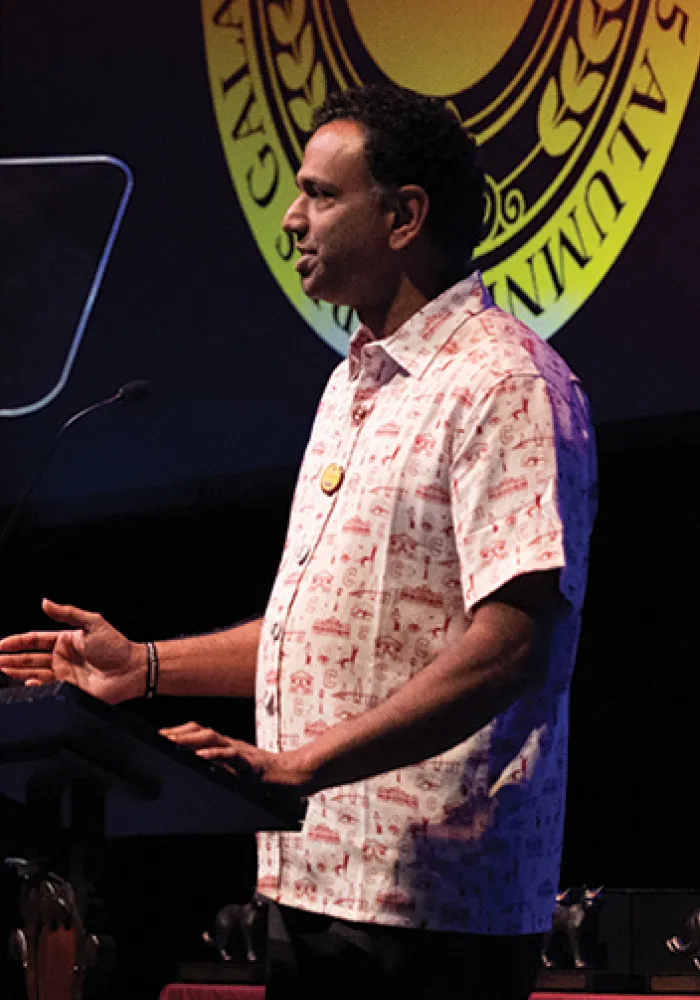
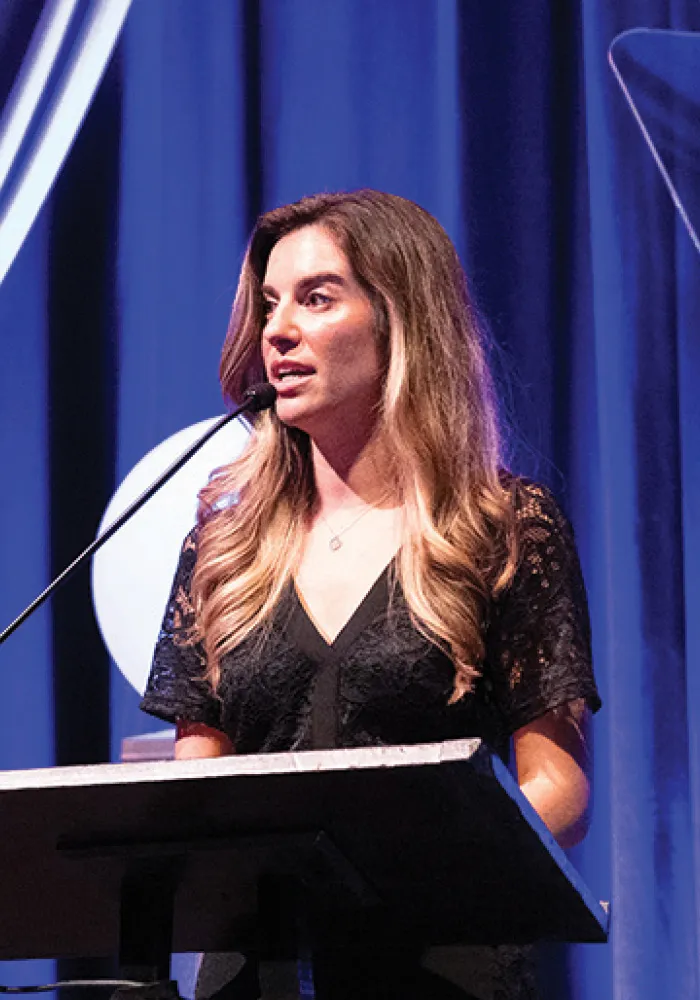
Outstanding Service Award in Medicine
Johns Island, S.C.
Honors College Distinguished Alumni Award
Charleston
Young Alumnus Award
Washington, D.C.
All That Jazz
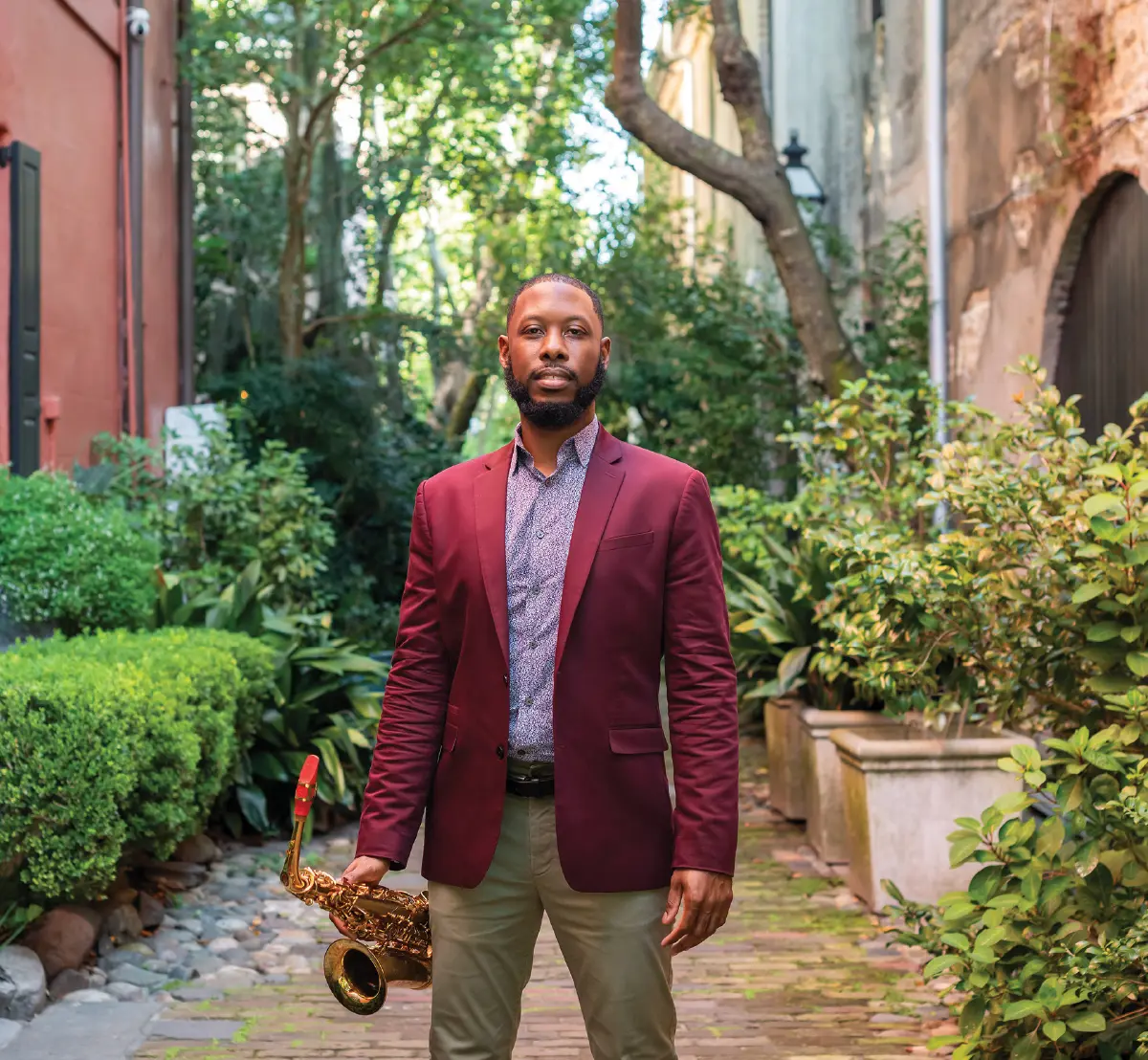
From middle school on, Patton immersed himself in music, learning to play everything from the sax to the piano. But he always saw music as a hobby, a creative outlet to balance what he assumed would be a more conventional career in technology. When the North Charleston native searched for the perfect university, he felt called to the College.
“The College is the city, and the city is the College,” says Patton. “I knew CofC would give me an invaluable education, and the city’s vibrant scene would open up a wealth of networking opportunities.”
Patton was a double major in computer science and music, but the personal attention and encouragement he received from the Department of Music sparked a realization that music could be more than just a pastime.
“Kevin was a wonderful student,” says Robert Lewis, visiting professor of music and director of jazz studies. “He came in as one of the most talented kids we’ve had in the program and always had a great work ethic.”
Even though Patton recalls Lewis as one of his most challenging professors, they are good friends today, with a strong personal and professional relationship (Lewis also plays in the Charleston Jazz Orchestra).
“He saw my potential and knew what I was capable of,” says Patton. “He pushed me beyond my limits, and for that I am forever grateful. I have enjoyed seeing how our relationship has grown from when I was a student to a professional musician.”
“To imagine where I was then to where I am now in my music career, seeing my growth and improvement over time, has been inspiring,” says Patton, who also plays the clarinet and flute with the orchestra.
Patton performs his own compositions at events such as Piccolo Spoleto, the Savannah Black Heritage Festival and the Atlanta Heritage Music Festival, where he received a Maestro Award. In addition to composing and performing, he also teaches music theory to middle and high school students at Allegro Charter School of Music in North Charleston.
Patton has two jazz albums to his name. His debut album, Full Authority, which he started as a CofC student, laid the foundation for his career. His second project, It All Works Out, followed soon after graduation, and he’s currently working on a third, with no plans of slowing down.
“If you plan to have a fruitful career, you need to know what it is you want and be fluid when it comes to obstacles,” he advises anyone thinking about making a career of their passion. “No road is smooth, but if you are persistent in your trials, you can pursue anything you want.”
Road Warrior

After graduation, I wanted to take a trip before settling into whatever came next. I’d lived in the U.S. for almost four years but had only really seen the East Coast and the cities I’d traveled to for soccer. Before moving here from the U.K., I thought of America mostly in terms of its big cities – New York, Miami, Los Angeles, Las Vegas – but during college I learned more about its national parks and realized how much of the country I hadn’t experienced. My first plan was a traditional road trip by car, but the idea of crossing the country by bike felt truer to what I wanted: to move slowly, see things properly and really earn the views out West.
At first, it was just a vague idea to fly to California, cycle around some national parks and see where it took me. That changed in the fall of my senior year when I took Ben Navarro’s intentionality class, which focused on a different theme of self-improvement each week, including stepping outside your comfort zone. I realized the last time I’d truly been uncomfortable was when I first moved to the States.
Our guest speaker that day mentioned how his employer gave him the “company car: a bike that had already been ridden across America.” I had no idea that was even possible, and it made me realize the trip I’d been planning felt too safe.
Last spring, I began training and planning to bike across the country. Through a mutual friend, I met Zach Thompson, a photographer and videographer who had dreamed of doing a similar trip since he was a kid. After a few meetups, we decided to go together. I’d originally imagined a trip like this being something to be done alone, but having someone to recount the day while cooking over our camp stoves in the evenings, sharing the views, and even the silence, made the trip all the more human.
The ride was tough in all the obvious ways, but what surprised me most was the mental side of it. We averaged around 70 miles a day, often on long, empty roads with nothing to do but think. Cycling like that is slow enough that you can’t hide from your own thoughts.
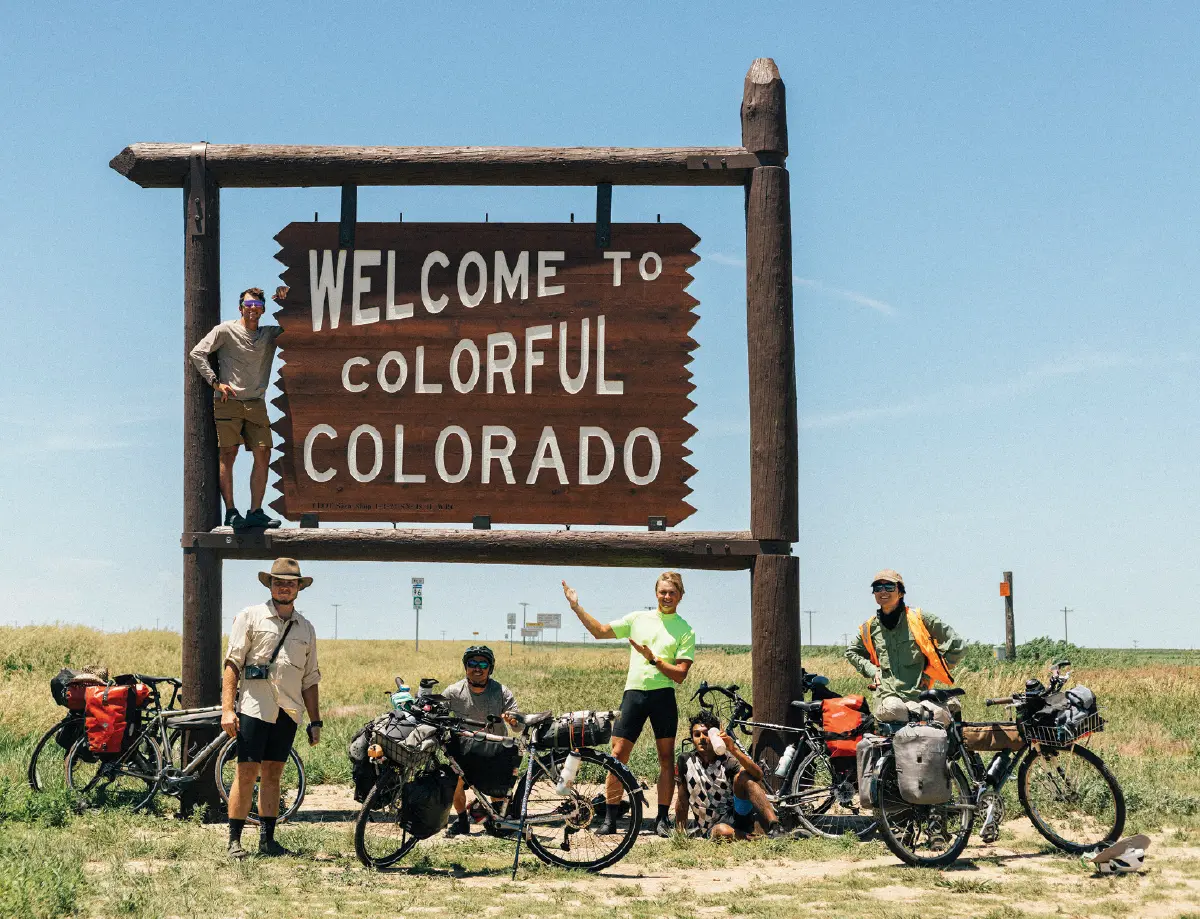
One day in Utah summed it all up. I’d been dreading a 120-mile stretch through the desert with no towns, no gas stations and only one muddy river for water. At the final stop, a couple I’d met insisted I take their water purifier, saying it might come in handy.
That day hit 103 degrees. My bottles were almost boiling, and by mile 85 I was out. When I flagged down a passing car, the driver, who turned out to be a cyclist, gave me the rest of his water. Ten miles later I was empty again, and another driver stopped to hand me ice, snacks and soda. It was enough to get me through. When I finally reached camp, I found a group of geologists setting up their tents. They had coolers full of water and food and immediately invited me to join them. Sitting in the desert that night, sharing dinner and a beer with strangers, ended up being my favorite moment of the trip. It had everything: exhaustion, beauty and kindness.
If I learned one thing, it’s that you don’t need perfect conditions to start something. I’ve always been someone who plans, waits until things line up and overthinks timing. But on this trip, things went wrong constantly: We had flat tires, broken spokes, forest fires and bad directions and just had to keep adapting.
At first, I hadn’t planned to ride for charity, but the more I trained, the more it felt wrong not to. I’ve been about 80% deaf since I was 17 because of a condition called otosclerosis and have relied on hearing aids ever since. So I partnered with the Hear the World Foundation, which provides hearing care for children in low- and middle-income countries, and we raised $2,500 along the way. On the hardest days, remembering that I was riding for something bigger than myself helped me keep going.
I started this trip wanting to see as much of America as possible before life pulled me elsewhere. I finished it realizing that what makes a place unforgettable isn’t the landscape or the miles you cover, but the people you meet when you’re vulnerable, open and moving slowly enough to notice.
PASSAGES
July 9, 2025; Atlanta, Ga.
Oct. 22, 2025; Greenville, S.C.
April 16, 2025; Mount Pleasant, S.C.
April 15, 2025; Mount Pleasant, S.C.
Oct. 21, 2025; Sumter, S.C.
Sept. 7, 2025; Orangeburg, S.C.
April 5, 2025; Sarasota, Fla.
May 5, 2025; Cashiers, N.C.
July 30, 2025; Charleston, S.C.
Aug. 23, 2025; Callahan, Fla.
Feb. 8, 2025; Charleston, S.C.
Aug. 24, 2025; Charleston, S.C.
Aug. 19, 2025; Ridgeville, S.C.
Oct. 8, 2025; Chester, S.C.
April 28, 2025; Goose Creek, S.C.
Aug. 11, 2025; Charleston, S.C.
April 9, 2025; Asheville, N.C.
Oct. 16, 2025; Charleston, S.C.
Feb. 21, 2025; Charleston, S.C.
Nov. 5, 2025; Mt. Pleasant, S.C.
Feb. 1, 2025; Columbia, S.C.
June 2, 2025; Mt. Pleasant, S.C.
Feb. 11, 2025; Rocky Mount, Va.
June 23, 2025; Charlotte, N.C.
Oct. 2, 2025; Charleston, S.C.
Aug. 7, 2025; Mt. Pleasant, S.C.
Jan. 7, 2025; Lawrenceville, Ga.
Nov. 4, 2025; Hanahan, S.C.
Feb. 17, 2025; Mt. Pleasant, S.C.
June 5, 2025; Charleston, S.C.
Oct. 3, 2025; Washington, D.C.
Feb. 9, 2025; Charleston, S.C.
Aug. 25, 2025; Beaufort, S.C.
Nov. 6, 2025; High Point, N.C.
June 16, 2025; Caldwell, N.J.
Sept. 6, 2025; Charlotte, N.C.
June 27, 2025; Charleston, S.C.
Oct. 8, 2025; Beaufort, S.C.
Former Staff
Aug. 31, 2025; Summerville, S.C.
April 22, 2025; Ocracoke Island, N.C.
April 19, 2025; Mt. Pleasant, S.C.
Faculty
Sept. 3, 2025; Charleston, S.C.
June 13, 2025; Columbia, S.C.
Oct. 1, 2025; Augusta, Ga.
Oct. 9, 2025; Charleston, S.C.
April 4, 2025; Summerville, S.C.
Aug. 19, 2025; Mt. Pleasant, S.C.
Oct. 30, 2025; James Island, S.C.
Aug. 8, 2025; York, Pa.
Oct. 29, 2025; Smyrna, Ga.
Sept. 16, 2025; Pound Ridge, N.Y.
April 23, 2025; Nashville, Tenn.
Aug. 31, 2025; Elizabeth City, N.C.
June 22, 2025; Charleston, S.C.
Aug. 1, 2025; Houston, Texas
Former Staff
July 16, 2025; Charleston, S.C.
Former Faculty
Aug. 16, 2025; Fredericksburg, Pa.
Former Staff
Oct. 19, 2025; Charleston, S.C.
Former Faculty
Sept. 16, 2025; Mt. Pleasant, S.C.
Honorary Degree
Aug. 21, 2025; Charleston, S.C.
Student
Oct. 31, 2025; Tinton Falls, N.J.

Dialogue over Dissmisal
One topic that has come up time and again on When We Disagree, our podcast about important disagreements in all of our lives, is the difference between proactive and reactive habits of healthy debate and dialogue. Proactive habits shape how we enter disagreements; reactive habits guide how we respond once things get tense. Together, they offer a road map for finding common ground and keeping conversations productive rather than polarizing.
Proactive Dialogue: Setting the Stage for Understanding
Before disagreement even begins, it helps to clarify what counts as good evidence. People rely on different forms of proof – personal experience, data, expert opinion or moral reasoning – and assuming everyone shares the same standard is a recipe for frustration. By naming how we each decide what’s credible, we build trust and reduce the chances of talking past one another.
Curiosity is another essential proactive habit. When someone presents an unfamiliar or unconvincing claim, we can ask, “How did you come to see it that way?” rather than rushing to correct them. This question shifts the tone from confrontation to exploration. Dialogue thrives when our first impulse is to understand, not to win.
Finally, it helps to remember that evidence is emotional. People’s beliefs about what’s true are often bound up with identity, belonging and experience. Recognizing this in advance allows us to approach conversation partners with empathy rather than suspicion.
Reactive Dialogue: Navigating Conflict in the Moment
Even with the best preparation, disagreements can still spark defensiveness or hurt. When that happens, healthy reactivity means slowing down rather than striking back. If you feel dismissed, ask, “What makes that hard to believe?” instead of doubling down. Slowing the pace helps both parties reengage their reasoning instead of their reflexes.
When others rely on stories or sources you find unconvincing, try to translate rather than dismiss: “So that example is meaningful to you because … ?” Doing so validates their experience without conceding the argument. If tension rises, name it gently: “We seem stuck on what counts as proof.” By talking about the disagreement, not through it, we transform friction into reflection. Healthy argument balances conviction and humility. It’s possible to stand firm in what you believe while still showing openness to new perspectives. Dialogue doesn’t always end in agreement – but it can end in mutual curiosity, a recognition that each side’s reasoning makes sense within their world.
A Courageous Path Forward
If we can get a little better – individually and collectively – at listening, arguing and thinking carefully about what counts as proof, then we can improve our world one conversation, one relationship at a time. The Civility Initiative’s mission is not to erase disagreement, but to humanize it. Each time we choose dialogue over dismissal or debate over disdain, we create space for understanding. And in those moments, however small, the world becomes just a bit more civil, more connected and more capable of change.