


Class Act
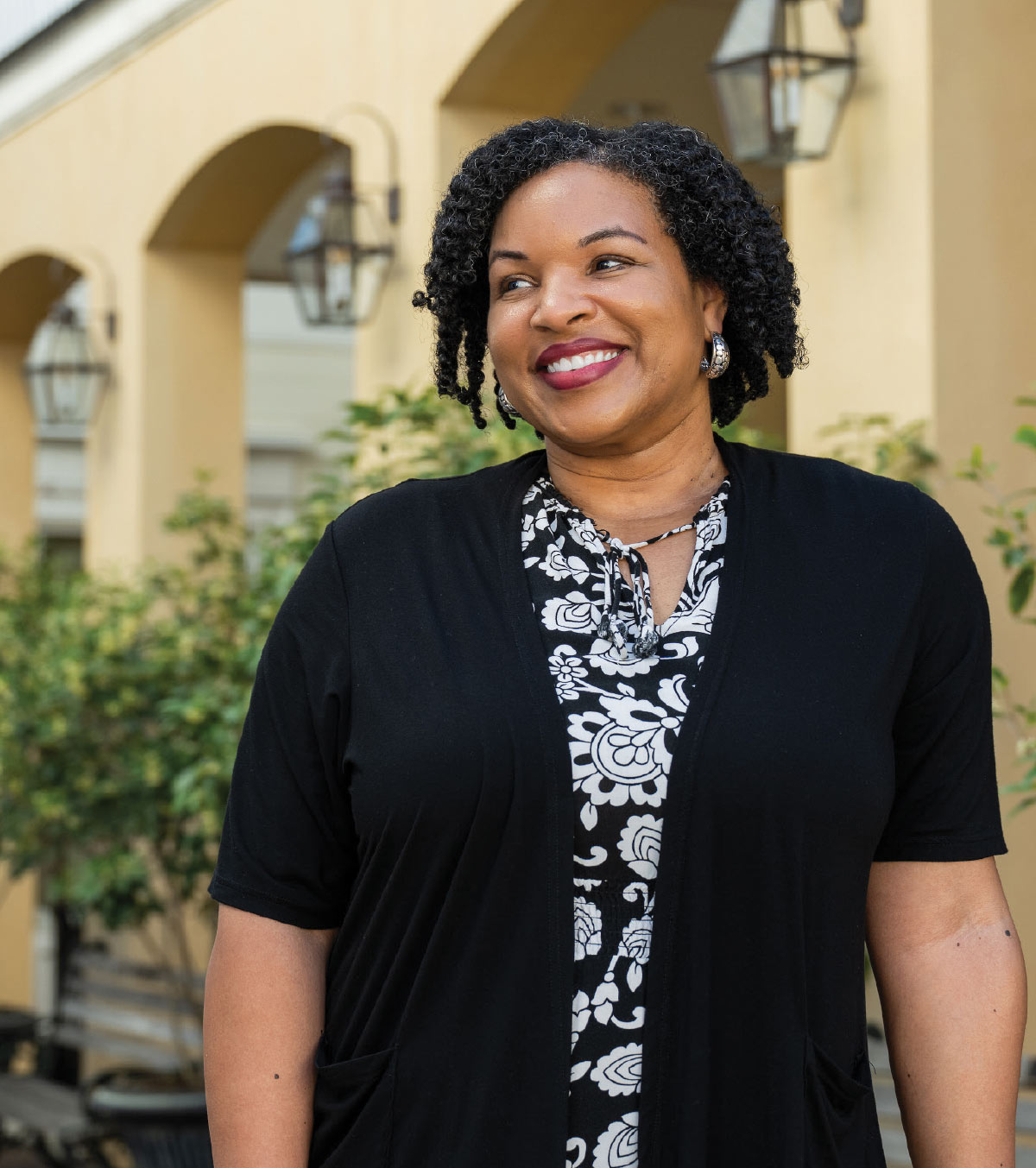
“I have education in my bones,” says Booker, whose mom was a kindergarten teacher and whose dad was an elementary school principal before both became school district administrators in Lynchburg, Va. “My parents both really impressed upon me the importance of educational achievement.”
The educational fortitude instilled in her by her parents helped push her, but there was still something missing. In many instances, Booker was one of the few African American girls in her classes.
“It was this quandary where I felt like I was achieving at a high level,” she says, “but I did not necessarily feel what we call in the research literature a sense of belonging.”
“I remember talking to my adviser, and I was kind of in this word salad, trying to figure out what I wanted to study, what to write for my dissertation, and beyond. My adviser said, ‘I think what you’re trying to explore is school belonging.’”
Twenty years later, Booker’s research and personal experiences have helped her flourish in her career focusing on just that. She examines the feelings students experience in the classroom in a qualitative way across multiple developmental age points, highlighting learning environments where students are valued, respected and welcomed.
“When I look at school belonging, I’m looking at the student, how they feel about their teachers, how they feel about their peer group and then how they feel about the content,” she says.
Finding a sense of belonging has not been an issue for Booker at the College, where she started in 2013 as an adjunct in teacher education. She is now a full professor in the School of Education who has also served as associate dean and interim dean in the Graduate School. (Husband Anthony Greene is the director of African American studies.)
Last summer, the School of Education launched its online Doctor of Education degree program, with Booker serving as its director. A total of 38 students made up the program’s first cohort.
“We knew we wanted it to be a cohort model,” says Booker. “The reason we did that is because we wanted people to feel a sense of belonging, a sense of community right from the beginning.”
The program focuses on learning and inquiry and is designed for professionals working in various environments who are ready to reimagine learning, improve educational systems and develop new solutions to complex educational challenges.
“We all have multiple problems, concerns and issues that bubble up in our organizations,” says Booker. “We want to equip our students with the ability to see that problem, name it, define it and bring to bear unique perspectives on how we can improve dynamic work settings.”