


Test Drive
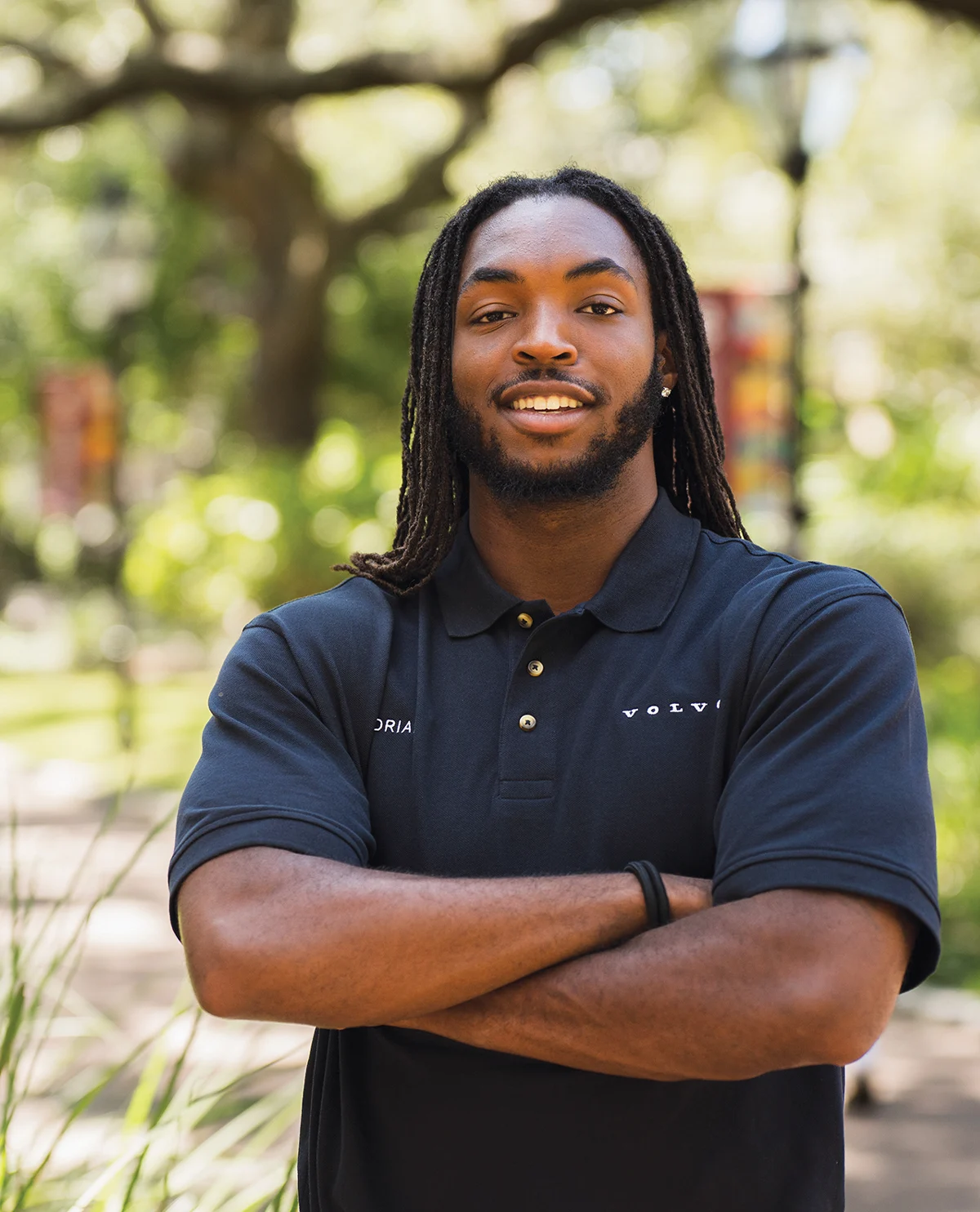
“I didn’t really know exactly what field of engineering I wanted to do,” says the senior from Rock Hill, S.C., who decided to major in systems engineering at the College. “Systems engineering was able to give me a wide variety of options and potential career paths to kind of let me continue to figure it out and find who I was in the whole process.”
The major came with several other benefits, too.
“The College of Charleston allows for a very intimate, close connection with your teachers and your mentors and advisers – and they are motivated for you to succeed through all sorts of opportunities to get hands-on experience in the industry,” says Smith. “They really give you the best advice for you to pursue your dreams and aspirations.”
Take, for example, Qian Zhang, assistant professor of engineering, who helped Smith get an internship with a Siemens lighting panel assembly plant in Roebuck, S.C., during his sophomore year and into the following summer.
“She’s been with me the entire way, giving me advice on entering the workforce, showing me potential directions I could take,” he says. “She definitely helps me narrow down and pick the best opportunities that are going to be best for myself.”
It was a great choice. Working on the Siemens assembly line optimization project pushed him to step up in ways he didn’t expect. By ensuring clear communication with the line workers and the material handlers, he recognized early on that their insights and collaboration were essential to making the improvements successful.
“Building trust through relationships while keeping lines of communication open allowed our process enhancements to really spark change,” he says.
The importance of communication was reiterated in his summer 2025 internship at Volvo in Ridgeville, S.C., which makes the fully electric EX90 and Polestar 3.
“System engineering requires a lot of teamwork, just for the simple fact that you’re working with such a wide variety of different teams and components – anything from assembly line workers to the stakeholders in the company,” he says. “It’s really important to have those communication skills and be able to work very well in teams and hold everybody accountable at the same time – including yourself.”
And, because he worked with several different teams, he was able to explore the various aspects of systems engineering.
“It showed me a different perspective on my career, and I was able to explore different options,” says Smith, who discovered his love for solving real-world problems – whatever those may be. “As a systems engineer, you can go anywhere – from automotive to civil to industrial – so you really have a very wide variety of options and career paths.”
Regardless of the path he takes after graduating in May, Smith knows his systems engineering degree will get him where he wants to go – with a lot of money.