


Brainstorming
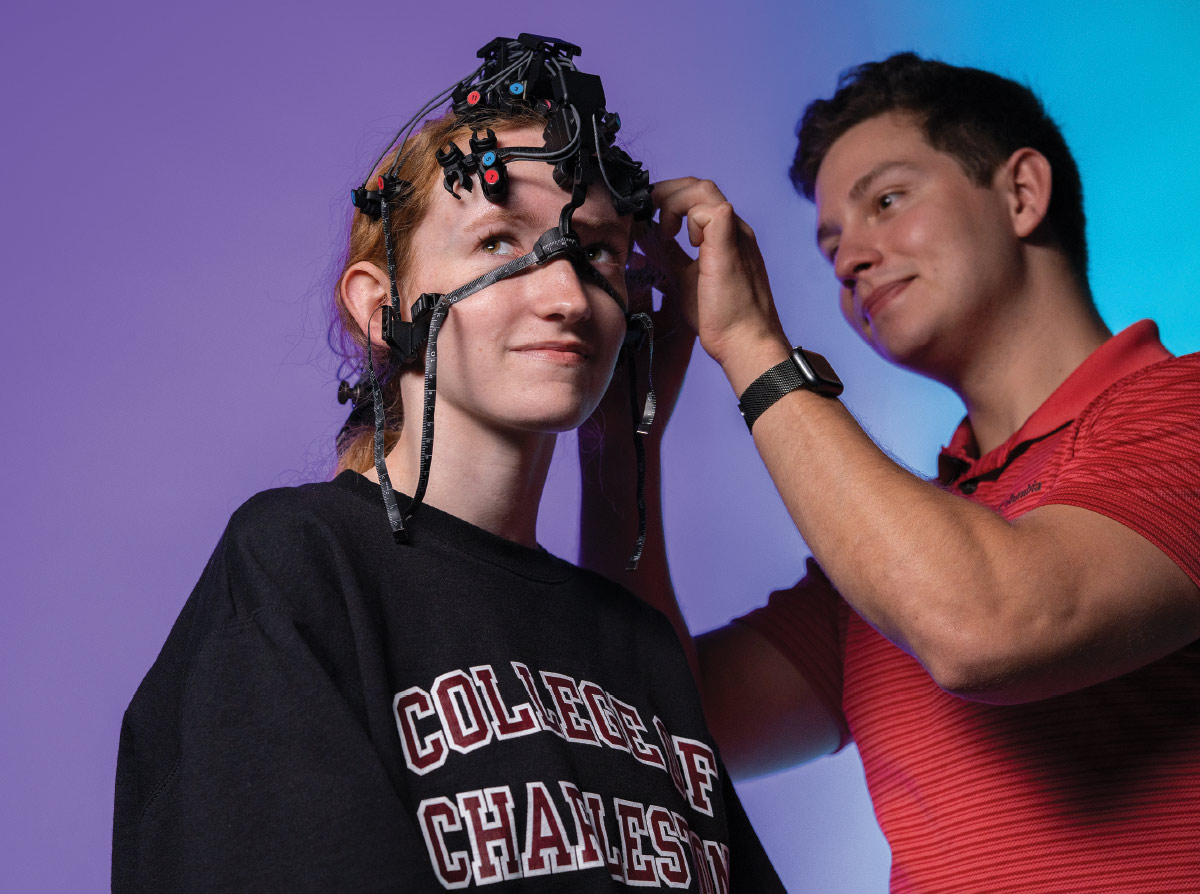
To conduct their research, Reynolds and Ice are using functional near-infrared spectroscopy (fNIRS). There are only a few fNIRS systems in the world, and Oprisan obtained one through a grant. Given the complexity of the project, Reynolds and Ice determined that they could not execute it on their own and enlisted experts and resources to help set up the device, interpret data, create surveys and choose the optimal music to elicit responses.
Dwight Krehbiel, professor emeritus of psychology at Bethel College, designed the psychometric instrument. Bill Manaris, professor of computer science and director of the College’s Computing in the Arts program, selected three distinct music pieces to help Reynolds and Ice map a subject’s musical preferences: Beethoven’s Piano Sonata, Oscar Peterson’s C Jam Blues and Yuja Wang’s Schoenberg Suite for Piano Op. 25.
It took Reynolds and Ice five months to figure out how to operate the fNIRS effectively. The fNIRS sensors, which sit on the skull like a cap, emit infrared light into the brain and detect when parts of the brain are activated.
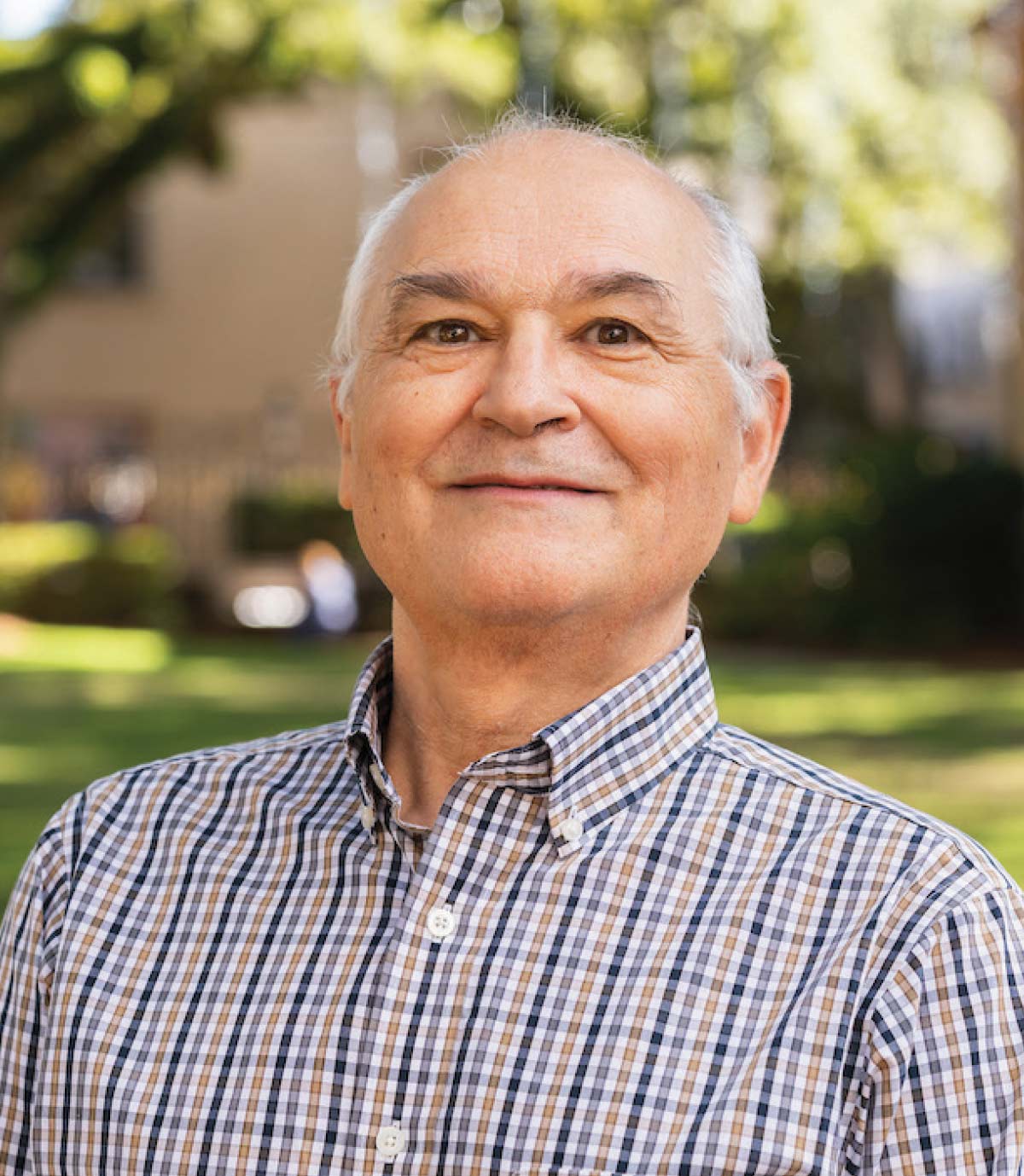
Reynolds and Ice studied nine subjects with mixed results. They discovered that the sensors struggled to read the scalps of people with dark hair and that their ideal candidate was bald. Despite the challenges, they had results.
“Zack and Chip definitely saw the change in the power of gamma bands; I knew they could do it,” says Oprisan, who hopes more students will join the research project. “This type of research is usually done by postdoc fellows, but here the research is conducted by undergrads — amazing.”
While more research is required, the long-term goal is to see AI incorporated into a more mobile and wearable fNIRS that could be worn on a day-to-day basis by people living with neurodegenerative diseases.