


Note of Appreciation
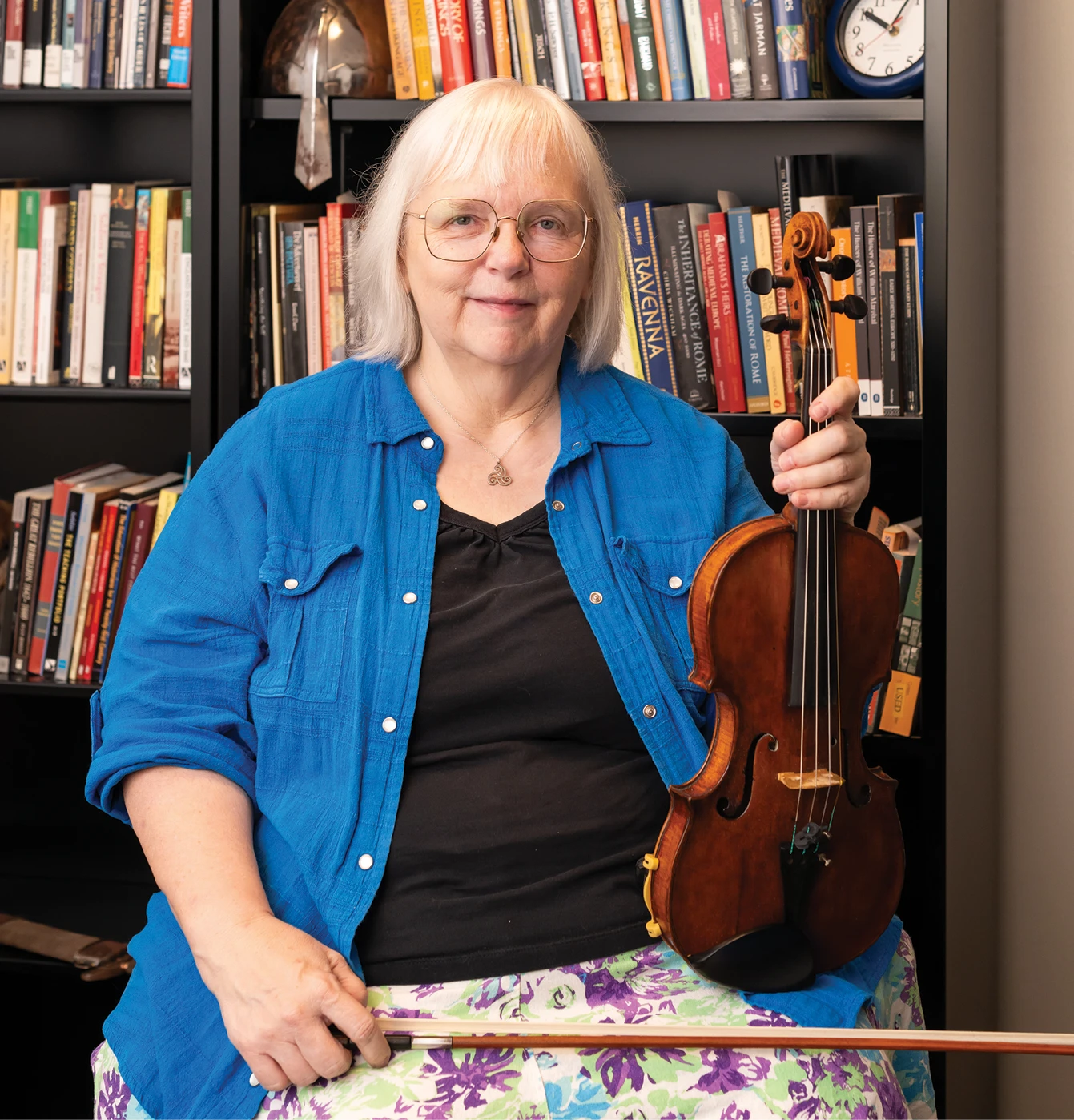
Jestice found her calling when she began playing violin in fourth grade. She received her violin, Alianora, which was made in Germany around 1800 and is named after a 14th-century noblewoman, in 10th grade. Jestice meticulously cleaned Alianora so that it offered a rich tone that she loves to this day.
In college, Jestice’s plans to become a secondary school music teacher ended with hand surgery. She pivoted to history, focusing on medieval European history. Still, she continued to play violin.
“It took me a long time to get past the pain threshold when playing, but I did because I had scholarships and had to play,” explains Jestice. “I just manipulated my wrist and hand differently than other players.”
When she joined the history department in 2012, she also joined the College of Charleston Orchestra, which had less than 20 players, and began one-on-one lessons with Tomas Jakubek, adjunct professor of violin.
“I have slowly and carefully worked with Tomas to be able to bend my wrist,” says Jestice. “Now I am stretching and twisting as I work my way down the neck of the violin. I am almost to the end of the fingerboard.”
With a more agile hand, Jestice finds even greater joy in playing with the orchestra, which has since expanded to 80 players. She enjoys interacting with students as a peer and watching them bloom under Yuriy Bekker, conductor of the CofC Orchestra and violin instructor.
“It’s beautiful to watch them respond and come up to a new level in their playing,” says Jestice, who acknowledges her playing has also improved, though she chooses to remain third chair of the second violins where she can serve as an anchor and students can key off her. She also shares tricks to making a violin tone better and brings students quality strings that offer a richer, complex sound.
“Not only does Phyllis exemplify how music can remain a meaningful part of one’s life journey regardless of career path, she is also a constant source of inspiration and ideas,” says Bekker. “She is a wonderful player, and I know she makes a positive impact on the students around her. Phyllis also has been an angel investor in our students. For Carnegie and now for Boston, Phyllis donated to the Orchestra Fund to cover the travel expenses for two of our students who wouldn’t have been able to make the trip otherwise.”
Jestice wants the orchestra students to feel the camaraderie that develops when traveling to perform.
“Making music together is the ultimate team sport,” says Jestice. “We are so reliant on each other; it’s a dynamic that requires everyone to be on. That is why I want all our students to have the opportunity to go to Boston; it will be a transformative experience that they will carry with them the rest of their lives.
“Music is a way to understand life,” adds Jestice, who hopes her bequest to the Department of Music will allow more people to develop a passion for its intrinsic value. “Life is awfully empty without music.”