


College of Charleston Magazine Summer 2026

President Andrew T. Hsu is overseeing
a renaissance of capital projects
that will transform the College
for generations to come.


SUMMER 2026 Volume XXX, Issue 2
College of Charleston
Office of University Communications
Charleston, SC 29424-0001
-
close to the heart
28
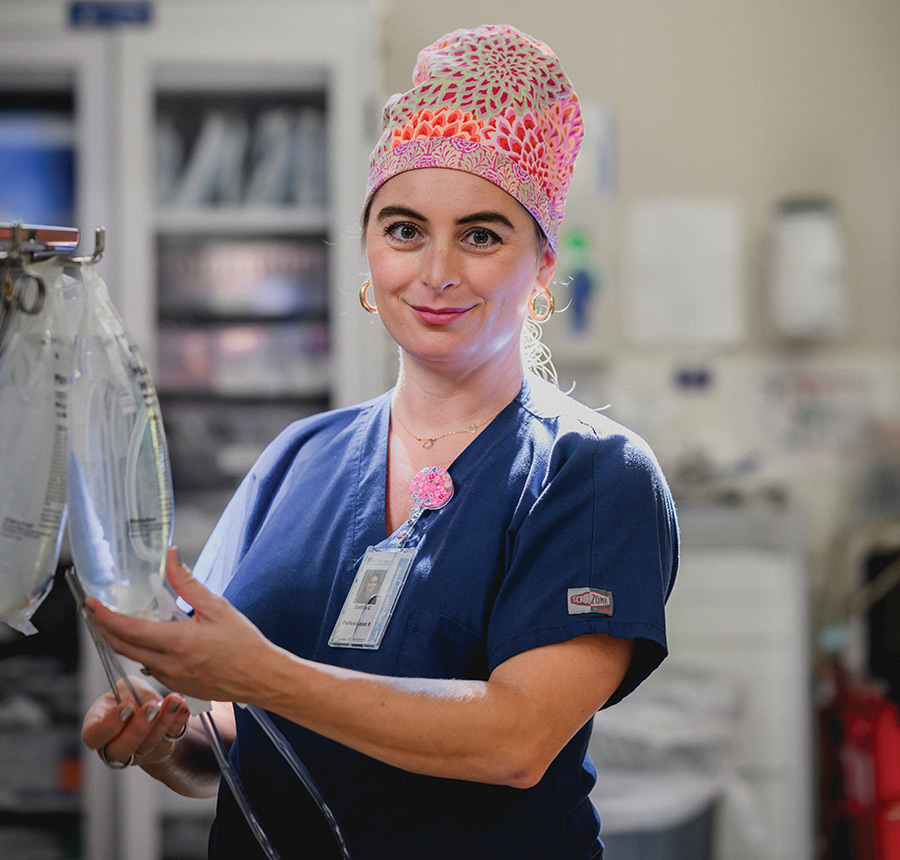
Dafne Andrea Chianella ’08 operates the heart-lung bypass machine that keeps children alive during open-heart surgery at the MUSC Shawn Jenkins Children’s Hospital.
-
Ship Shape
22
Enthralled by the international supply chain since he was a child, Micah Mallace ’07 (MBA ’11) is now the CEO and president of South Carolina Ports, with big plans to regain the agency’s top spot. -
A Campus Transformed
36
With two new buildings and seven others in various stages of renovation or planning, the College’s facilities are undergoing the most significant upgrade in decades, benefiting generations of students to come.
-
Departments
- Around the Cistern 3
- Life Academic 9
- Making the Grade 15
- TEAMWORK 19
- Impact 45
- Alumni Notebook 49
- LAST WORD 64
- on the cover: President Andrew T. Hsu inside the Stern Student Center during renovation.
- illustration by: Mike Ledford
Location, Location, Location
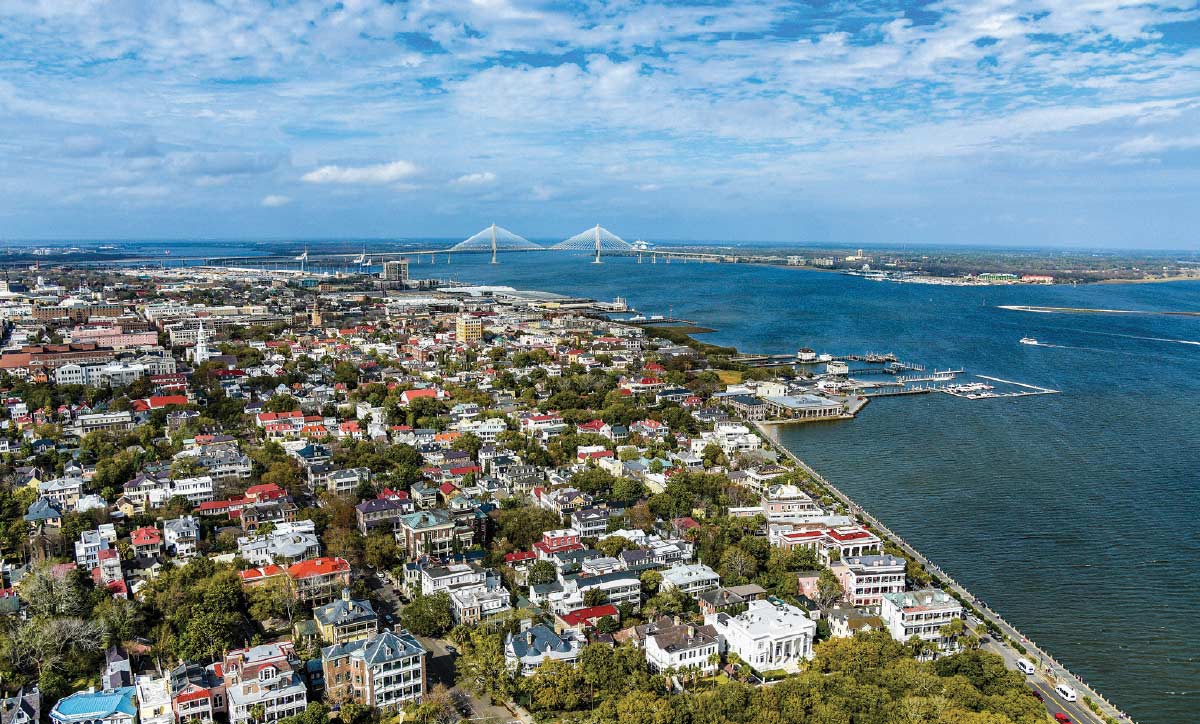
In the real estate industry, the mantra of “location, location, location” rules the day, and I believe the same holds true in higher education. Of course, not all college towns are built the same; each caters to a different identity. Colleges and universities adapt to their surrounding communities. I am thankful that our university had its own kind of special soil in which to put down roots, grow and blossom.
We like to think that our university is different – just as every institution makes that same claim. But our location in a city unlike so many others does give us an air of real distinction. Whether it is the salt-air breezes, nearby beaches, award-winning restaurants, world-famous shopping or many historical and cultural places dotting the landscape, Charleston is a unique location in our country.
WalletHub, in its review of 400 U.S. college towns, included Charleston in its top 10 Southern towns and No. 19 overall, just between Madison, Wis., and New Haven, Conn. (homes to a flagship university and Ivy, respectively). For their rankings, the editors at WalletHub zeroed in on cost of living, balanced against good academic and work opportunities. While we might have a spirited debate on affordability, especially for those who want to live downtown, near campus, the city of Charleston is experiencing a remarkable period of growth, development and revitalization.
And our students and graduates are the direct beneficiaries of that economic boom. In fact, it is a virtuous cycle, with our graduates meeting the workforce needs for a wide range of industries, which allows those companies to make even greater investment throughout the Lowcountry. In engineering terms, we call that a positive feedback loop, in which an initial effect reinforces itself and strengthens the overall process. It’s like a turbocharger in an internal combustion engine, in which each part amplifies the next.
Right now, we are certainly in a turbocharging moment for both our city and our university. And it is incumbent on us to take full advantage of our moment so that we are both positioned for sustained success. Because together, we can – and we will – do even greater things.

AROUND THE CISTERN
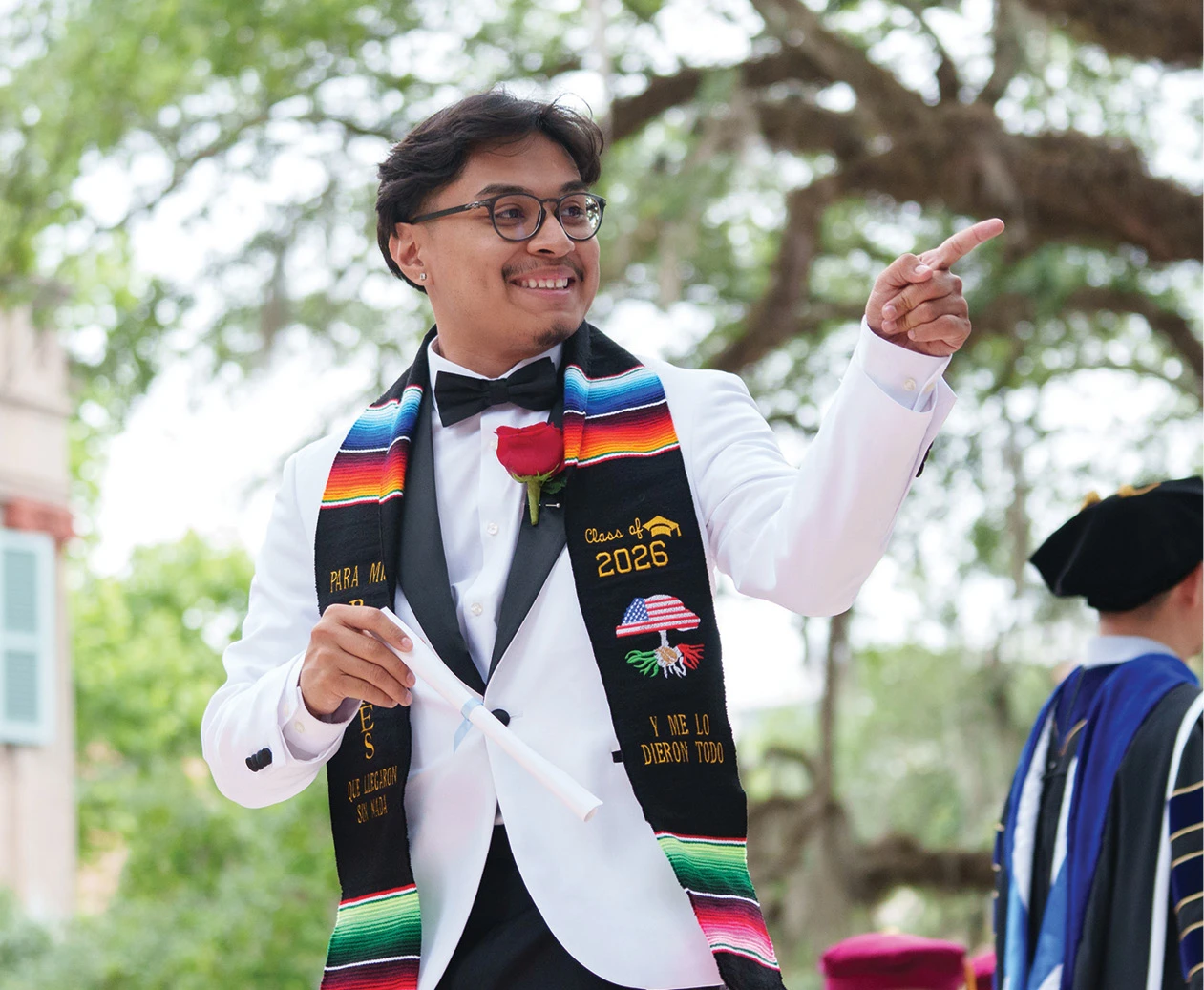
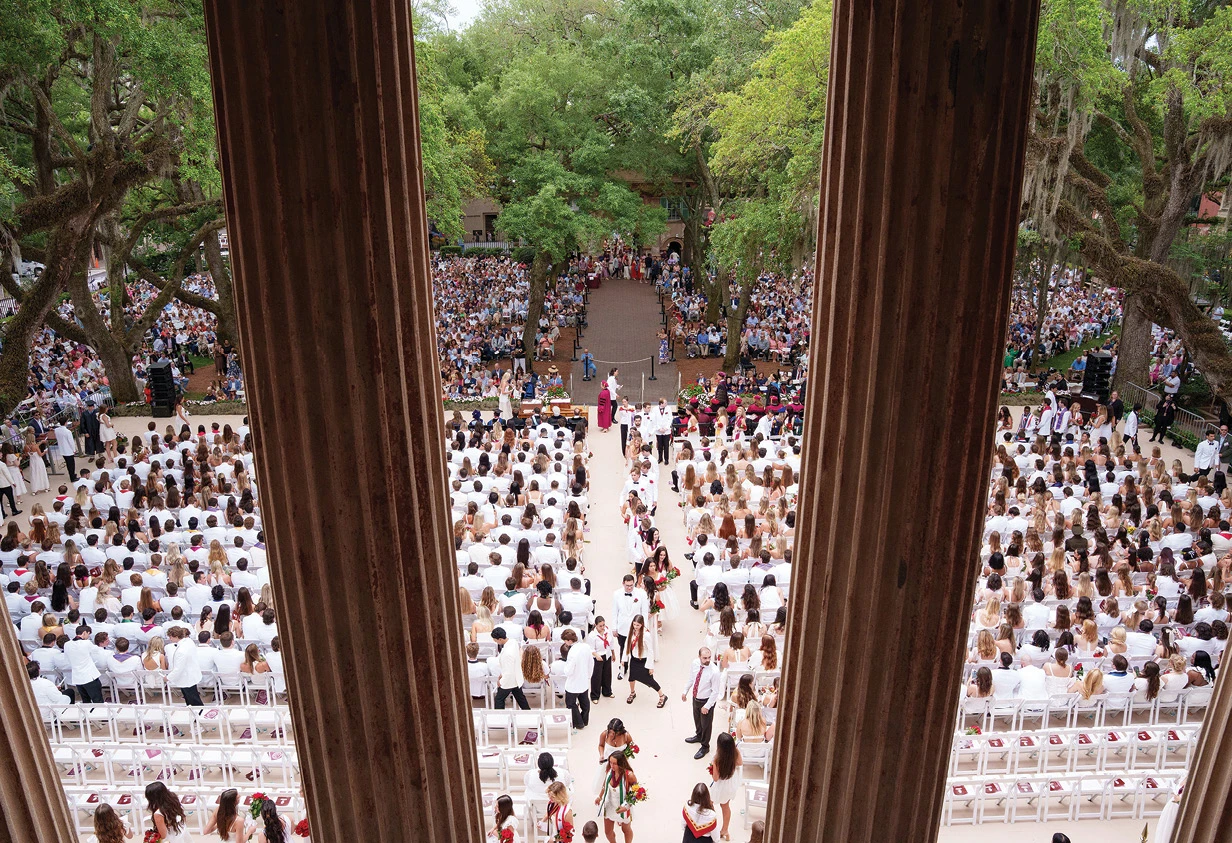
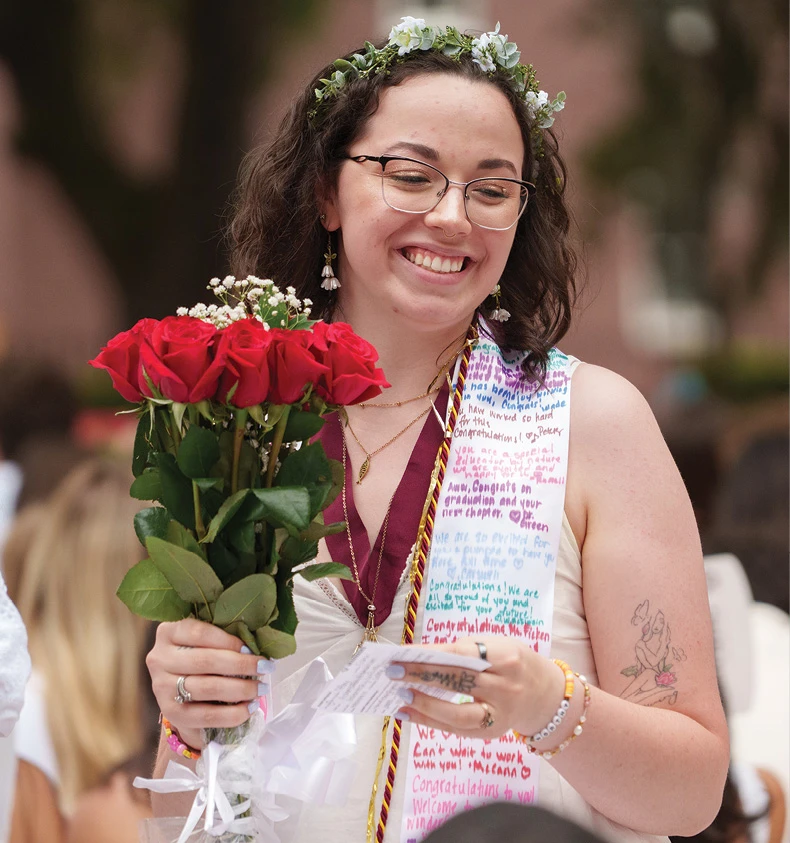
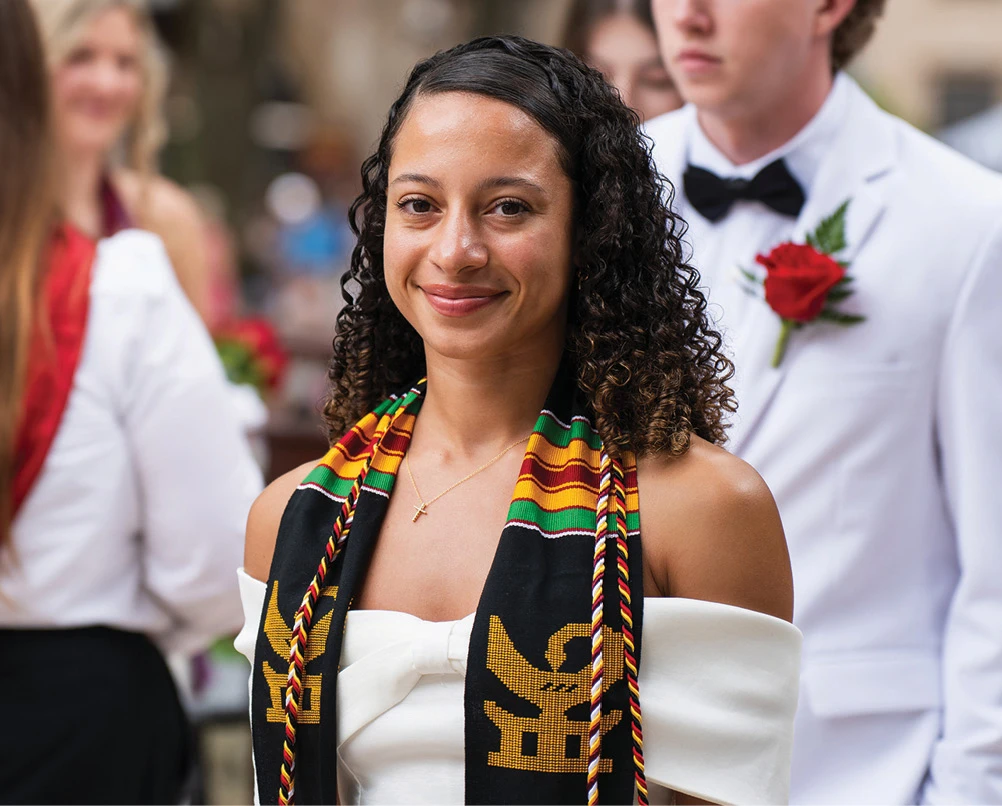
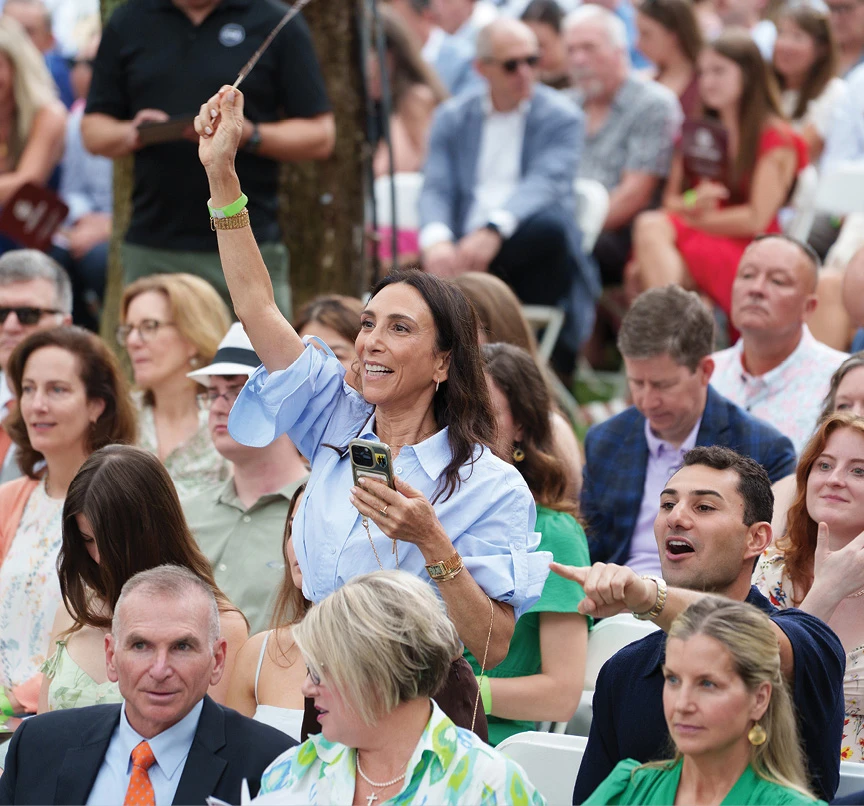
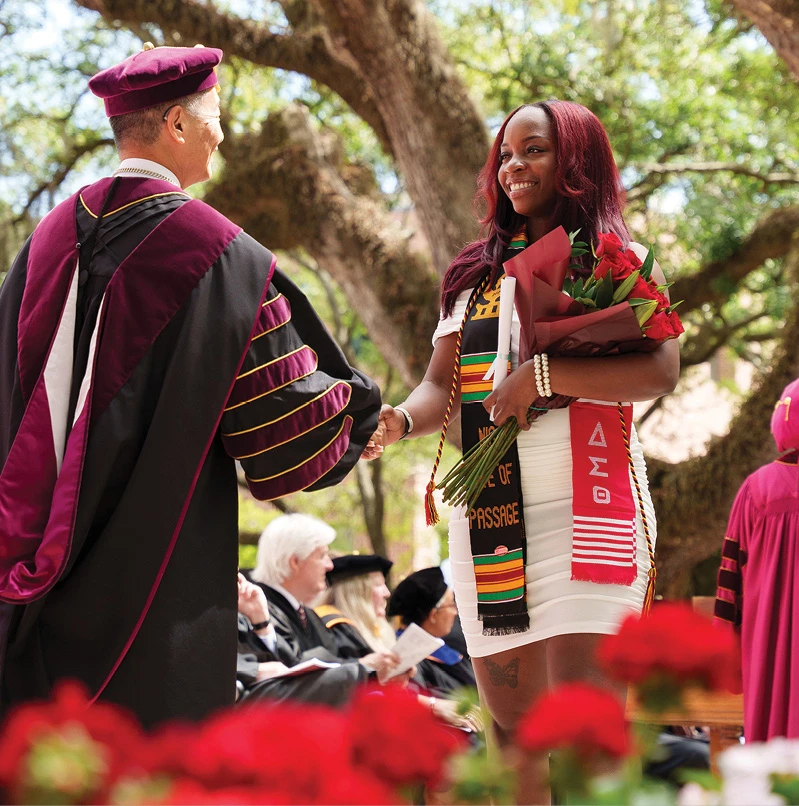
Cistern Crossed!
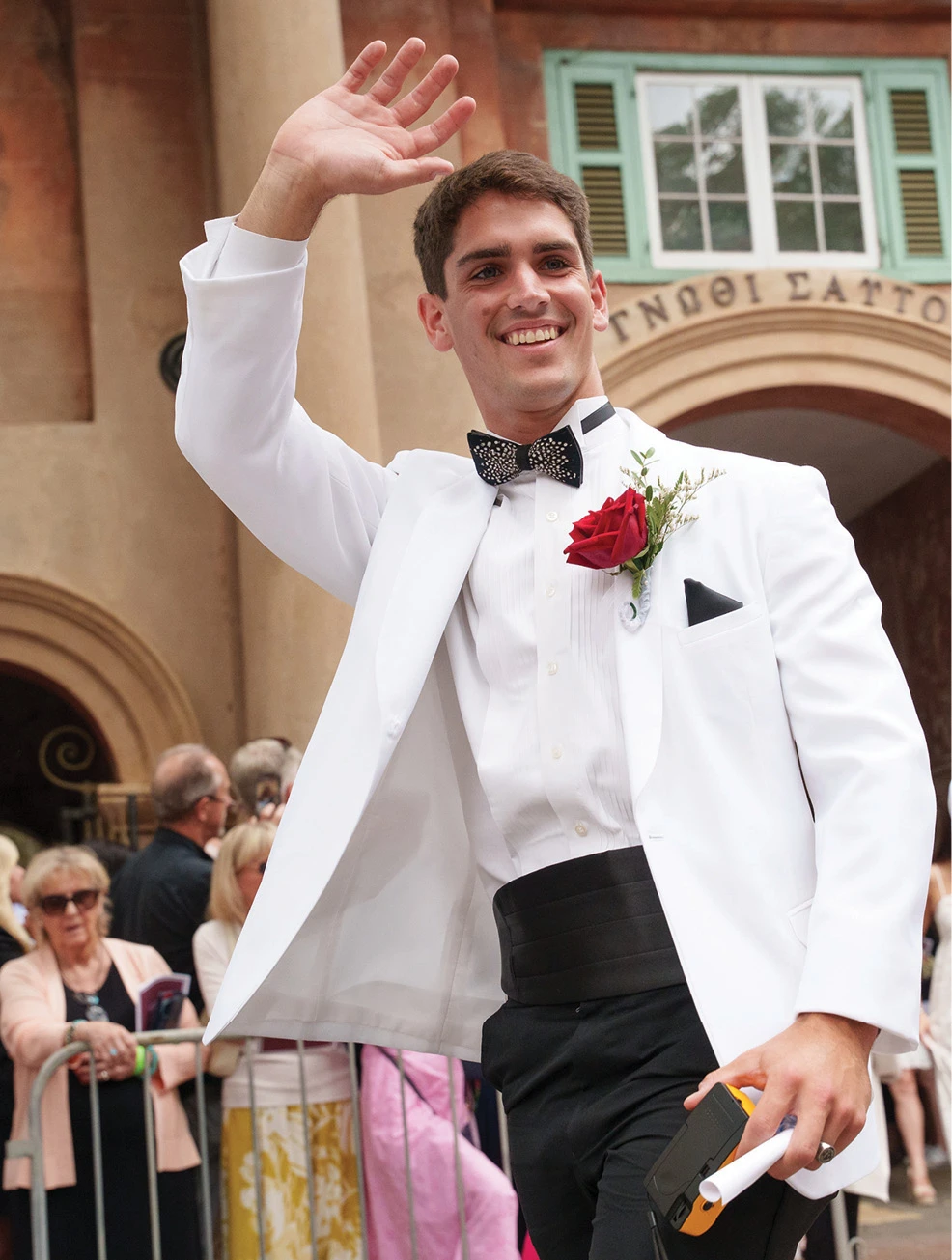
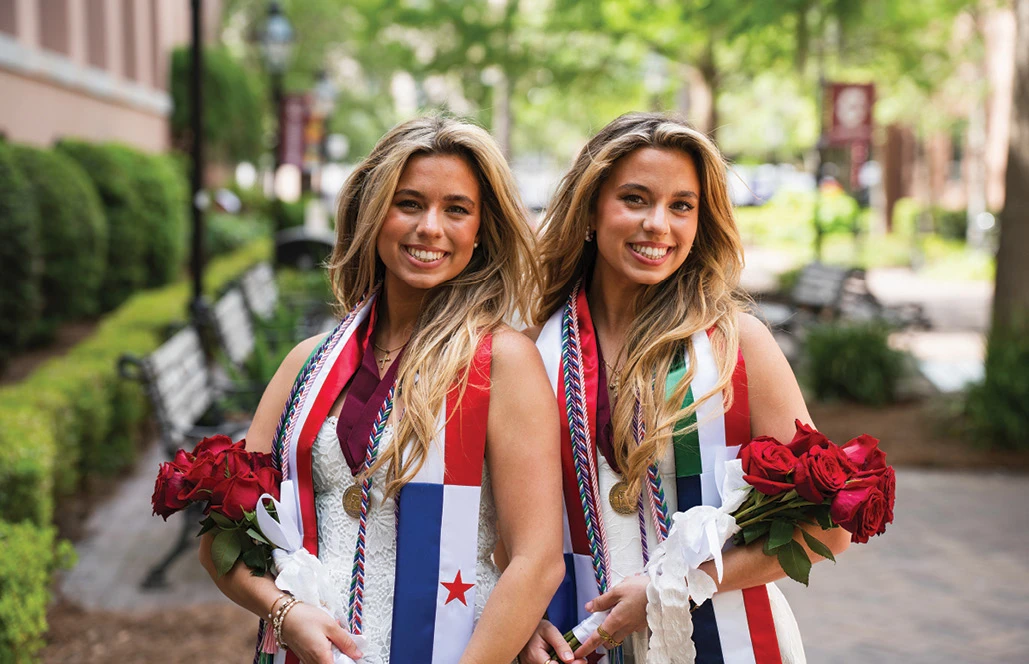
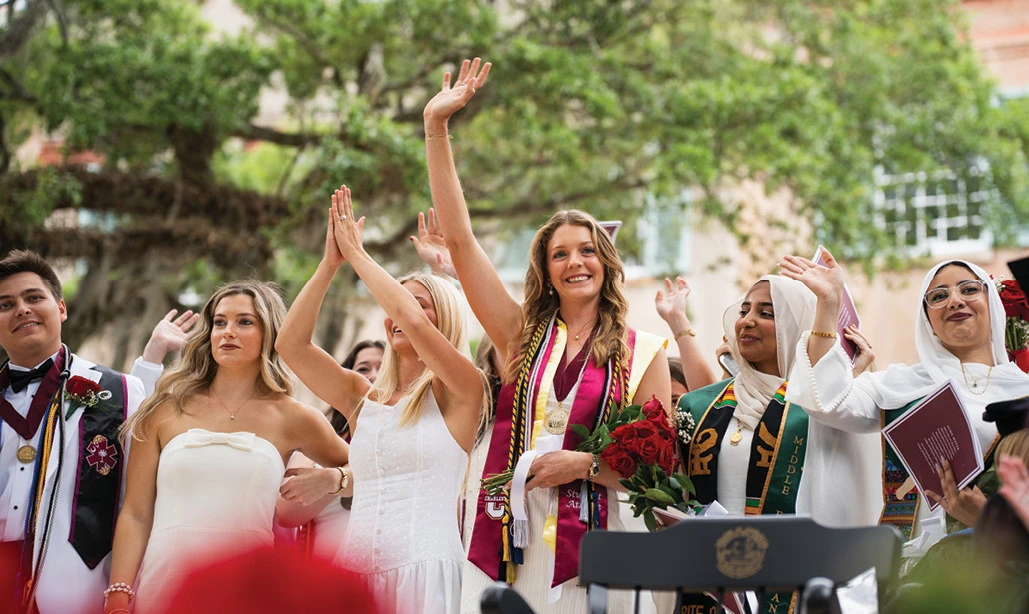
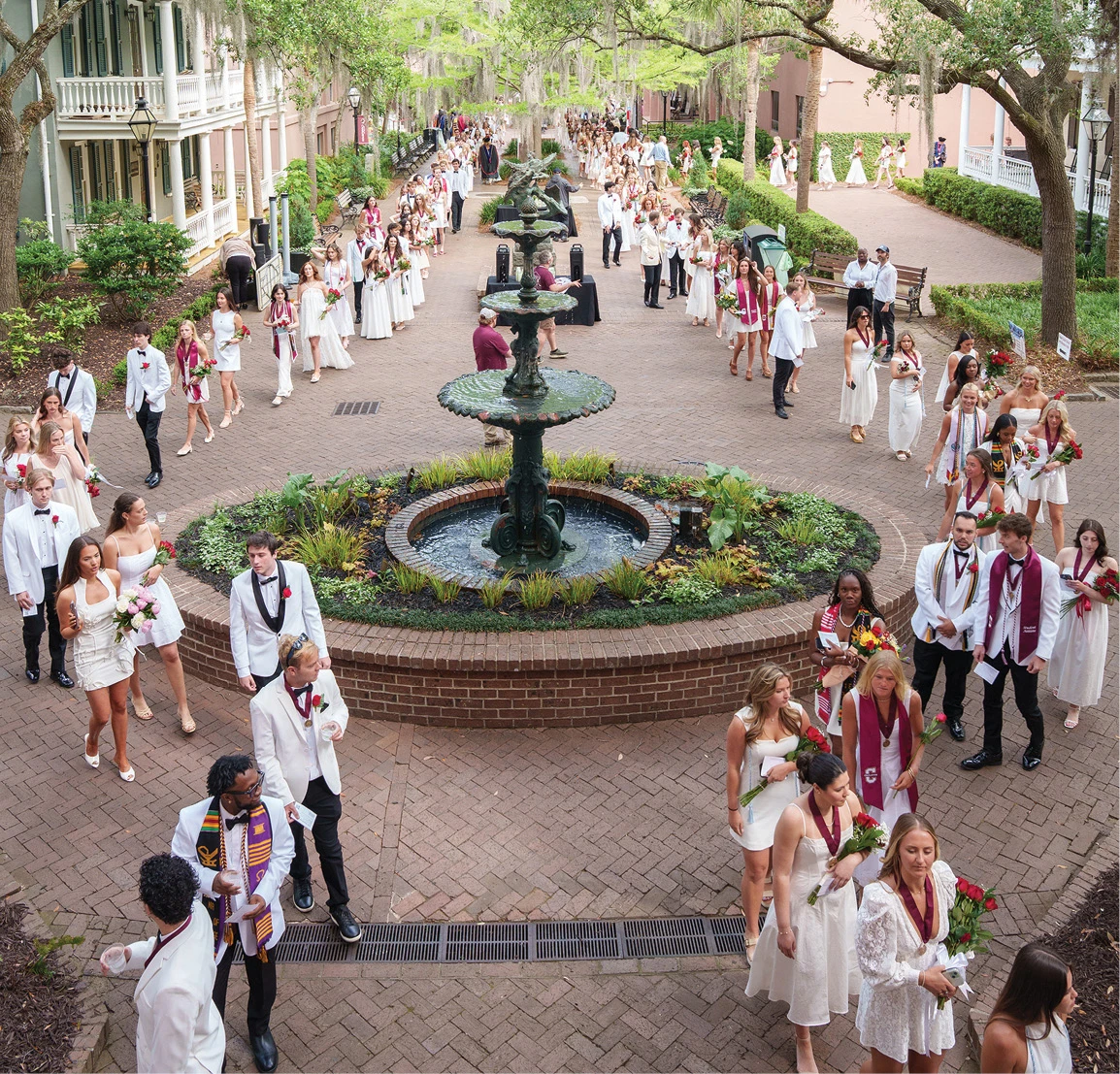
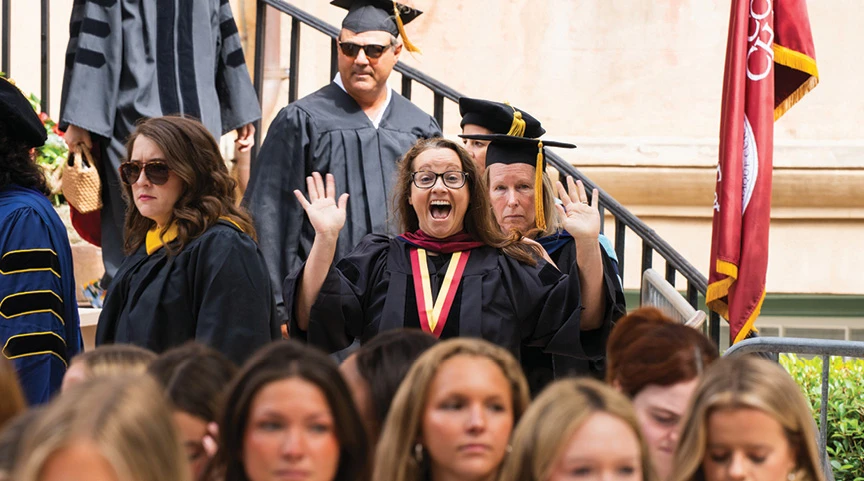
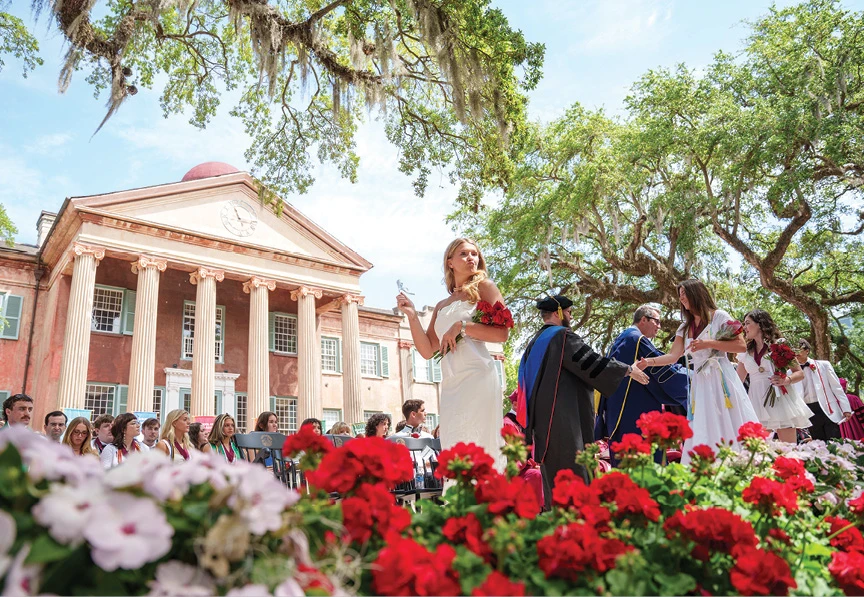

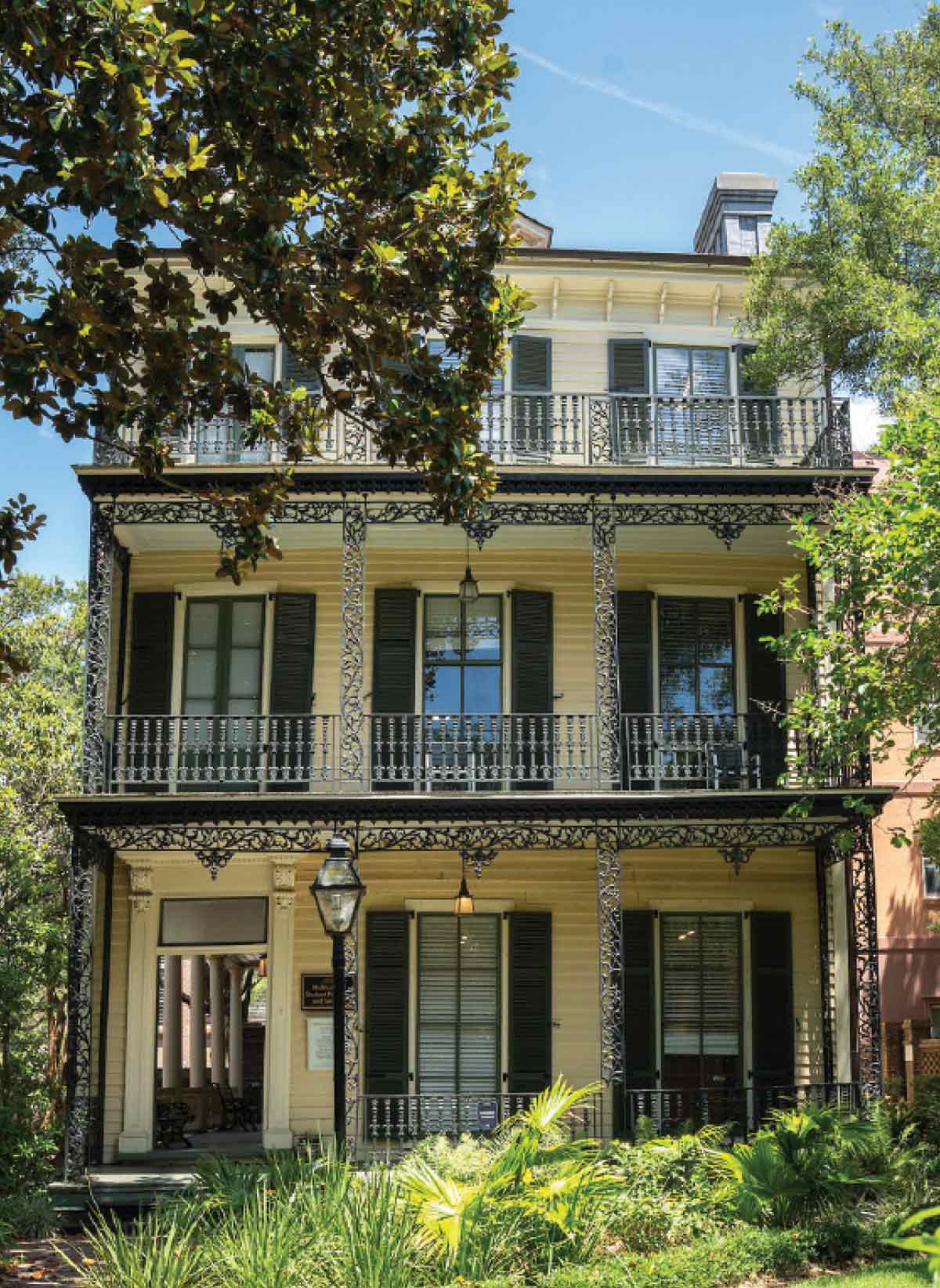
Class of 2026
by the Numbers
(undergraduate degrees)


LIFE ACADEMIC
Independence Minded
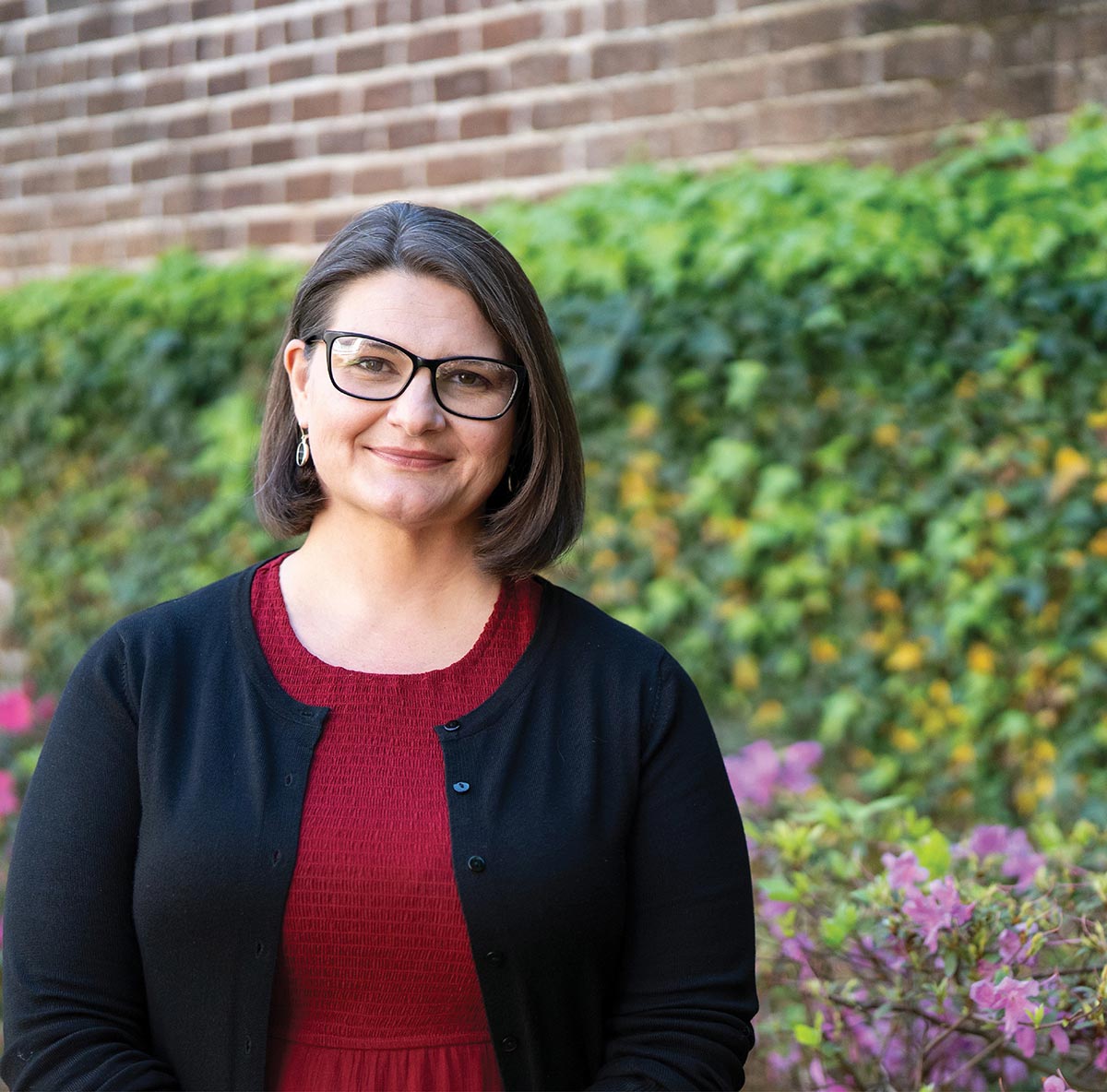
“It was excruciating,” she says.
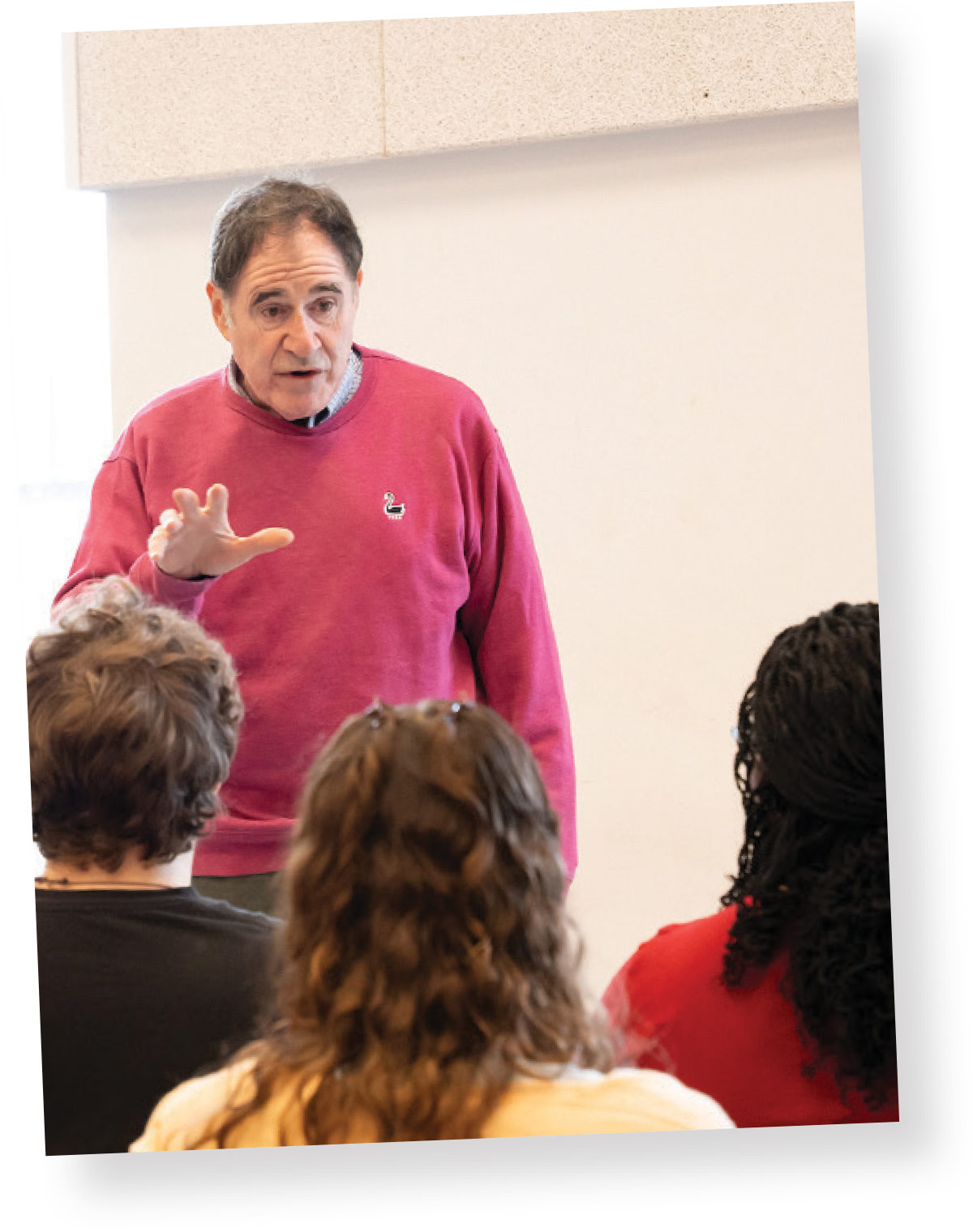
The tarring, not the tax, which was nominal. But the painting is a searing reminder that the Revolution was messy, personal and often brutal. Now, as the nation marks 250 years since the Declaration of Independence, Slater, a professor of history and director of the Carolina Lowcountry and Atlantic World Program, wants people to grapple with the Revolution’s full complexity.
“We’re still talking about freedom, property, human rights, representation – how to matter to our government,” she says. “It’s a really important moment of reflection – of awe – that this little collection of colonies made a nation, but it also calls us to be self-critical and hold ourselves accountable.”
Slater’s own curiosity about freedom began in the “hollers” of Turkey Creek, Ky. The daughter of a coal mining, family-farm community in Appalachia – a “forgotten people historically,” she says – she grew up attuned to inequity, especially around class. As a child, she devoured Abraham Lincoln’s words and wanted to trace the roots of the ideas he invoked, leading to a doctorate in history from the University of Kentucky in 2009. She started at the College two weeks after defending her dissertation. She felt at home immediately.
“I love it here,” she says, adding with a laugh: “Good luck prying me out of my office.”
Her research reaches across early America and the Atlantic World with a specialty in the intersections of class, race, gender and sexuality. Charleston, the fourth-largest colonial city, is a living archive for that work.
For Slater, the Revolution was “absolutely a civil war” – not just between colonists and crown, but within communities and families. Even Benjamin Franklin was riven by division: “His son was the royal governor of New Jersey and a loyalist,” she notes. “After he refused to support the Patriot cause, Franklin saw his son only once again, a cold meeting to settle debts.”
Why should Americans care about the 250th? Because, argues Slater, the Revolution’s ideals are not relics – they are live questions. It’s a chance to assess the “unfulfilled promise” of the Declaration of Independence. Yes, the founding period restricted political participation to a narrow slice of property-owning white men; women, free Black Americans, enslaved people and Native Americans were largely excluded or pushed westward. But Slater sees elasticity in the founding language to expand rights over time.
“Women’s rights advocates, abolitionists, Abraham Lincoln – they all go back to the language of the Declaration and the Constitution to expand those promised freedoms,” she says.
The danger lies in treating those documents as static. “They have to evolve with the times,” she cautions, “and reflect the society in which we find ourselves.”
Plus, it’s one heck of a story: a rebel alliance defeating the imperial forces.
“It was the most unlikely of victories, given the limited resources, lack of preparedness and tentative unity among the colonists,” she says. “Nobody thought America would win.”
Leisure Pursuits
-
Name:
Young Hoon “Hunter” Kim, professor and director of the Michael and Amy Bennett School of Hospitality and Tourism Management
-
Hometown:
Uijeongbu, South Korea
-
Hobby:
Cooking
-
First Dish:
Tonkatsu (a Japanese pork cutlet) at age 9 was my first dish I was proud to prepare for my parents’ anniversary.
-
On the Menu:
Hunter’s Spicy Chicken Wings and Sweet Chicken BBQ are two of my most popular creations, known
among family and friends for their bold flavor, balance of heat and sweetness and careful seasoning. I also enjoy preparing Hunter’s Roll and Fish and Rice, which reflect my appreciation for both Korean chobab and Japanese sushi traditions. -
Cultural Roots:
Growing up in a traditional South Korean home, food and culture played a large role in my family.
-
Culinary Inspiration:
My wife, Leah, first inspired my interest in preparing meaningful and flavorful meals. I later developed my techniques and skills through hospitality and business courses in college.
-
Fermented Feast:
Kimchi is one of my most ambitious dishes. I learned how to make it from my wife. Today, there are more than 100 styles of kimchi. In particular, I enjoy making chonggak kimchi.
-
More Than a Meal:
The true principle of good cooking goes beyond taste alone. It involves thoughtful preparation, sharing conversation and laughter and enjoying the experience of eating together. Also, I believe the best dishes are from the best ingredients. I am learning about farming from my dear friend from my doctoral program at Texas Tech, Dr. Nelson Barber.
-
At the Table:
Today, hospitality means caring, serving and expressing a thoughtful mindset toward guests, customers and everyone around us by creating a welcoming environment where they feel valued, comfortable and respected. Food is one of the most powerful resources and tools we can
use to express and deliver true hospitality.
The Thinker
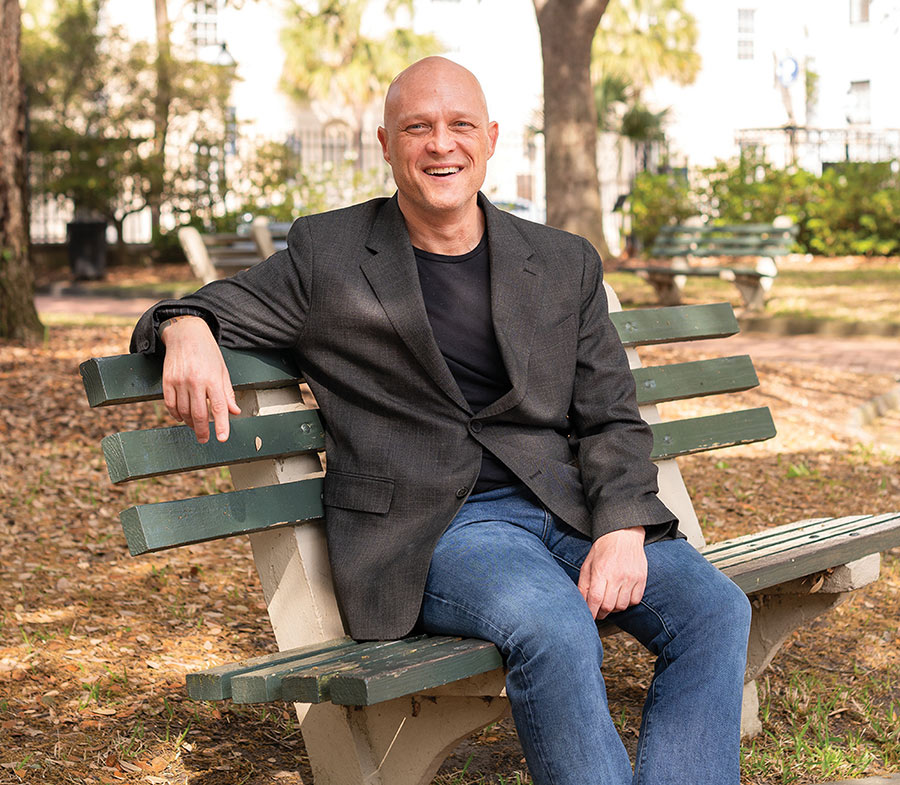
Nadelhoffer’s true area of expertise: intellectual thought. Because there is no such academic department, he serves as professor of philosophy, but he’s also considered an affiliate faculty member in psychology and neuroscience because his research and courses span all three, with spoonfuls of quantum physics, biology, criminology, chemistry, theology and geometry stirred in. It makes for a delicious intellectual gumbo.
“Most philosophers don’t view the sort of research I do as philosophy,” he says. “Philosophers don’t collect data or run studies.”
Today, his work has achieved a place in the academic canon – and a name: experimental philosophy. His undergraduate course, Psychopathology and the Law, is a rollicking serpentine through the dense forest of mental illness, criminality, intent and punishment. The class explores the meaning of insanity and what makes people morally responsible for criminal acts.
Another Nadelhoffer offering is Contemporary Moral Issues, where students navigate a broad swath of topics – the death penalty, euthanasia, abortion, foreign aid and more – through a philosophical lens.
The course begins with a video showing a physically healthy 81-year-old Belgian woman in a retirement community committing assisted suicide after her daughter dies and she loses her reason to live. “We start with that topic because students have no preexisting intuition about it,” he notes, “and students struggle with her decision.”
Even as an undergrad, Nadelhoffer gravitated toward philosophers like William James, Nietzsche, Hume and Wittgenstein who were interested in the psychology of philosophy – that is, the psychological dispositions and traits that drive our philosophical intuitions.
His doctoral dissertation at Florida State University studied how criminal law regulates criminal responsibility, focusing on outcomes, in contrast to philosophy, which is more interested in intent. Why, for example, is attempted murder a lesser crime than murder when the intent is the same? Are we rewarding incompetence?
Tattooed and earringed, Nadelhoffer is no mere intellectual. A former wrestler, he has a black belt in Brazilian jiujitsu, which he claims is the titan of martial arts because it maximizes the geometry of violence. Mentally and physically absorbing, it’s the perfect antidote for professional thinkers, he says.
But the brain of a professional thinker can’t shut down for long. During the pandemic, Nadelhoffer amused himself by cogitating on the musical interconnections that built various rock ’n’ roll subgenres, starting with their roots in early blues.
Tracing each sound backward, he produced a chronology of albums shaping the punk genre. That led to similar forays into doom, thrash and grunge, with reggae next on the list.
What kind of person embarks on such a nerd-out venture? “A crazy person,” he admits. “It’s a mountain of work to satisfy my own curiosity.”
My Favorite Reads
Out of Africa
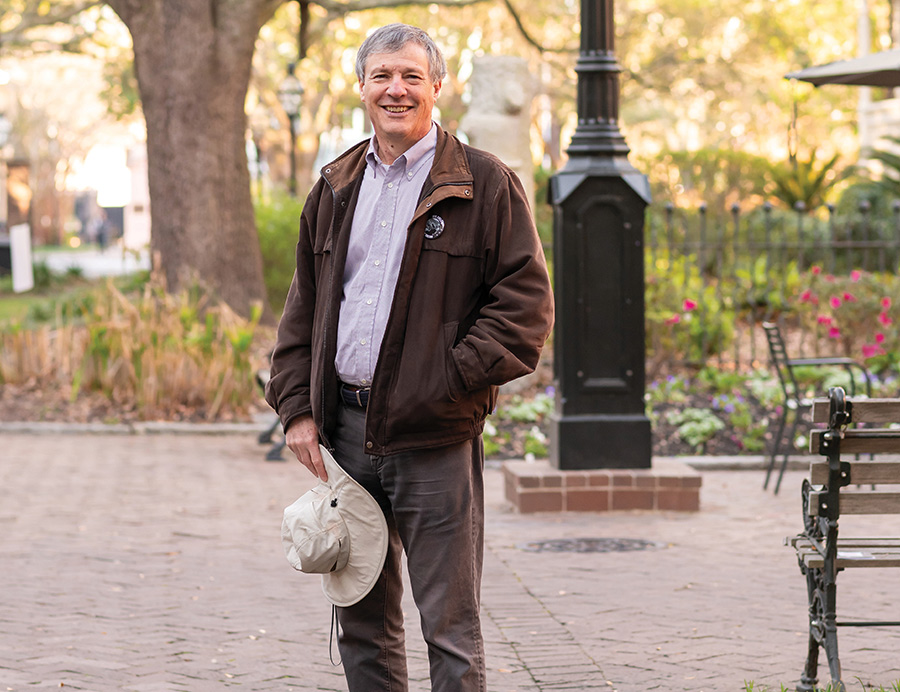
That makes more sense than you would think if you only knew Lewis as a white Englishman, an Oxford graduate, an English professor and a longtime Charleston resident.
Yet his whole career harks back to Africa. As does he.
Lewis is known worldwide as a professor of African and Third World literature, a widely published author on East and South African literature, editor of an international poetry journal, leader of a College group connecting the history of the Lowcountry to West Africa and president of the global African Literature Association.
Born and raised on a farm in England, Lewis moved with his family to South Africa for nine years until he graduated from high school. Horrified by the racist apartheid system and soaked in the literature of the continent, he headed to Oxford to study English literature and took every opportunity to delve into South African writers, white and Black, who salted their works with the roiling politics of the time.
“That was exciting to me, and still is,” he says. “I have a hard time switching off my political side when I teach. I think students are befuddled when I assign a novel and get up on my hind legs and give a history lesson.”
Two years of teaching English in Tanzania convinced Lewis that he was meant to study, promote and teach world literature, so he headed to the University of Florida for a doctorate, thus beginning his American adventure.
College of Charleston has been his sole professorial home – and, as the entry point linking the African continent to colonial America, Charleston suits him. Lewis can never forget that Africans were dragged to Charleston involuntarily before much of their history and culture was erased. He has spent his career helping restore it.
Charleston won’t be home for long, though. After 30 years of teaching, he just retired and plans to move closer to his children with his wife.
Though mostly self-taught in African literature, Lewis is admired across the nation in his discipline. Having joined the African Literature Association in his first year at CofC, Lewis brought the organization’s annual conference to Charleston, the birthplace of African America. That was in 2013, the 150th anniversary of the Emancipation Proclamation.
Already a blockbuster gathering, the conference took a turn when attendees learned that acclaimed Nigerian author Chinua Achebe – considered the Shakespeare of modern African literature – had died in Boston. During the conference, Lewis and his team pivoted to honor and remember Achebe, a man admired and befriended by most of the attendees.
A decade after the rousing success of the conference, Lewis was invited to the ALA executive board and later served as president. He still can’t fathom it.
“I had no aspiration to leadership because there are actual African scholars, as opposed to an Englishman like me, with much greater right to do this,” he says.
But few would agree with that modest assessment.
“Simon’s the kind of teacher who would talk about his own background and how it shaped his interests and worldview with his class,” says Scott Peeples, a fellow English professor who shared an office with Lewis in their early days at CofC. “His courses really open his students’ eyes to the experiences of Africans and non-Western people in general.”
Making the Grade
Ahead of the Game
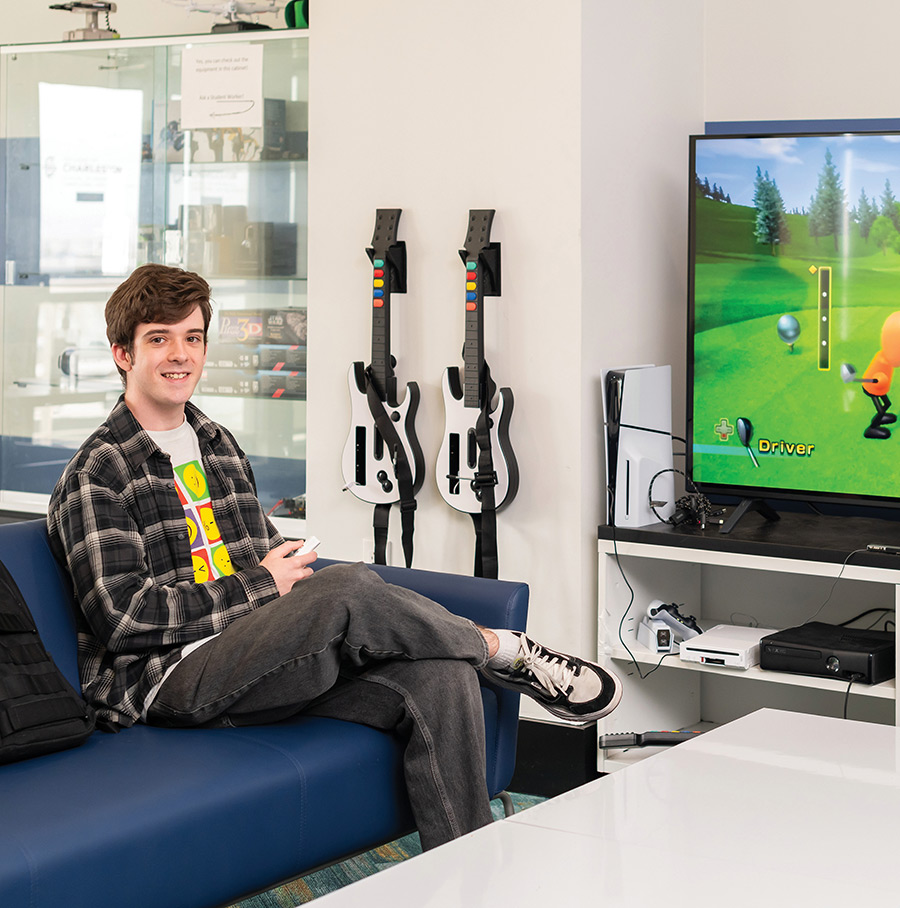
With one of the first computer science departments in the country and a renowned arts program, the College of Charleston was the perfect university for him to continue his education. S.E. Schoemann, assistant professor of computer science, taught him in two classes, where he emerged as one of her standout students because of his talent and drive to improve. Koch is constantly applying his skills to different art forms like album covers, comic books, oil painting and graphic design, and now has a lucrative side gig making original art for video games like Team Fortress 2.
“David has a strong and distinct sense of visual style that made his work in both games and 3D modeling really stand out,” Schoemann says.
“His digital artwork has a unique and offbeat aesthetic that really brings it to life. In our game class, for example, he made a brilliantly wacky single-player tennis game where the player has to move the court to play. I was happy, but not too surprised, to learn that he had found a way to use his skills outside of the classroom. It’s always great to see talented students forging creative careers that blend their technical expertise with their digital art skills.”
Koch enjoys creative coding classes because they go beyond the set of instructions and tasks typical of traditional coding classes. Instead, he developed his own problems and learned how to solve them, which made him more invested in learning coding.
His favorite class, however, was Game Programming, for which he collaborated with his team of classmates to develop a dueling-themed rhythm game where players battle to keep time with the background music. Koch developed shaders – small programs that influence the way objects in a game appear in various circumstances – for the visuals on the main menu of their game.
“Over the years I have gotten better at tackling new problems,” says Koch. “Throughout my college journey, I have learned to analyze what other people have done in their games and their art. One of the things that I am proudest of in this class is making the 2D image on the main menu of a game rotate, making it appear 3D, kind of like the main menu of the game Minecraft.”
Koch considers himself an artist more than anything else, noting he has dabbled in 10 different arts media.
“I love all of them, and I want to put them to different uses,” he says, adding that he hopes to continue to create art on commission. “I would like to collaborate with artists on large-scale projects, and computing in the arts has added a new dimension to my creative abilities.”
BREAKING THE SILENCE

“I remember the feeling of being somber and crying,” says Blanchard. “It made me think about the willpower and self-determination of the enslaved community because there is a big silence. I was disappointed I hadn’t learned more about their history when I was in high school and made it my mission to share their story and spread awareness.”
Mission in mind, Blanchard decided to pursue a master of arts in history at the College. As a first-generation university student, she was grateful for the financial support she received through the Karen Chambers Fellowship and graduate assistantships, including one with the College’s Lowcountry Digital History Initiative, which provides public access to the history of the South Carolina Lowcountry.
Blanchard’s first project at LDHI brought her full circle: the digital exhibit by her Queens University undergraduate professor and mentor, Caroline Grego. Based on Grego’s book, Hurricane Jim Crow: How the Great Sea Island Storm of 1893 Shaped the Lowcountry South, the exhibit tells the story of Sea Island communities’ recovery efforts after a devastating hurricane. The exhibit was LDHI’s biggest mapping project, and Blanchard did the lion’s share of the calculations and data analysis to build out each map point. She also painstakingly conducted image research, including getting copyright permission, and then drafted layout options for images and text.
“Kayla tapped into how to use data to present the power and strength of Sea Island communities with a deep sense of historical empathy,” says Leah Worthington, digital projects librarian at the Marlene and Nathan Addlestone Library.
The Sea Island communities’ story lines up perfectly with why Blanchard pursued her graduate degree. Sharing the story through technology fed into her desire for people to see the full picture. Now she has a whole new way of sharing history with real-world applications.
To build her skills further, Blanchard began working as a graduate assistant at the Avery Research Center for African American History and Culture. Mentored by Ashley Dennis, assistant professor of history, she helped put together both physical and digital exhibits commemorating Avery’s 40th anniversary. The physical exhibit opened Blanchard to the traditional way of sharing information with the public. Their first step was to take notes on Avery’s archival collection and review past Avery exhibits.
Now that she’s graduated, Blanchard plans to continue her work in public history and archival spaces while building on her research interests in African American spiritual traditions and preparing to apply to doctoral programs.
She’s got a mission in mind.
A Leg Up
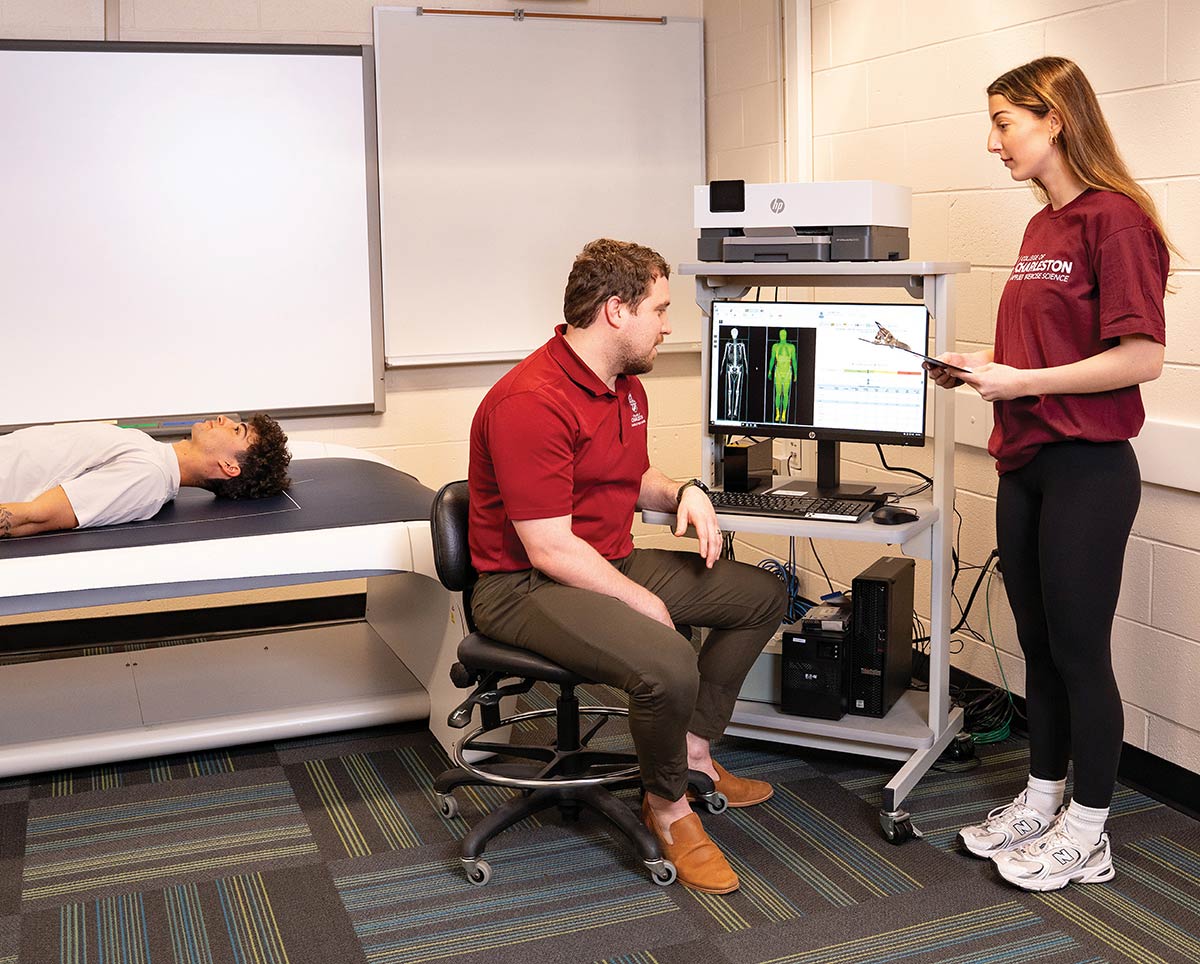
But that’s exactly what Keagan Kindler ʼ26 and Kathryn Mukherjee ʼ26 did in coveted internships this spring while finishing their bachelor’s degrees in exercise science in the School of Health Sciences’ Department of Applied Exercise Science.
“I feel kind of special because we’re the first interns,” says Kindler. “I feel like you could go into multiple fields with this experience.”
The newly launched Fitness and Community Health Testing program assesses cardiovascular fitness, body composition, metabolic rate, muscular fitness and more for those using weight loss drugs, receiving hormone therapy or simply looking to better understand their fitness levels and longevity. FaCHT does not diagnose or treat health conditions.
Kindler and Mukherjee not only paved the way for other students to gain valuable experience as they consider careers in physical therapy, athletic training and wellness coaching; they also helped introduce the Charleston community to some of the most advanced fitness performance assessments available in the Lowcountry.
Mukherjee says it’s inspiring to see assessment results spark motivation in those who visit the lab. “They get their numbers back and say, ‘Oh my gosh – I’m going to come back in six months to compare. I want to get better,’” she says.
FaCHT offers a variety of aerobic, metabolic and strength assessment packages, including VO2 max testing, the gold standard test for heart and lung health and oxygen utilization, which is the strongest predictor of longevity.
It also offers DEXA scans – short for dual-energy X-ray absorptiometry – which show the amount of fat and non-fat mass on the body and provide insight into bone density, another excellent predictor of lifespan. Packages also include resting metabolic rate testing, which shows the body’s true caloric expenditure, helpful for those on weight loss medications.
Since its launch last December, the state-of-the-art fitness assessment program has attracted elite athletes who wish to optimize performance, as well as older adults and others in the community who simply want to gain insight into their current health.
It’s an incredible opportunity for students, faculty and staff to work directly with campus and community members seeking to better understand various measures of fitness and their impact on their health.
“The FaCHT program fills a void in the health and fitness testing market in Charleston and represents a one-stop shop for anyone who wants to be able to present test results to their physicians for deeper insight,” says Wes Dudgeon, dean of the School of Health Sciences.
The internships provide invaluable experience to students starting their own journeys as they look ahead to their healthcare careers.
Says Chris Reader, coordinator of the FaCHT program: “The most rewarding thing I’ve seen with the interns is seeing the ‘light turn on,’ connecting what they learn in their exercise physiology coursework to real-life application.”
That’s a healthy thing for the university, its students and the broader Charleston community.
TEAMWORK
The good sport
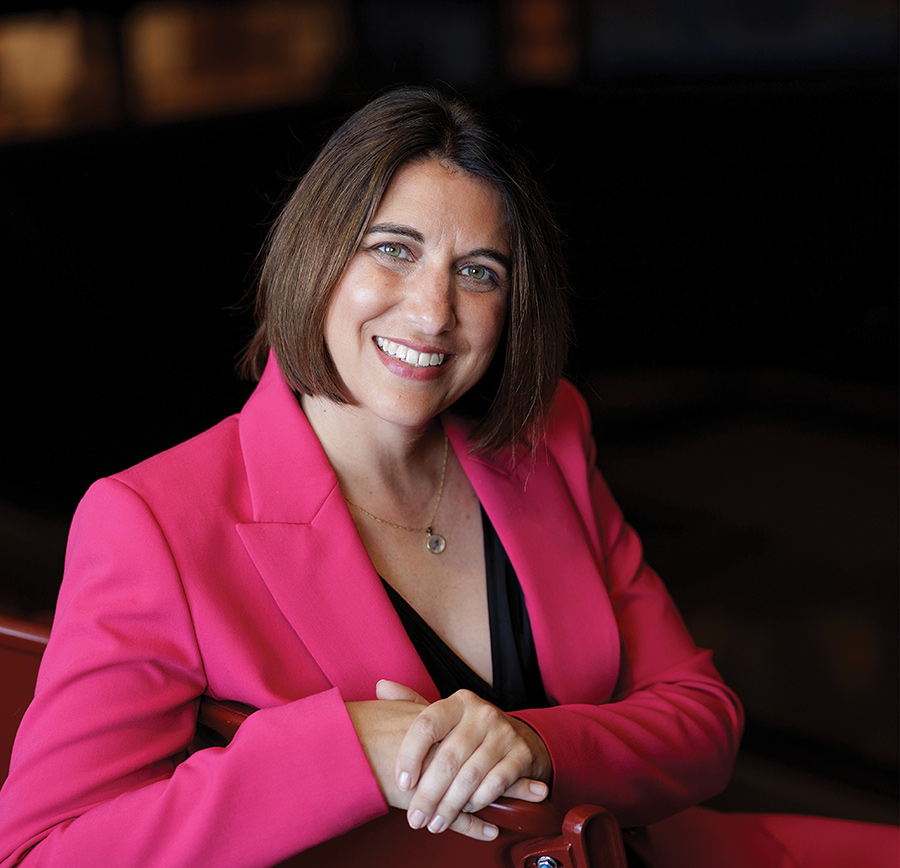
“I thought it was great because I’d still be able to hang out with my friends, ride on the bus and watch them do something that they loved to do,” she chuckles. “When I recently told that story to some track student-athletes, they thought I would have been upset, not happy. But I told them, ‘That’s because you’re real athletes, and I never was.’’’
So how did an individual with little to no experience in athletics become one of the most important voices inside the College’s athletics department as the deputy director?
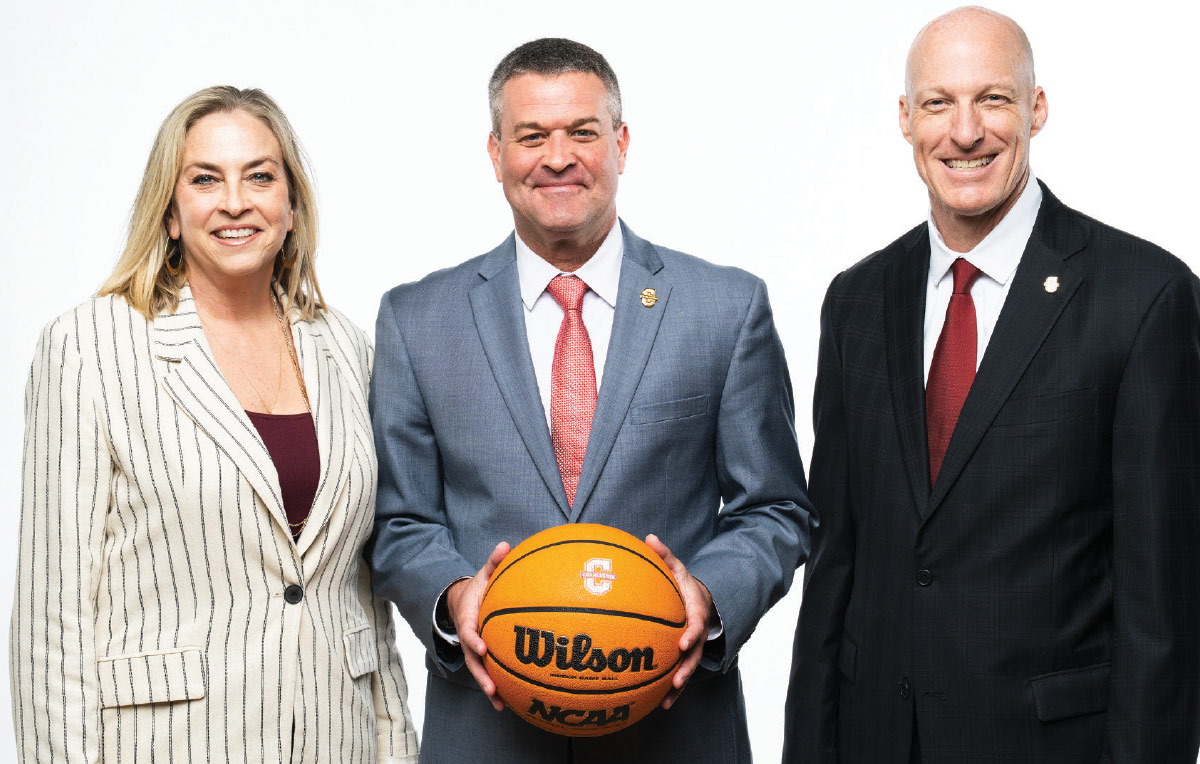
“Kate has such a caring heart and an attention to detail when it comes to the student-athletes,” says Matt Roberts, director of athletics. “She pours herself into making sure every student-athlete in every sport has a tremendous experience.”
Tiller, who graduated with a political science degree, just completed her 17th year working at the College. What started as a way to stay connected to the university and city she loved as an academic adviser has morphed into a career she never thought possible as an undergraduate.
“I’d like to think that I had a plan when I was an undergraduate, but I really didn’t,” says Tiller. “I thought about law school. I was determined to do whatever I could to stay at the College.”
From her humble beginnings in the academic services department, Tiller has risen through the ranks, becoming the senior associate athletics director for student-athlete success and the department’s senior woman administrator in 2021.
In her role, Tiller oversees student-athlete academic services, sports medicine and sports performance, and she holds administrator duties for multiple sports.
Tiller has quickly become one of Roberts’ most trusted advisers and has a reputation as a fixer for anything broken within the department.
When Tiller joined the athletics department, one of her first tasks was helping newly hired baseball coach Monte Lee. Until Lee’s arrival, the baseball team’s graduation record had been spotty. Tiller and Lee were determined to change the narrative.
“I knew the players were in great hands because of how much she cared about their success on and off the field,” says Lee.
The men’s basketball team was next on the agenda.
During Earl Grant’s tenure as head coach (2014–21), only one player who stayed for four years didn’t graduate.
“I had some guys who needed a lot of support academically, and Kate poured her heart into making sure they got their degrees,” Grant says.
The 2018 men’s basketball team, the first to make it to March Madness in more than two decades, had three future NBA players on the roster: Joe Chealey ’18, Jarrell Brantley ’19 and Grant Riller ’20.
“I learned pretty quickly that Kate’s passion for helping us was the same passion I had for basketball,” says Chealey.
While Tiller is proud that she played a small part in their success, she also delights in the success of team members like Evan Bailey ’18, who received the Bishop Robert Smith Award, the highest and most selective honor a graduating student can achieve at the College. Bailey is now a third-year resident in orthopedic surgery at Emory University.
“We get to see these amazing student-athletes play at the highest levels, sometimes even professionally,” says Tiller. “But not everyone is going to go pro, so to see them succeed academically is incredibly satisfying.”
Home Run
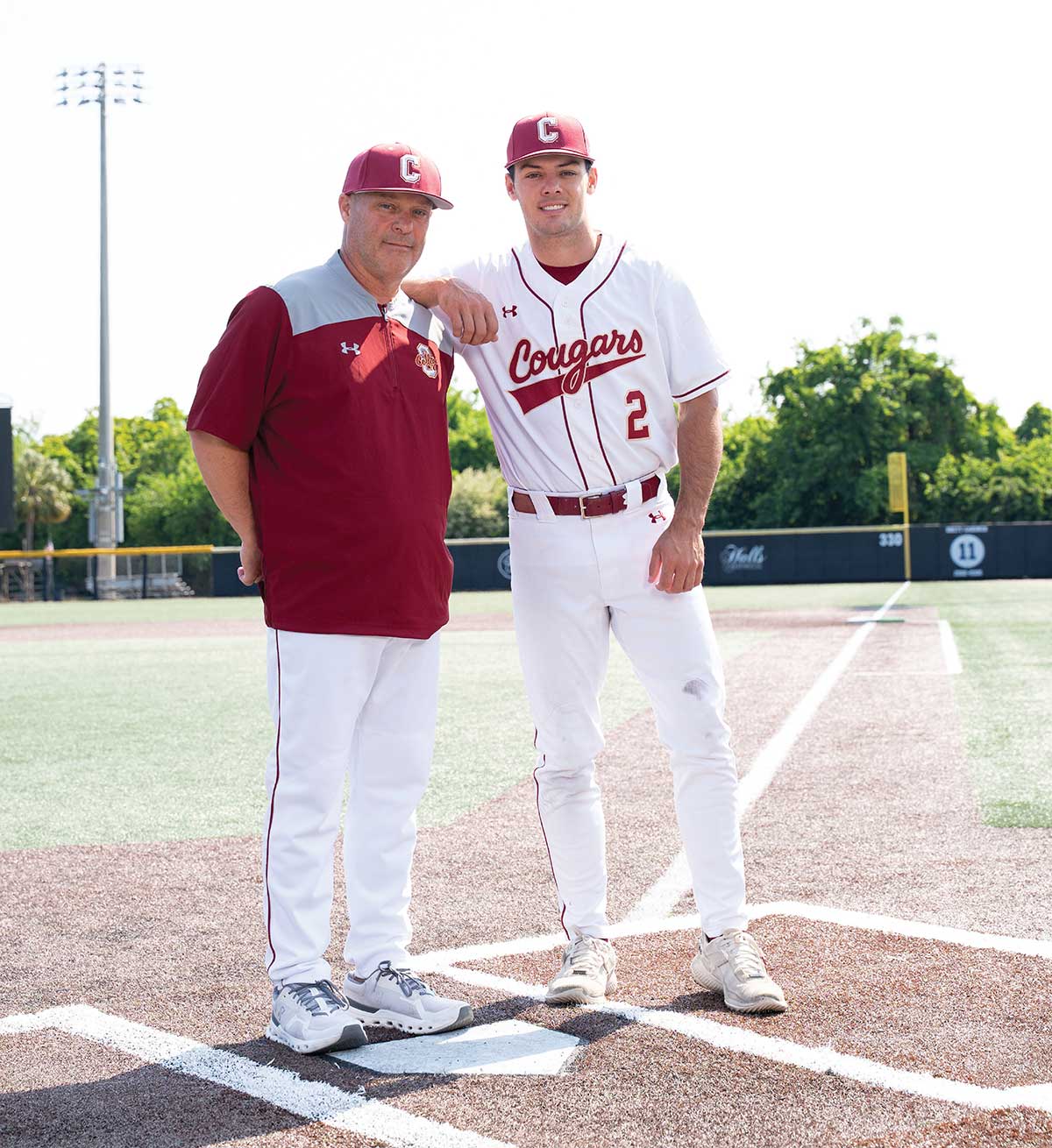
“It was probably one of the coolest Father’s Day gifts I’ve had,” says Holbrook, who just finished his ninth season as the Cougars’ head coach.
The fact that Reece is alive, let alone playing baseball at such a high level, is nothing short of a miracle.
When Reece was 2 years old, Chad and Jenn Holbrook noticed some unusual bruises on his legs and back. Chad chalked it up to his son’s rambunctious nature. But when more bruises surfaced, the couple took him to the doctor.
After several tests, Reece was diagnosed with acute lymphoblastic leukemia, a fast-growing cancer of the blood and bone marrow that causes the body to produce large numbers of immature, nonfunctional white blood cells called lymphocytes.
“We were devastated,” says Jenn. “Any time you hear the word cancer or leukemia, it’s scary.”
For the next three years, Reece spent days on end in the hospital undergoing treatment, which included painful chemotherapy and spinal taps.
“It was actually a blessing that Reece was diagnosed when he was so young,” says Jenn. “He doesn’t remember much about the treatments, and I think that’s one reason he was so resilient.”
Reece does, however, remember how nice and attentive the doctors and nurses were at the time. The pain, having no hair and the constant visits to the hospital were just part of his daily routine.
“I thought it was normal,” says Reece.
In 2012, he was finally declared cancer free. Now, he is tested annually to make sure the leukemia hasn’t come back.
“Reece fought the biggest fight of his life and won, so everything is just icing on the cake,” says Jenn.
Coming out of Hammond School in Columbia, S.C., there was no guarantee that Reece would play for his father at the collegiate level. Reece wasn’t sure he was ready to share the same locker room and dugout with his dad.
“I didn’t have the urge to play for my dad because every father and son have their issues,” says Reece.
The feeling was mutual.
“All Reece had heard his whole life was my voice when it came to baseball,” says Chad.
Reece played in just 71 games over four seasons with the Tar Heels.
This season, as an everyday starter in the outfield with the Cougars, his role increased dramatically. He finished as one of the Cougars’ top defensive players and had a solid year at the plate.
“It was a special season for our family,” says Reece. “I wouldn’t trade playing for my father for anything in the world.”
Chad admits it was tough to separate being a father from being a coach when Reece was at the plate.
“As a father, my heart rate was different when Reece was at the plate,” says Chad. “I had to teach myself that he was just another player, but it was a challenge because you want your child to succeed.”
Chad realized early in the season that Jenn was not shy with her opinions on the subject.
“If she had come to the ballpark and Reece wasn’t in the starting lineup, I knew I would probably have to find a couch to sleep on,” laughs Chad. “She was a college athlete, so she understands, but I was coaching Reece, and Mom was coaching me.”
Ship Shape

By Margaret Loftus
Photography by Catie Cleveland
hipping containers in a kaleidoscope of orange, magenta and seafoam green are stacked six high in places at the Wando Welch port terminal in Mt. Pleasant, casting late afternoon shadows as cranes hoist more Lego-like units from the belly of a dockside ship.
“Sometimes one hatch is being unloaded with imports, and the hatch next to it is being loaded with exports,” explains Micah Mallace ’07 (MBA ’11), the CEO and president of South Carolina Ports. More than ever, time is money: Ships spend an average of 12 hours in port. “The days of ships taking a week to unload and the sailors going to the bars – yeah, those days are long gone,” he says.
The movement of goods via freighters, trains, planes and trucks has enthralled Mallace since he was a kid. So, when it came time for him to choose a major as an undergrad, his mother nudged him toward the College of Charleston’s supply chain management program. It wasn’t a hard sell, and after graduation and a stint in hospitality and commercial real estate, he went back to campus to earn an MBA with a focus on finance, which set him firmly on the path he’s on today.
Mallace started at SC Ports fresh out of business school in 2011, climbing the ladder from inside sales to chief commercial officer in the span of 10 years. In 2022, he left the port to helm Harbor Logistics, a third-party transportation and logistics company in North Charleston. But last October, he returned to SC Ports as its seventh CEO.
He now heads up a staff of 735 employees spread across four marine terminals – at 689 acres, Wando Welch is the largest – and two inland ports in Greer and Dillon. But his influence and that of the port extends well beyond its shipping operations: One in nine jobs in the state are fueled by the system. That’s more than the one in 10 jobs supported by another of the state’s big revenue drivers, tourism.
“The port serves a bigger purpose in itself,” he says. “We really exist to drive economic development. What we do allows for people to be employed all over the state – and really, the region – and it allows those people to put food on their dinner tables for their families.”

“We are incredibly fortunate for the ocean harbor we have,” Mallace says – “some natural things that just set us apart.”
What’s more, the infrastructure is enviable. A $2-billion expansion program completed in 2021 entailed building the Hugh K. Leatherman Terminal in North Charleston and deepening the harbor to 52 feet at low tide, making Charleston one of the deepest ports in the country, with a channel that can accommodate two ships side by side. (A fully loaded freighter requires a water depth of 50 feet.)
Perhaps above all, Mallace values his team. “The idea of a CEO having all the answers is, in my opinion, bunk,” he says. “The team figures out all the answers together.”
He looks at his role in the operation as a problem solver. “Wherever there are obstacles that stand in the way of our goals, my job is to support the team in finding ways around those challenges,” he says. “Or, if those challenges are greater than the team, then my job is to personally remove those obstacles.
“For example, one of the port’s largest customers had an issue that risked the entire business between it and the port,” he adds. “I did not deliver the answer to the problem; the team did. They came up with the options, analyzed to identify the best one, engineered the infrastructure needed, convinced the customer of the new option’s merit and fixed the issue.”
Home Away from Home
Thanks to his previous decade-long run at the port, he’s got a lot of support. Mary Beth Richardson, SC Ports’ vice president for strategy and analytics, met Mallace when he was an MBA student.
“My first impression was that he is bright, genuine and engaged,” she says. “Nearly 15 years later, I feel exactly the same. As our CEO, he is a thoughtful leader with a keen focus on growing and improving the business. In his first few months back, he has challenged our team to think outside of the box to drive business and change.”
That he has a successful career and roots in Charleston – he and his wife, Katie ’07, have a 7-year-old son and 5-year-old twin daughters and live in Mt. Pleasant – is ironic considering how he ended up at the College. With his twin brother committed to an expensive private college, Mallace chose the College in the hope of saving some money for his mother, who had pledged to foot both bills.
“I was choosing between the University of Pittsburgh and here,” he recalls. “And I thought, Well, Charleston is a lot cheaper, and if I hate it, I can transfer. So I guess the storyline there is really value – that was the underlying driver for coming here.”
It didn’t take long for Mallace to fall for the school and the city. “I do remember thinking this was a beautiful place,” he says. “I think I called my mom two weeks, maybe a month, after having moved here and said, ‘Mom, I don’t know if I’ll ever leave this place.’”
Growing up on the north side of Chicago and Old Lyme, Conn., Mallace always knew he wanted to work in a global industry. Both his parents worked in international business and had lived abroad, and travel was a big part of the family’s life.
“The stories that we always heard growing up were about various cultures, and having a German boss and a French colleague, the cultural nuances,” he recalls. “I always knew I would wind up in something that was a little more global, where there was the opportunity for dealing with other cultures.”
Along the way, he jumped at the opportunity to spend part of his junior year with his brother on Semester at Sea, a floating classroom with ports of call all over the globe. “Seeing these industrial ports just felt like, That’s the global economy,” he says. “If you go to Nigeria, Russia, Hong Kong, there’s a container terminal that looks a lot like this one. Yeah, their culture is different, (but) trade is a unifying factor, and that spoke to me.”

Chain Reaction
“It was fascinating that something you read about in The Wall Street Journal or The Economist you can actually see in our industry,” says Mallace. “You know, if there’s a burgeoning, growing middle class in Asian economies, we see pork and poultry exports growing like crazy because the first thing that people start to change as they move into the middle class and have some discretionary income is they start to put protein into their diet. It kind of grabbed me. And I always thought, If I could get into that industry, that’d be pretty great.”
One of the highlights of the program was spending a week in the Netherlands, where one of the facilities he and his classmates visited was the world’s largest flower warehouse, essentially the epicenter of the industry in the country (the Dutch control more than half the global flower market). This was distribution on a massive scale – moving lightning fast, thanks to the blooms’ short shelf life.
“We had this week of just one amazing supply chain experience after another,” he says. “It’s great to know the theory, but being able to touch and feel and see firsthand – that’s something that the supply chain program at College of Charleston does that is pretty unique. It’s not just all theory. It’s actually, ‘How do you apply that theory?’ I still benefit from that today. So that was a real crystallizing moment.”

Another memorable teacher was finance professor Jocelyn Evans, the former chair of the Department of Economics and Finance. In her class, Mallace says he “learned how everything, ultimately, can get calculated, pushing hard to make everything an objective decision.”
Mallace’s experiences at the College have led him and his wife Katie to give back by establishing the Micah & Katie Mallace Faculty/Staff Service Excellence Award for School of Business employees who consistently demonstrate exceptional commitment to serving students, colleagues and the broader College community. The first of its kind at the school, the award is endowed and will be given to faculty and a staff member on alternate years.
Back at the port, Mallace has his hands full, not just with his plan to win back the claim of fastest-growing port, but also with global attention focused on the Strait of Hormuz, which is critical to so much of the world’s oil supply and energy prices. But being nimble is just part of the job.
“It’s exciting,” he says. “You have to love change. You have to be motivated by, ‘Let’s solve this problem.’”
Close to the Heart



The call set in motion an extraordinary 24 hours when not only little Clover got a new lease on life, but so did a 13-year-old girl when surgeons and staff, including clinical cardiovascular perfusionist Dafne Andrea “Andy” Chianella ’08, performed back-to-back, 10-hour pediatric heart transplants – an exceedingly rare feat that involved coordinating four separate teams performing four concurrent operations.
Timing is everything when it comes to a heart transplant, so it was doubly so on this day. The procurement team from MUSC and We Are Sharing Hope SC flew on a private jet to confirm that the heart was indeed a good one for Clover before removing it and bringing it back within four hours – the limit a heart can live on ice outside the body. As soon as Clover’s surgeon, Dr. Minoo Kavarana, got the match confirmation at 1 a.m., he started performing a sternotomy on Clover to expose her heart, which can take hours if patients have scar tissue from previous surgeries, like many do, including Clover.
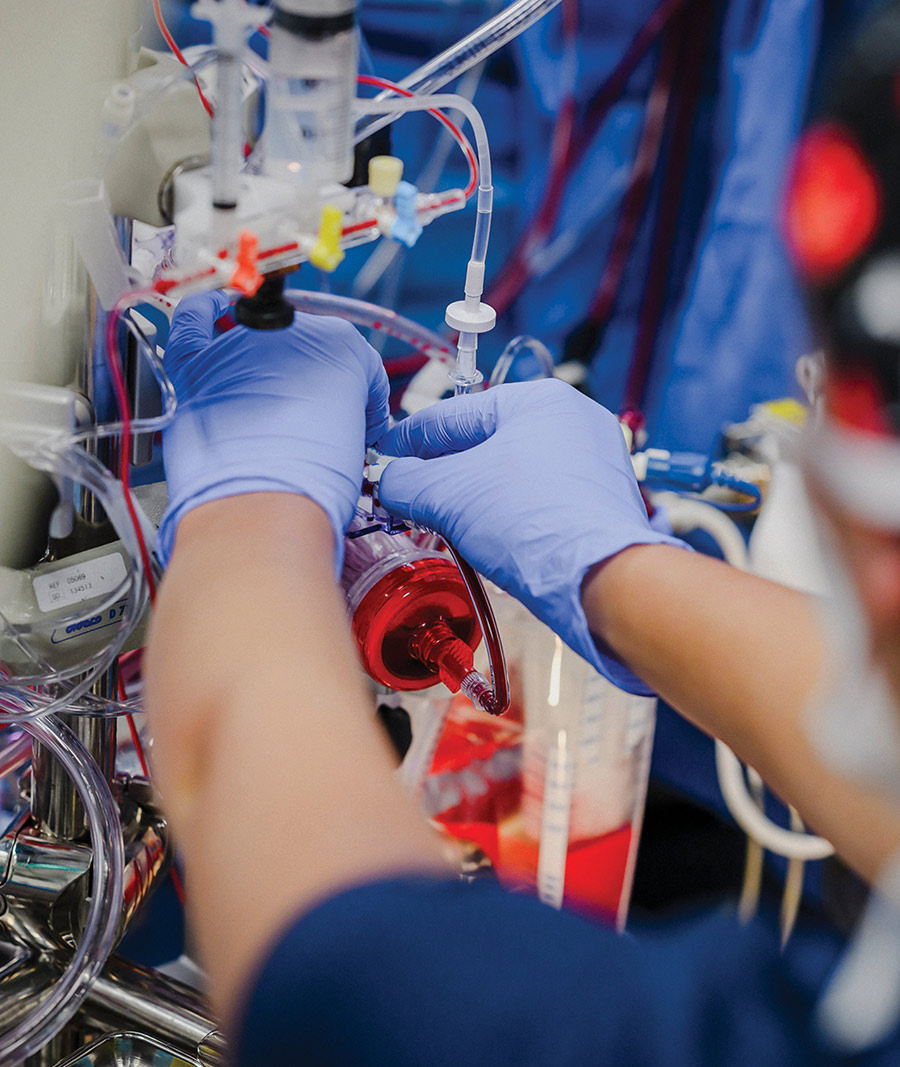
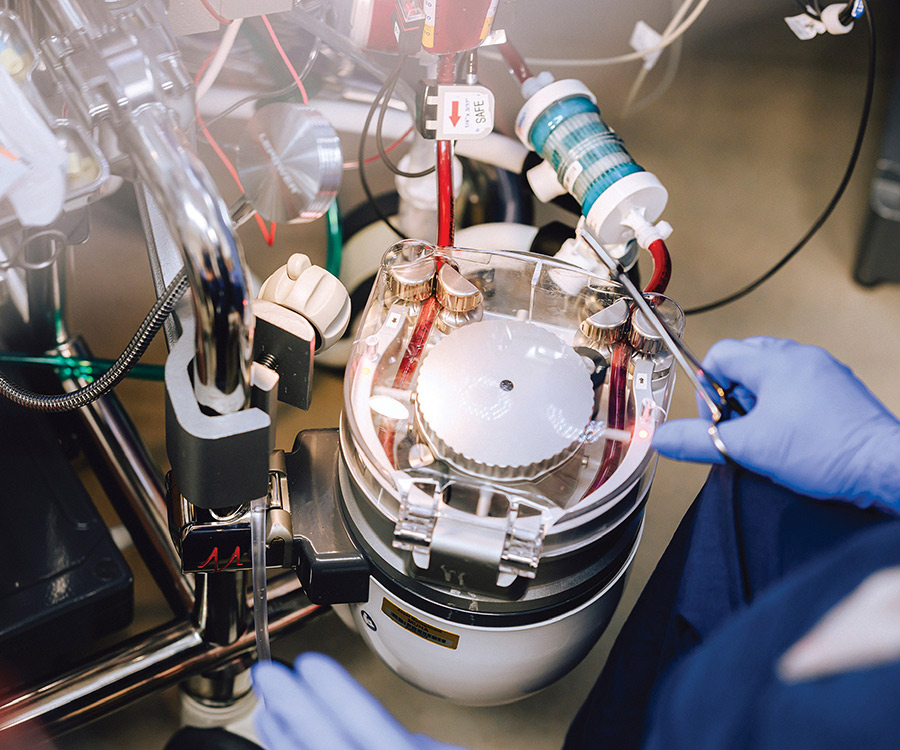
By 6 a.m. Monday, the heart had arrived, and so had Chianella from her home in downtown Charleston to relieve her colleague and take over the heart-lung bypass machine that creates a bloodless, motionless field for the heart surgeon. A beating heart is a terrible workbench. To sew, graft or replace with precision, particularly in newborns, the heart must be arrested, the chest must be still and the rest of the body must keep living. The perfusionist’s instrument is a $250,000 tangle of pumps, filters and translucent tubing straight out of science fiction. Perfusionists like Chianella take over control of a patient’s blood flow, emptying the heart and even the entire body during deep hypothermia. They have to monitor so many different body-function levels on computer screens, it can be dizzying. The numbers have numbers.
– Dafne Chianella ’08
Touchdown occurred at about 11 a.m., when Kavarana removed the cross-clamp on the aorta to redirect the blood flow to the new heart. “It is always a nervous but wonderful feeling,” says Chianella. “So many people were involved to get to that moment, and you always say a little prayer – please start, please start.”
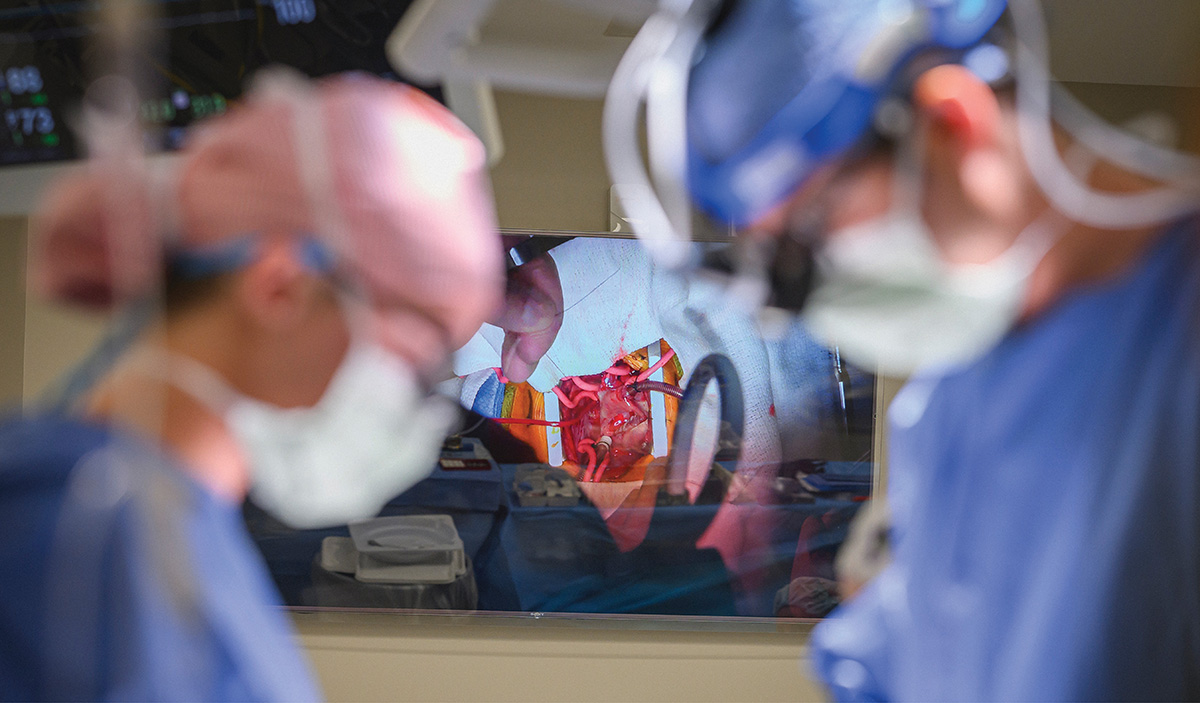
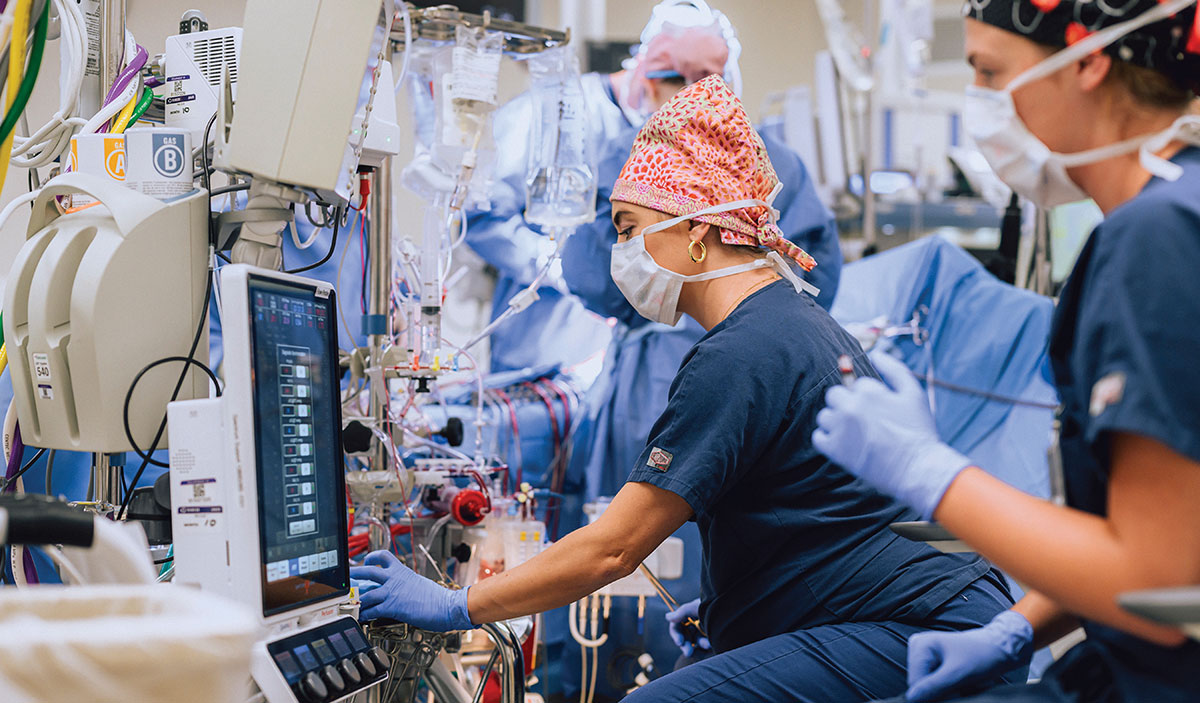
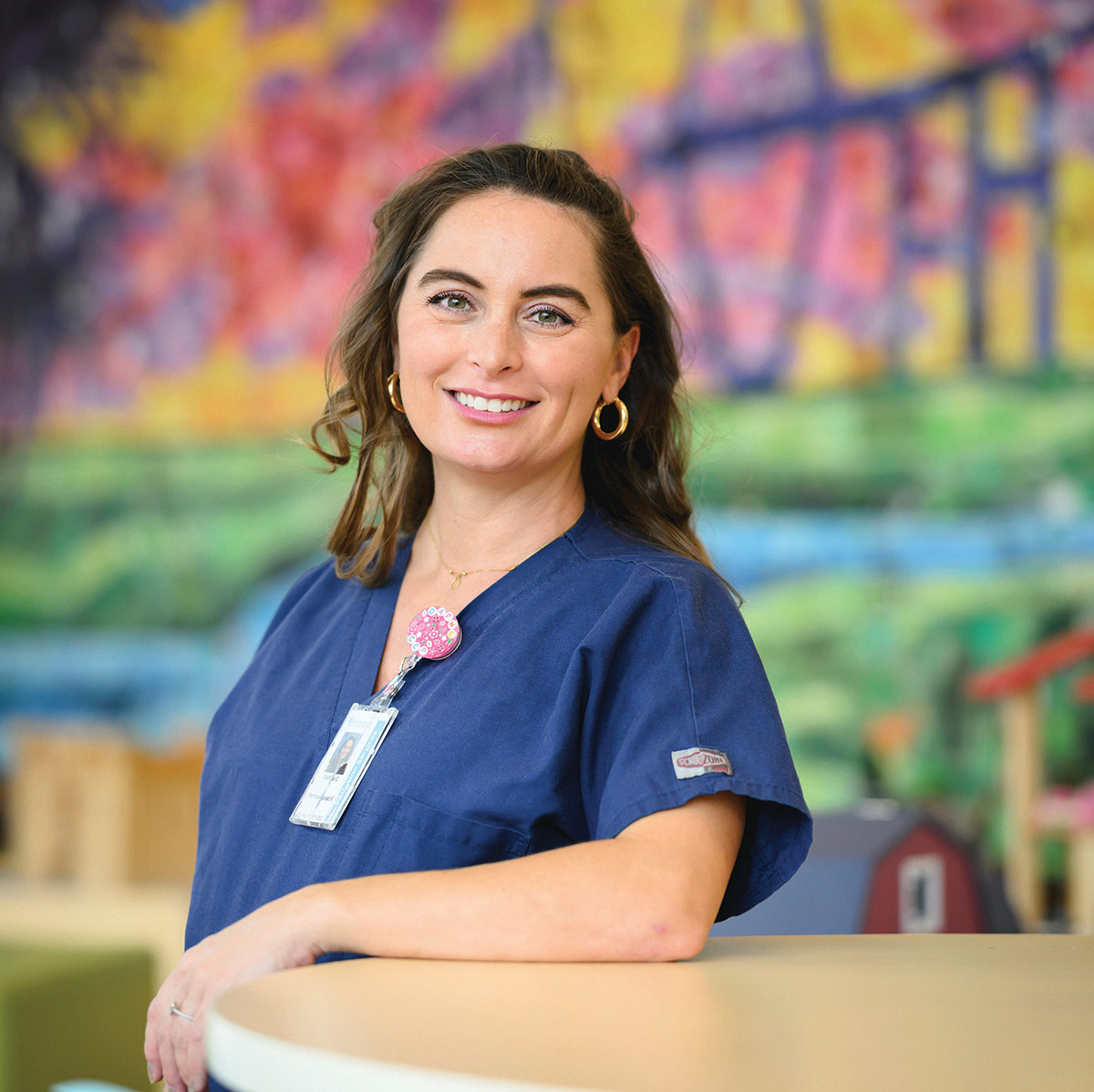
“There is a lot of adrenaline on these days,” says Chianella. “Everyone is excited and nervous, but there is also an underlying somberness, as these hearts did come from someone else. Another child had to die for us to save this one, but it was a wonderful win for our hospital and team.”
One of just five pediatric perfusionists in the state, Chianella thrives in the emergency atmosphere.
“She’s everything you’re looking for in a perfusionist during cardiac surgery because you really need a lot of communication between the teams taking care of the patient,” says Felmly. “The things that we do working on the heart directly affect the vital signs in ways that a lot of other types of surgery don’t. The anesthesia team, the surgical team and the perfusion team really have to work together seamlessly. Dafne’s been recognized as one of the top perfusionists in the country and is very active in research and moving the field forward. It’s a real treat to work with her.”
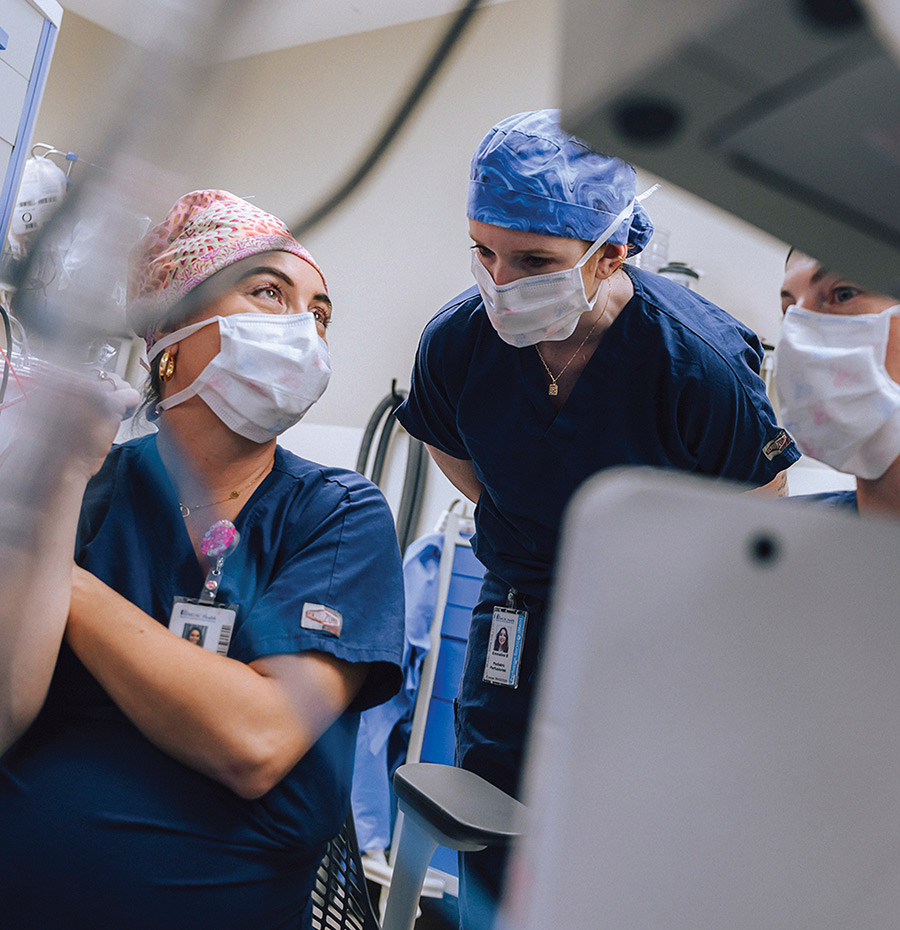
Following Her Heart
It’s not easy, but Chianella finds so much joy in her work that it makes all the sacrifices worth it. Somehow, she still finds time to serve as the chair of the American Society of Extracorporeal Technology’s Pediatric and Congenital Perfusion Committee, helping write standards and protocols that hospitals across the world reference. In 2019, she revived South Carolina’s statewide perfusion society, bringing nearly 90 perfusionists together to share protocols and clinical support.
She also founded AmSECT’s Women in Perfusion group, building mentorship and leadership pathways in a discipline that hasn’t always accommodated motherhood or equity.
“This is the coolest career in the world,” says Chianella, “but it can be tough for women. I have to be here at 5:30 a.m. most days, so I don’t get to do the school drop-off. You give a lot of yourself for other people’s children. I’ve spent a couple Christmases here doing transplants, but you’re giving someone a gift of life, so it’s hard to really be upset.”
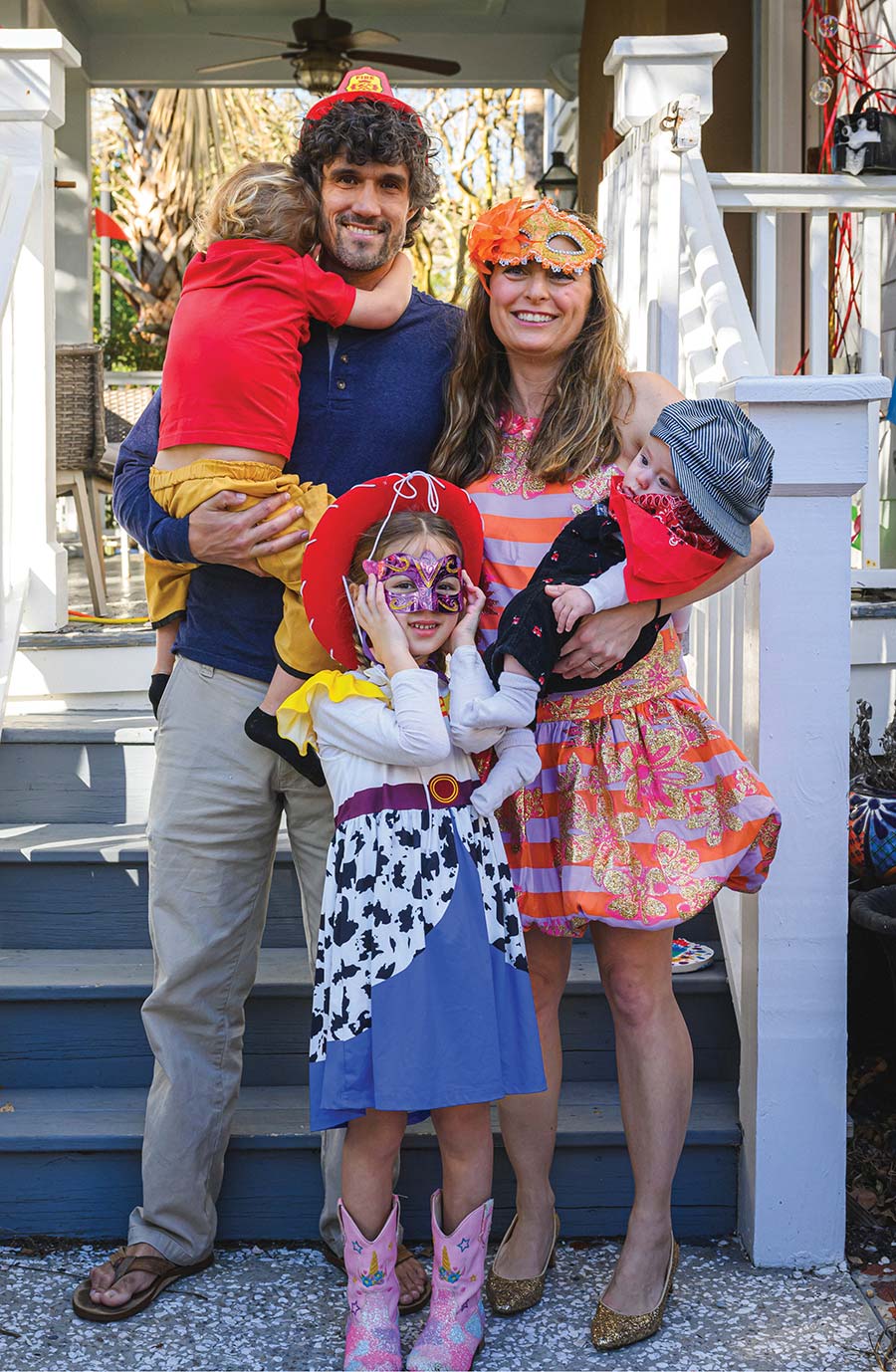
Her parents, Danilo and Gwen, moved the family from Rome to Memphis, Tenn., when Danilo became a pilot for FedEx in 1996 after a career as a fighter pilot in the Italian Air Force. (Gwen, an American, caught Danilo’s eye when he was in the States on a NATO exchange program, and she spoke to him in perfect Italian when they met on the military base.)
“Memphis was a culture shock,” says Chianella, who found her calling in high school when she shadowed doctors at Le Bonheur Children’s Hospital. “The first case I ever got to shadow was a liver transplant, which involved perfusionists, since a third of the blood goes through the liver. As soon as I saw the OR, I said, ‘Oh, this is what I’m going to do.’”
She also knew she didn’t want to stay in Tennessee for college. “I went to a giant high school in Memphis, and when I visited the College of Charleston and toured the science center and saw one faculty member in a lab with just two or three students, I was like, What kind of one-on-one is this? That’s amazing.”
When Chianella was a junior and senior at the College, she got to experience that thrill for herself in Beth Meyer-Bernstein’s lab, doing circadian rhythm research on mice.
“She has an adventurous spirit,” says Meyer-Bernstein, now the dean of the Honors College. “She really took it upon herself to do the hard work and challenge herself, and she continues to do that. She not only has this incredible career as a perfusionist, but, Oh, let’s be a pediatric perfusionist just to make it that much harder and the stakes that much higher. And then let’s have three children. She’s got an incredible energy about her that is just really infectious.”
Knowing that Chianella wanted to get into medicine but not necessarily become a doctor, Meyer-Bernstein – whose brother-in-law worked in MUSC’s perfusion program – suggested the “sleeper career” not many people knew about. Chianella shadowed an adult heart transplant at MUSC and was hooked.
“It was the most extraordinary thing I’d ever seen,” she says. “You literally take over the person’s heart and lungs. It sounds impossible until you watch it happen.”
After graduating with a degree in biology and a minor in Italian studies to learn about the culture she missed, she earned a second bachelor’s in perfusion at MUSC (now a master’s-level degree). She then worked at New York-Presbyterian’s Columbia University Irving Medical Center in New York City for two years before returning to MUSC in 2013. When Shawn Jenkins Children’s Hospital opened in 2020, Chianella switched to pediatric perfusion full time, “attracted by the level of precision and very small margin of error,” she says.
Not for the Faint of Heart
“Look at this baby’s heart,” she says of a donor heart emptied of blood and suspended like a jewel in a clear container. “It’s walnut size. The surgeon’s thumb is almost the size of the entire myocardium (the heart wall). That’s the scale we’re talking about.”
Scale is where perfusion becomes art. A healthy adult has about five liters of blood. A newborn may have 500 milliliters – the difference between a family-size pitcher and two teacups. Connecting a child to bypass without diluting them into catastrophe requires engineering so precise it borders on poetry. Everything is minuscule.
“While we are experts in our field, weird things happen,” she says. “This is not a flawless system. We’re doing the best we can, and some patients don’t do well. There are complications. It’s not anyone’s fault.
“There’s one several years ago that still haunts my dreams,” she adds. “But I try to focus on the positive ones, like the girl who got to walk at her high school graduation with her brand-new heart. I don’t know anyone who’s prouder of their job. I get so much satisfaction helping these patients and these families.”
It’s because of people like Chianella that the Shawn Jenkins pediatric cardiology and heart surgery program – the only pediatric heart center in South Carolina – ranks among the best in the nation, a fact reflected in national reports and lived every day in hospitals’ operating rooms and ICUs.
“For what we do, we’re completely dependent on the perfusionists and the heart-lung machine,” says retired pediatric cardiac surgeon, Dr. Scott Bradley, who worked with Chianella for more than a decade. “That requires having a great perfusionist like Dafne. It makes a huge difference. It has to be reliable and high quality, or we can’t do what we’re trying to do.”
Bradley also points to the intangibles, like Chianella’s calm, positive attitude and ability to read an operating room. “She knows when not to talk so the surgeon can stay in the zone. She’s smart; she’s great with people. And she has a life. I don’t know exactly how she does it, but she gets it done.”
She’s a great ambassador for the program, too, not only on the national level, but on a local one, teaching MUSC students by bringing them into the OR and passing on her passion for perfusion.
“Once you see it in action, as long as you don’t pass out, it is so cool,” says Chianella. “I get to give someone a new heart. I get to go and save a child. I mean, that’s the best part, hands down. I can’t imagine working anywhere else.”
A Campus Transformed

With two new buildings and seven others in various forms of renovation or planning, the College’s facilities are undergoing the most significant upgrade in decades, benefiting generations of students to come.
by Mark Berry
Photography by Keith Isaacs
A university campus is a constant work in progress. It’s a living, breathing space, where wear and tear are equally shaped by wisdom and evolution. To fully realize its mission, a university must continually renew itself, balancing preservation with progress and tradition with transformation.
That work takes vision, patience and planning – sometimes years, sometimes decades, maybe even centuries. That is exactly where the College finds itself today.
We have entered a new era of campus renewal – a renaissance of capital projects that will retshape and strengthen the College for generations to come. Over the next five to 10 years, major renovations, strategic demolitions and new construction projects will transform how students learn, live and connect with the city around them.
These projects are not simply about buildings. They are about creating spaces that inspire discovery and support student success.
So, pardon our dust as we readjust and build toward our institution’s next great chapter.
Photography by Keith Isaacs
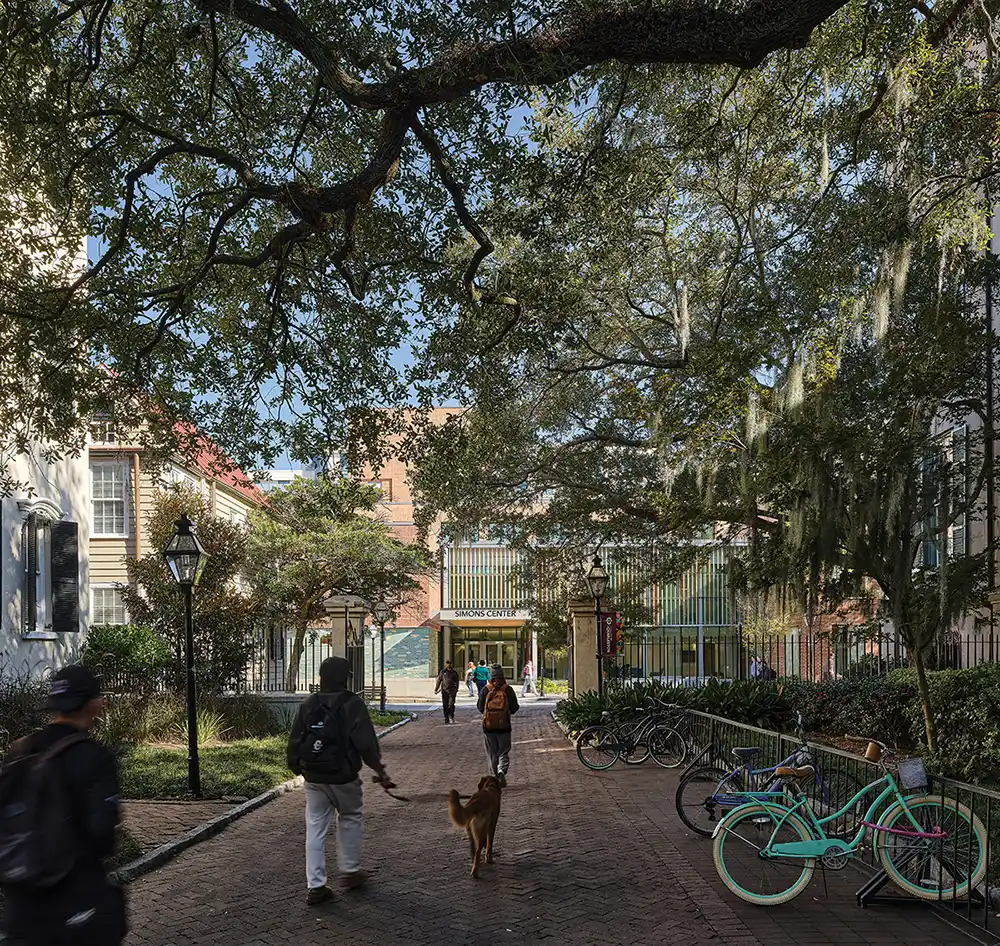
ndrew T. Hsu walks through the Cistern Yard each morning on the way to his office on the second floor of Randolph Hall. Since 2019, when he became the 23rd president of the university, he has enjoyed this short commute from his home at 6 Glebe St., the Bishop Robert Smith House, walking along the herringbone-patterned sidewalks and throughways, careful of uneven bricks where the live oak roots push upward.

Some mornings it is quiet; others, he sidesteps students and professors hurrying to make class. No matter the day or the activity level, that walk through the Cistern Yard calms him and readies him for his duty to steward the oldest institution of higher learning in South Carolina so that others may enjoy moments like this for years to come. This space is an open sanctuary of sorts – a place to come together and a spot to escape the day’s worries.
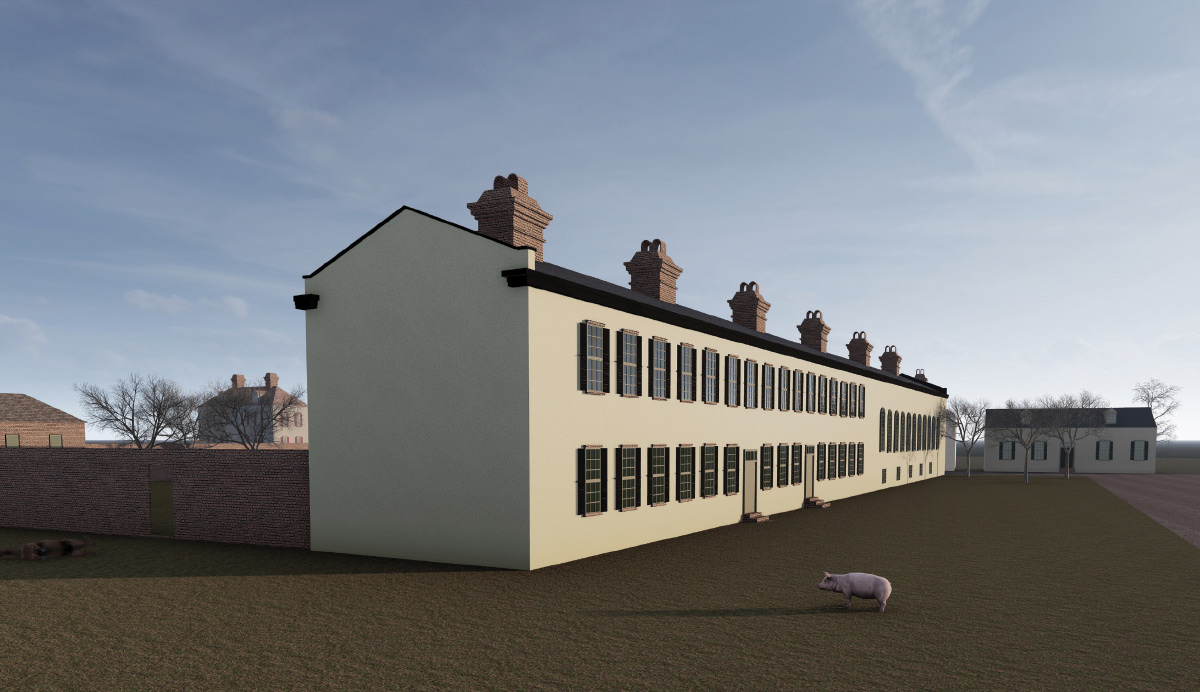
Today, higher education is at an inflection point – with artificial intelligence disrupting classroom instruction, demographic decline in traditional-age college students and changes in student demand. Each day can be a roulette wheel of old and new challenges, but Hsu finds that the best way to cope with any stress is to focus on what you can control – or at least what may make an impact. And a campus that dates to the birth of this country and was originally fashioned out of Revolutionary War barracks provides plenty of challenges to occupy one’s thoughts.
In his engineer’s mind, Hsu is programmed to identify problems and then formulate possible solutions. Facilities, since he first stepped on campus, have taken up a particular area of concern. He remembers several years ago, when clouds of steam rose from various manhole covers. For his youngest daughters, it gave a distinctly Victorian-era London feel, but it also meant that old steam lines were failing, and the campus was not operating efficiently. Romance had to give way to finance. Getting those underground lines repaired required years of hard work from the facilities team and an army of outside contractors. Now, the central utility system is working, meaning students, faculty and staff can do the business of the College with fewer disruptions.
One of the philosophical underpinnings of the current 10-year strategic plan, Tradition & Transformation, is to retain the historic character of campus while bringing things like academic programming, student services and buildings into the 21st century. It is a delicate balancing act, but the College has been moving back and forth on that tightrope for a long time.
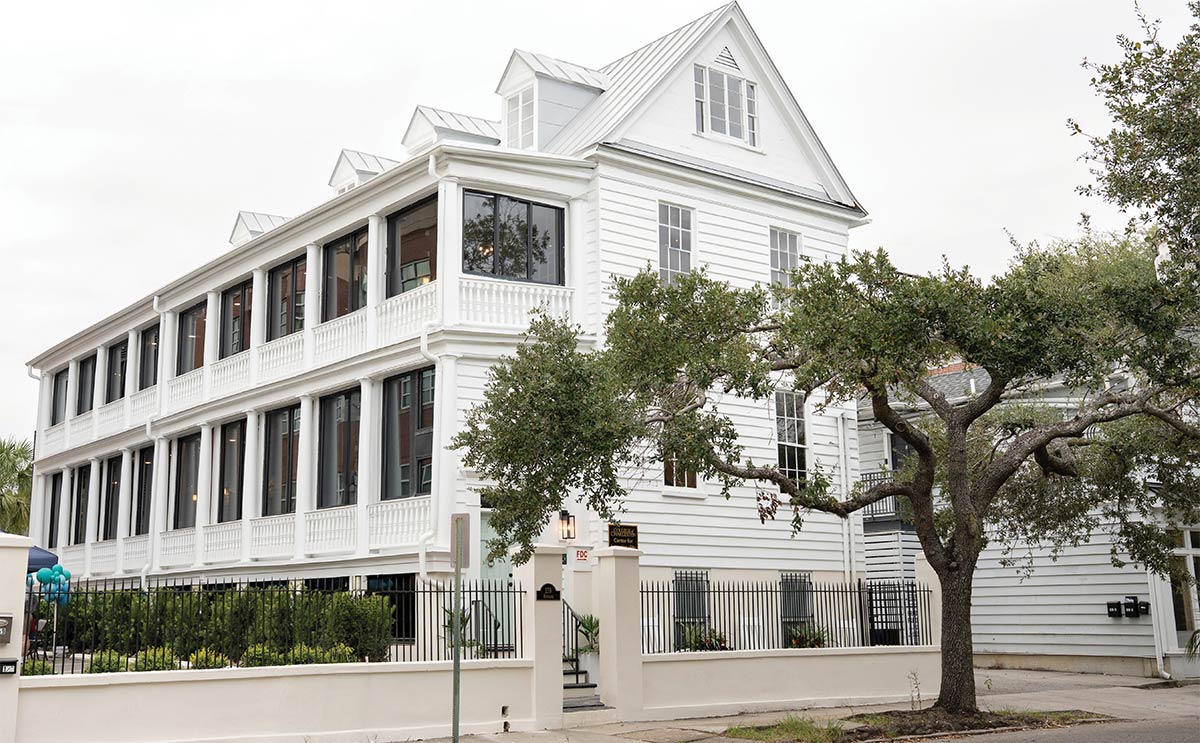
Since 2020, the College has made significant investments in its infrastructure, academic and student facilities and campus grounds, to the tune of more than $250 million. For example, the Simons Center for the Arts received a major overhaul and reopened in 2024; several residence halls – Berry, Buist Rivers, Craig and McAlister – have undergone extensive renovations; and 207 Calhoun St. (the home of the Center for Sustainable Development) has been restored, earning a Carolopolis Award (Pro Merito category) from the Preservation Society of Charleston in 2026. Much has been done, and much more is yet to be done.
Historically, many of these transformational projects have been made possible through strong state support and disciplined financial stewardship. Increasingly, however, private philanthropy has become an essential partner in shaping what comes next. Projects like the Edward J. Tuccio ’91 Student Success Center, the future School of Business building and the Michael and Amy Bennett School of Hospitality and Tourism Management reflect this new era of partnership between public investment and private generosity.
Standing there in the Cistern Yard, Hsu turns from Randolph Hall and immediately takes note of two projects in his peripheral vision that will transform the student experience. When he thinks about the Collegeʼs other facilities, he imagines the new buildings along and north of Calhoun Street, the renovation of Grice Marine Lab across the Charleston Harbor and the expansion of campus to East Bay and North Market streets. Once considered a “sleepy little college” – something Hsu has heard repeatedly from alumni and community members for years now – the university is waking up, stretching and ready to take on a new day.
And that vision of a new day is coming into clearer focus through several current and future projects reshaping the campus.
Simons Center for the Arts
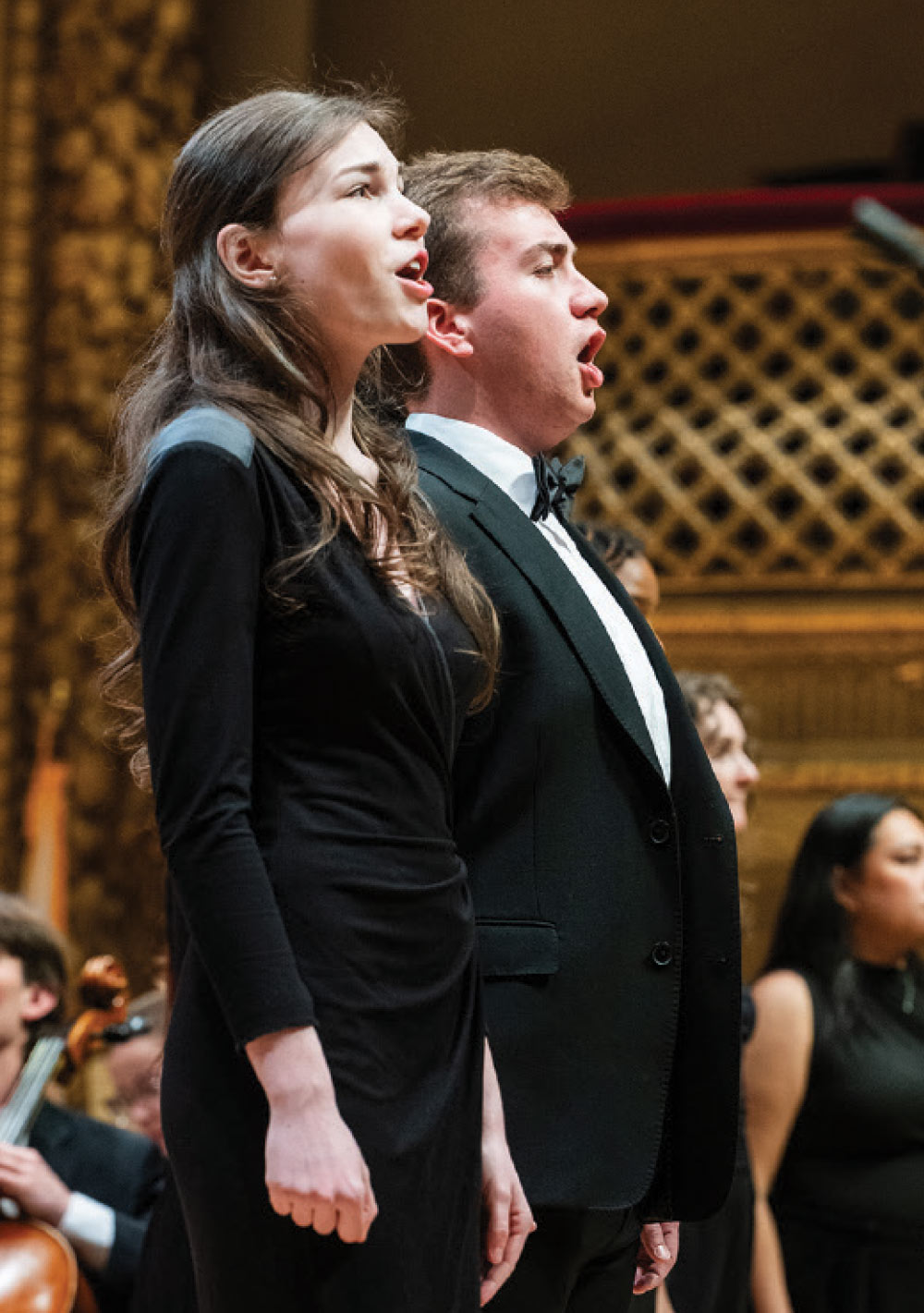
Since it came online in 1979, the Simons Center for the Arts on St. Philip Street has been an artistic home for both the campus and the city of Charleston. Performances there, by students and visiting professionals alike, have added to the dynamic artistic conversations happening throughout the greater Charleston community, whether with the Spoleto Festival USA, Piccolo Spoleto, the Charleston Gaillard Center, the Charleston Symphony or the Gibbes Museum of Art.
The multiyear, multimillion-dollar renovation included upgrades such as new seminar rooms and enlarged classroom spaces, a state-of-the-art costume shop, a digital lab/multipurpose room, a technologically advanced sculpture studio, reimagined printmaking studios, new music practice rooms and new mechanical, electrical and plumbing systems.
“The renovation is truly more than an architectural transformation,” says Jayme Klinger Host, dean of the School of the Arts. “It is an act of institutional faith in the power of creative life. When our students step into the new two-story black box theater, when they gather clay in a studio flooded with natural light, when they hear their own compositions ring with clarity in our recital hall, they are not simply using a building. They are inhabiting a declaration – a declaration that their work matters, that their vision deserves a stage worthy of its ambition.”

Theodore S. Stern Student Center
In 2024, the Stern Student Center was closed in order to modernize its facilities. Named for Ted Stern, president of the College from 1968 to 1978, the building has undergone a significant renovation, including outdoor landscaping, a new state-of-the-art event space, additional dining options, a new fitness center and gathering and collaboration spaces for students and student organizations.
“Our student affairs team worked closely with numerous partners to plan this transformative renovation,” says Alicia Caudill, executive vice president for the Division of Student Affairs. “Once complete, it will serve as the heart of our student-life experience and will provide students and the greater College community with the resources and services they need to be successful. This will be a true game changer for our students.”

Edward J. Tuccio ’91
Student Success Center
Located in the Barnard Elliott House (built circa 1803), which formerly housed the John M. Rivers Communication Museum,
the Tuccio Student Success Center will be the new home of the Career Center and the Financial Wellness Initiative. Students will use this facility to access internships, jobs, graduate school guidance, one-on-one career development counseling and financial planning workshops. The center is named for Edward Tuccio ’91, a retired real estate developer based in Connecticut.
“This renovation has been a long time coming,” says Hsu. “The building was closed in 2015 for repairs and will finally reopen more than a decade later. Thanks to the generosity of the Tuccio family, this building, located in the center of campus, will be transformed into something truly extraordinary for our students.”
Once considered an eyesore, the building will be yet another jewel in the crown of campus design.
“From a building construction standpoint, we’re preserving the main house, which is an old historic building, with a new addition on the back side,” says Cristi Schultz, director of architecture and engineering, of the historic home at 58 George St. “It will blend very nicely the old and the new, and so that location of George and St. Philip will serve as another important cornerstone for campus – right across from Randolph Hall.”
As an urban campus in the historic downtown district, the College of Charleston has been and continues to be a leader in making the most of its built environment.
“Each renovation or new building blends tradition with transformation, preserving the historic character of the peninsula while integrating modern materials and advanced, often unseen technologies,” says Brad Weiland, vice president for Facilities Management. “The result is spaces that may look familiar on the outside but offer a significantly enhanced, forward-looking experience within.”
Center for Intentionality
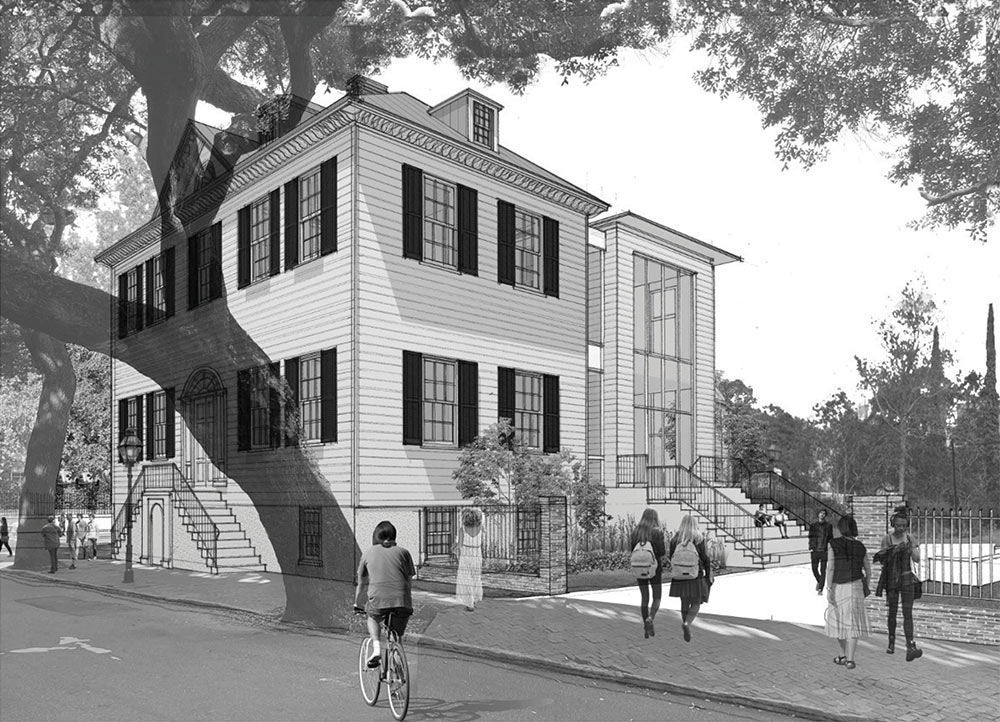
The Center for Intentionality, just west of campus on Rutledge Avenue, and its supporting student club were born out of a course taught by philanthropist and businessman Ben Navarro. Since 2023, Navarro has led this class in the School of Business, drawing its wide-ranging curriculum from his experiences, reflections and years of observing commonalities among highly successful people. The new center makes the course’s same principles available to a greater number of students.
“Students not only discover who they are, but also work toward the selves they aspire to become,” says Hsu. “It is a place where curiosity meets purpose and reflection turns into direction.”
159 Calhoun St. Development
This proposed new facility is slated for construction on Calhoun Street at the site of the now-defunct College Lodge residence hall, which will be demolished in 2026.
“The prevailing thought right now is that this development will be a multipurpose facility,” says Hsu. “The building will be home to the Michael and Amy Bennett School for Hospitality and Tourism Management and designed to both train and practice the hospitality that Charleston is famous for. Other areas being considered within the space are offices for our industry partner, Explore Charleston, a well-appointed event/conference center and a new alumni center.”
In January, the College announced the creation of its first named school, reimagining and elevating the Department of Hospitality and Tourism Management. Named for the Bennetts (Michael and Amy ’82), the new school aligns well with Michael’s career in hotel development and operations. His Hotel Bennett was one of the first Charleston-area hotels to receive a prestigious Michelin Key (2024), and Esquire magazine recently named it one of the Most Iconic Hotels of All Time.
As for a new alumni center, College administrators want to dream big for the space, with early concepts including a 2,500-square-foot multipurpose area to complete the conference and event space, a welcome desk and facilities on the first floor and shared access to a sixth-floor rooftop amenity.

Turning Space Into Place
“Donors provide the margin of excellence, delivering on the difference between simply constructing space and creating places of inspiration, discovery and belonging,” says Dan Frezza, chief advancement officer. “Building a strong culture of engagement and philanthropy, at times, is a brick-and-mortar effort, and I thank the countless donors that have made this possible and will continue into this exciting future.”
If you are inspired by this new era of campus transformation, we invite you to connect with our advancement team (giving.charleston.edu) to learn how you can be part of it. These different projects offer meaningful opportunities for alumni and supporters to leave a lasting legacy, including a variety of naming opportunities that will shape the College of Charleston for generations to come.
TD Arena
The College has made significant upgrades to TD Arena, including improved wall branding, upgraded lighting, new flooring and a refreshed color palette. In total, 58 unique vinyl graphic treatments were installed with three additional backlit structures. Also added: two new video boards, a new scorer’s table, new shot clocks and a 360-degree ribbon board. The 450-foot ribbon not only brightens the arena; it removes static sponsor signs and allows for a more dynamic and immersive experience for Cougar fans.
“Charleston athletics is committed to continually improving our facilities and the game day experience for its fans and student-athletes,” says Matt Roberts, director of athletics. “The addition of the new video elements, as well as improvements in the back of house, have made one of the best venues in the NCAA even better.”
106 Coming St.
In January 2025, the College acquired property between the St. Philip Street Parking Garage and the renovated apartment complex at 99 St. Philip St. after the Charleston City Council rezoned the land for high-density housing.
But like much of Charleston, the history of the land is complicated. Before it had been the home of the YWCA (1907–2014), the site had been a neighborhood (1817–present). Before that, the city of Charleston used the space as a municipal burial ground, or potter’s field (1793–1807). The poor, orphans, people of color, enslaved persons, yellow fever victims and “strangers” (traveling merchants, seafarers, immigrants and refugees) were buried at this site. At this time, the College is in the planning stages for archaeological excavation and removal in order to bring restorative dignity to those unknown people and commemorate their lives through memorialization and research.
“This is probably the most complex building project the College will ever undertake, and we want to do right for these forgotten people,” observes Hsu. “Through public memory, we initiate moral repair. Justice can be done without freeze-framing the land. To that end, we will work closely with the greater Charleston community on proper commemoration and memorialization.”
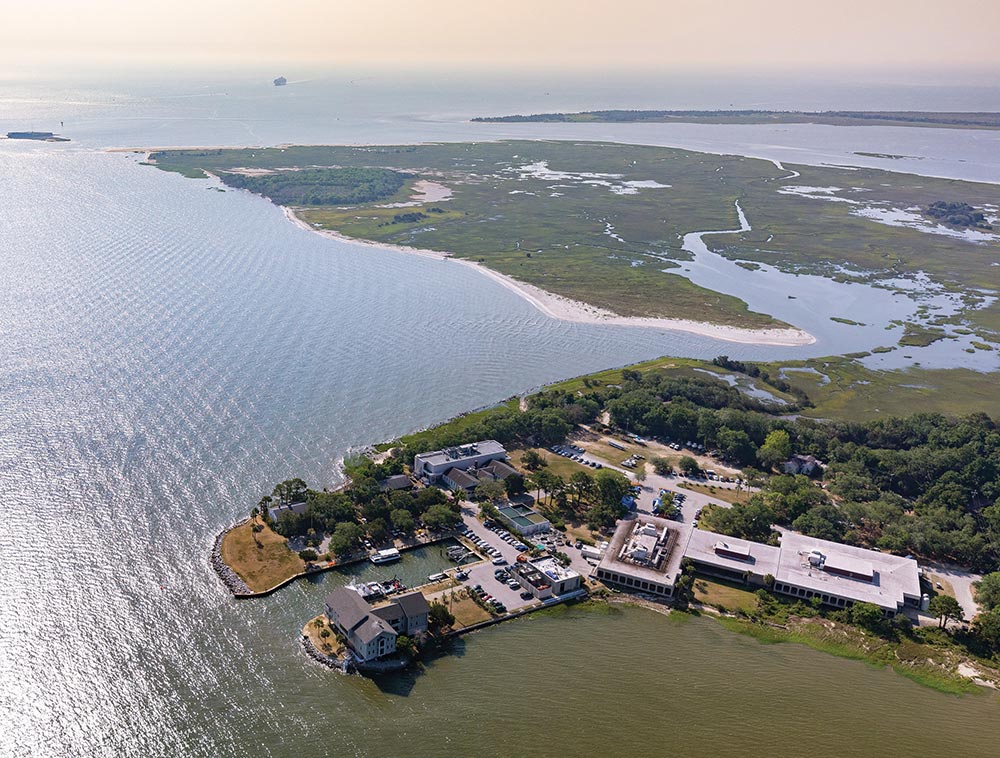
Grice Marine Laboratory
Located along the James Island side of the Charleston Harbor, Grice Marine Lab is undergoing significant interior and exterior renovations. The facility contains classrooms, student laboratories, research laboratories, faculty offices, an aquarium room and a research collection of marine invertebrates and fishes. The renovation underway focuses on the oldest portion of the complex, a 1930s-era annex that originally served as a quarantine hospital for the Port of Charleston. Upgrades include accessible restrooms; structural stabilization; mechanical, electrical and plumbing updates; and new interior finishes in the labs, offices and housing spaces. Most importantly, the team will be installing a central heating, ventilation and air-conditioning system.

New Business School Building
In October 2025, Ben Navarro wrote in a guest column in The Post and Courier, “We have purchased the abandoned Carroll building at Market Street and East Bay – in my view, one of the ugliest buildings in all of downtown at one of the most dangerous intersections. We are giving this land to the College, and we will work with them to build a world-class business school worthy of its students.”
The building, less than a 10-minute walk from the current School of Business building, the Beatty Center, will extend the boundaries of campus and fully integrate the College within the greater Charleston business community.
“This site gives us a once-in-a-generation opportunity to build a business school that is deeply connected to Charleston,” says Paul Schwager, dean of the School of Business, “educating future leaders, partnering with industry and contributing to the economic and civic vitality of our city.”
The opportunity, of course, is not simply to construct a new facility, but to create a defining space that embodies the university’s commitment to innovation and community partnerships.
“In all of these building projects, we talk about transformation,” says Hsu. “And I know we may overuse that word to an extent where we risk losing its meaning. But I cannot overstate how truly transformational the new home of the School of Business on the corner of Market and East Bay will be for our university. The location is one of the most visible in the city, and the more than 8.5 million annual visitors to Charleston will see our institutional brand in a new light. There are moments in our university’s history where we have made bold moves – across George, across Calhoun and across Coming Street. Now, we will establish a foothold on a new part of the peninsula in an area that is being overhauled as part of the Union Pier redevelopment.”
As most alumni will acknowledge, the College of Charleston has done admirably with a relatively small footprint for its first 256 years. Now, it’s time to think differently and see the campus more fully integrate within Charleston so that both may fully flourish for the next 256.
Impact
Winning the Day
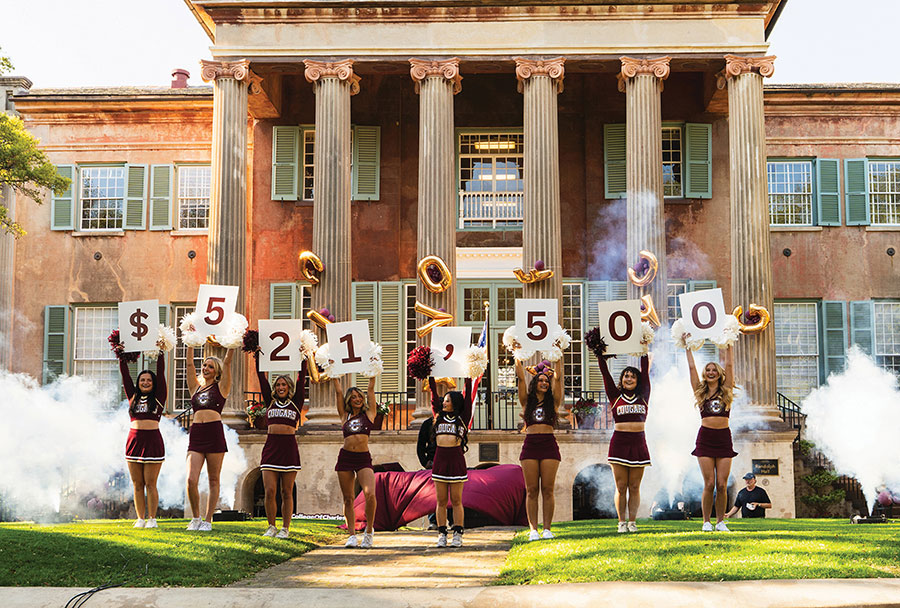
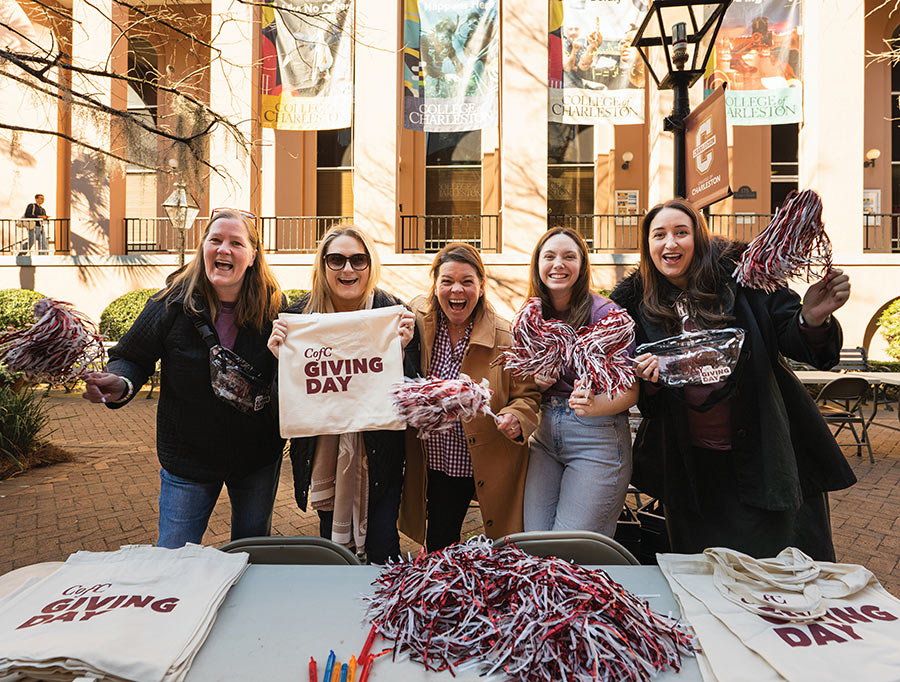
CofC Giving Day brings together the Cougar community in a shared celebration of the College. This year, more than 2,100 donors gave over $1.1 million, impacting 220 areas of campus.
The celebration carried into the next day as the College of Charleston women’s basketball team traveled to Durham, N.C., to face No. 3-seeded Duke in the first round of the NCAA Women’s Basketball Tournament. In honor of their historic debut, additional giving hours were added to keep the momentum going as the Cougar community rallied behind the team.
“CofC Giving Day is a powerful reminder of how our community comes together to support what matters most at the College,” says Dan Frezza, chief advancement officer of the College and chief executive officer of the College of Charleston Foundation. “The success of this year’s historic Giving Day is a testament to the incredible generosity of our alumni, parents, students, faculty, staff and friends. We are deeply grateful to everyone who gave and helped ensure the College can continue providing an exceptional education and expanding opportunities for our students.”
CofC Giving Day activities included a student organization banner competition, a student showcase of the impact of philanthropy on the student experience, a faculty and staff lunch courtesy of the Staff Advisory Committee to the President and Denny’s FUNd, a financial wellness event by the Career Center and a block party in the Cistern Yard that included a Cash Cube Challenge by Johnnie Baxley ’92 and his wife, Michelle.
In addition to events around campus, Alumni Association clubs spearheaded CofC Giving Day celebrations in multiple cities along the East Coast so people outside Charleston had the chance to engage and celebrate the day.
- The Buono School of Education Challenge, sponsored by Mark ’81 and Judy ’22 (M.Ed.) Buono, unlocked $12,500 for the School of Education after 50 donors gave to the school.
- The Lovell J. Stewart Walker Match contributed an additional $5,000 in matching funds to support CofC’s varsity sailing team.
- The Dwyer Family E-LLC Challenge unlocked $10,000 after 25 donors made a gift to the Honors College Entrepreneurship Living-Learning Community.
- The Mimi O’Brien School of Natural and Environmental Sciences Challenge unlocked $2,000 after 25 donors supported the school’s Dean’s Excellence Fund.
- The Zucker Challenge, sponsored by Anita Zucker and her family, unlocked $100,000 after 1,770 donors donated.
- The Kosko International Piano Series Challenge unlocked $1,000 after 10 donors supported the International Piano Series.
- The Lynn L. Moody Endowment for Mental Health and Suicide Awareness Challenge, sponsored by Janice Bethea, unlocked $5,000 after 30 donors made a gift to the fund.
- The Coleman Edmunds School of Business Dean’s Excellence Fund Match provided $1,500 in matching funds.
- The Dan Chandler School of Business Accounting and Business Law Match provided $1,500 in matching funds.
- The School of Business Board of Governors CofC Giving Day Challenge provided an additional $10,000 when $25,000 was donated to the Dean’s Excellence Fund at the school.
- The McLain School and Unit Competition, sponsored by Justin McLain ’98, awarded $50,000 to various excellence funds to recognize and incentivize participation across campus.
Evolution of a Museum
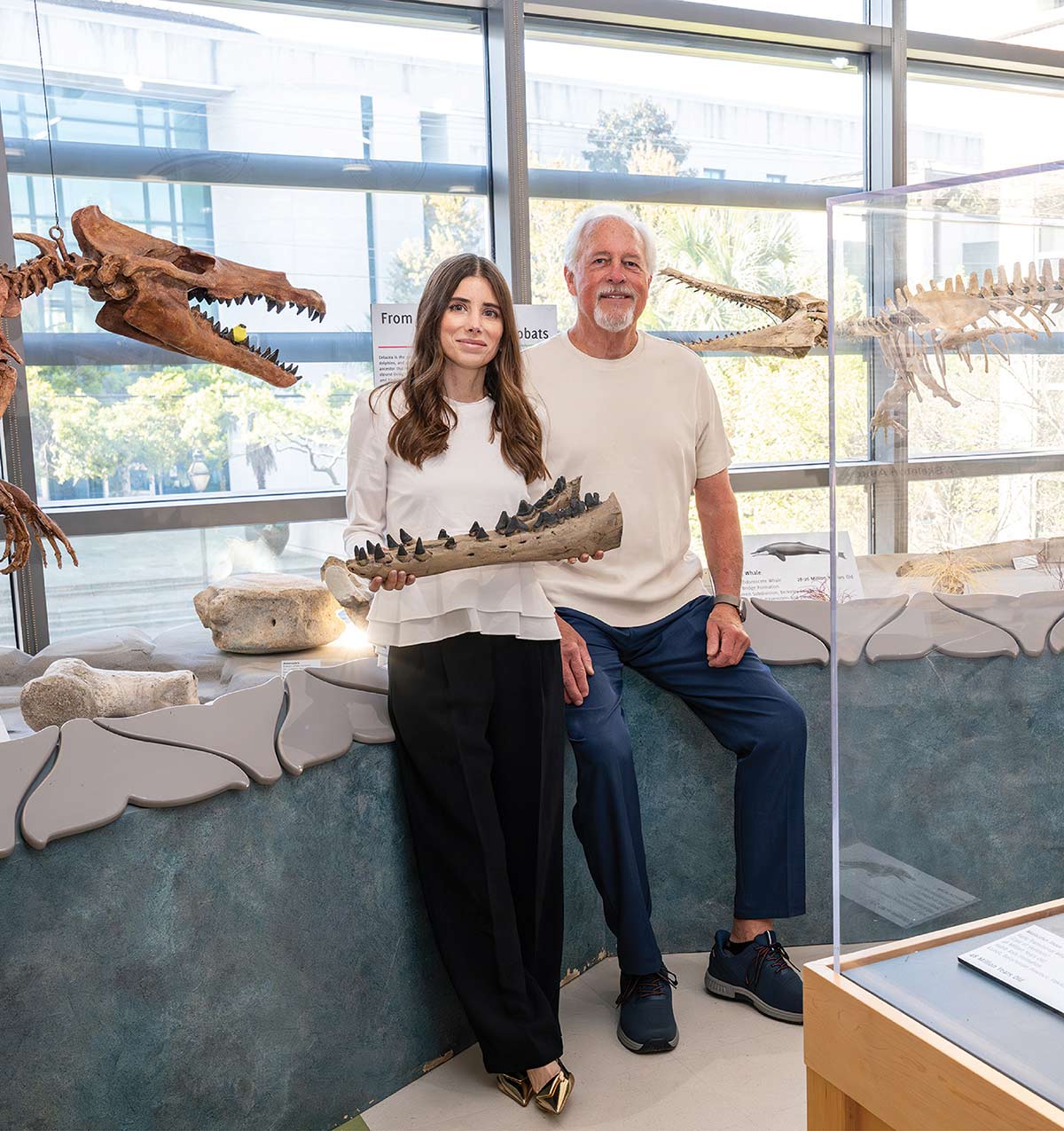
Brown and Kane, who earned a doctorate at Harvard, discovered a shared passion for fossils when they met in 2023. Brown, a local businessman, had donated his 5,500- square-foot collection of fossils – valued at more than $1.6 million – to establish the Mace Brown Museum in 2010. Kane founded the Charleston Center for Paleontology, a 10-plus–acre land conservation and research site in Ridgeville, S.C., known for its marine fossils from the late Oligocene to early Miocene epochs (23–28 million years old). Both had a desire to delve into the Lowcountry’s unique geology, including why it contains a plethora of marine fossils documenting the golden age of whale evolution.
When Brown moved to Charleston in 1992, discovering the abundance of prehistoric shark teeth in the area sparked his passion for fossil collecting. He adorned his Meeting Street office with his collection and welcomed CofC students to view them. In 2006, then-president Lee Higdon offered Brown dedicated space to establish a museum for his collection at the College’s new science center. After years of planning, in April 2010, the Mace Brown Museum of Natural History opened its doors on the corner of Calhoun and Coming streets. Since then, the museum has grown in popularity with more than 20,000 visitors in 2025.
“What has been done in terms of published citations on cetaceans and marine life has established our museum as a prominent resource for research of those fossils,” says Brown. “Many of the specimens are holotypes, a special designation given to fossil specimens that are used to describe new species. We plan to build on all this and develop a continuing post-doc research program.”
Kane’s passion for paleontology began in graduate school at Harvard and was reignited in 2017 when she moved to the Charleston area and discovered fossil shark teeth at local beaches. With her research site and laboratory in Ridgeville and its laboratory merging energies with the museum, Kane looks forward to creating community programs.
“For many students, fossils are a gateway to a love of STEM,” says Kane. “We are excited that local middle and high schoolers will be able to engage with world-class research in their own community.”
Kane hopes the museum can be a nexus for the Lowcountry, showing the benefits of industry and academic collaboration. “Most local specimens were discovered during excavation due to development and construction,” she explains. “As we build out our museum advisory board, we aim to strengthen our connections in this area.”
President Andrew T. Hsu believes Brown and Kane’s plan will increase community engagement and the College’s national prominence.
“We are so grateful to have Mace Brown and Elizabeth Kane on our team,” says Hsu. “Their vision for the museum will not only expand interaction and awareness about the Lowcountry’s unique geological resources, but will bestow national distinction on the College as a world-class research center.”
Driving Force
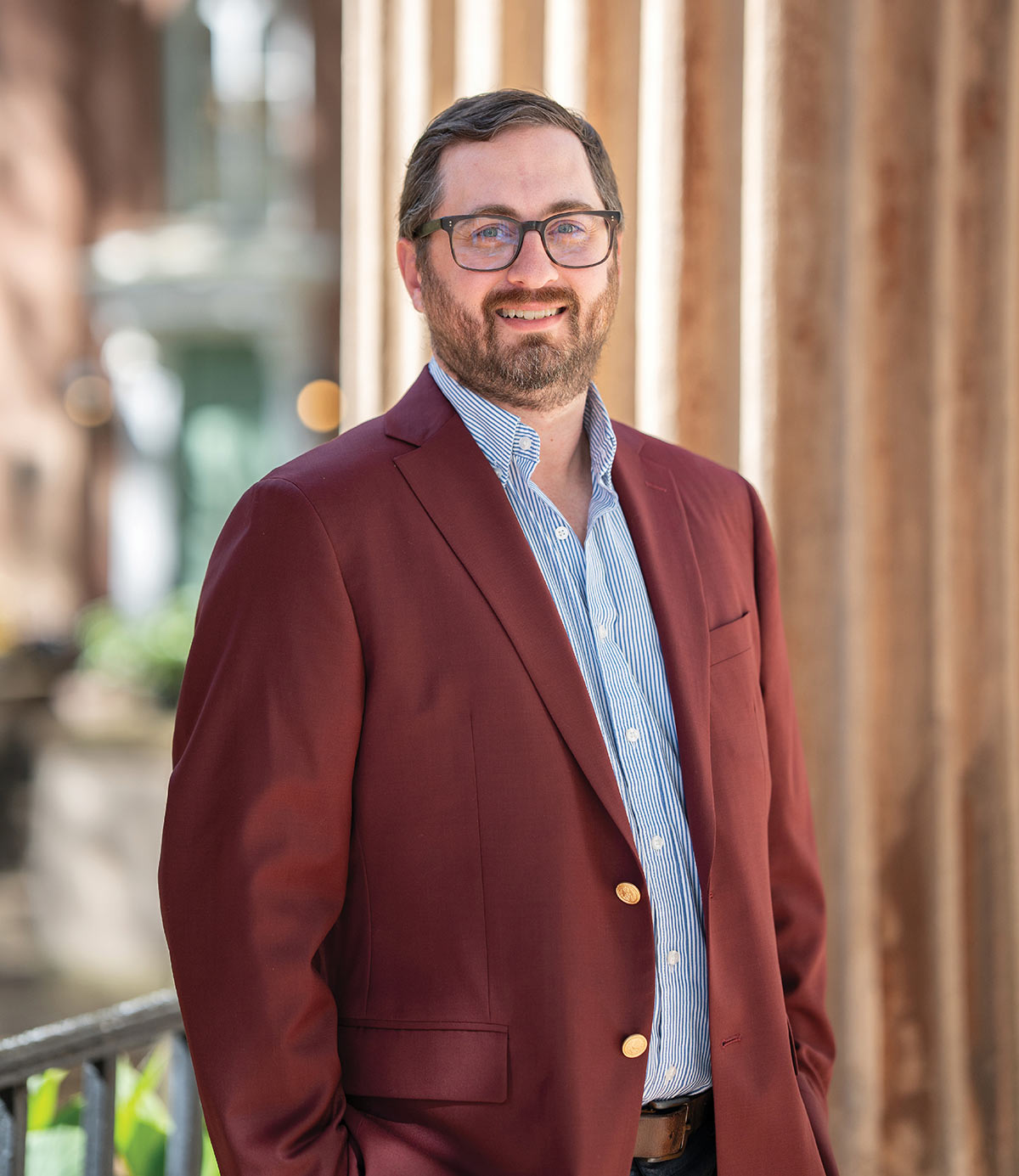
As with so many alumni, my connection to the College didn’t end at graduation; it only evolved. The friendships formed under the live oaks, the long conversations after class and the deep sense of place that defines the College stay with you long after you leave campus.
What makes the College special is not just its beautiful campus or its academic reputation; it’s the lifelong community the College cultivates. Alumni carry that spirit with them wherever they go.
As volunteers, we have the opportunity to keep that spirit alive by connecting graduates, supporting students and strengthening the bond between the College and its broader community. Every time alumni gather for an event, mentor a student or lend their expertise to help the institution grow, we reinforce the idea that the College is not simply a place we attended – it is a community we remain part of for life.
One of the most inspiring parts of serving in this role is seeing how powerful alumni engagement can be. When graduates stay involved, the College continues to evolve in meaningful ways. Alumni help open doors for internships and careers, support scholarships that make education accessible to future Cougars and provide insight that helps guide the College’s future. Their perspective, shaped by experience beyond the campus, adds tremendous value to the institution’s progress.
This relationship between the College and its alumni is a driving force behind many of the exciting developments happening today. The College continues to grow academically, expand opportunities for students and strengthen its role as a leader in higher education. None of this happens in isolation; it happens because thousands of alumni remain invested in the success of the institution and in the students who now walk the same brick pathways we once did.
Being involved has deepened my appreciation for what the College represents. It has allowed me to reconnect with classmates, meet graduates from different generations and witness firsthand the passion our alumni have for their alma mater. Every conversation reminds me that the College of Charleston leaves a lasting imprint on the people who cross the Cistern.
There has never been a more exciting time to be part of this community. The momentum at the College is real, and alumni play a vital role in shaping what comes next. By staying connected, sharing our time and talents and supporting the College’s mission, we help ensure that future generations experience the same transformative education and sense of belonging that meant so much to us. That is the true power and joy of being an engaged alumnus.
I encourage everyone to find a way to engage with the College of Charleston; it will change your life in positive ways.
ALUMNI NOTEBOOK
-
GOLD HIGHLIGHTED ALUMNI ARE RECENT DONORS TO THE COLLEGE
-
1974
Teresa Owen Hinnant was recently elected to the Orangeburg County, S.C., school board in 2024. She and her husband reside in Eutawville, S.C.
-
1977
Mikey Allen III is a group health benefits sales professional at C.T. Lowndes & Co. He earned a master’s from The Citadel in 1986. He and his wife reside in Pawleys Island, S.C.
- Terri Major Luhrs is the owner of Women for Women’s Health. She and her husband reside in Macon, Ga.
- Steve Thompson is a retired instructor from Tennessee State University and the University of Tennessee. He earned his master’s in public administration from the University of South Carolina in 1980 and his doctorate in political science from the UT in 2019. He and his wife, Christine Peralta Thompson, reside in North Charleston.
-
1979
Sharon Wood is a social worker who earned her master’s in social work from the USC in 1983. She resides in Charleston.
-
1980
Steve Horrocks recently retired. He earned his master’s in geology from Old Dominion University in 1994. He resides in Chesapeake, Va.
-
1981
Cheryll Woods-Flowers (M.S. ’99) is a residential real estate specialist at Coldwell Banker Realty. She was recently named to the Coldwell Banker International Sterling Society, ranking in the top 11% of agents worldwide. She and her husband reside in Mt. Pleasant.
-
1983
Gerald Bresnihan is a vice president at CH Powell Co. He earned his MBA from Georgia Southern University in 1993. He and his wife reside in Charleston.
- Patrick Conway is a pastoral associate at Resurrection Catholic Church in Aptos, Calif. He earned his master’s in theology from Santa Clara University’s Jesuit School of Theology in 1995. He and his wife reside in Watsonville, Calif.
-
1984
Suzette Jeffries Timme recently accepted the role of executive managing director of property management at TSCG following the company’s merger with Indigo Asset Services, which she founded in 2017. She currently serves as vice president of the College’s Alumni Board of Directors and established the Suzette J. Timme Endowed/Annual Scholarship to support students facing unexpected financial hardships. She and her husband reside in Arlington, Va.
-
1986
Ginger Dillard Selby is a managing director at J. Henry Stuhr Inc. She and her husband reside in Daniel Island, S.C.
-
1987
Betsy Allen Fanning (M.ED. ʼ95) is head of school at Trident Academy in Mt. Pleasant. She earned a master’s in school administration from The Citadel in 2002. She and her husband reside in Charleston.
-
1991
Sabrina Moore is a paralegal at Tivity Health. She recently received recognition from the organization, Influential Women. She resides in Lawrenceville, Ga.
-
1993
Madelyn Cocke Caraway is an analyst at the Department of Defense. She earned her master’s in communications from the University of Memphis in 2000. She and her husband reside in Memphis, Tenn., with their two children.
- Christiane Magann Farrell (MPA), is an assistant town administrator for the town of Mt. Pleasant. She was named the Master of Public Administration Alumni of the Year in 2025. She and her husband, ROBERT FARRELL ’97, reside in Charleston.
- Paul Gillam Jr. is the president and CEO at Security Management of South Carolina. He and his wife, Pamela Sparks Gillam ’95, reside in Columbia, S.C., with their two children.
- Heather Nidiffer White is the director of children’s ministry at Dauphin Way United Methodist Church in Mobile, Ala. She earned her master’s in elementary education from the University of Tennessee in 1997. She and her husband reside in Mobile with their two children.
-
1994
Emily McDaniel Barrett is an attorney at Palmetto Adoption Law Group in Charleston. She earned her law degree from Cumberland School of Law at Samford University in 1998 and her master’s in ocean and coastal law from the University of Miami School of Law in 1999. She received a 2025 Angels in Adoption Award from the Congressional Coalition on Adoption after a nomination from U.S. Sen. Tim Scott of South Carolina. She and her husband reside in Charleston with their son.
- Terri Donnahoo Basch recently earned her master’s in sustainability from Harvard Extension School, the continuing education division of Harvard University. She and her husband reside in Portland, Ore., with their two children.
-
1995
Pamela Sparks Gillam (see Paul Gillam Jr. ’93)
-
1996
Dee Dee Simpson Figueroa is a contracting professional for the U.S. Department of Defense, supporting the Europe and North Africa Defense Health Network. She earned master degrees in human resources development and human resources management in 2002, followed by a master’s in procurement and acquisitions management in 2015 from Weber University. She graduated with the highest academic honors in all three graduate programs. In 2024, she earned a contracting officer warrant. She resides in Germany.
-
1997
Robert Farrell (see Christiane Magann Farrell ’93)
- Beth Reines Gunter is the owner of Spry Digital. She was named to the St. Louis “Titan 100” list for 2026 and was featured in St. Louis Small Business Monthly in its “Top 100 St. Louisans To Know To Succeed in Business” list. She also received a GRIT Award from the company: Growth, Resilience, Intention and Tenacity. She and her husband reside in Olivette, Mo., with their two children.
- Courtney Feuers Mann is a solution architect at MetLife. She and her husband, DAVID MANN ’02, reside in Greenville, S.C.
- Manelik Pou is a clerk at the International Longshoremen’s Association. He earned his MBA from The Citadel in 2006 and resides in New Orleans.
-
1998
Berri Heinz is the director of capital procurement at Prisma Health. She resides in Greenville, S.C.
-
1999
Candy Hunt Acanfora is a development coordinator at King & Society Real Estate. She resides in Charleston.
- Jen Job was appointed to the Wake County Public Schools Board of Education in Cary, N.C., in December. She earned her doctorate in curriculum studies from the University of North Carolina at Chapel Hill in 2013. She resides in Apex, N.C., with her daughter.
- Kevin Rhodes is an internal communications lead at Spirax Sarco. He earned his master’s in mass communications from USC in 2023. He and his wife reside in Ridgeway, S.C.
- Porcher Scott is a math teacher at the Georgetown School of Arts and Sciences in Georgetown, S.C. She is a published author of The Visitor and a co-author of a forthcoming piece in the Journal of the Advanced Practitioner in Oncology. She is also a curriculum developer, creating multicultural programming. She and her husband reside in Georgetown with their daughter.
- Harriet Ethridge Selby is a supply chain specialist at Dodge Industrial Inc. She and her husband reside in Taylors, S.C., with their son.
-
2000
Christine Brackett Gordon is a marketing and communications manager at the Pardee Hospital Foundation. She and her husband reside in Lawndale, N.C., with their three children.
- Chris Sanders is an executive solution architect at SSP Innovations. He and his wife reside in Charleston with their two children.
-
2001
Cate Lynch Goff is the director of communication and marketing at Sandhills Medical and resides in Elgin, S.C.
- Maria Milonas Rakes is the owner of BluTide Marine Construction. She and her husband reside in Wadmalaw Island, S.C., with their two children.
-
2002
Matt Dorsey is a branch manager at CMG Home Loans. He currently serves on the board of the James Island Youth Soccer Club. He and his wife, Jenny Peterson Dorsey, reside in Charleston with their two children.
- David Mann (see Courtney Feuers Mann ’97)
- Sean Milligan is the president of the logistics consulting company Gatlin Mill. He was recently appointed by Florida Gov. Ron DeSantis to the Valencia College Board of Trustees in Orlando, Fla. He resides in Orlando with his three children.
- Bethany Tyree is a client development manager at The Greer Group, a staffing company. She resides in Wake Forest, N.C., with her daughter.
- Tasha Dorn Wright is a registered nurse at Inova. She and her husband reside in Dumfries, Va., with their three children.
-
2003
Luke Cooper (see Jenny Bannan Cooper ’05)
- Mary Sabatino Dobek was recently appointed president of Wiedner & McAuliffe, becoming the law firm’s first female president. She earned her law degree from DePaul University in 2006. She and her family reside in Chicago.
- Whitney Allen Laurie is a high school teacher in the Glasgow Independent Schools in Glasgow, Ky. She and her husband reside in Glasgow with their three children.
-
2004
Meike McDonald is a high school math teacher for Florence School District 5 in Johnsonville, S.C. She and her husband, Mitchell, reside in Coward, S.C.
-
2005
Katie Holton Albia is the vice president of Alpine Bank. She and her husband, Nick Albia ’14, reside in Norwood, Colo.
- Hope Bergquist was promoted to lead senior commercial counsel at the information technology security company Zscaler. She earned her law degree from the Charleston School of Law in 2011 and resides in Charleston.
- Kosha Lance Coleman is a physician assistant at Atrium Health. She earned her master’s in physician assistant studies in 2009 and her medical degree from the Medical University of South Carolina in 2023. She resides in Indian Land, S.C., with her two children.
- Jenny Bannan Cooper is an elementary teacher in Dorchester District 2. She was recently named Teacher of the Year at her school. She and her husband, LUKE COOPER ’03, reside in Summerville, S.C., with their three children.
- Kelly Flaherty is a collections information specialist at the Princeton University Art Museum. She earned her master’s in art history and her master’s in library and information science from Pratt Institute in 2012. She and her husband reside in Ewing, N.J.
- Lizzy Eggers Plimpton is an actor, writer and director. She recently produced, directed and wrote the short film Grace and the Red Glow, which is currently on the festival circuit. She resides in Pleasantville, N.Y., with her son.
- Chaz Shanton II is a sales and business development executive at Charles A. Wells Sales Co. He resides in Denver.
- Ryan Yaden (see Erin Gavin Yaden ’06)
-
2006
Chris O’Neal (M.S.) is a managing partner at Moody & O’Neal CPAs and resides in Charleston.
- Erin Gavin Yaden is a teacher for the Charleston County School District. She and her husband, Ryan Yaden ’05, reside in Charleston with their two children.
- Erica Zakrzewski is a corporate compliance manager at Total Beverage Solution. She recently took a sabbatical to study art throughout Europe. She resides in Seabrook, S.C.
-
2007
Hunter Lappen is a client adviser at Rick Hendrick BMW Charleston and resides in Charleston.
- Lisa Hergatt Sizelove is a project manager for science and engineering at the Oklahoma Department of Education. She earned her master’s in curriculum and instruction from Southeastern Oklahoma State University. She and her husband reside in Earlsboro, Okla., with their two children.
-
2008
Mary Lee Hutson Briggs is an attorney at the Ramsdale Law Firm. She was recently sworn in as the president of the Charleston County Bar Association. She earned her law degree from Charleston School of Law in 2013. She and her husband, Robert Lee Briggs III ’11, reside in Charleston with their two children.
- Melissa Cohen Kegan is the executive vice president of operations at Dentsu Creative. She and her husband welcomed their second child in August 2025. The family resides in Richmond, Va.
- Jess Levkoff is a restaurant manager at Wild Common, a Michelin one-star tasting-menu restaurant. She and her spouse reside in Charleston.
- Marquitta Scott is a pharmacy buyer at Roper Hospital and resides in Goose Creek, S.C.
-
2009
Seaton Brown is the executive director of graduate admissions and marketing at the College and resides in Charleston.
- Britt Foster is the head of product at BusinessLoans.com. She and her husband, randy buchanan ʼ10, reside in Charleston with their daughter.
- Alexandra Robinson Pierson and her husband welcomed their third child, Piper, in September 2024. The family resides in Aliso Viejo, Calif.
-
2010
Randy Buchanan Randy Buchanan (see Britt Foster ’09)
- Christopher Hart (see Stephanie Zeigler Hart ’11)
- Zac Jennings founded Southern Exits, an exit advisory practice. He and his wife, Graylyn Steiner Jennings, reside in Charleston with their three children.
- Suzanne Lee is a freelance prop stylist. She recently received the Harriet Popplewell Award at the American Yacht Club. She resides in Amesbury, Mass.
- Kyle Rees is a senior product manager at Amazon. He earned his MBA from George Washington University in 2015. He resides in Silver Spring, Md.
-
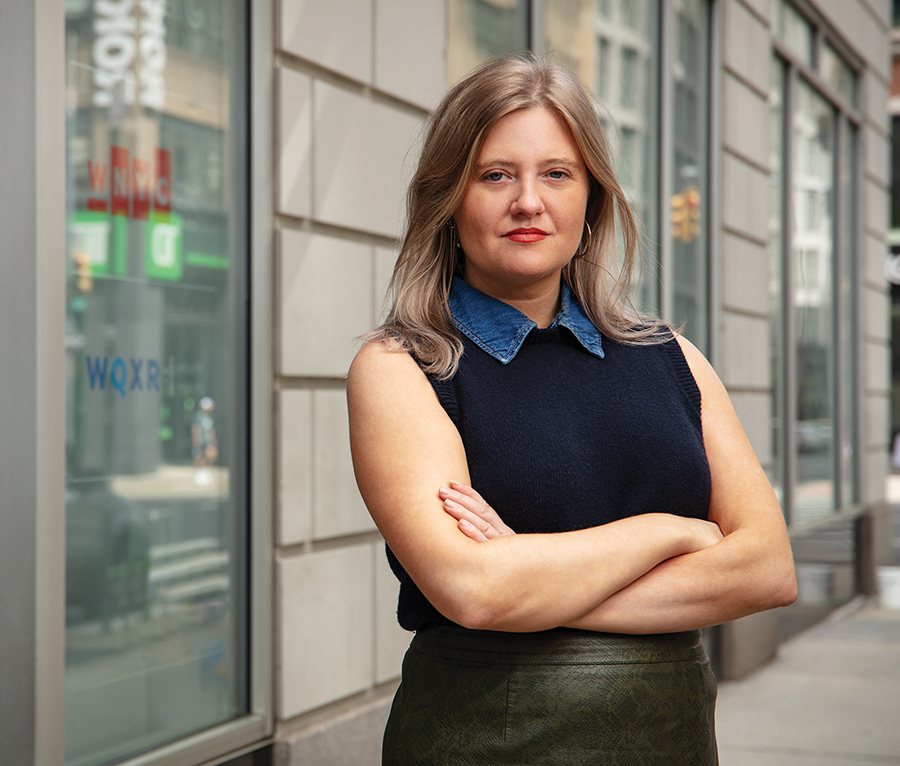 | photo by Jörg Meyer |
 - Craig Schultz is first officer for A320 aircraft at JetBlue Airways. He and his wife reside in Fuquay-Varina, N.C., with their two children.
-
2011
Cristy Jamison Armstrong is the owner and marketing and public relations director at the firm Cristy J. Armstrong. She and her husband, Creighton Armstrong, reside in Charleston.
- Rachael Cechak Arora is a senior assistant public defender with the Charleston County Public Defender’s Office. She earned her law degree from the Charleston School of Law in 2013. She and her husband reside in Charleston with their two children.
- Sean Bear is an assistant director of health services and a public health administrator at Georgia Southern University and resides in Statesboro, Ga.
- Robert Lee Briggs III (see Mary Lee Hutson Briggs ’08)
- Colin Pociask Chinery is the director of global recruiting at Salesforce and resides in San Francisco.
- Holly Colsher is a senior coordinator for meetings at the American Bankers Assoc. and resides in Centreville, Va.
- Jessica Ledford Costanza is a senior digital producer at Human Security. She and her husband reside in Morehead City, N.C.
- Charlotte DeWitt is a lead technology sourcing and category manager at Ally Financial and resides in Charlotte, N.C.
- Brandon Ellis was promoted to lieutenant commander in the U.S. Navy and will soon be serving as a foreign area officer in Japan. He earned his master’s in international politics and military affairs from The Citadel in 2024. He and his wife reside in Marina, Calif., with their two children.
- Dodson Felton (see Courtney Gerstenmaier Felton ’12)
- Can Foster is a senior program manager at Oracle and a former Army officer. He earned his master’s in supply chain management from the University of Washington in 2022. He and his wife reside in Gulf Shores, Ala., with their two children.
- Maeve McKenna Gallivan is the founder and CEO of Emyvale Golf. She earned her master’s degree in public relations and corporate communications from Georgetown University in 2016. She and her husband reside in Charleston with their daughter.
- Zach Guest is a senior account executive at Garter and resides in Cincinnati.
- Stephanie Zeigler Hart is a research coordinator at the Lowcountry Center for Veterans Research. She and her husband, Christopher Hart ’10, reside in Johns Island, S.C.
- James Helton is the director of school counseling at Gregg Middle School. He and his wife, Kelsie Helton ’14, reside in Summerville, S.C.
- Christine Levi was recently promoted to assistant U.S. attorney and deputy appellate chief for the U.S. Attorney’s Office. She earned her law degree from the Columbus School of Law at the Catholic University of America in 2018 and resides in Montgomery, Ala.
- Nevan Phillips is a general manager at Clover Wheel Estate and resides in Clover, S.C.
-
2012
Evan Berke is an operations manager at AlphaSense and resides in Nashville, Tenn.
- Sierranicole Butler is a multilingual learner program specialist at Sumter School District and resides in Sumter, S.C.
- Katreena Lynnette Davis and her husband welcomed their first child in November. The family resides in Mableton, Ga.
- Stefani McGee Davis is the director of marketing at Fetco. She and her husband reside in Long Beach, Calif.
- Courtney Gerstenmaier Felton is an education curator at the North Carolina Maritime Museum. She and her husband, Dodson Felton ’11, reside in Trent Woods, N.C.
- Brooke Hohman Harrison is a co-owner at Duo Creative Co. She and her husband reside in Alpharetta, Ga., with their son.
- Seth Kight is chief of staff at Inovalon and resides in North Charleston.
- Ross Kressel is a vice president and business manager for the treasury management and payments business at FNB Corp. He earned his MBA from the University of Pittsburgh in 2016. He and his wife reside in Upper St. Clair, Pa., with their two children.
- Anne Rector Mastin is a GIS analyst at the Idaho Transportation Department and resides in Idaho Falls, Idaho.
- Daniel Pitcher (see Christina Pitcher ’16)
- Rebecca Read is a senior associate underwriter at Amwins and resides in Hollywood, S.C.
- Allison Jahries Rogers was recently honored in The Post and Courier Pee Dee as part of its 20 Under 40 list. She opened her private practice, Still and South Counseling, in 2025 and resides in Florence, S.C., with her two children.
- Carl “Shake” Thomas is a national account manager at Chetu and resides in Tampa, Fla., with his four children.
- Elyse Chubb Welch recently launched Carolina Retail Experts, a majority female-owned commercial real estate company. In 2024, she was named Woman of the Year in the Charleston Regional Business Journal. She also serves as secretary of the Charleston Athletic Fund, which supports College of Charleston athletics and student-athletes. She and her husband live in Charleston with their two children.
-
2013
Carolyn Barnick is a global director of customer marketing at DXC Technology. She was recently recognized in the Charleston Regional Business Journal on its 40 Under 40 list. She resides in Charleston.
- Brooks Clark is a broadcast associate at Fox Sports. He and his wife reside in Costa Mesa, Calif.
- Richard Duncan is an associate director of residence life at the University of Utah. He earned his master’s in counselor education from Clemson University in 2015 and resides in Salt Lake City.
- Kenneth Felder is an advanced physical therapist at Prisma Health’s Roger C. Peace Rehabilitation Hospital. He earned his doctorate in physical therapy from MUSC and resides in Greenville, S.C.
- Dakota Flynn is a clinical fieldworker director and an assistant director of inpatient rehabilitation for the U.S. Army. He earned his master’s in higher education and student affairs from USC in 2015 and his doctorate in occupational therapy from MUSC in 2022. He resides in San Antonio.
- George Kaplan is a managing director at Choice Sports Holdings. He and his wife reside in Wayland, Mass., with their child.
- Marion Lake is the owner of Another Chance Psychotherapy and Consultation Services and resides in Charlotte, N.C.
- Greg Neal is an estate buyer at the Heartland Roadshow and resides in Lexington, S.C.
- Alyssa Maute Smith (M.A.) is the executive director at Charleston Wine + Food. She and her husband reside in Charleston.
- Dyanne Vaught is a senior economist at the Council of Economic Advisers. She resides in Washington, D.C.
- Nic Wegrzyn is a supply chain manager at Nespresso. He and his husband, Matthew, were married in May 2025. The couple resides in New York City.
-
2014
Nick Albia (see Katie Holton Albia ’05)
- Sam Dahabi is a photographer and resides in Kihei, Hawaii.
- Kelsie Helton (see James Helton ’11)
- Kaitlin Foran married Josh Duffey in September 2025. She is a legislative affairs assistant for the South Carolina Department of Public Health. The couple resides in Lexington, S.C.
- Alex Huffman is a manager of auto finance at Ally Financial. He and his wife reside in Matthews, N.C.
- Tarek Kabbani (see Emily Deal ’16)
- Michael Kreisel is a research analyst at Lake Tahoe Community College. He is pursuing his master’s in data science with plans to graduate in 2027 and resides in South Lake Tahoe, Calif.
- Chase McGraw and his wife, Pauline, were married in October 2025. He is the owner of Coastal Golfaway. The couple resides in Charlotte, N.C.
- Fred Quick is the director of recruitment and admissions at MUSC’s College of Graduate Studies. He earned his master’s in leadership from The Citadel in 2021 and his master’s in project management in 2023. He resides in Charleston.
- Jeff Sledden is a vice president of development at the real estate investment firm StoneRiver Co. He married his wife, Ellie, in October 2024, and the couple welcomed their daughter in July 2025. The family resides in Charleston.
-
2015
Savannah Anderson is an association operations director at the YMCA of Upper Palmetto and resides in Clover, S.C.
- Master Bines is a real estate adviser at EXP Realty and resides in North Charleston.
- Melissa Jacobs Connell is a financial aid officer at Trident Technical College. She and her husband reside in Charleston.
- Ross Drummond is a project manager at the brand experience company First, managing corporate events and experiences for the financial services company KKR. He earned his master’s degree in event management from New York University. He resides in Mountain View, Calif.
- Kayla Bogad Esan is a director of donor relations at Florida Atlantic University. She and her husband reside in Boca Raton, Fla.
- Drew Hendricks recently competed in the Special Olympics North America Golf Championship, where he won a silver medal. He resides in Metter, Ga.
- Val Keller is a manager of customer success at Employ Inc. and resides in Conshohocken, Pa.
- Caroline Kenny is a White House producer at NBC News. She earned her master’s in journalism from Northwestern University in 2016 and resides in Washington, D.C.
- Emily Knopf King has been promoted to senior go-to-market recruiter at SentinelOne. She and her husband reside in Savannah, Ga.
- Hannah Shoemaker is a mental health therapist at Dee Norton Child Advocacy Center and resides in Charleston.
- Danielle Stout is a senior accountant at Allianz and resides in Richmond, Va.
- Dael Szuch is a membership director at Piedmont Driving Club and resides in Atlanta.
- Kim Kamps Wiegand is a stakeholder services representative at New York Independent System Operator. She and her husband reside in Clifton Park, N.Y.
- Chris Wynn is a material handler at Gildan and resides in North Charleston.
-
2016
Amy Cartwright is a registered nurse at MUSC and resides in North Charleston.
- Angel Darrow is a counselor at Kolmac Integrated Behavioral Health. She earned her master’s in clinical mental health from George Washington University in 2023 and resides in Arlington, Va.
- William Davis III is a director of sales at Ethox Chemicals. He and his wife welcomed their first child in October 2025. The family resides in Greenville, S.C.
- Emily Deal is a digital marketing manager at the jewelry company Hart. She and Tarek Kabbani ’14 recently became engaged. The couple resides in Charleston.
- Erin Dempsey is pursuing her master’s degree in international public policy from the Johns Hopkins University School of Advanced International Studies, with plans to graduate in 2026. She also is a member of the College’s National Advisory Council within the communications department. She resides in Washington, D.C.
- Lindsay Wooles Gainey is the owner of The Home Bridge, an education consulting agency that provides parent education, tutoring and advocacy. She and her husband reside in Clover, S.C., with their son.
- John Jonas is a partner solutions manager at Simple Logistics Solutions and resides in Nashville, Tenn.
- Emily Kerr is the founder and executive director of Charleston Hope and the founder of Catalyst Nonprofit Coaching. She resides in Charleston.
- Christina Pitcher is the owner of Christina Pitcher Creative. She and her husband, Daniel Pitcher ’12, have been renovating a project in downtown Charleston, documenting the process on social media and engaging more than 24 million viewers. They reside in Charleston with their daughter.
- Hanna Miller Puetter is an adviser at Windermere Insurance. She and her husband reside in Mt. Pleasant.
- Hannah Martin is a flight instructor at Delta Airlines. She is pursuing her commercial pilot license and resides in Port Jefferson, N.Y.
- Natasha Senken married Derek Angermaier in October 2025. The couple resides in Oakdale, N.Y.
- Jessie Woodroof married Chris Yenney in October 2025. The couple resides in Boise, Idaho.
-
2017
Chelsea Anderson is a marketing manager at Lowcountry Food Bank and resides in North Charleston.
- Mara Argyriou is the owner of Mara Sports Performance and Physical Therapy. She and her husband reside in Charlottesville, Va.
- Andy Cohen is the director of leadership events at Washington University. He and his wife welcomed their first child in September 2025. The family resides in University City, Mo.
- Collin Davidson is an attorney at Horton and Associates and resides in Bluffton, S.C.
- Hannah Dominy is a local coordinator at the Council on International Educational Exchange and resides in Kansas City, Mo.
- Mike Gelber is the chief product officer at Impiricus and resides in New York City.
- Paige Landfried Gervais (M.A.) is a senior tax associate at Moody & O’Neal CPAs and resides in Charleston.
- Macy Haley is a registered nurse at MUSC. She and her husband reside in Charleston.
- Schuyler Keating has been promoted to manager at Greenhouse Software and resides in New York City.
- Kha-Lil Pearson is a senior professional in technical accounting and financial reporting at Mitre. He earned his master’s in accounting from American University in 2019 and resides in Washington, D.C.
- Haley Phillips is a physician assistant at MUSC Health Florence. She earned her master’s in medicine from North Greenville University in 2024 and resides in Florence, S.C.
- Mary Pumper is an actor and the associate producer of the thriller/crime feature Paradise: Disturbed, in which she also appears in a supporting role. She earned her master’s in acting from CalArts in 2021. She resides in Colorado Springs, Colo.
- Jasmine Saab is the director of patient access analytics at MUSC and resides in Charleston.
- Izzy Sandoval is a project design coordinator at Abbot Diabetes Care and resides in San Francisco.
- Myranda Sauls is a public relations director at Details Flowers Software. Her company was recently recognized as one of the CO-100 Top Small Businesses of the Year by the U.S. Chamber of Commerce. She resides in Ormond Beach, Fla.
-
2018
Jennifer Asouzu is a director of communications for the South Carolina Honors College at USC. She earned her master’s in higher education and student affairs from USC in 2021. She resides in Columbia, S.C.
- Johnny Derryberry is a pediatrics resident physician at Jacobi Medical Center. He earned his medical degree from the University of Tennessee Health Science Center in 2024. He resides in the Bronx, N.Y.
- Grace Finlay married Charles Patterson in November 2025. The couple resides in Charleston.
- Austin Hopcia (see JENNA FENNEY HOPCIA ’19)
- Mac Kindel is a business relationship manager at JPMorgan Chase. He earned his master’s in finance from the College of William and Mary in 2024 and is currently pursuing his doctorate in finance and economics from the College. He and his wife reside in Charleston.
- China King is the owner of Sweet but Not So Sweet, a gourmet brownie business she launched in 2024, and the brand is continuously growing. She resides in Goose Creek, S.C.
- Tanner Malkasian is a manager at Charleston Outdoor Adventures and resides in Charleston.
- Bella Nieves is a registered nurse at the University of Colorado Anschutz Medical Campus. In October 2025, she married Jake Burton. The couple resides in Aurora, Colo.
- Melanie Ropp has been promoted to senior client director at The Goat Agency and resides in Charleston.
- Latisha Robinson Stevenson is a co-owner of Twin Innovations. She and her husband reside in Hayward, Calif.
- Alex Wray is an assistant manager at Top Flight Aviation in Johns Island, S.C.
-
2019
Sarah Dixon is a registered nurse at Advocate Health. She earned her BSN from Northeastern University in 2023. She resides in Charlotte, N.C.
- Morgan Graham is a digital commerce manager at BabyBjorn and resides in New York City.
- Mikel Hannah-Harding is a meteorologist at The Weather Channel. He was previously employed in Augusta, Ga., at WRDW/WAGT. He resides in Atlanta.
- Dupree Hart is a field coordinator at Rodgers Builders and resides in Charlotte, N.C.
- Jenna Fenney Hopcia is a musician. She and her husband, Austin Hopcia ’18, reside in Nashville, Tenn. They married in May 2025.
- Kelly Rosenblatt is a development coordinator for the School of Nursing and the School of Pharmacy at Virginia Commonwealth University and resides in Washington, D.C.
-
2020
Beth Alexander is a fundraising officer at The Welcome Organization. She earned her master’s in arts management and cultural policy from Queen’s University Belfast in 2024. She resides in Belfast, Northern Ireland.
- Cameron Alvar is an assistant interior designer at Jenny Keenan Design and resides in Charleston.
- Sarah Tisdale Amann and her husband, Paul, welcomed their first child in May 2025. The family resides in Kingstree, S.C.
- Mary Rinne Jackson Bird is a sales representative at Align Technology. She and her husband reside in Wake Forest, N.C.
- Jared Crawford is a wealth manager at Rigden Capital Strategies and resides in Myrtle Beach, S.C.
-
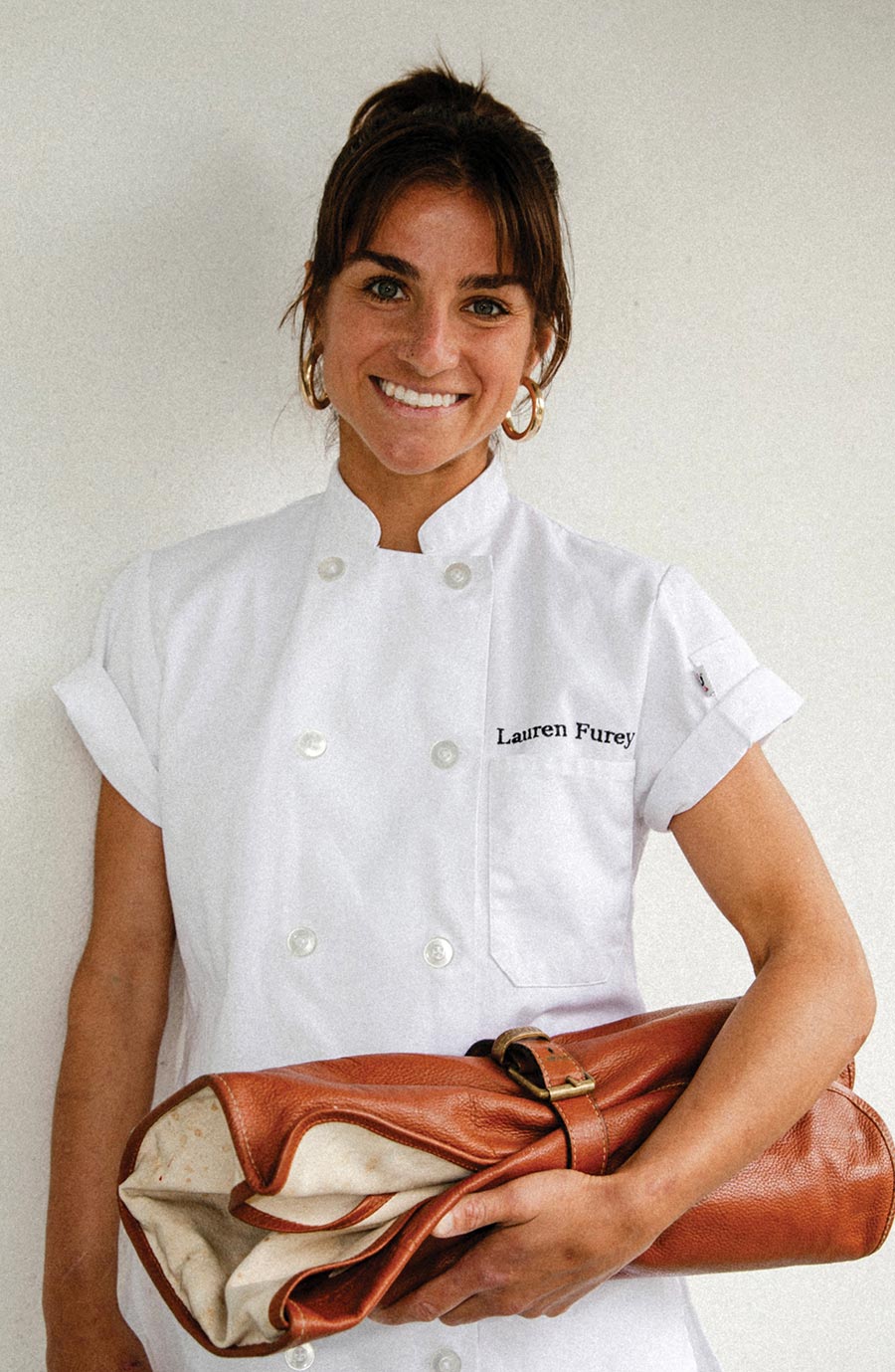
- Hunter King is a program manager at MUSC Health. She earned her master’s in health administration from MUSC in 2022 and resides in Charleston.
- Bryan Ko is a senior technical consultant at Adaptavist and resides in North Charleston.
- Hunter Altman Lambert is an occupational therapist at Roper St. Francis.
- Kendall Martin (see Tyler Martin ’23)
- CAROLINE GREENBLATT MATTHEWS is an adjunct instructor of English at Old Dominion University. She earned her master’s in English in 2023. She and her husband reside in Norfolk, Va., with their daughter.
- James McCrary is an operations coordinator at Joey’s Fireworks and resides in Charleston.
- Alex Moring is the South Carolina operations manager at Bella Bridesmaids and resides in Charleston.
- Olivia Neumann is a corporate recruiter at DoorDash. She and her husband, Patrick, married in October 2025. The couple resides in Littleton, Colo.
- Posy Olivetti is a senior consultant at Deloitte. She earned her master’s in business analytics from Georgetown University in December 2025 and resides in Jersey City, N.J.
- Tiffany Potter is an event manager at Southern Entertainment, where she has earned multiple award nominations for the events she has executed. She resides in Charlotte, N.C.
- Isabelle Renzi is a senior administrative assistant at PSG. She earned her MBA from The Citadel in 2023 and resides in Boston.
- Hannah Rose is a vice president of portfolio development and revenue operations at Qi Venture Partners. In January, she married Nicolas Sanchez, and the couple resides in Greensboro, N.C.
- Tiffany Williams Sanchez is a senior consultant and agency relationship manager at the South Carolina Department of Administration. She also recently founded a commercial real estate business and resides in Columbia, S.C.
- Karly Shirey is a GPS AI and data senior consultant at Deloitte. She earned master’s degrees in reproductive medicine in 2022 and public health in 2025 from the University of South Wales. She resides in Columbia, S.C.
- Rachael Lolar Sox is a publishing and distribution specialist at Palmetto Publishing. She earned a master’s in English literature from East Carolina University in 2024 and resides in Charleston.
- Sofia Troya (M.S. ’22) is a manager of community-led solutions partnership at Conservation International. She earned her master’s degree in environmental and sustainability studies and resides in Charleston.
-
2021
Morgan Agolli is a teacher assistant at Dunwoody Baptist Church and resides in Roswell, Ga.
- Jordan Barck is a financial consultant at Wells Fargo Advisors and resides in Richmond, Va.
- Liz Boedeker is a digital marketing sales representative at American Marketing and Publishing and resides in Daufuskie Island, S.C.
- Hallie Conrad is a graduate admissions coordinator at Clemson University and resides in Pendleton, S.C.
- Mary Griffin is a marketing associate at the Roseate Group of Wells Fargo Advisors. Her team was recognized by Forbes on its 2025 list of Top Wealth Management Teams: Private Wealth. She resides in Charleston.
- Marc Hunter is an assistant public defender. He earned his law degree from the University of Mississippi School of Law in 2024 and is pursuing a Master of Laws with plans to graduate in 2026. He resides in Lithonia, Ga.
- Thomas Hutchins (see Grace Barnett Hutchins ’22)
- Kayshawn McCoy is a system employee experience leader at the Compass Group and resides in Charleston.
- Laney Pound is an education instructor at the South Carolina Aquarium and resides in Charleston.
- Elizabeth Quarles is an academic adviser at the College. She earned her master’s in English language and literature from The Citadel in 2023 and is currently pursuing her doctorate in education from the College, with plans to graduate in 2028. She resides in Charleston.
-
2022
Grace Barnett Hutchins is a digital sales associate at a media and publishing company. She and her husband, Thomas Hutchins ’21, reside in Raleigh, N.C.
- Troy Johnson is a team lead at Sportsman Boats and resides in Summerville, S.C.
- Bryce Maldonado is a child life specialist at the Children’s Hospital of Richmond. He earned his master’s in child life from Towson University in 2025 and resides in Richmond, Va.
- Anna Martin is a registered nurse at Seattle Children’s Hospital. She was recently awarded the Rising Star Award for MUSC perioperative nursing and resides in Seattle.
- Zachary McMurrer welcomed his second child, Charles, in January. The family resides in Summerville, S.C.
- Zoe Morgan is an environmental professional at Hepaco. She earned her master’s in marine science and climate change at the University of Gibraltar in 2024 and her Level 3 diploma in marine biology from the University of Oxford in 2022. She resides in Summerville, S.C.
- Kendall Pereless is an event operations coordinator at Stradley Davidson Linen Collective and resides in Charleston.
- Graysen Burris Saverance is a school counselor at GREEN (Global Renewable Energy Education Network) Charter Schools. She and her husband reside in Greenville, S.C.
- Wyatt Slominski (M.S.) is the founder of the marketing company 843Hub, partnering with organizations such as the Charleston Battery, the Stingrays and Disney. He also is a computer science instructor at the College and resides in Charleston.
- Charles Taibi is a process engineer at STV Inc. He earned his master’s in environmental engineering from Texas A&M University in 2024 and resides in Oklahoma City.
- Elizabeth Walker is pursuing her medical degree from MUSC, with plans to graduate in 2029. She earned her master’s degree in biological and biomedical sciences from Duke University School of Medicine and resides in Columbia, S.C.
- Rob Ziglar is a funding manager at Sovereign and resides in Charleston.
-
2023
Olivia Blankenship is a real estate agent at Keller Williams Charleston and resides in Charleston.
- Jill Bridges is a paralegal at Charleston Legal Access and resides in Charleston.
- Connor Cozad is an account manager at Esri. He earned his master’s in data science from the University of Colorado Boulder in 2025 and resides in Atlanta.
- Noah Futch is an account manager at Dentsply Sirona and resides in Charlotte, N.C.
- Christian Gibson II is a software engineer at EZ Home Search and resides in Conway, S.C.
- Grayson M’Kenzee Holbrooks is a teacher for Dorchester District 2 Schools and resides in Summerville, S.C.
- Aliece Hurley is a teacher at Achievement First and resides in Brooklyn, N.Y.
- Raechel Irby is a planning and operations specialist at Iron Oaks Wealth Advisors and resides in Acworth, Ga.
- Tyler Martin is the owner and brewer at Island Time Kombucha. He and his wife, Kendall Martin ’20, reside in North Charleston.
- Blake Mitrick is an application programmer analyst at the College and resides in Charleston.
- Charlie Smith is earning a law degree at Mercer University School of Law and resides in Macon, Ga.
- Maddy Smith is a theater teacher at Zeta Charter Schools and resides in New York City.
-
2024
Carly Bell is a real estate agent at Coldwell Banker Realty. She earned her real estate license from the Real Estate School of Charleston in 2025 and resides in Charleston.
- Mallory Burns is a paralegal at Cipriani & Warner and resides in Newport, Pa.
- Samuel Carl is an operations manager with the U.S. Air Force at Joint Base Charleston and resides in North Charleston.
- Belle Coffman is a program specialist at the Southeast Crescent Regional Commission and resides in Irmo, S.C.
- Allie Dixson is a head concierge at Forth Hotel and Club and resides in Atlanta.
- Darby Ewing is a marketing associate at Brackish and resides in Charleston.
- Connelly Grant is pursuing her master’s in healthcare administration from MUSC and resides in Charleston.
- Carter Jackson (MBA) is a business development associate at Bridgepoint Consulting and resides in Charleston.
- Brittany Morgan is a sales adviser at Warby Parker and resides in Charleston.
- Emilee Pope is a communications relations manager at First Light Home Care of Greater Charlotte and resides in Charlotte, N.C.
- Jackson Reid (MBA ʼ25) is chief of staff at Saltgrass Advisory and resides in Charleston.
- Grace Squires works in business development support at Blue Strike Environmental and resides in Denver.
- Michael Stein is a staff writer and social media chair at the Washington and Lee Journal of Civil Rights and Social Justice. He is pursuing his law degree from Washington and Lee University School of Law and resides in Lexington, Va.
- Ally Thumpston married Wyatt Hallman in October 2025. The couple resides in Charleston.
- James Tomberg (MBA ʼ25) is a business operations analyst at Purpose Financial and resides in Simpsonville, S.C.
- Claire Turner is a paralegal at Midlothian Estate and Elder Law and resides in Richmond, Va.
- Emma Whitman is an associate in client operations at SCS Financial. She is pursuing her MBA from Northeastern University with plans to graduate in 2027 and resides in Boston.
-
2025
Charlie Blankin is a sales and marketing manager at Mankiewicz and resides in North Charleston.
- Madison Damore is an operational excellence and corporate experience intern at Trio Community Meals and resides in Monroe, N.J.
- Caroline Fines is a graduate assistant for family engagement at the College of William and Mary. She is pursuing her master’s in clinical mental health and resides in Fairfax, Va.
- Will Garstka is a tax accounting associate at Moody & O’Neal CPAs and resides in Charleston.
- Emily Kang is a dental assistant at Tri-County Endodontics and resides in Charleston.
- Lucas LeMaster is a research technician at MUSC and resides in Charleston.
- Savannah Lominac is a volunteer recruitment coordinator at Harvest Hope Food Bank and resides in Hartsville, S.C.
- Ryley Murphy is a congressional caseworker for the U.S. House of Representatives and resides in Charleston.
- Charles Nealon is a sales and showroom assistant at Maison de Carine and resides in Hopkinton, Mass.
- Karli Reed is a marketing director at Reed Real Estate and resides in Charleston.
- Mary Weinstein is a sales coordinator at Charleston Shoe Co. and resides in Charleston.
- Rhiannon Wilkinson received a Fulbright U.S. Student Program English Teaching Assistant Award and is now teaching English and American studies in Germany. She resides in Leipzig, Germany.
- Summer Wolcott is an interior design consultant at Arhaus and resides in Marblehead, Mass.
Nonprofit Prophet
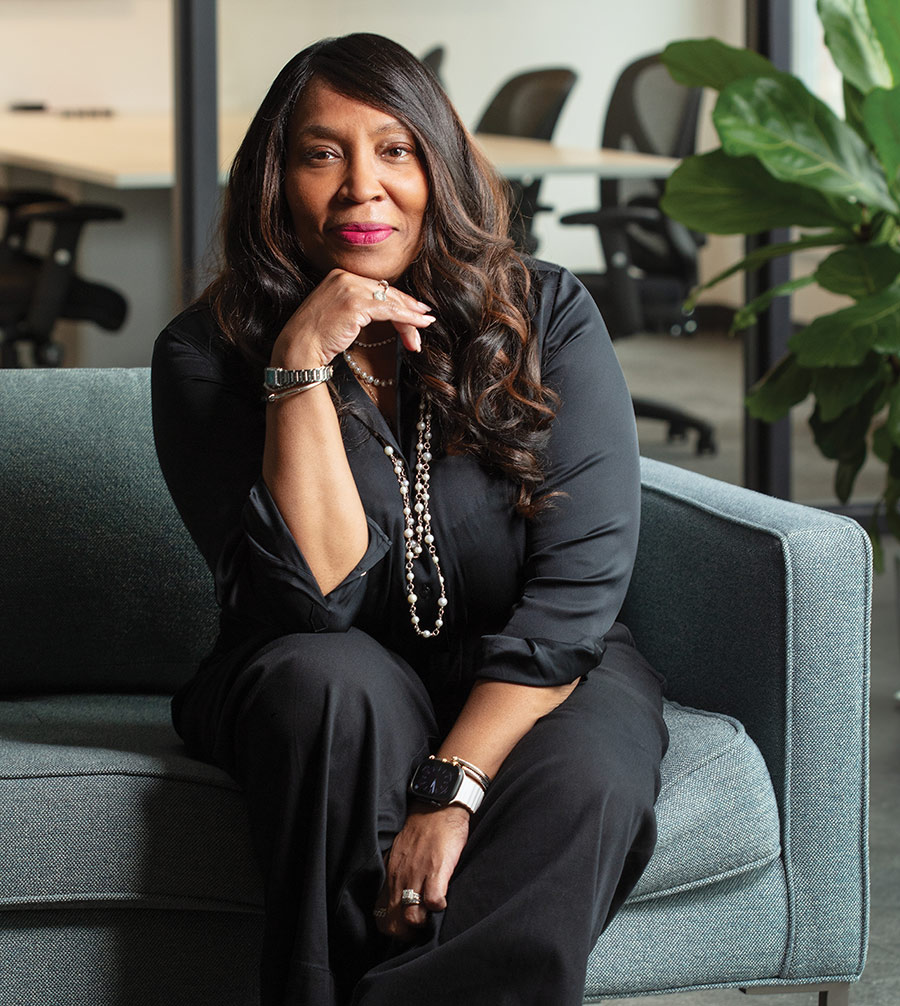
“Rising Tide exists to transform lives,” says Joynicole Martinez ’96, CEO and president. “And in transforming one life and connecting them to others, you transform a community.”
Raised in Rochester, N.Y., Martinez had her own life transformed after coming to the College, although her parents were a little confused by her decision to attend a university in the South. But she fell in love with the College at first bite.
“Shrimp and grits made me want to go to the College of Charleston,” she says, recalling one of her first impressions of Charleston.
She first assumed she’d become a chemical engineer like her mother or a doctor like her father. But Martinez discovered an interest in political science at the College.
“I fell in love with learning how humans make decisions about themselves and each other,” she says. This knowledge would later serve her as an executive consultant to organizations, which she describes as “little civilizations.”
Her final semester was memorable, if unusual. Newly married, Martinez and her husband, who was deployed with the Marine Corps, had to move to California. Political science professor Jack Parson flew out and administered her final exam in a restaurant to ensure she could graduate on time. She describes Parson, now retired, as embodying “the spirit of the College.”
After graduation, Martinez worked at a gospel record label and wrote grant proposals on the side to help her father’s patients – many diagnosed with HIV/AIDS – secure nonmedical resources.
Over time, that work evolved into a consulting practice as she began advising organizations on leadership, diversity and community building. Her business grew organically, leading her to opportunities to present in more than 100 countries. During the pandemic, an acquaintance connected her with the co-founders of Rising Tide Capital. In the first conversation, she knew: These are my people.
Though she’s had a wide-ranging career, Martinez says she’s only really had one job: helping people get better.
In 2025, she was named one of the Top 50 Most Influential People of African Descent – a global initiative supporting the United Nations International Decade for People of African Descent – in the philanthropy and social impact category.
Martinez spent years fighting impostor syndrome, convinced she needed more experience before she belonged in the rooms she wanted to be in. But after earning master’s and doctoral degrees, she realized it wasn’t about “the letters.” It was about gaining the knowledge to pursue the career she wanted.
Determined to make the journey to success easier for those who come after her, Martinez donates to CofC funds spanning diversity, STEM and entrepreneurship. She wants to create a safe space for students to explore their identities and goals.
Her advice to students trying to find their way: “What brings you joy? What makes you want to get up? What’s on your mind all the time? Find that thing. And then don’t ask to solve it. Just get to work solving it.”
Holding It Together
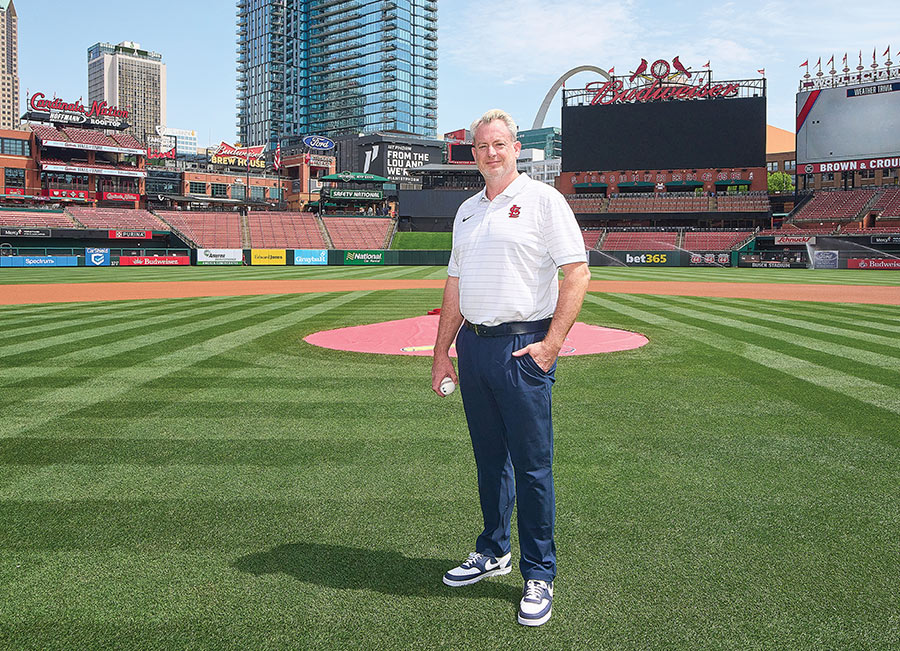
“He’s like, ‘I need help,’” says Conroy, who has been the Cardinals’ assistant athletic trainer for 15 seasons. He and his colleagues grabbed rolls of tape and started wrapping legs, elbows – whatever it took. “We taped him top to bottom,” Conroy remembers.
Somehow, Wainwright took the mound and got No. 200. “It was a huge, momentous occasion,” says Conroy. “But we always laugh about how much tape we used to get him out there.”
Moments like that – mixing skill, grit and an unswerving devotion to his players – have defined Conroy’s career. Starting out with old-school players like Wainwright, who would do anything to stay on the field, he has since adapted to a game increasingly driven by data.
“The biggest challenge for me is to balance art and experience with the objective numbers I’m given,” he says of gauging players’ physical and mental health. Data might show a player’s asymmetry, for example, “but my hands and his attitude are showing he’s fine.”
Other times, a player may look physically sound but be struggling off the field: “He’s not physically banged up, but emotionally this guy needs a break,” says Conroy. “It’s about having those relationships with the front office so you can earn the respect to have that open conversation.”
For Conroy, relationships are the job. “That’s probably my superpower,” he says. He traces his skills to being brought up by outgoing Irish-immigrant parents in North Carolina. “I can talk with anyone about anything.”
Initially interested in physical therapy at the College, he changed course after visiting the training room.
“I was like, This is incredible,” he says. “A great way to stay involved in athletics and potentially make a living at it.”
He immersed himself in the work, blowing past the required number of hours in an internship with basketball trainer Martin Travis. “I still tape an ankle the way Marty showed me,” he says.
After more than a decade in the minors, Conroy arrived in St. Louis in 2012 during a golden era of playoff runs. The pace was relentless. “During October, you’re running on caffeine and adrenaline,” he says. He formed close bonds with veterans like Carlos Beltran and Yadier Molina.
“They had a commitment to their contracts – to play, not sit out games,” he says. “It was a different era.”
Conroy was a big part of the team’s success.
“Great teams and organizations have a secret that goes beyond the talent on the field, and that secret is a support staff that embodies the culture of excellence and do extensive work behind the scenes to allow elite athletes to thrive,” says the Cards’ former manager, Mike Matheny.
“Chris has the unique ability to bring professionalism and expertise to a Major League clubhouse while also never losing sight of the fact that it’s a kid’s game – and to never stop having fun while fighting for a competitive edge. Chris made our very successful teams better. Period.”
Today, workload management, performance data and collaboration have reshaped his role, as trainers now work with coaches to improve player performance. While some of the old grit is gone, dugout culture has evolved in some positive ways.
“There’s been a huge revolution in paying closer attention to mental health,” says Conroy, who has found renewed purpose mentoring younger trainers and players, teaching them professionalism alongside rehabilitation.
This past year, he attended the MLB All-Star Game, an honor reserved for trainers once a decade.
“You get to interact with the best players in the game, and everyone treats you like you are their teammate,” he says, adding that it was a chance to reflect on a career built not just on keeping players in the game, but on forming relationships that make it worth playing. “I just love the people, and I love the team. I hope I’m around long enough to do it again.”
Perks of the Job
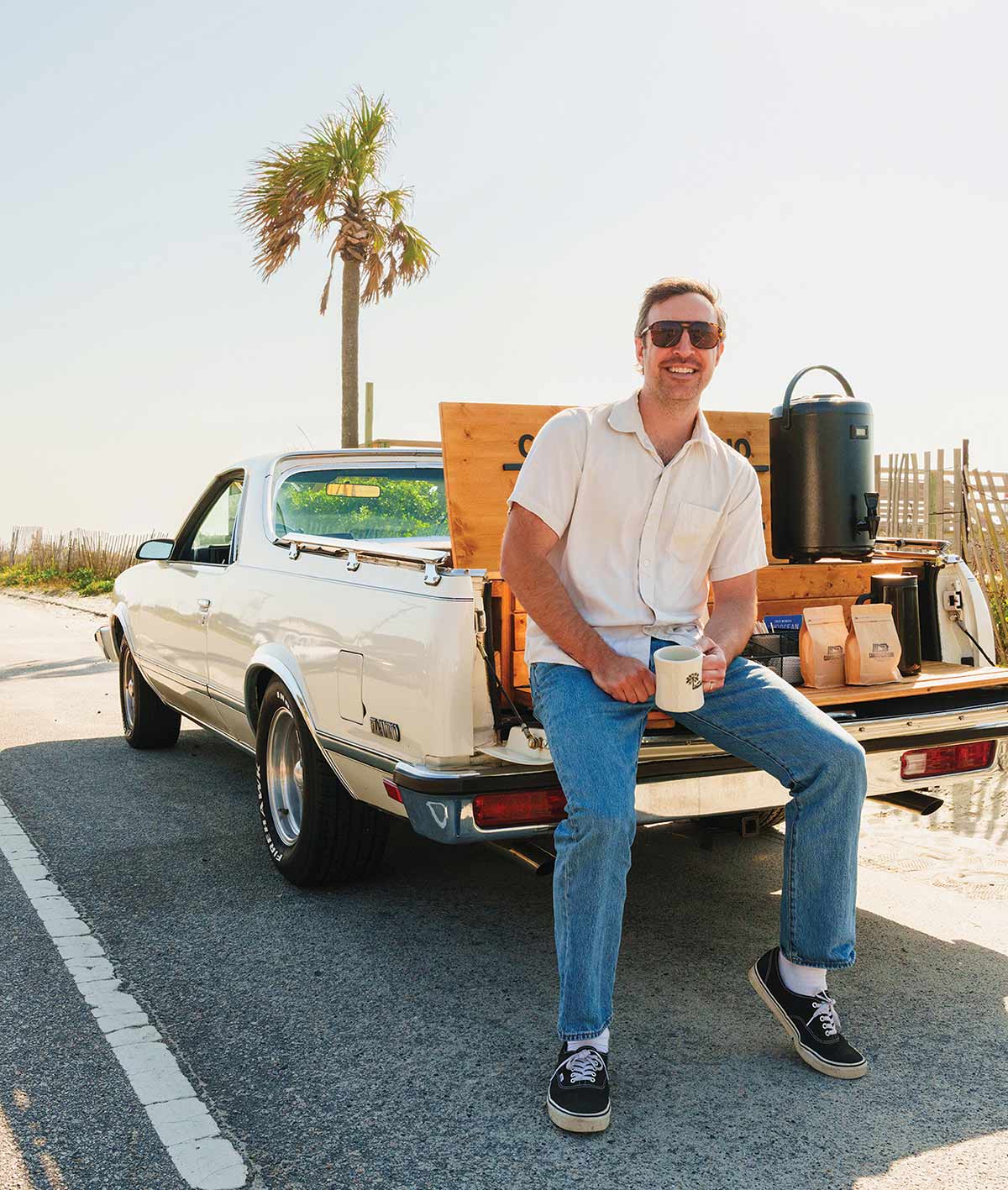
Huffman, the recipient of the School of Business MBA Scholarship, attributes a lot of his networking success to Brown.
“As a fellow student body president when we were undergraduates, we immediately clicked,” says Huffman. “He’s such an asset to the program; he’s like the unofficial mayor of Charleston. He connects everyone both while in school and after. The opportunities just keep coming.”
One connection Brown forged for Huffman was a mentorship with Charles Wonderlic, former CEO and current executive chairman of a software company. The experience proved transformative.
“Charlie introduced me to the tech industry and how to leverage my skills and experience to transition my career into the tech startup world,” explains Huffman, who landed a job post-graduation as director of customer success with Good United, a tech company that helps nonprofits connect with supporters on social media. “I still have the nonprofit angle, which gives meaning, but I am also helping build a business.”
Huffman’s job with Good United ticked all the boxes but one. Behind a computer all day speaking with clients across the country, he had no interaction with the local community. He spoke with his wife about his post-retirement dream – selling coffee from the back of an El Camino, following in the footsteps of his grandfather who sold tomatoes from the back of his El Camino.
After his wife convinced him that there’s no time like the present, Huffman found the perfect 1986 El Camino and traveled to Florida to pick it up. He then built a stand in the back of the flatbed for his coffee. In November 2023, Camino Caffeino gave out its first cups of coffee at Folly Beach. The experience confirmed his wife’s words.
“Camino Caffeino gave me a chance to meet people and tell my story and hear theirs,” says Huffman, who believes serving and drinking good coffee is the best way to build relationships. “I have finally built a community and feel like a part of the small-business growth in the area. Other small-business owners have been really supportive and have helped guide me through what it takes to succeed. I try to keep everything I do local by partnering with local coffee roasters, local designers and local manufacturers to help build up and support the small-business community here in Charleston.”
As a new father, Huffman realizes the value of having his son see him pursuing his dreams. “I want my son to know that no dream is too silly to pursue and that it is possible to have a career for pay and something that fills your soul in other ways.”
giving props
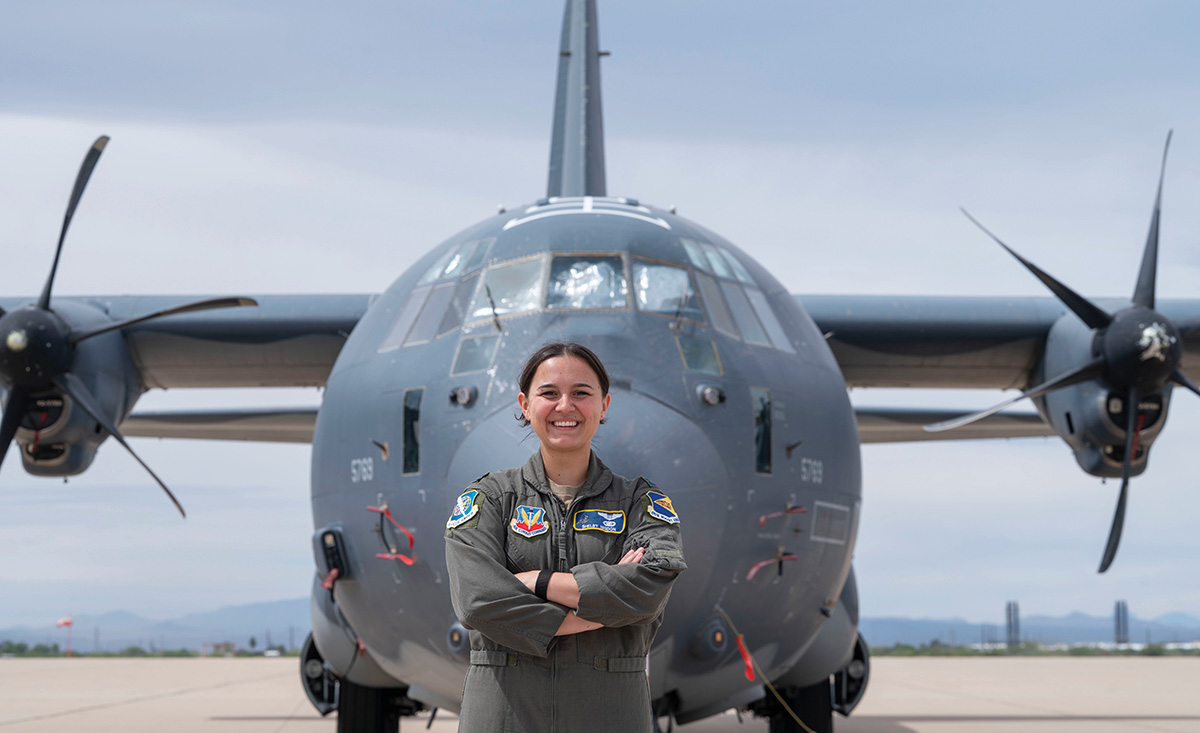
The Davis-Monthan Air Force Base in Tucson, Ariz., home of the 79th Rescue Squadron, is a long way from Wednesday night karaoke at Burns Alley near the College, where she and her best friend once carved out a single evening of freedom between classes, work shifts and late nights at Addlestone Library.
And for most of her life, it wasn’t supposed to happen at all. She was certain – completely certain – that the military wasn’t for her. But, after dating someone who explored a military career, Higdon decided to join the College’s Air Force ROTC program. She had already set her sights on a degree in communication because it’s such a universally useful skill.
After earning her bachelor’s, Higdon left the Lowcountry for Los Angeles Air Force Base, where she became an acquisitions officer (AO) for the Space Enterprise Consortium (SPeC).
Her role was to help award space prototype contracts in under 90 days – a real challenge in an industry that, despite its rocket capabilities, is infamous for its lack of speed.
Fortunately, Higdon was able to draw on the skills she developed at the College to help SPeC land contracts quickly, including one exceeding $12 billion. She credits Elena Strauman and Kathleen DeHaan, associate professors in communication, as major influences on her success.
“It was a really jargon-heavy and technical organization,” she says of SPeC. “I applied Dr. Strauman and Dr. DeHaan’s lessons to develop public releases and communications plans in a way that anyone could understand.”
After three years as an AO, Higdon was nominated by her commander to participate in the Air Force Air Education and Training Command’s highly competitive Rated Preparatory Program to gain aviation skills. Though she didn’t land her first choice as a pilot, she’s elated with her role as a combat systems officer (her second choice). From planning routine airdrop and refueling missions to coordinating full-scale search-and-rescue efforts, Higdon says no two days are the same – and it’s about as far from boring as you can get.
Whether determining which parachute gets used for different personnel and cargo, or mapping out scenarios based on changing weather, every little decision can have a major impact on the success of a mission.
“It’s our job to find out as much info as possible so we can aid the HH-60 helicopter in performing a rescue,” she says. “It’s a really cool job.”
For someone who once swore the military wasn’t for her, Higdon is exactly where she’s meant to be.
“Being in the military is the ultimate learning experience,” she says. “It’s the most wild, chaotic fun. So much growth occurs.”
Playing Through
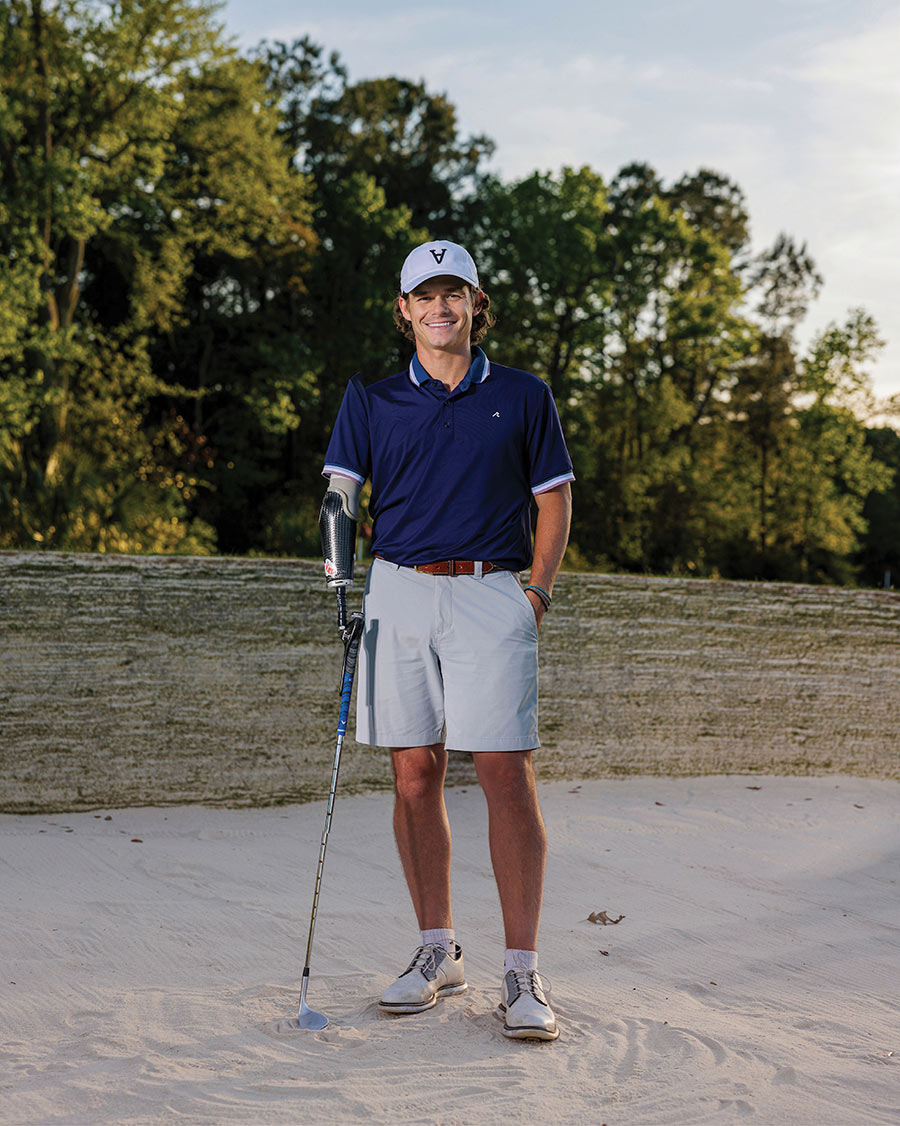
“You’ve changed my life,” said Joe Morrissey, whose wife was pregnant with a child missing his right hand and forearm just like Austen.
After Morrissey saw Austen acting like any other teen on a summer day, his whole attitude changed. His son, Tommy, would go to become a golf prodigy of some renown.
Austen has inspired a lot of people over the years with his athletic ability, whether on the baseball diamond, the soccer pitch or the basketball court. Now, with the help of a prosthetic and a club attachment, he’s making a name for himself in the adaptive golf world by qualifying for the sport’s biggest event: the U.S. Adaptive Open, July 6–8 in Rockville, Md., for the second straight year.
“It’s such a cool experience for us adaptive athletes,” says Austen. “They (the United States Golf Association) give you a locker with a nameplate and treat you like a professional for the week. It’s pretty special.”
Austen’s mother, Mary, was 18 weeks pregnant when an ultrasound revealed that a random vascular accident meant that her son’s right hand “didn’t punch through” and would end mid-forearm. The doctor’s counsel took her aback.
“His problem is going to be you and you,” he said, pointing at her and her husband, Peter. “If you have a problem with it, he will have a problem with it.”
Mary bristled at the shallow implications on the car ride home. “But looking back, it was a great way to frame it – treat him like any other child; he’ll be fine,” she says. “And we did.”
Adds Peter: “We certainly couldn’t teach him to tie his shoes with one hand. He had to figure that out on his own.”
His three brothers and sister never gave him a pass either, and Austen never felt sorry for himself or even felt the need to wear a prosthetic to stop some people from staring.
In Little League, some coaches would try to exploit his fielding disadvantage by bunting on him when he pitched, but he’d quickly stick the mitt under his right armpit as he scampered for the ball and throw the batter out.
His senior year of high school, the baseball team won the district championship with Austen throwing in the mid-80s in the title game.
After earning a business degree from the College, he started playing more golf during the pandemic. He wears a silicone sleeve on his right arm that locks into a custom carbon-fiber socket; a clamp slides up the club from the shaft and tightens over a standard grip.
When he’s not working on his game in Charleston, Austen coaches middle school baseball and basketball teams at Porter-Gaud School and runs the after-school programs there with brother John ’24, the director of auxiliary programs. Austen has also become a bit of a golf influencer with almost 46,000 Instagram followers (@jimmythekiiid).
“Coaching and the content creation lean into what I’m trying to show people – anything’s possible,” he says. “I want the seventh and eighth graders to see that if I can do it, then they can do it.”
PASSAGES
March 22, 2026; Macon, Ga.
Nov. 22, 2025; Louisville, Ky.
Feb. 20, 2026; Johns Creek, Ga.
March 8, 2026; Mount Pleasant, S.C.
Dec. 15, 2025; Hendersonville, N.C.
March 16, 2025; Charleston, S.C.
Dec. 31, 2025; Carmel, Ind.
April 15, 2025; Pensacola, Fla.
March 16, 2025; Sarasota, Fla.
Dec. 1, 2025; San Diego, Calif.
Feb. 5, 2026; Peachtree City, Ga.
March 2, 2026; Punta Gorda, Fla.
Nov. 16, 2025; Las Vegas, Nev.
Dec. 17, 2025; Harrisburg, Pa.
Dec. 6, 2025; McClellanville, S.C.
March 17, 2025; Charleston, S.C.
Feb. 1, 2026; Charleston, S.C.
Dec. 22, 2026; Augusta, Ga.
July 28, 2025; Raleigh, N.C.
Jan. 8, 2026; Awendaw, S.C.
Feb. 19, 2026; Crozet, Va.
Mar. 4, 2026; Charleston, S.C.
March 10, 2026; Orangeburg, S.C.
May 24, 2026; Asheville, N.C.
Dec. 7, 2025; Eatonton, Ga.
Jan. 1, 2026; Clarkston, Mich.
Dec. 25, 2025; Charleston, S.C.
April 2, 2025; Arlington, Tex.
June 17, 2025; Spartanburg, S.C.
Dec. 9, 2025; Charleston, S.C.
March 6, 2026; Charleston, S.C.
Feb. 21, 2026; Birmingham, Ala.
June 15, 2025; Anniston, Ala.
Feb. 5, 2026; Hollywood, S.C.
Jan. 14, 2026; San Diego, Calif.
Nov. 24, 2025; Wilmington, N.C.
Jan. 17, 2026; Charleston, S.C.
July 15, 2025; Elkin, N.C.
Feb. 13, 2026; Charleston, S.C.
Dec. 1, 2025; Wadmalaw Island, S.C.
April 20, 2025; Charleston, S.C.
March 18, 2026; De Pere, Wisc.
Dec. 26, 2025; Emlenton, Pa.
Dec. 22, 2025; Sea Girt, N.J.
Feb. 6, 2026; Winston Salem, N.C.
Feb. 14, 2026; Ridgeville, S.C.
Oct. 8, 2025; Charleston, S.C.
Feb. 21, 2026; Columbia, S.C.
March 30, 2026; Charleston, S.C.
Nov. 10, 2025; Florence, S.C.
Jan. 10, 2026; Brooklyn, N.Y.
Nov. 30, 2025; Charlotte, N.C.
Feb. 17, 2026; Greenville, S.C.
March 23, 2026; Lexington, S.C.
Former Staff
Feb. 25, 2026; Ladson, S.C.
Former Staff
March 8, 2026; Mount Pleasant, S.C.
Honorary Degree
Feb. 18, 2026; Charleston, S.C.
Former Staff
Mar. 8, 2026; Mount Pleasant, S.C.
Former Faculty
April 25, 2026; Charleston, S.C.
Former Staff
Jan. 13, 2026; Mount Pleasant, S.C.
Former Staff
Nov. 29, 2025; Wando, S.C.
Former Staff
Dec. 21, 2025; Wadmalaw Island, S.C.
Student
April 8, 2026; Bluffton, S.C.

Life of Riley
Serving as mayor for over 40 years from 1975 to 2016, Riley helped guide Charleston through one of the most transformative periods in its history. At a time many American cities struggled with decline, Riley championed a different path – one grounded in historic preservation, world-class urban design and improved race relations. His leadership helped revitalize the downtown peninsula, expand public green spaces, protect the city’s architecture and cultivate a vibrant arts community. Charleston’s international reputation as a beautiful, livable city is no accident; it’s the result of decades of careful stewardship – an approach Riley reflects on in his memoir, Windows on Washington Square, published earlier this year by Evening Post Books.
His tenure as mayor stands among the most consequential in modern urban leadership. Guided by a conviction that a city’s greatest assets belong to all its people, his vision and persistence reshaped Charleston into one of the nation’s most celebrated cities. Landmark projects such as King Street, Charleston Place, Waterfront Park, the South Carolina Aquarium and the International African American Museum reflect that vision. In moments of crisis, including Hurricane Hugo and the tragedy at Emanuel AME Church, his leadership emphasized unity and healing and won him national recognition. Many of Charleston’s defining public institutions embody his belief in civic belonging and shared opportunity, and his legacy continues to inform and inspire the city’s leadership today.
Riley believed deeply in the role of education as a partner in civic life. His long-standing relationship with the College strengthened its connection to the city and reinforced its role as a leader in the community. This spirit of collaboration continues today through the College’s Joseph P. Riley Jr. Center for Livable Communities – an interdisciplinary public service institute whose mission is to leverage our institution’s intellectual resources to support the economic and cultural vibrancy of the Charleston and other communities throughout South Carolina.
Housed in the School of Humanities and Social Sciences, the Riley Center brings together faculty, staff and students to collaborate with local governments and nonprofits in advancing livable-community research and practice. Through hands‑on learning opportunities, faculty, staff and students apply academic rigor to real‑world challenges. Serving as a bridge between campus and community, the Riley Center carries on Riley’s legacy. This past year, the center has been awarded 40 grants and contracts, provided training for more than 350 public service employees and served 34 counties, 75 cities and eight nonprofits across the state.
Riley often reminded Charlestonians that cities are shaped by the choices people make together. Through his example and through the ongoing work of the Riley Center for Livable Communities, that ethic remains at the heart of both Charleston and the College – an enduring legacy alumni can take pride in for years to come.