


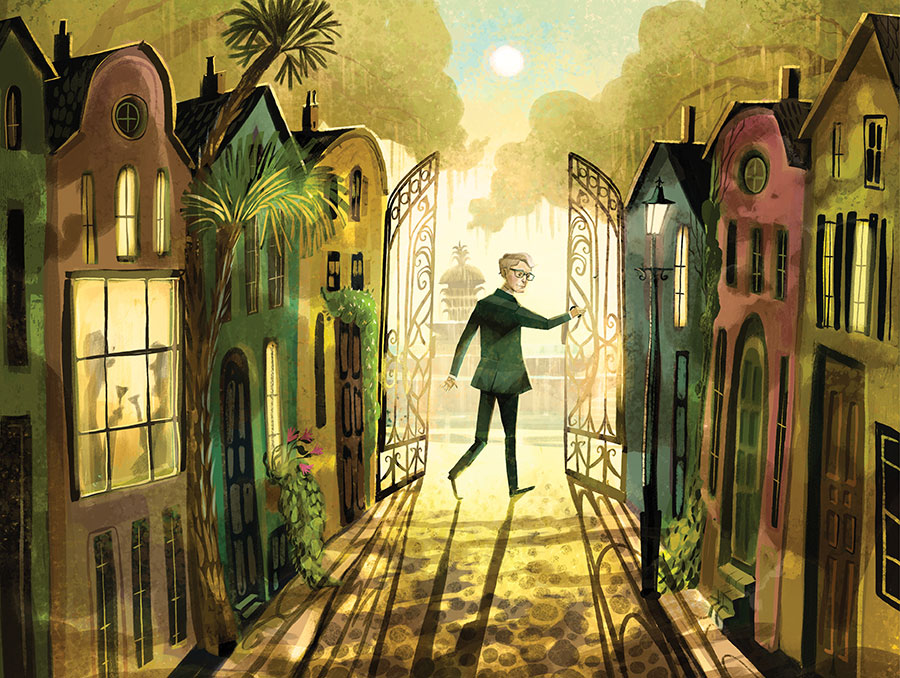
Life of Riley
Serving as mayor for over 40 years from 1975 to 2016, Riley helped guide Charleston through one of the most transformative periods in its history. At a time many American cities struggled with decline, Riley championed a different path – one grounded in historic preservation, world-class urban design and improved race relations. His leadership helped revitalize the downtown peninsula, expand public green spaces, protect the city’s architecture and cultivate a vibrant arts community. Charleston’s international reputation as a beautiful, livable city is no accident; it’s the result of decades of careful stewardship – an approach Riley reflects on in his memoir, Windows on Washington Square, published earlier this year by Evening Post Books.
His tenure as mayor stands among the most consequential in modern urban leadership. Guided by a conviction that a city’s greatest assets belong to all its people, his vision and persistence reshaped Charleston into one of the nation’s most celebrated cities. Landmark projects such as King Street, Charleston Place, Waterfront Park, the South Carolina Aquarium and the International African American Museum reflect that vision. In moments of crisis, including Hurricane Hugo and the tragedy at Emanuel AME Church, his leadership emphasized unity and healing and won him national recognition. Many of Charleston’s defining public institutions embody his belief in civic belonging and shared opportunity, and his legacy continues to inform and inspire the city’s leadership today.
Riley believed deeply in the role of education as a partner in civic life. His long-standing relationship with the College strengthened its connection to the city and reinforced its role as a leader in the community. This spirit of collaboration continues today through the College’s Joseph P. Riley Jr. Center for Livable Communities – an interdisciplinary public service institute whose mission is to leverage our institution’s intellectual resources to support the economic and cultural vibrancy of the Charleston and other communities throughout South Carolina.
Housed in the School of Humanities and Social Sciences, the Riley Center brings together faculty, staff and students to collaborate with local governments and nonprofits in advancing livable-community research and practice. Through hands‑on learning opportunities, faculty, staff and students apply academic rigor to real‑world challenges. Serving as a bridge between campus and community, the Riley Center carries on Riley’s legacy. This past year, the center has been awarded 40 grants and contracts, provided training for more than 350 public service employees and served 34 counties, 75 cities and eight nonprofits across the state.
Riley often reminded Charlestonians that cities are shaped by the choices people make together. Through his example and through the ongoing work of the Riley Center for Livable Communities, that ethic remains at the heart of both Charleston and the College – an enduring legacy alumni can take pride in for years to come.