

Close to the Heart



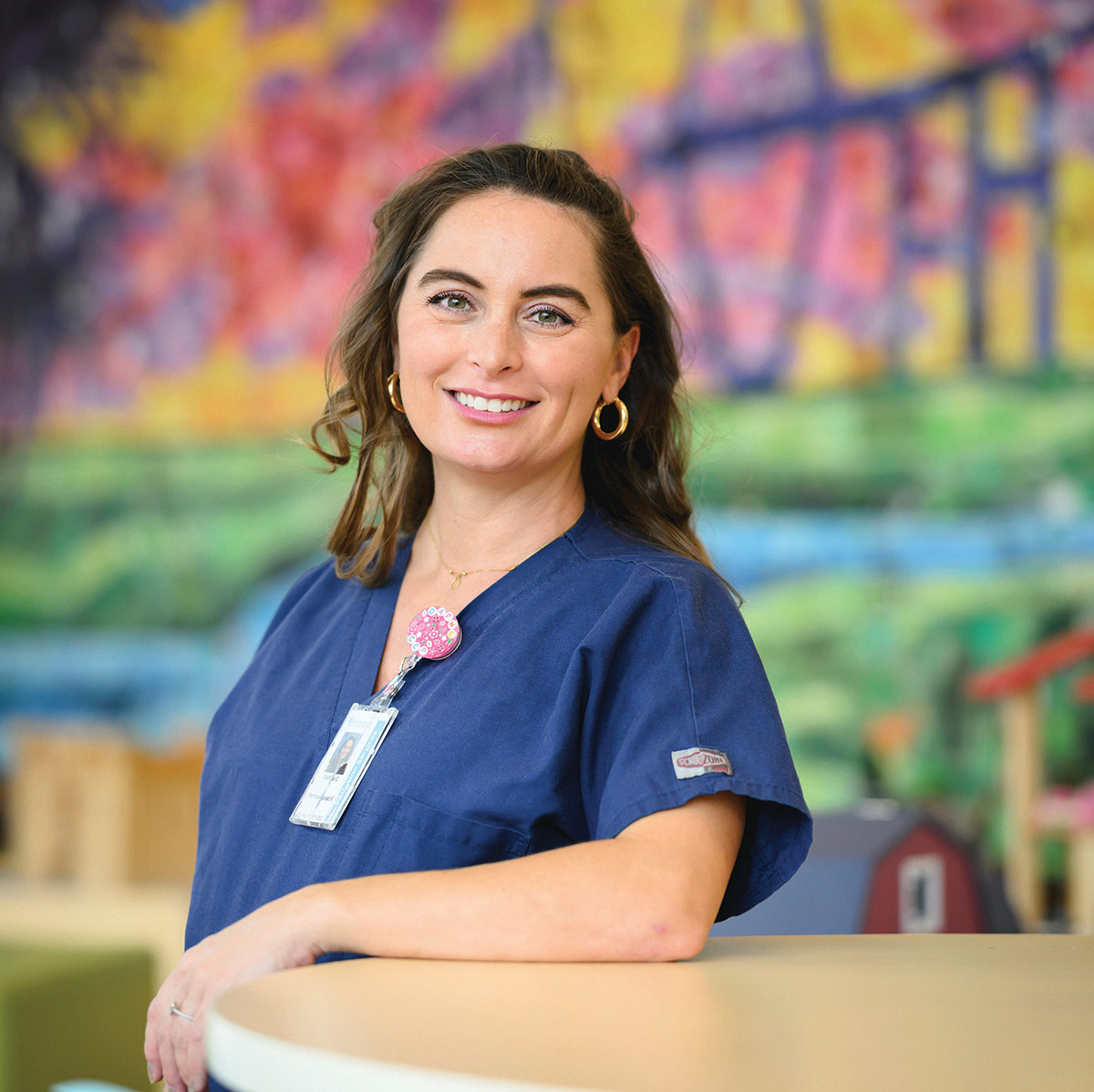
The call set in motion an extraordinary 24 hours when not only little Clover got a new lease on life, but so did a 13-year-old girl when surgeons and staff, including clinical cardiovascular perfusionist Dafne Andrea “Andy” Chianella ’08, performed back-to-back, 10-hour pediatric heart transplants – an exceedingly rare feat that involved coordinating four separate teams performing four concurrent operations.
Timing is everything when it comes to a heart transplant, so it was doubly so on this day. The procurement team from MUSC and We Are Sharing Hope SC flew on a private jet to confirm that the heart was indeed a good one for Clover before removing it and bringing it back within four hours – the limit a heart can live on ice outside the body. As soon as Clover’s surgeon, Dr. Minoo Kavarana, got the match confirmation at 1 a.m., he started performing a sternotomy on Clover to expose her heart, which can take hours if patients have scar tissue from previous surgeries, like many do, including Clover.
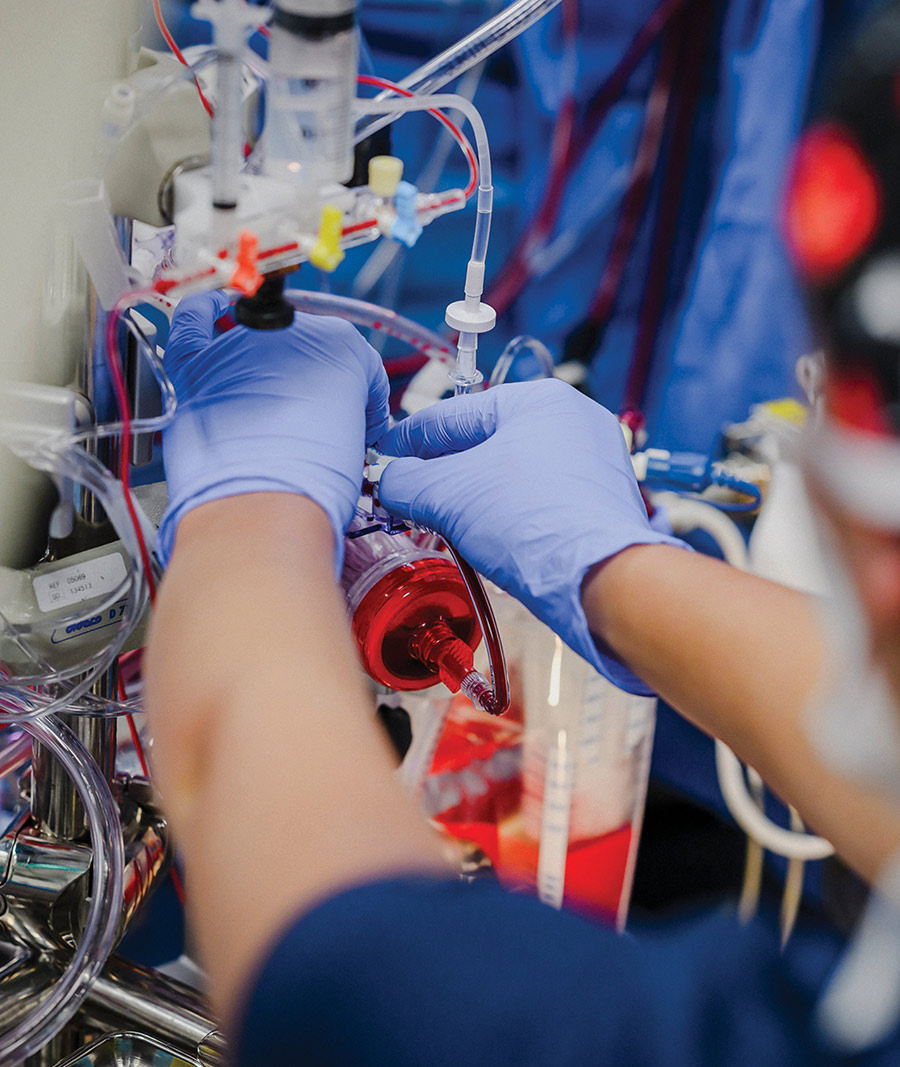
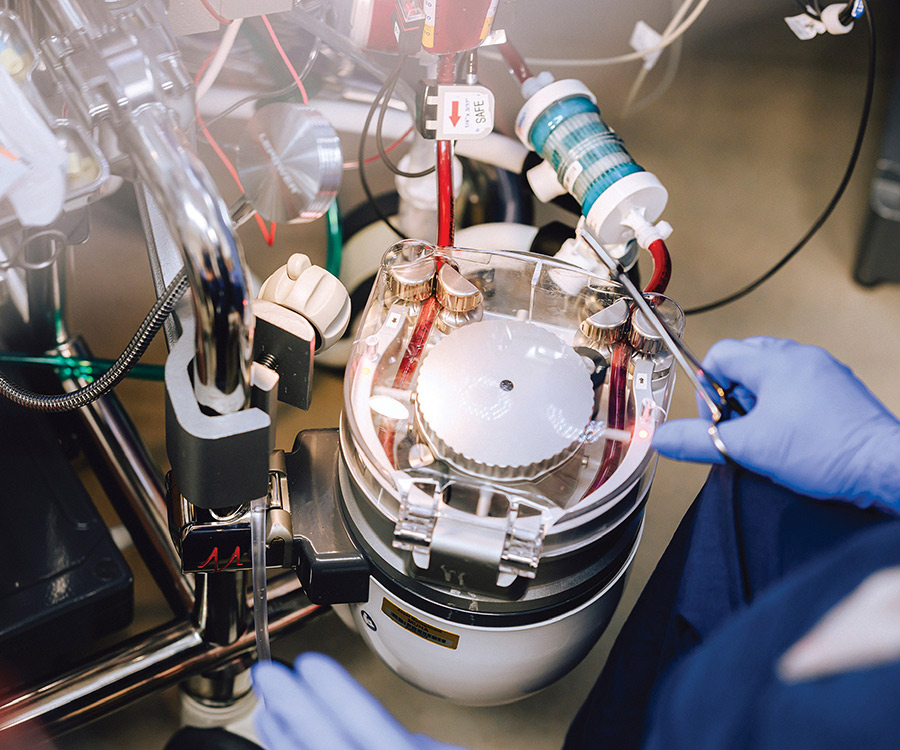
By 6 a.m. Monday, the heart had arrived, and so had Chianella from her home in downtown Charleston to relieve her colleague and take over the heart-lung bypass machine that creates a bloodless, motionless field for the heart surgeon. A beating heart is a terrible workbench. To sew, graft or replace with precision, particularly in newborns, the heart must be arrested, the chest must be still and the rest of the body must keep living. The perfusionist’s instrument is a $250,000 tangle of pumps, filters and translucent tubing straight out of science fiction. Perfusionists like Chianella take over control of a patient’s blood flow, emptying the heart and even the entire body during deep hypothermia. They have to monitor so many different body-function levels on computer screens, it can be dizzying. The numbers have numbers.
– Dafne Chianella ’08
Touchdown occurred at about 11 a.m., when Kavarana removed the cross-clamp on the aorta to redirect the blood flow to the new heart. “It is always a nervous but wonderful feeling,” says Chianella. “So many people were involved to get to that moment, and you always say a little prayer – please start, please start.”
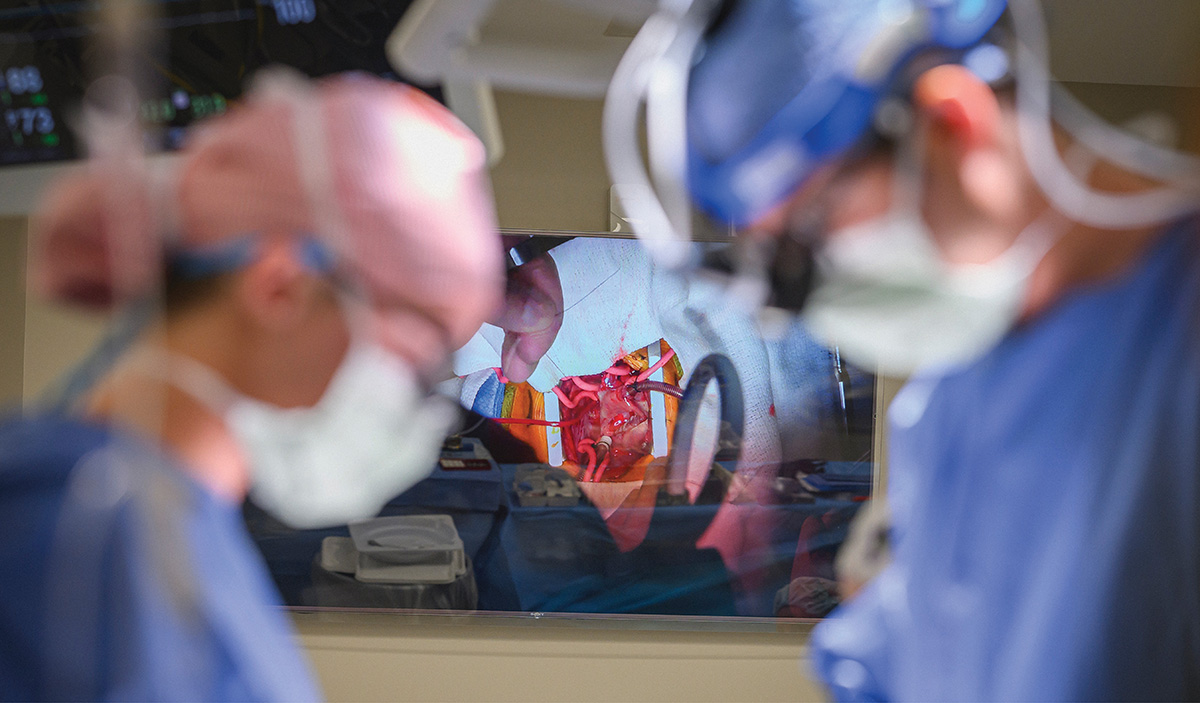
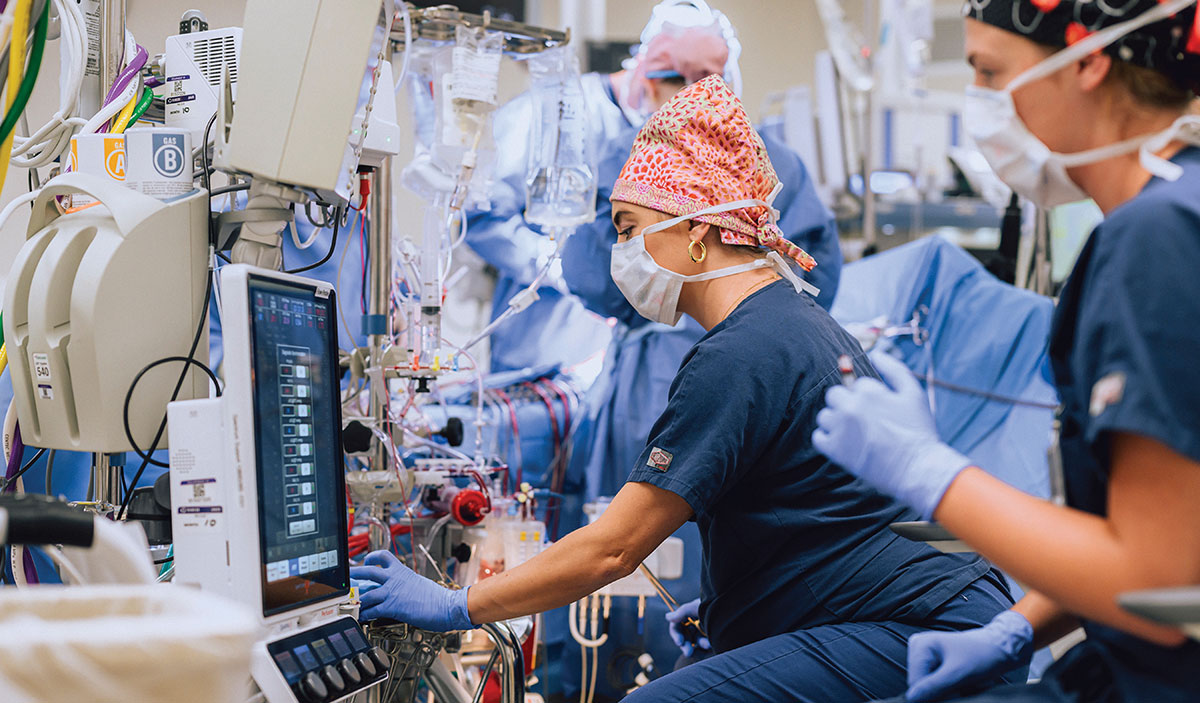
“There is a lot of adrenaline on these days,” says Chianella. “Everyone is excited and nervous, but there is also an underlying somberness, as these hearts did come from someone else. Another child had to die for us to save this one, but it was a wonderful win for our hospital and team.”
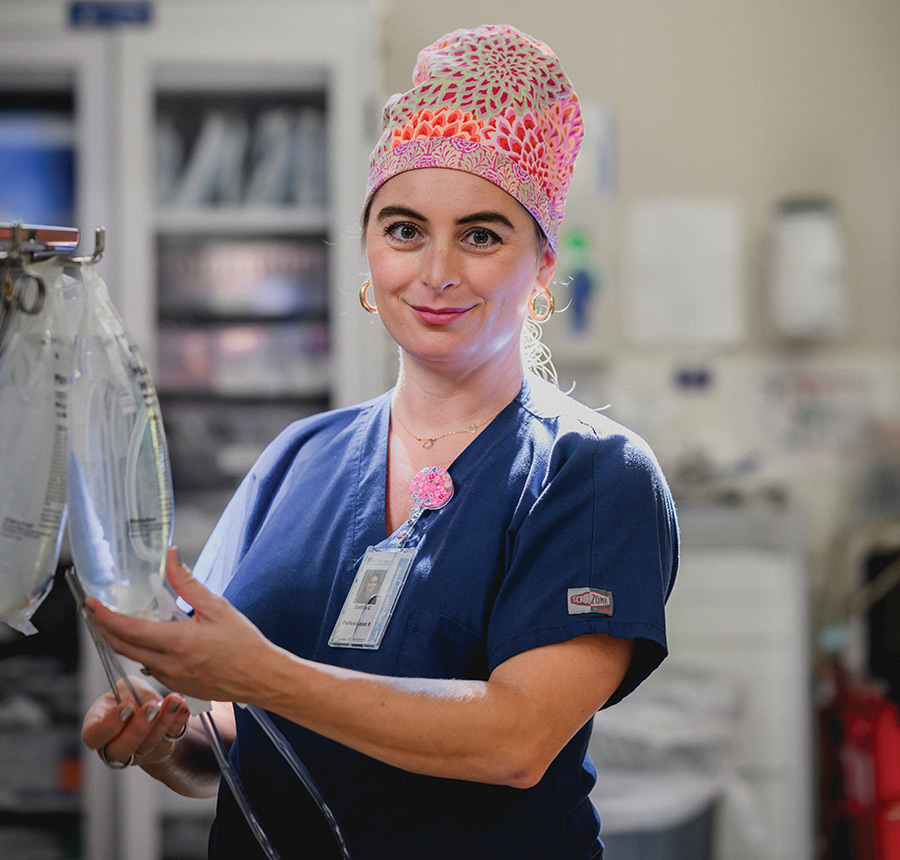
One of just five pediatric perfusionists in the state, Chianella thrives in the emergency atmosphere.
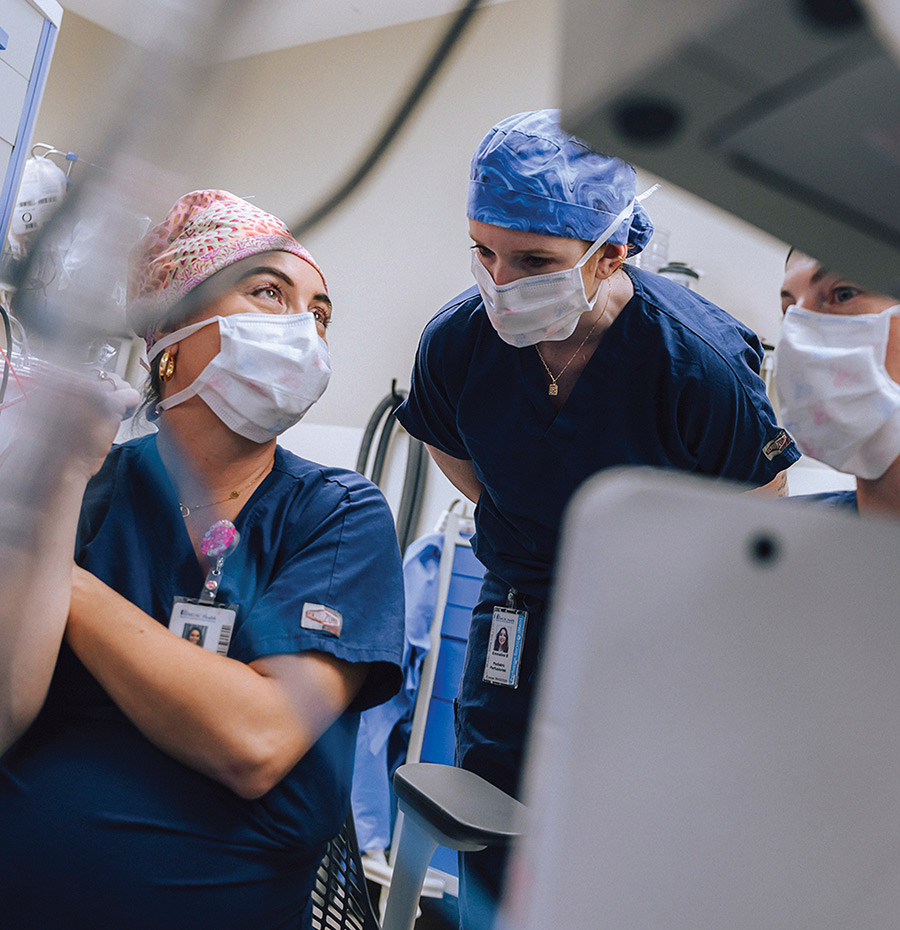
“She’s everything you’re looking for in a perfusionist during cardiac surgery because you really need a lot of communication between the teams taking care of the patient,” says Felmly. “The things that we do working on the heart directly affect the vital signs in ways that a lot of other types of surgery don’t. The anesthesia team, the surgical team and the perfusion team really have to work together seamlessly. Dafne’s been recognized as one of the top perfusionists in the country and is very active in research and moving the field forward. It’s a real treat to work with her.”
Following Her Heart
It’s not easy, but Chianella finds so much joy in her work that it makes all the sacrifices worth it. Somehow, she still finds time to serve as the chair of the American Society of Extracorporeal Technology’s Pediatric and Congenital Perfusion Committee, helping write standards and protocols that hospitals across the world reference. In 2019, she revived South Carolina’s statewide perfusion society, bringing nearly 90 perfusionists together to share protocols and clinical support.
She also founded AmSECT’s Women in Perfusion group, building mentorship and leadership pathways in a discipline that hasn’t always accommodated motherhood or equity.
“This is the coolest career in the world,” says Chianella, “but it can be tough for women. I have to be here at 5:30 a.m. most days, so I don’t get to do the school drop-off. You give a lot of yourself for other people’s children. I’ve spent a couple Christmases here doing transplants, but you’re giving someone a gift of life, so it’s hard to really be upset.”
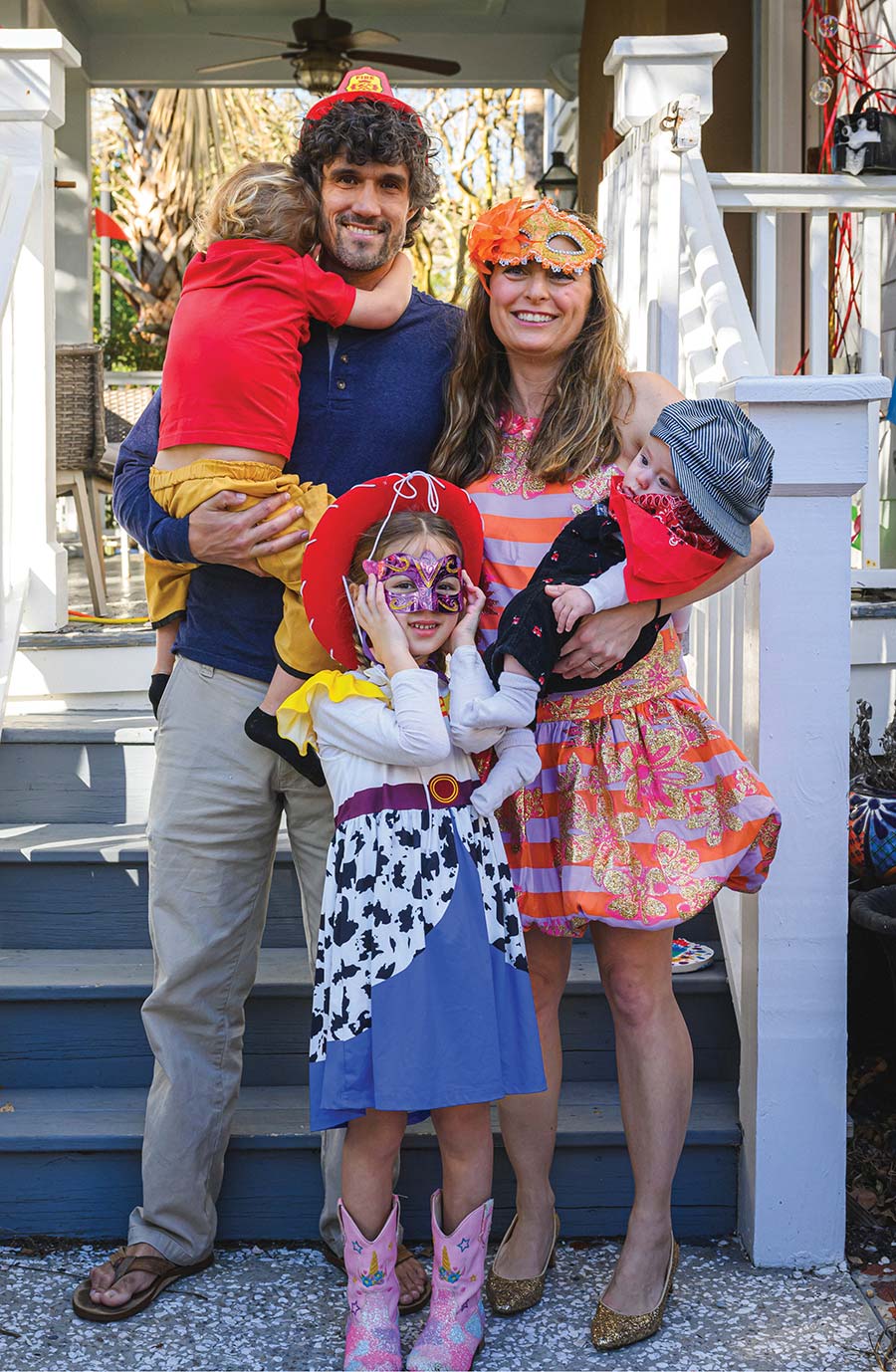
Her parents, Danilo and Gwen, moved the family from Rome to Memphis, Tenn., when Danilo became a pilot for FedEx in 1996 after a career as a fighter pilot in the Italian Air Force. (Gwen, an American, caught Danilo’s eye when he was in the States on a NATO exchange program, and she spoke to him in perfect Italian when they met on the military base.)
“Memphis was a culture shock,” says Chianella, who found her calling in high school when she shadowed doctors at Le Bonheur Children’s Hospital. “The first case I ever got to shadow was a liver transplant, which involved perfusionists, since a third of the blood goes through the liver. As soon as I saw the OR, I said, ‘Oh, this is what I’m going to do.’”
She also knew she didn’t want to stay in Tennessee for college. “I went to a giant high school in Memphis, and when I visited the College of Charleston and toured the science center and saw one faculty member in a lab with just two or three students, I was like, What kind of one-on-one is this? That’s amazing.”
When Chianella was a junior and senior at the College, she got to experience that thrill for herself in Beth Meyer-Bernstein’s lab, doing circadian rhythm research on mice.
“She has an adventurous spirit,” says Meyer-Bernstein, now the dean of the Honors College. “She really took it upon herself to do the hard work and challenge herself, and she continues to do that. She not only has this incredible career as a perfusionist, but, Oh, let’s be a pediatric perfusionist just to make it that much harder and the stakes that much higher. And then let’s have three children. She’s got an incredible energy about her that is just really infectious.”
Knowing that Chianella wanted to get into medicine but not necessarily become a doctor, Meyer-Bernstein – whose brother-in-law worked in MUSC’s perfusion program – suggested the “sleeper career” not many people knew about. Chianella shadowed an adult heart transplant at MUSC and was hooked.
“It was the most extraordinary thing I’d ever seen,” she says. “You literally take over the person’s heart and lungs. It sounds impossible until you watch it happen.”
After graduating with a degree in biology and a minor in Italian studies to learn about the culture she missed, she earned a second bachelor’s in perfusion at MUSC (now a master’s-level degree). She then worked at New York-Presbyterian’s Columbia University Irving Medical Center in New York City for two years before returning to MUSC in 2013. When Shawn Jenkins Children’s Hospital opened in 2020, Chianella switched to pediatric perfusion full time, “attracted by the level of precision and very small margin of error,” she says.
Not for the Faint of Heart
“Look at this baby’s heart,” she says of a donor heart emptied of blood and suspended like a jewel in a clear container. “It’s walnut size. The surgeon’s thumb is almost the size of the entire myocardium (the heart wall). That’s the scale we’re talking about.”
Scale is where perfusion becomes art. A healthy adult has about five liters of blood. A newborn may have 500 milliliters – the difference between a family-size pitcher and two teacups. Connecting a child to bypass without diluting them into catastrophe requires engineering so precise it borders on poetry. Everything is minuscule.
“While we are experts in our field, weird things happen,” she says. “This is not a flawless system. We’re doing the best we can, and some patients don’t do well. There are complications. It’s not anyone’s fault.
“There’s one several years ago that still haunts my dreams,” she adds. “But I try to focus on the positive ones, like the girl who got to walk at her high school graduation with her brand-new heart. I don’t know anyone who’s prouder of their job. I get so much satisfaction helping these patients and these families.”
It’s because of people like Chianella that the Shawn Jenkins pediatric cardiology and heart surgery program – the only pediatric heart center in South Carolina – ranks among the best in the nation, a fact reflected in national reports and lived every day in hospitals’ operating rooms and ICUs.
“For what we do, we’re completely dependent on the perfusionists and the heart-lung machine,” says retired pediatric cardiac surgeon, Dr. Scott Bradley, who worked with Chianella for more than a decade. “That requires having a great perfusionist like Dafne. It makes a huge difference. It has to be reliable and high quality, or we can’t do what we’re trying to do.”
Bradley also points to the intangibles, like Chianella’s calm, positive attitude and ability to read an operating room. “She knows when not to talk so the surgeon can stay in the zone. She’s smart; she’s great with people. And she has a life. I don’t know exactly how she does it, but she gets it done.”
She’s a great ambassador for the program, too, not only on the national level, but on a local one, teaching MUSC students by bringing them into the OR and passing on her passion for perfusion.
“Once you see it in action, as long as you don’t pass out, it is so cool,” says Chianella. “I get to give someone a new heart. I get to go and save a child. I mean, that’s the best part, hands down. I can’t imagine working anywhere else.”