


ground-breaking work
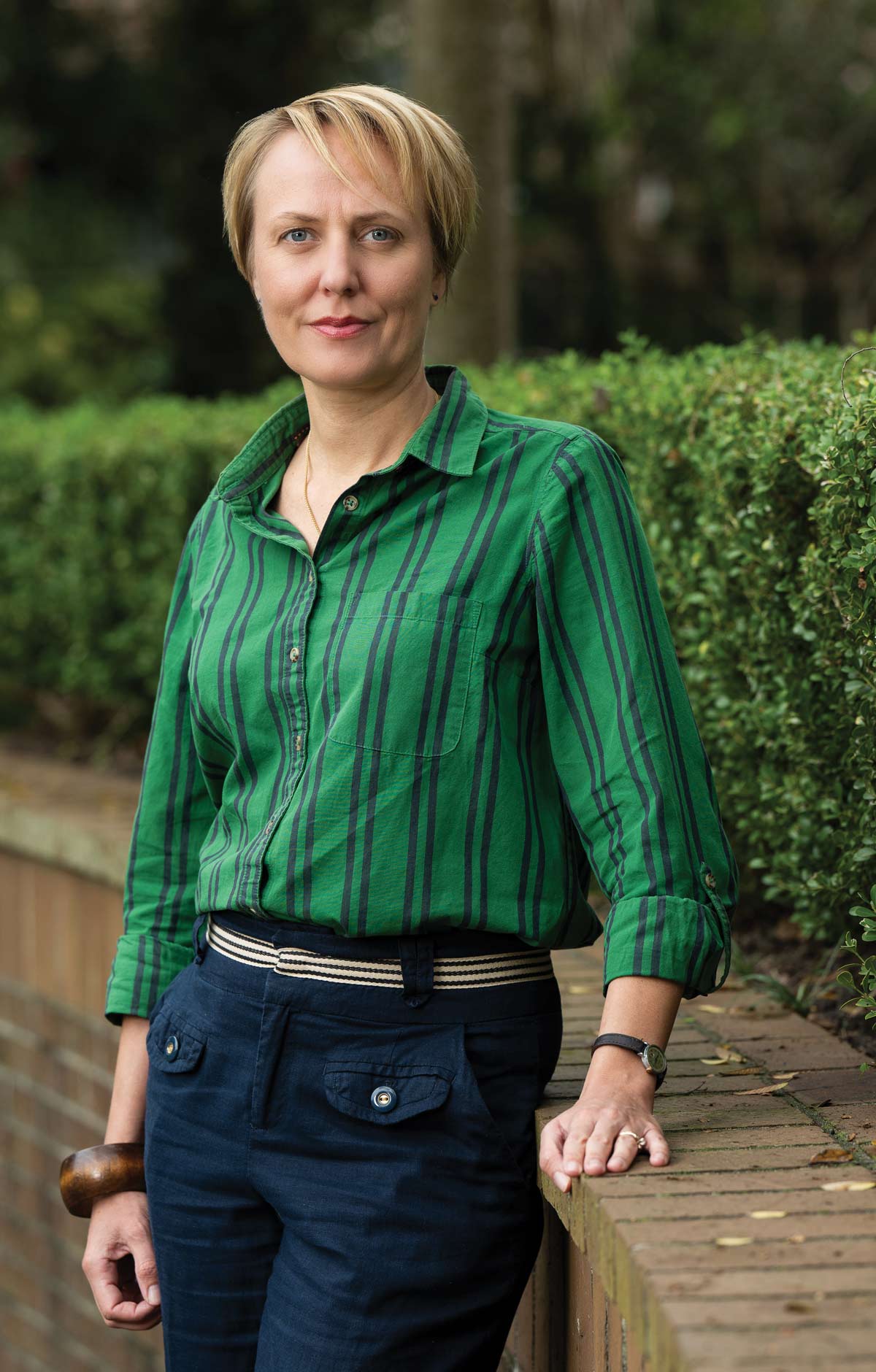
Her passion became clear as a master’s candidate doing fieldwork on a small island in the Caribbean. The fieldwork on St. Eustatius was at a former leprosy colony, or a lazaretto, where she witnessed evidence of the disease’s impact in the victims’ remains. Gilmore decided then and there to dedicate her scholarship to studying and sharing the stories of the disenfranchised.
“The thing that fascinates me is how close you can get to an individual through studying their remains,” she says. “There is real evidence of their lived experience and how they were cared for or neglected as a person shunned by society. We are giving voice to the voiceless when we study human remains.”
That cry for recognition will be most evident this spring when the city of Charleston dedicates a fountain honoring the 36 humans whose remains were found during construction of the Charleston Gaillard Center in 2013. Designed by noted North Carolina–based sculptor Stephen Hayes Jr., the fountain will include earth collected by Gilmore and the Anson Street African Burial Ground research team from 36 of the approximately 80 burial sites of Africans and African Americans on the Charleston peninsula, including one on campus at Rivers Green. Hand molds of 36 Charleston residents will memorialize each ancestor.
“Finding community members to represent the ancestors and collecting soil has been a powerful and meaningful process for all involved,” says Gilmore, the director of research and interpretation for the Anson Street African Burial Ground project. “Hearing the stories shared by the descendants of those interred was unforgettable.”
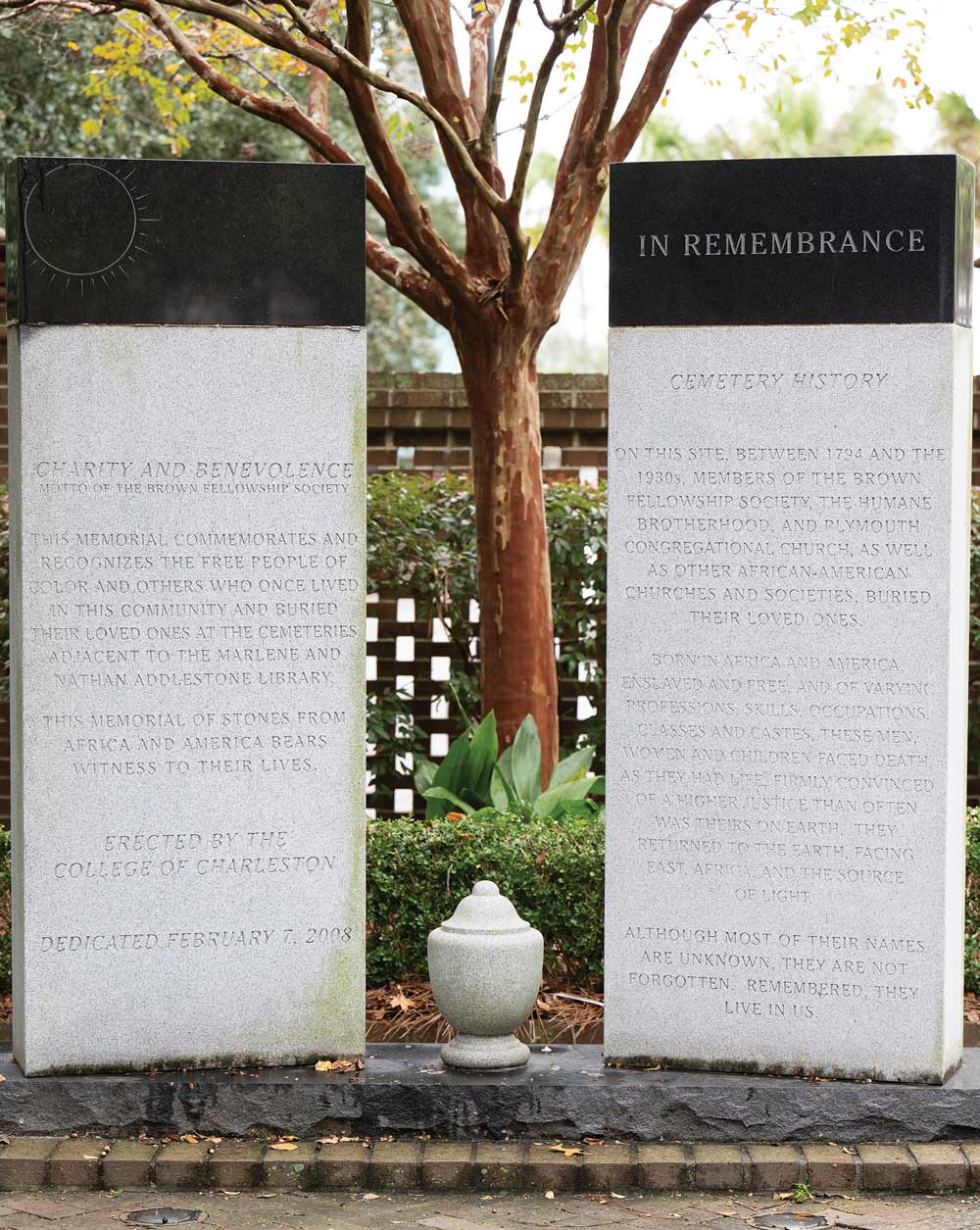
They spent years working on the Anson Street African Burial Ground project. The remains of the 36 individuals are the earliest burials found in Charleston, dating to 1760–1800, and were of African descent. Stable isotope data showed six were born in West/West Central Africa, providing evidence of people who endured the transatlantic slave trade. DNA analysis showed that one ancestor, Coosaw, had Native American ancestry, while two others shared the same mitochondrial DNA type. These were an adult female (Isi) and a male child (Welela), who were buried right next to each other, suggesting a mother and child. The Gilmores’ work has been featured in The New York Times, Smithsonian Magazine and The Washington Post.
“I feel like the least we can do, after seeing how people are mistreated in life and death through these abandoned burial grounds, is make sure people have a say about their ancestors’ remains,” says Gilmore. “It feels like a gift to be a part of this meaningful work and see the impact on the community.” – Amy Stockwell