

Head in the Cloud


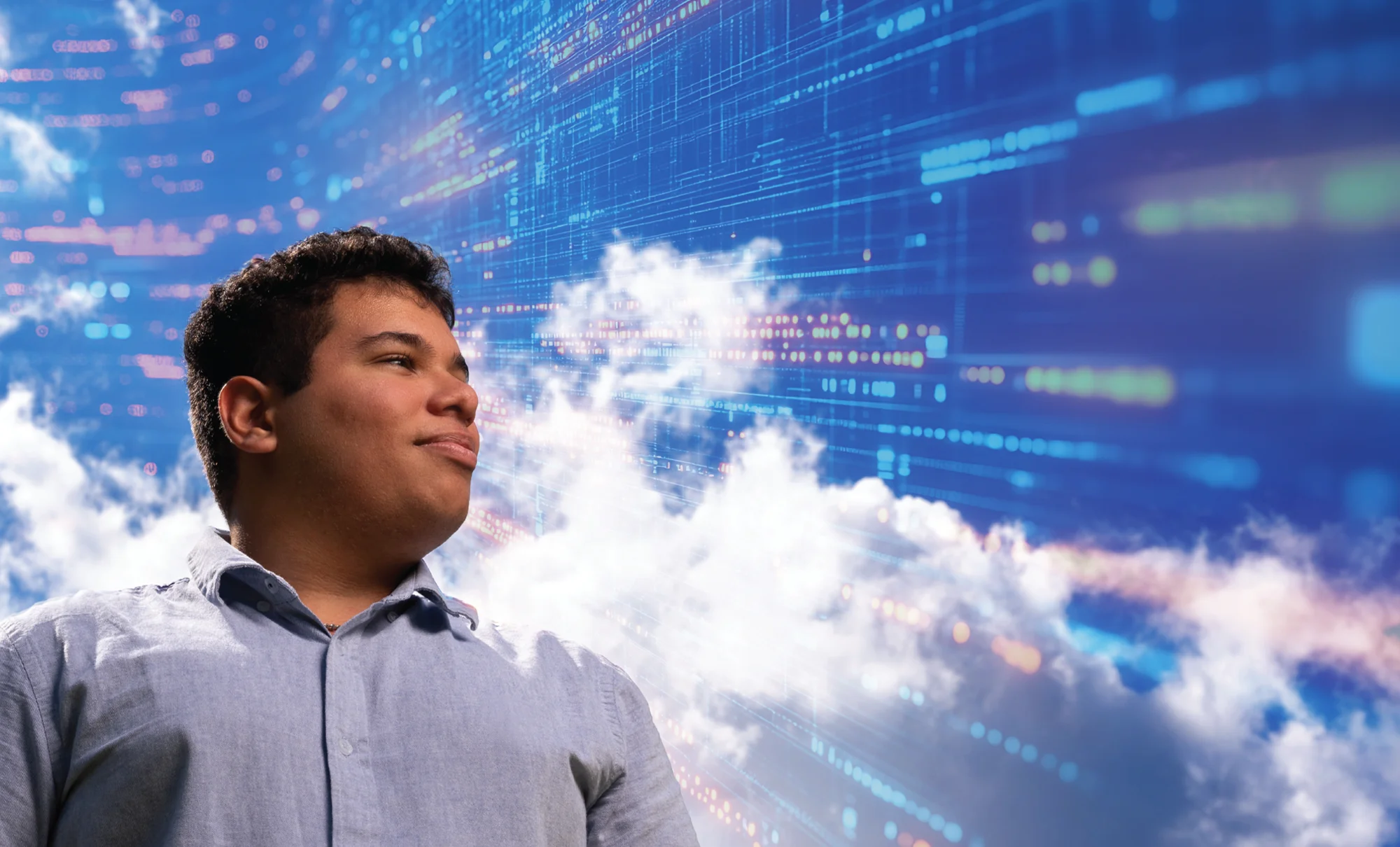
A first-generation college student, sophomore Simon Salazar-Marin left his parents in Colombia at age 17 to come to America where he’s hoping a specialty in data storage will lead to a better future for him and his parents.

photography by CATIE CLEVELAND
The sound of a whirring coffee machine
wafts across the chatting students as they wait in line at Starbucks inside the Addlestone Library. It’s been a long day, but Simon Salazar-Marin remains focused on the task at hand – filling the fifth tall mocha latte order he’s taken in the last hour.
As his shift winds down, though, his mind starts to percolate on capping gigabytes of storage and better solutions for hosting and organizing terabytes of information. He’s eager to get back to his residence hall to tackle those questions for his Amazon Web Services lesson through Coursera, which he’s taking online as part of his First Year Experience cybersecurity class.
Not the typical train of thought for a first-year college student. Then again, Salazar-Marin isn’t quite typical.
A first-generation college student, Salazar-Marin left his parents in Colombia at 17 to live with family friends 2,200 miles away in Greenville, S.C., to complete 12th grade with the goal of going to college in the United States. He wanted better access to higher education in an environment that would fully nurture his ambitions. When he arrived in Charleston, the computer software engineering major found himself working 40 hours a week to pay for his education while navigating some hiccups with his financial aid.
It was tough, and no one would have blamed him if he had decided to withdraw and head for the comfort of home. Instead, Salazar-Marin buckled down.
“In many countries there are a lot of people who have the skills and commitment to succeed, but they don’t have the opportunity,” he says. “I had the opportunity, so I said, ‘I’m not going to let it go to waste.’ And that’s what I’m doing.”
Different Kind of Java
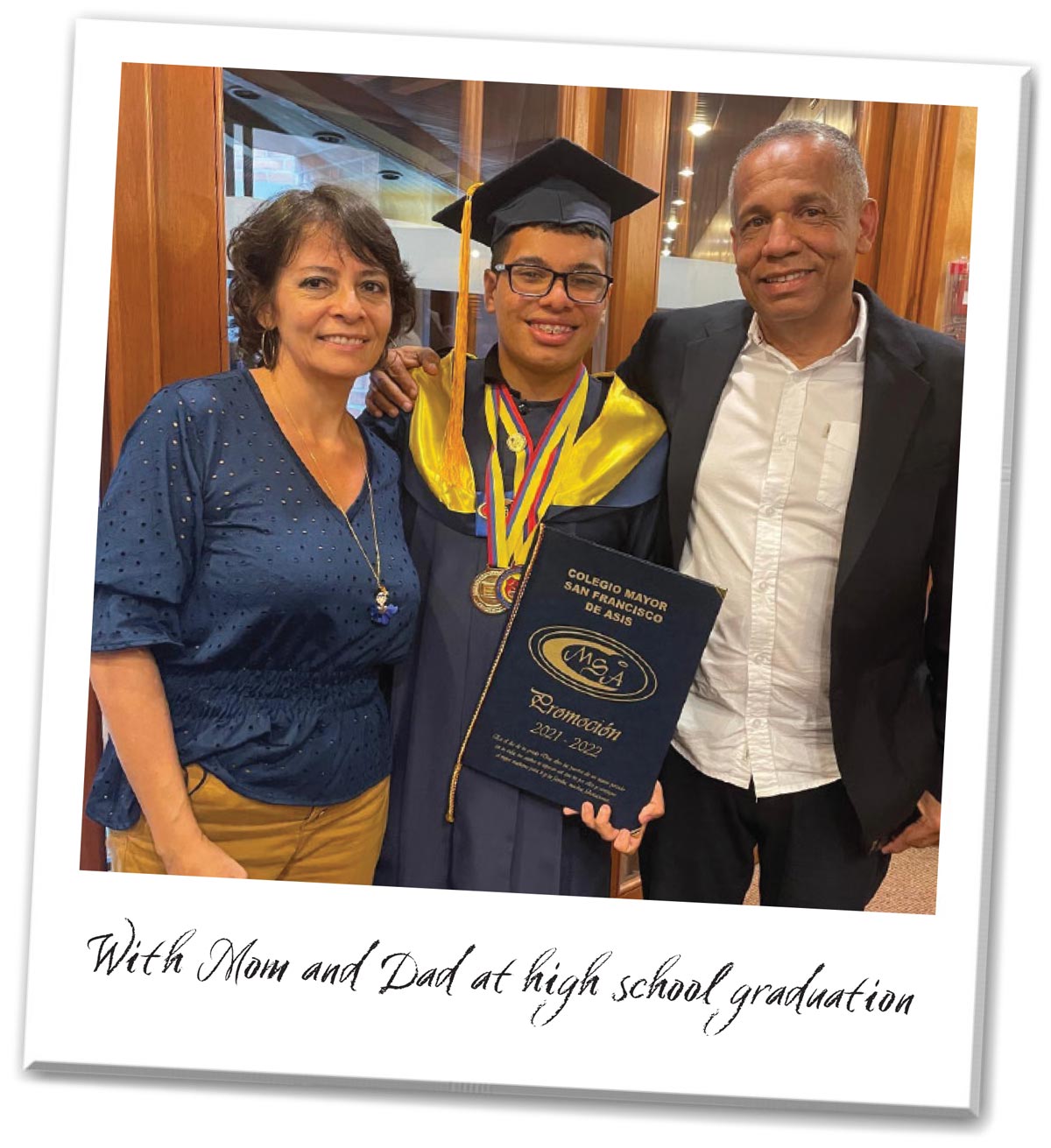
Cecilia Marin and Guillermo Salazar immigrated to the United States from Colombia in the early 2000s after qualifying for asylum. They eventually settled in North Carolina, where their only child, Simon Salazar-Marin, was born in 2005.
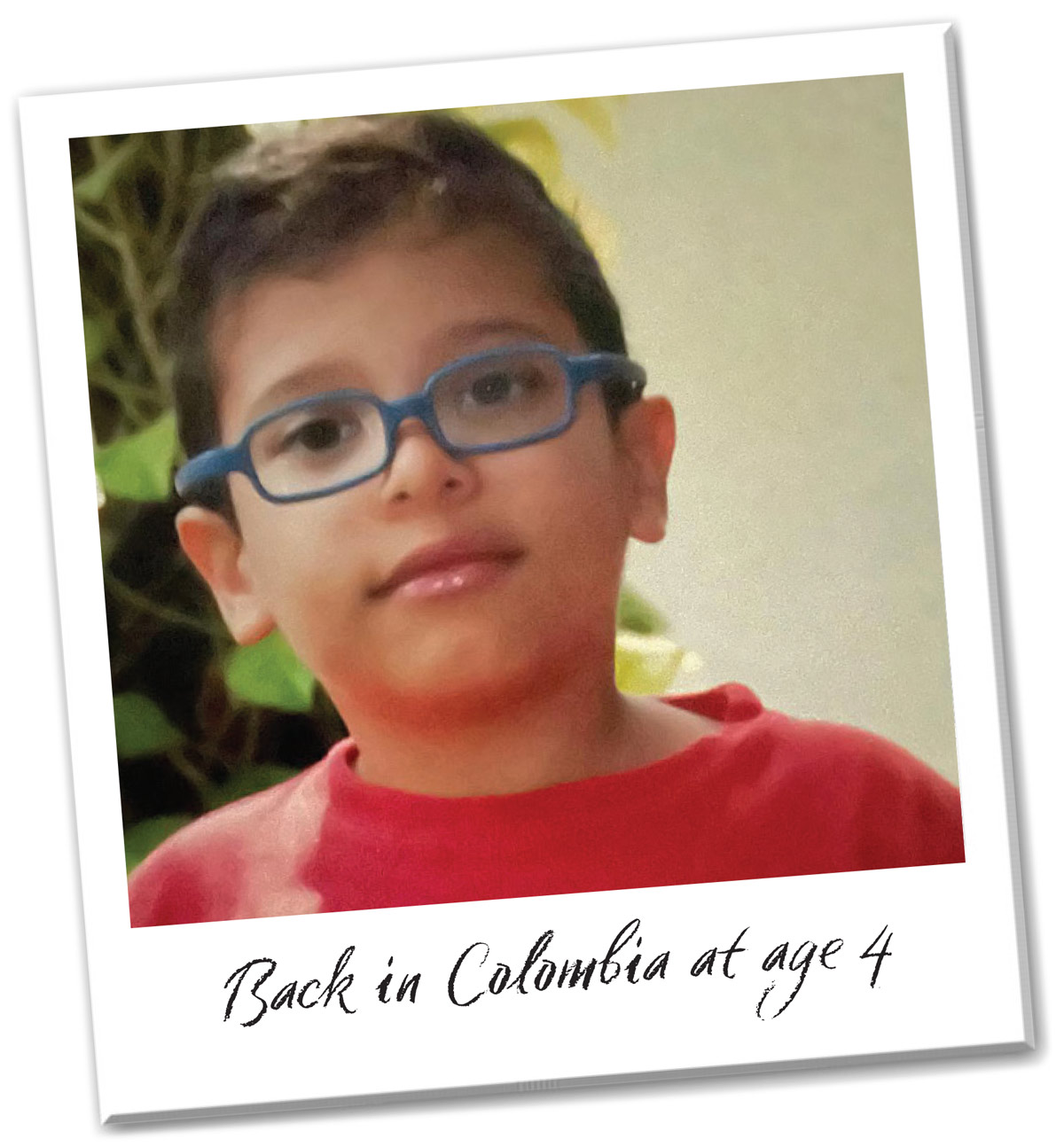
From what he can recall at that young age, Salazar-Marin says his transition to Colombia was fairly seamless. He grew up speaking Spanish at home and settled in with little trouble. His mom found work where she could, and his dad taught students as an English instructor before starting his own publicity business. Neither of his parents were able to attend college.
Seeing how thoughtful and curious their son was from a young age, Salazar-Marin’s parents began to foster and support his potential while he was still in grade school. Like all parents, they wanted to help their son succeed.
“Since his first years, Simon always demonstrated great intelligence and the ability to learn with ease,” says Marin. “He was an intelligent, disciplined, sociable and loving child.”
Salazar saw his son’s interest in computers and everything related to new technologies at an early age. “He has always excelled academically, being first in his class until he finished high school,” he says.
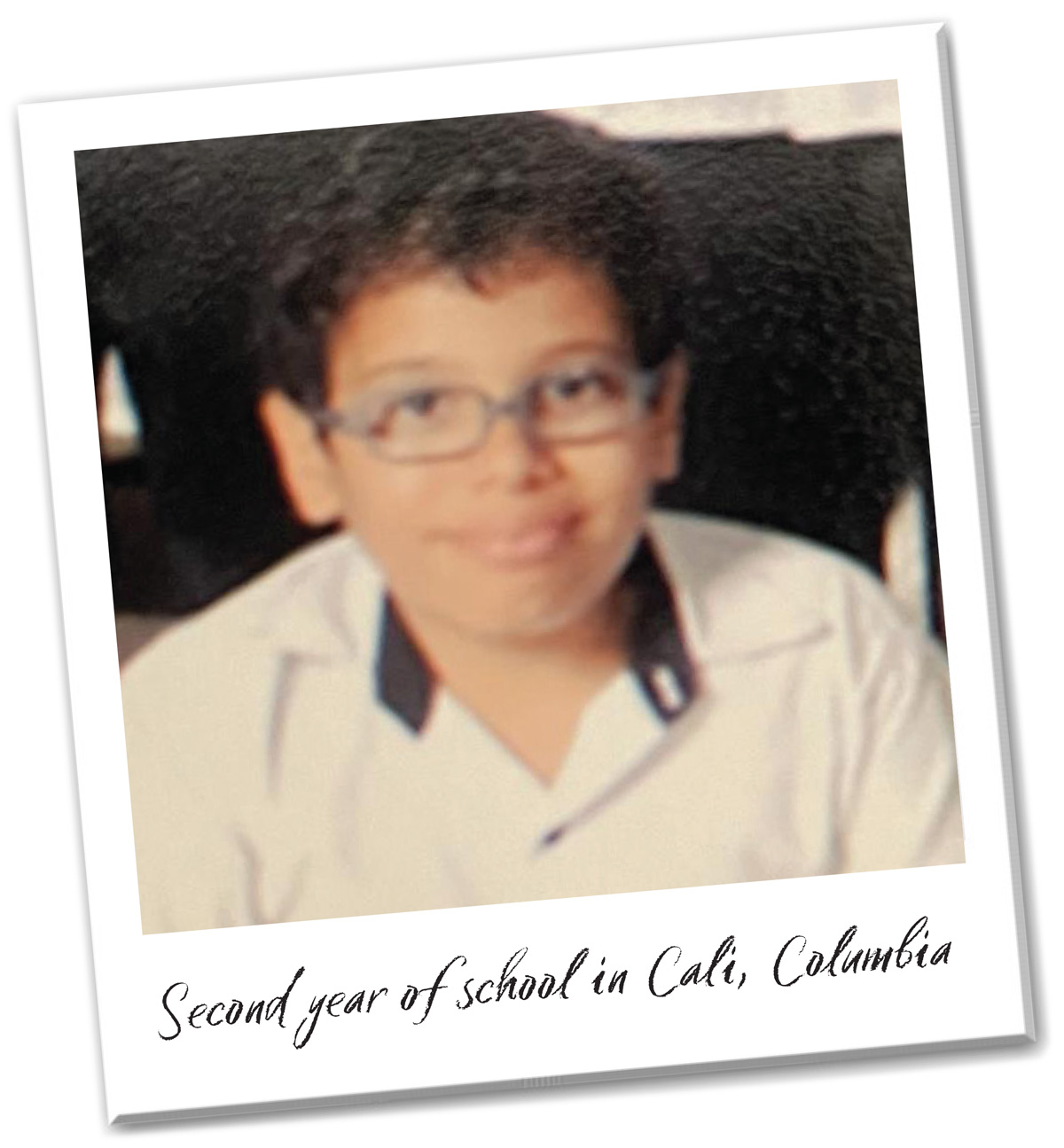
“I felt a lot of happiness the day he told me that I was holding him back because, in every module, he would do the assignments and explain things to me,” says Salazar. “For that reason, he wanted to continue on his own to advance more quickly. Since that day, he hasn’t stopped progressing and studying a lot about that subject.”
Bolstered with confidence, the young teen enrolled in an online introductory computer science certificate program through Harvard University to keep growing his skills.
“I like problem-solving, and I like programming, and it was interesting,” he recalls of his early experiences in coding and computer science. “I feel like it came naturally. I just understood the concepts.”
Just Like Home
As he finished his last semester of his secondary education in 2022, the political landscape began to change in Colombia with a new president and regime. Although some regions of the South American country have always struggled with political strife, Cali, where Salazar-Marin grew up, largely didn’t have those issues until 2021, when civil unrest over class differences and social inequalities led to violent protests. The change in government exacerbated those frustrations across Colombia and quickly led to economic uncertainty and more widespread destabilization that made him worry about his future.
“Sending Simon to the U.S. was difficult because he had never been separated from his family before,” says his mother, who now lives in Spain. “But we supported him … because we are confident in his intellectual ability, discipline and perseverance.”
He discovered the College of Charleston somewhat by happenstance while on a retreat to the Holy City with Southside Christian. Salazar-Marin was struck by the city’s similarities to his hometown of Cali – the coastal vibe, the rich architecture and the warm climate all felt right. Then he learned about the computer science and software engineering programs at the College, and his curiosity was piqued.
“I gave the College a visit, and I saw downtown King Street, and I really liked it,” he recalls. “It reminded me a lot of home. That was a really big factor for me, and I’m very, very happy here.”
Love of Learning
Despite the initial financial aid challenges, Salazar-Marin hit the ground running his first semester in the fall of 2023. He quickly caught the attention of Honors Faculty Fellow and Senior Instructor of Computer Science Lancie Affonso ’96 (M.S. ’08) when he began to work ahead on the Coursera course. A member of the College’s chapter of the Louis Stokes Alliance for Minority Participation, which supports historically underrepresented students in STEM fields, Salazar-Marin ended up completing the course and earning the certificate within the month.
Affonso’s class helped pilot the use of Career Academy on Coursera in the fall of 2023 before the College offered the industry micro-credentials for in-demand workplace skills free to all faculty, staff, students and alumni. Salazar-Marin’s enthusiastic response to Coursera, says Affonso, showcases how industry-focused micro-credentials can extend the impact of classroom instruction and give students certificates that make them more competitive for internships and careers after graduation. So far, Salazar-Marin has earned seven certificates through the Coursera platform.
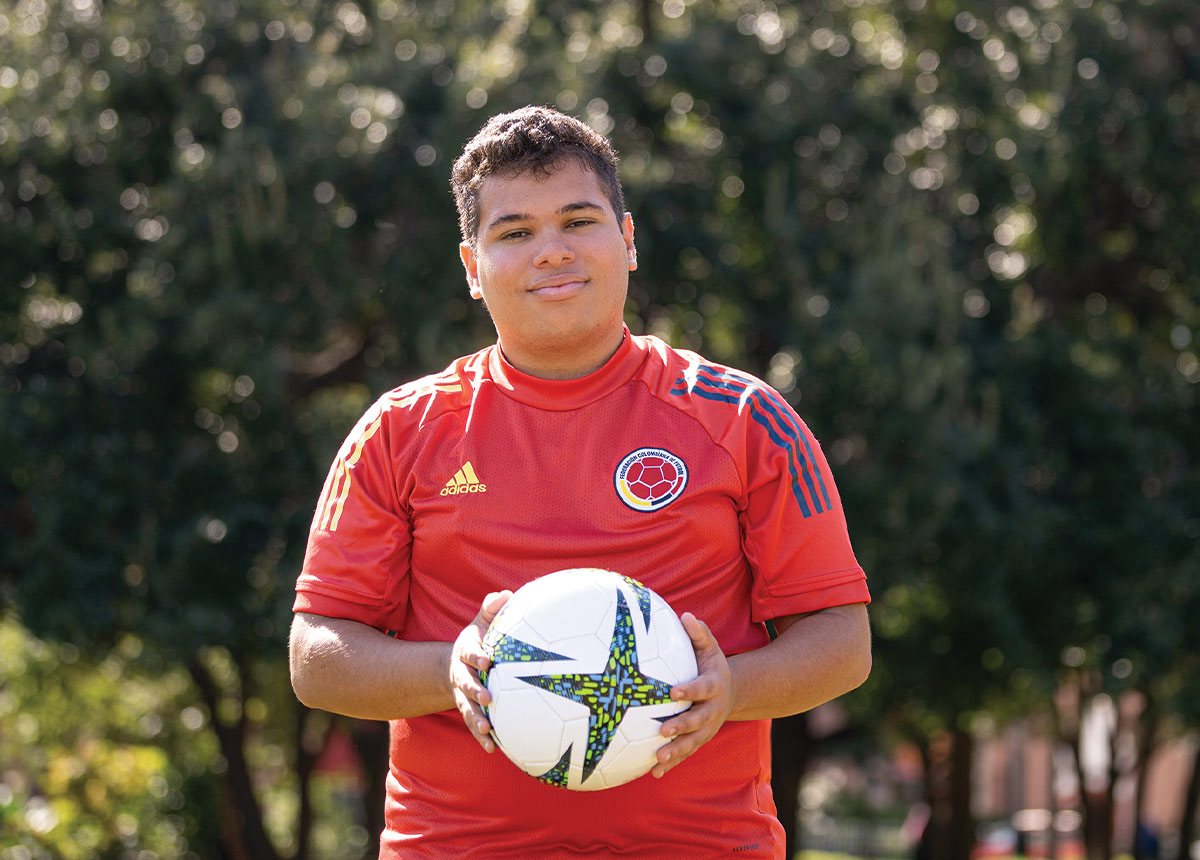
“He dived in very quickly,” recalls Affonso, adding, “Simon is what I call highly motivated but intrinsically driven by the love of learning and sharing it with others.”
Impressed with Salazar-Marin’s voracious curiosity, Affonso agreed to mentor him as part of a summer 2024 research grant through the College’s School of Engineering, Computing, and Mathematics to study data lakes using Amazon Web Services platforms. The term “data lakes” refers to repositories for structured and unstructured digital data, which could be everything from text messages and videos on your phone to your browser history to website information. The information gathered in data lakes can be used to generate analytics and dashboards for individuals or businesses.
Not satisfied with just doing a summer research project, Salazar-Marin also did a study abroad program in Trujillo, Spain, where he took a seminar class on computing and society. He also did a micro-internship there with a company called Solar Drone, helping clean up databases and adjust algorithms for solar field data.
When he came back in June, he continued to develop his research on data lakes, planning to make that a long-term project with Affonso. “I delved into it to see how they work and to build my own data lake,” says Salazar-Marin. “I’m planning on doing some comparisons with other types of data lakes, like through Google, and comparing it with Amazon Web Services. It’s a really good project because it can branch into many more things.”
Supportive Ecosystem
Now in his second year at the College, Salazar-Marin serves as an ambassador for some of Affonso’s other classes, where he talks to students about how they can leverage access to Coursera, specifically certificates and training through Amazon Web Services.
His desire to give back and mentor other students hits close to home for Affonso, who is himself a first-generation student who immigrated to the U.S. to attend the College of Charleston. When students like Salazar-Marin support other students, he says, it creates an environment for success.
“It’s the ecosystem that the College creates,” says Affonso. “We’re willing to give back and invest in young students like Simon with advice, with free resources and mentoring. I’m big on this whole idea of ‘mentoring matters,’ and we see it in Simon. And so, in my classes, our sophomore students are mentoring our freshmen, who are now mentoring high school students. I have a high school student in my class right now who’s being mentored by Simon, and we hope he’ll come to the College.”
Salazar-Marin’s friend Keisha Gonzalez-Diaz, a computer information systems major, says his determination and dedication to get the most out of college is inspiring. The two met through a Latin American and Caribbean studies class. They later discovered they were both in the Spanish as a Heritage Language Distinction Program, which offers Hispanic studies courses for Hispanic and Latino students to connect through the Spanish language and the Hispanic world. A native of Puerto Rico, Gonzalez-Diaz says they bonded over being native Spanish speakers and shared cultural connections. The program also helped them meet friends with similar interests and build a sense of community.
“He’s very responsible and very hardworking,” she says. “Even though he was working so much during his freshman year, he still got (all of his coursework) done. He got really good grades. He doesn’t give up, and he demonstrates resilience every day.”
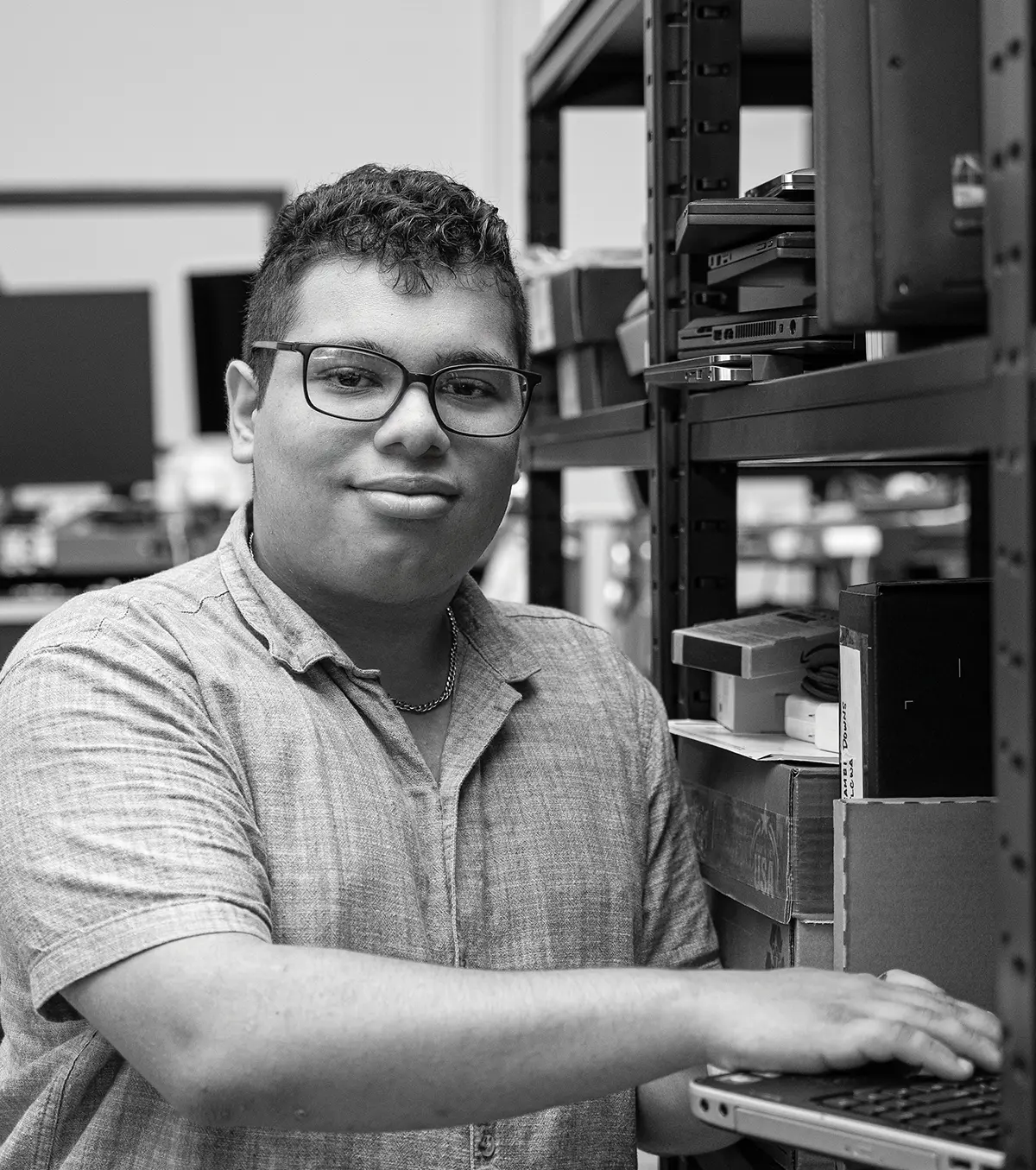
These days, the only coffee Salazar-Marin brews is his own. He has left his full-time job at Starbucks and taken a part-time position with the College’s Division of Information Technology as a digital communications support specialist to get more real-world experience. He continues working on his research and plans to present his project with Affonso on data lakes at the College’s EXPO 2025, which elevates research, creative activities and community research projects from students across the university.
But Salazar-Marin is still decoding his future. He hopes to get more internships and earn more micro-credentials through Coursera and Amazon Web Services. He wants to keep programming a path to a career that allows him to lean into his love of problem-solving.
And, in a couple of years, after he graduates with his bachelor’s degree, he hopes to extend the opportunities he’s had to his parents, especially his dad, whom Salazar-Marin plans to sponsor so he can come live with him in the U.S.
“I know my parents want me to have success and be successful in college, especially because they didn’t. It’s given me a lot of motivation for sure.”