

Standing On Their Own
There was nothing he could do but watch as it spun so violently it fell over and continued to shake in front of his class at University of Manitoba in Canada.
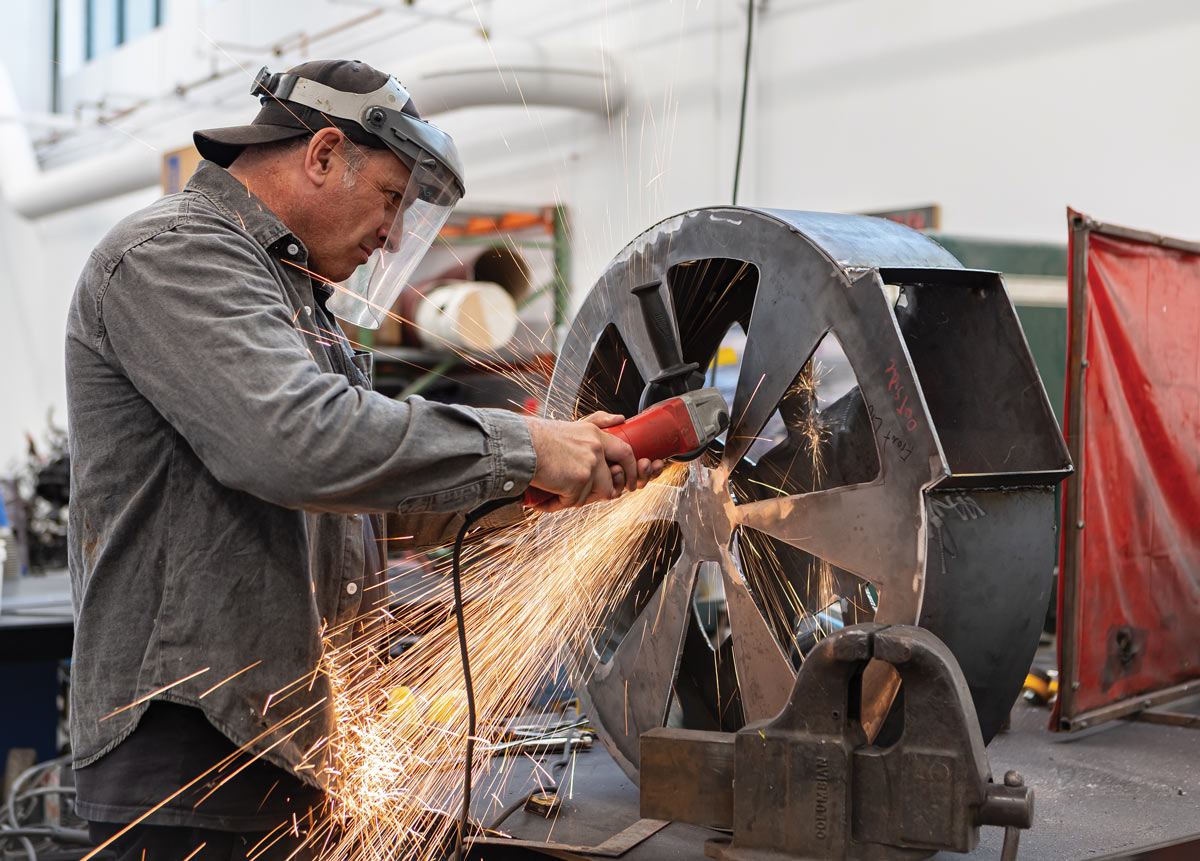
Pieces of the runaway hunk of metal – a welded steel drum with a propeller, rods and an electric motor from a heater fan attached to the bottom – started to fly off, and the extension cord began to flap about, wrapping around the metal in fitful spasms.
“It was loud, and it was crazy, and it was frightening,” he recalls. “It was also performative and dramatic.”
Fortunately, that was the assignment: to “do something dramatic, to do something unique. Something performative.”
His instructor loved it.
“It made everybody’s day,” laughs the associate professor of sculpture, who has found a lot more control in his art since then.
But he hasn’t forgotten what it’s like in those early days of studying sculpture.
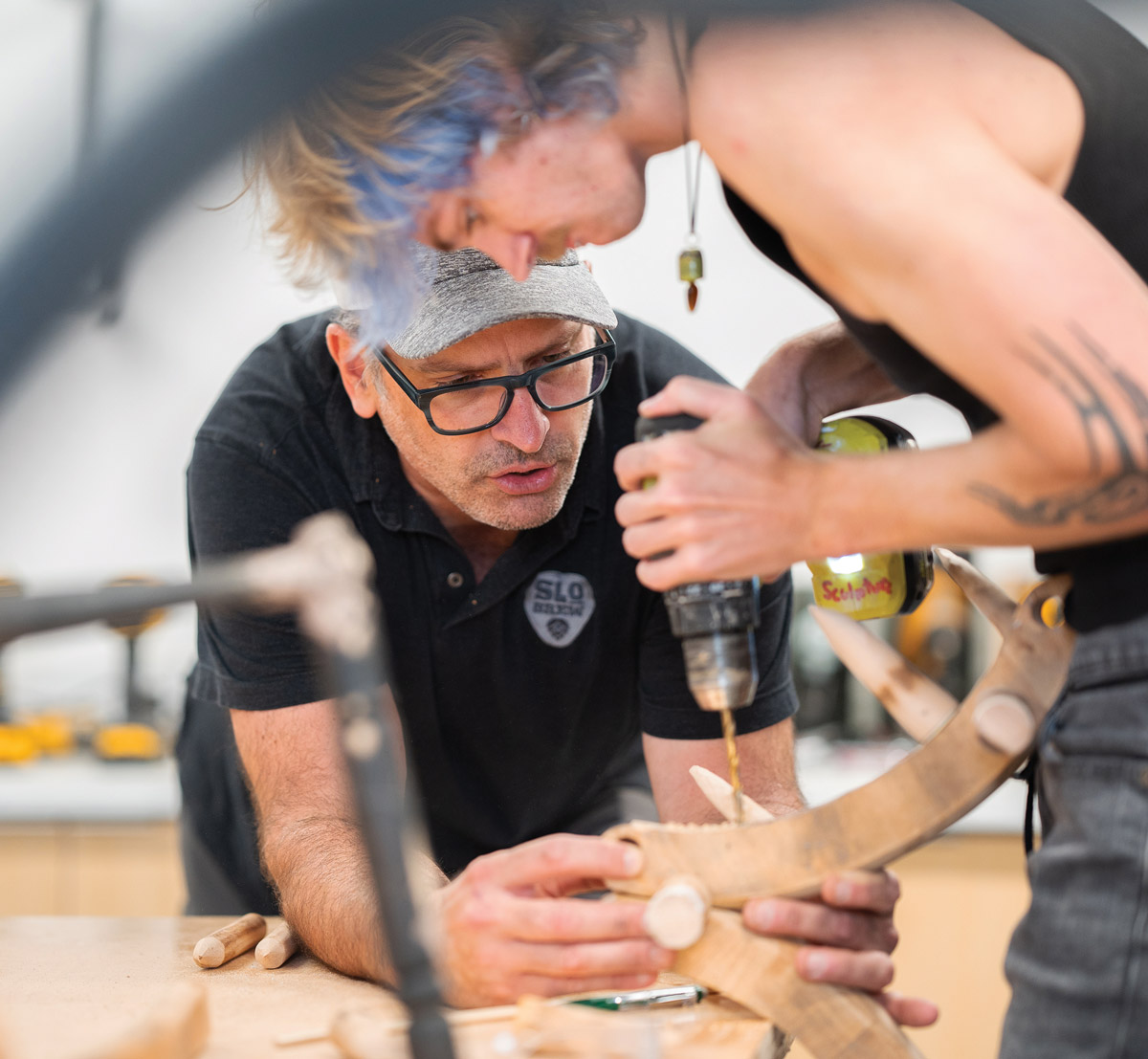
It’s one of the many things Charzewski emphasizes with new students.
“We aim to build a strong foundation of confidence – confidence in their own abilities, in a group setting, in us as instructors, in the space and with the materials,” he says. This is why he ensures his students dive right in from the start. “From Day 1, they’re creating from scratch, working with raw materials, getting their hands dirty and immediately immersed in the process. We just get to work.”
Charzewski recognizes that many students have to adjust the way they think, the way they work.
“It’s unlike anything they experience in other classes. It’s about learning to see – to truly observe. When they look at an object, they must consider the parts they can’t see. Our goal is to help them think in three dimensions, to visualize an idea and then bring it to life, whatever that may be,” he explains. “At first, shifting to this way of thinking can be challenging. But you see a spark when they realize there’s another side to this. What I love most about teaching is witnessing that moment when someone’s creative light turns on.
“Many students don’t realize what’s truly possible,” he continues. “It can ignite a spark in them – this amazement of, ‘I had no idea I could do that.’ I love telling them, ‘Yes, that’s possible. We do this here every day.’”
With the newly renovated sculpture studio in the Simons Center for the Arts, even more is possible.
“This space is a state-of-the-art facility, equipped with advanced ventilation, modernized tools and a highly sophisticated lighting system,” Charzewski says, adding that his favorite addition is the studio’s new technology room. “Every detail has been carefully considered. Now, everything we need is right at our fingertips.”
His students love the fresh, clean space, too.
“There’s definitely a sense of pride that students bring to the work they create here,” Charzewski says. “They want to spend more time in the studio, working on their projects, sharing what they’re doing with family and friends. I love meeting their parents and seeing them show off a bit because they’re genuinely proud – proud of their work and proud of the space they’re part of.”
He remembers that feeling as an undergraduate, too.
“From the moment I stepped into the sculpture studio, I was captivated,” he says. “I wanted to be part of it. I wanted this to be my place – to walk in, know what every tool and piece of equipment was and know exactly how to use it.”
How else are you going to get your sculpture under control?