

American Dream


Wes remembers calling home: “I said, ‘Is the site broken or something?’” But Allegiance was indeed finally reaping the rewards of years of groundwork and fine-tuning by the three cofounders, including a recent reduction in the cost of its product. Plus, it was nearly spring. “We’ve come to find out that’s what we call flag season in America,” says Wes. “It’s almost like being a Christmas tree lot at Christmastime.”
Soon, the pandemic would spark an e-commerce bonanza for homewares of all sorts and stir patriotic feelings among many Americans. (A recent law passed in Congress mandating all federal American flags must be made in the U.S. is indicative of the demand for domestically made flags; alas, Allegiance only sells to consumers and some businesses.) Together, the trifecta was rocket fuel for the made-in-America flag biz: Allegiance grew 4,200% between 2019 and 2020.
“We really did not want to give up,” says Katie. “I don’t think we ever had that conversation. It was probably 800 days of no sales. We were like, ‘This is going to happen.’”
Pledge of Allegiance
It was just the sort of business idea they’d been casting for ever since attending grad school at the College together. Coincidentally, Katie and Max had known each other as middle schoolers at Mason Prep in Charleston, and all three had gone to the University of South Carolina for undergrad. But it wasn’t until Wes, who is from Raleigh, N.C., and Max met at the College that they all became good friends and eventually business partners.
After grad school, all three more or less resumed the careers they had begun post-college. Once he had an MBA under his belt, Max had successfully jump-started his hospitality career in finance for several independent luxury hotels in Charleston. Katie returned to children’s television, taking a job with local production company Litton Entertainment, founded by her father, David L. Morgan (who sits on the College’s School of Business Board of Governors). Wes, who had worked in sports marketing for IMG before business school, landed in education tech sales for various companies based out of Washington, D.C.
All the while, the three kept their antennas up for business ideas. Despite going back to school to study education, Katie had inherited the entrepreneurial bug from her father. “I knew that business was what I wanted to do,” she says. “I think teaching is the most incredible job, (but) taking more risks is what I was more interested in than a set path.”
Thanks to the aha moment that exposed a niche for American flags made in the U.S., a plan began to percolate. The friends were intrigued by the modern consumer experience that they were seeing develop with some consumer brands. “It’s creating a community around what you’re selling,” explains Wes, pointing to the weekly “This Week in American History” emails, for example. “It’s not like you’re going to give me money, and I’m going to give you a good. It’s more like I’m going to give you an experience around it. We realized that no one was doing that around the American flag and thought there was a real opportunity there.”
They pooled $5,000 among themselves and wrote up a bar-napkin business plan. “We just kind of dove right in. We all knew we wanted to do something where we could eventually become our own bosses, and we felt really strongly about this idea,” explains Max. To this day, Allegiance is a bootstrap business. Having no outside investors, says Katie, “we felt was the true entrepreneurial spirit.”
Bursting at the Seams
Wes was influenced by the entrepreneurs he was introduced to in the MBA program, including Beezer Molten, founder of Half-Moon Outfitters in Charleston, and Baker Motor Co. owner and president Tommy Baker, who came to talk to their class. “That put a seed of inspiration in me to want to go out and do it myself,” he says. “That’s what I remember more than anything.”
Both Wes and Max fondly recall their professors as well, including Jim Kindley, who teaches the capstone class and who included a case study on Allegiance in his class this past fall semester, which about 60 students, some faculty and School of Business Dean Paul Schwager attended. “Very full-circle experience!” says Wes.
Max, in particular, connected with associate professor Brumby McLeod, who encouraged him to apply to the program. Berry’s focus on revenue management has paid big dividends – literally. “It’s been hugely helpful for the financial infrastructure of the business,” says Wes.
After sales went from 0 to 100 in February 2020, the three went into emergency mode. They immediately leased a space – a 700-square-foot tornado shelter – carved out by their friends over at Smithey Ironware in North Charleston’s Navy Yard and began hiring people to help fulfill orders.
Despite the supply chain hiccup, the pandemic ended up being a positive for the startup, giving the newbies space to grow into their roles. “With the world being shut down, we got an opportunity to huddle together and figure it out without everyday distractions,” says Katie.
All in all, the partners fondly remember those crucial early days. “It was a really fun time,” says Wes. “You’re pinching yourself every day and saying, ‘I can’t believe this is working.’”
By April 2020, all three cofounders – their official titles – were able to quit their jobs and go full time with Allegiance. Their professional roles developed organically, aligned with each of their strong suits. Max handles the financials and performance marketing, such as Facebook and TV ads; Katie manages the creative marketing and branding; and Wes oversees operations, including the warehouse, sewing and fulfillment, as well as partnerships.
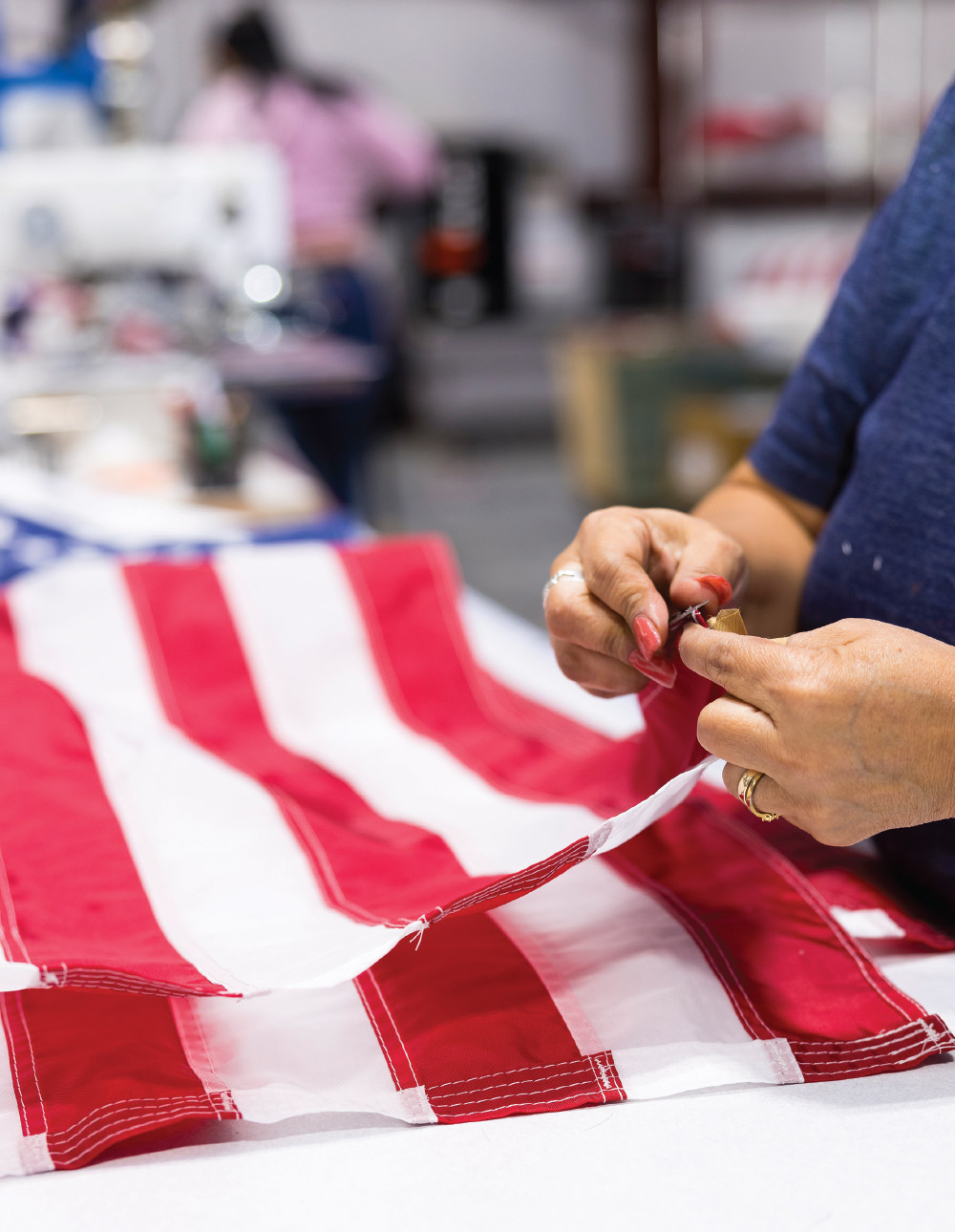
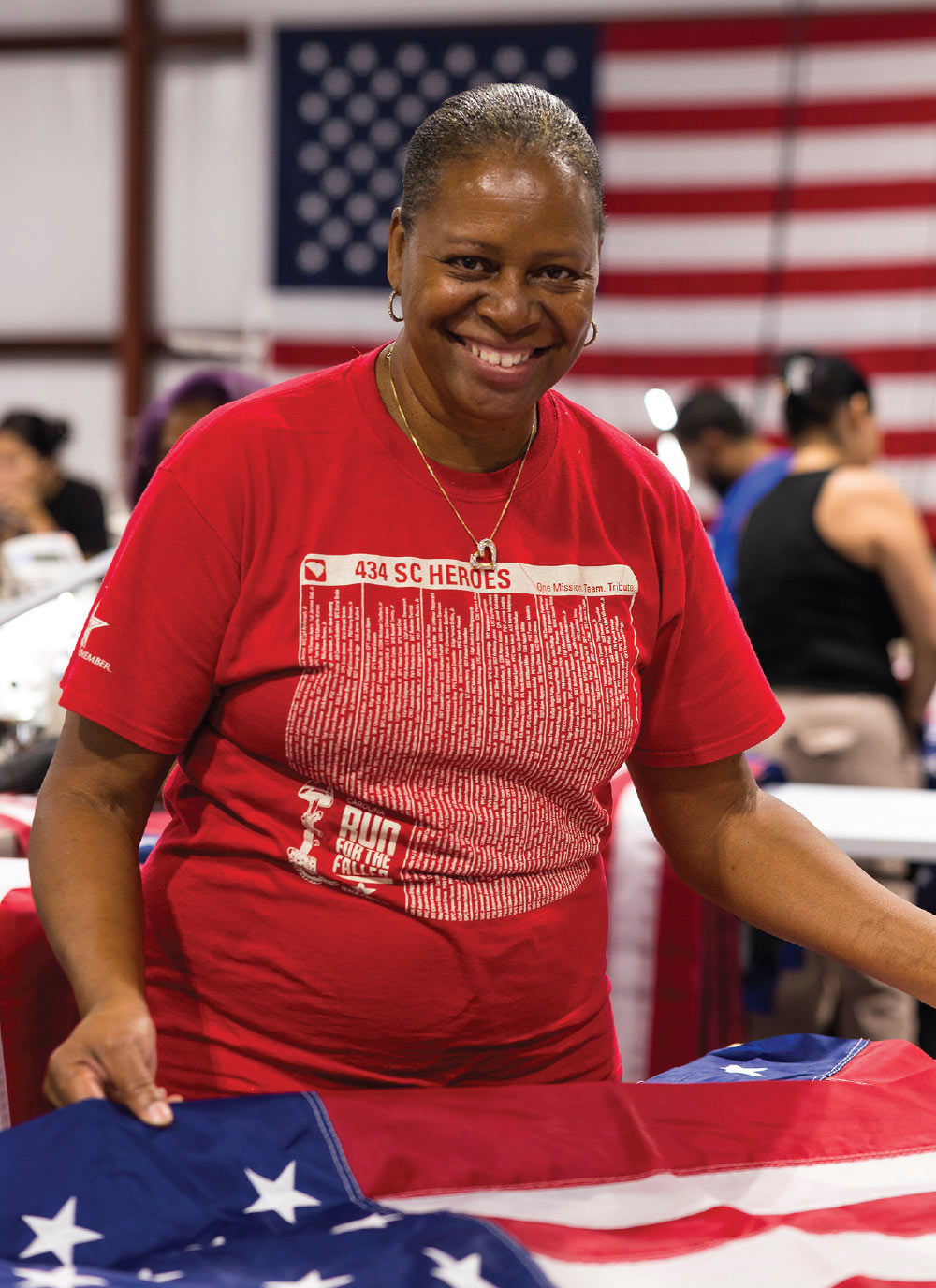
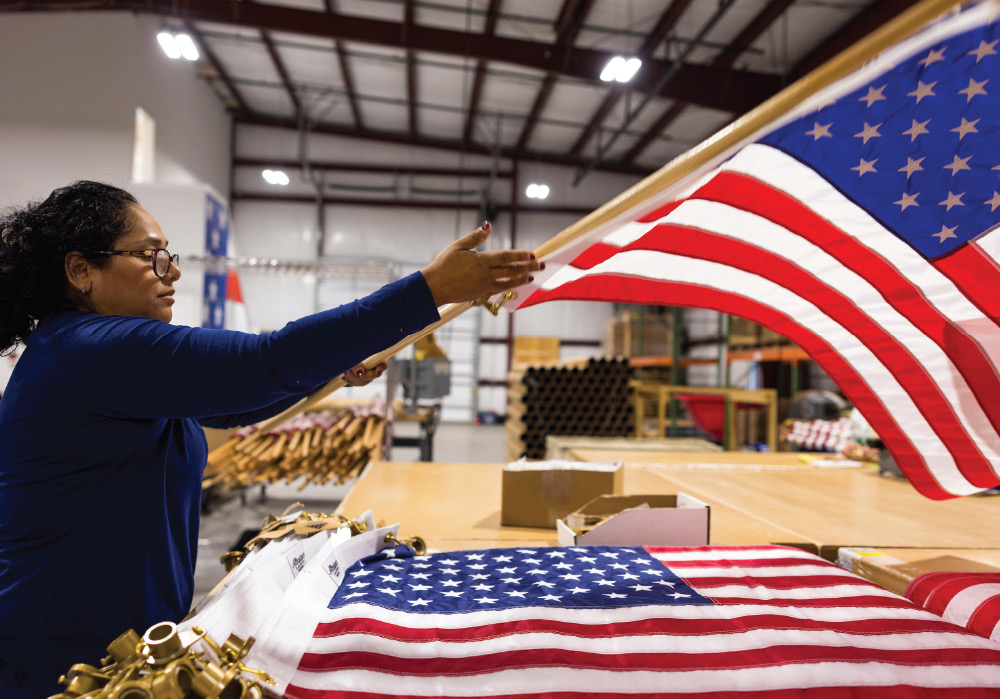
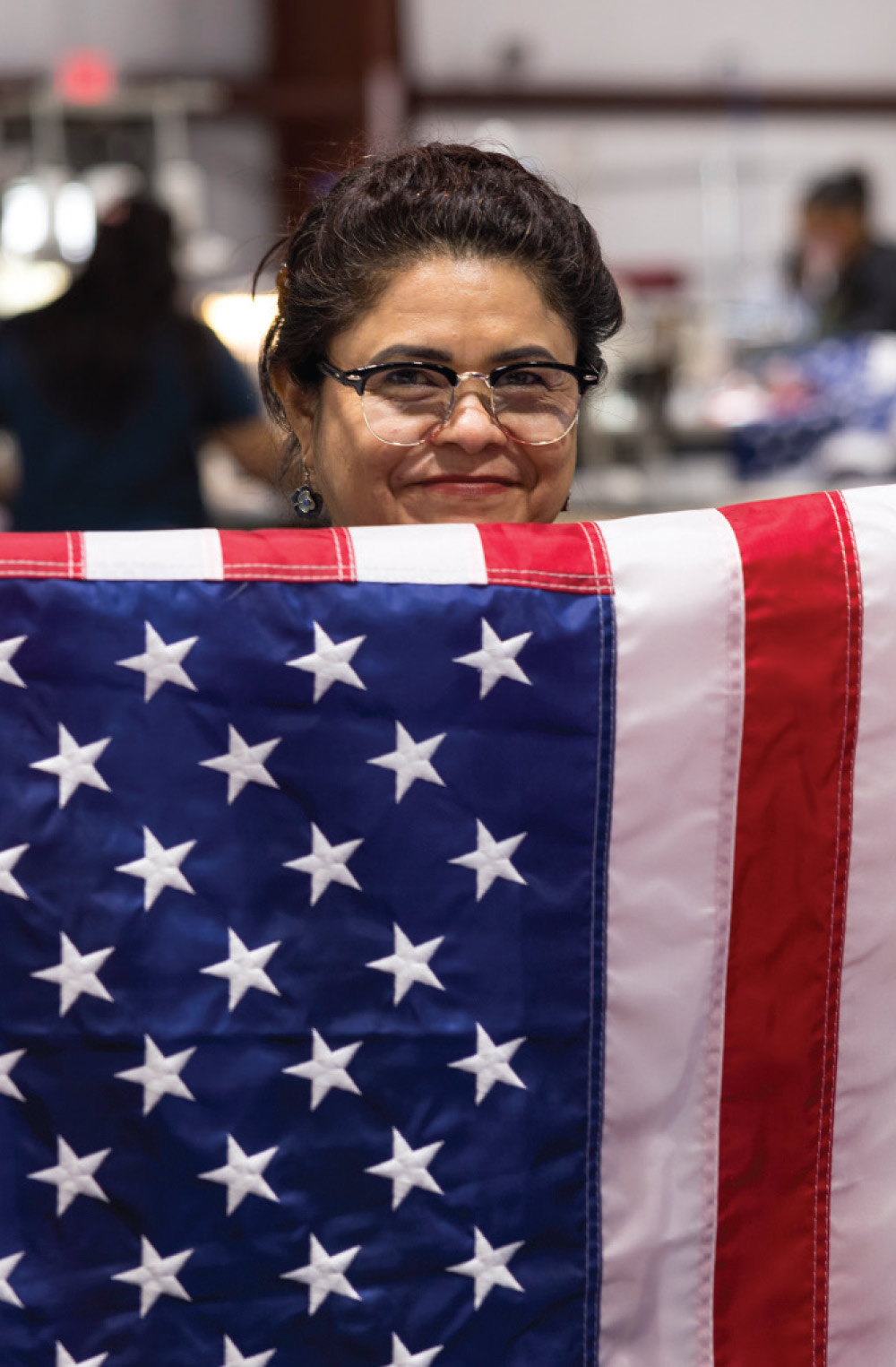
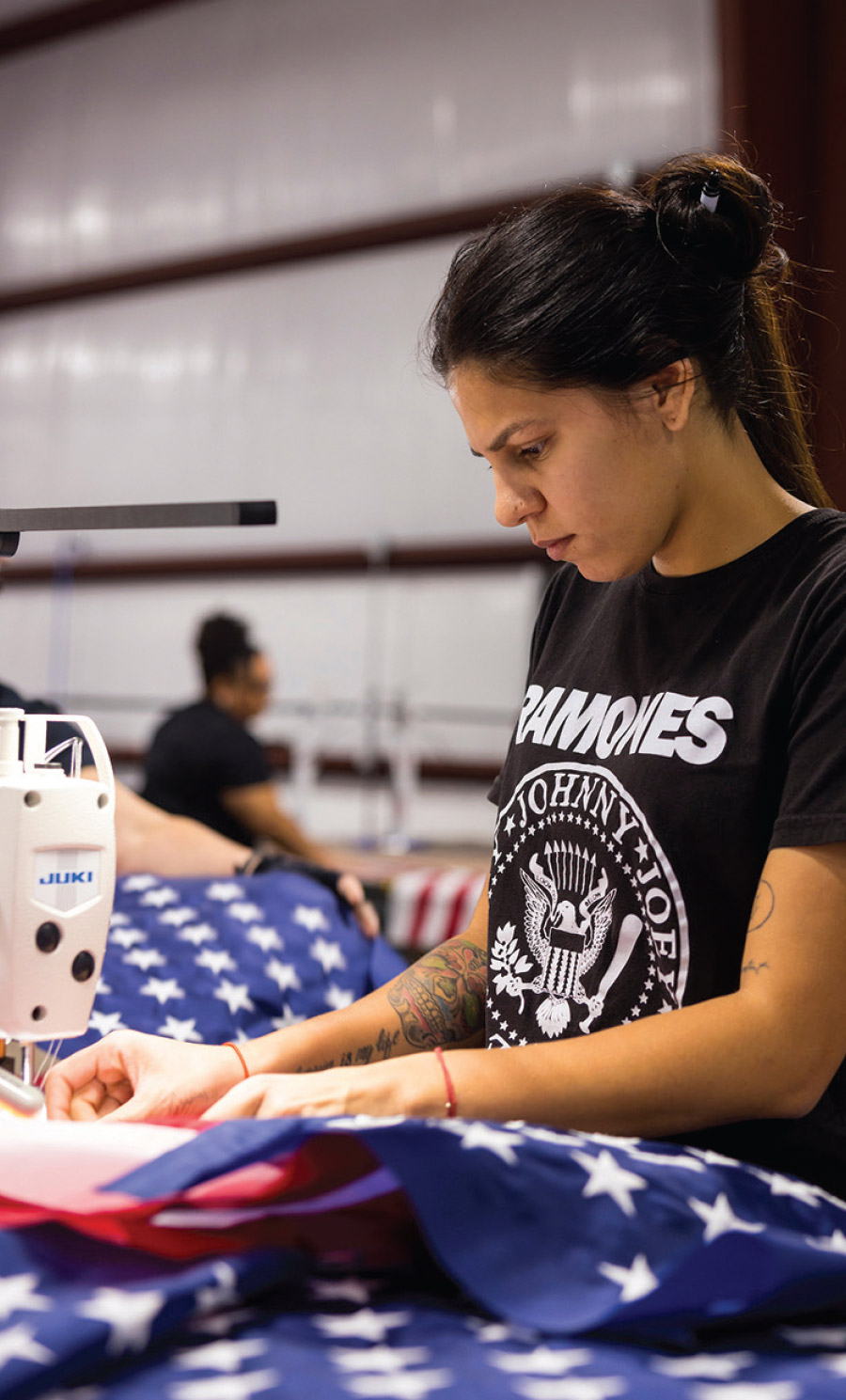
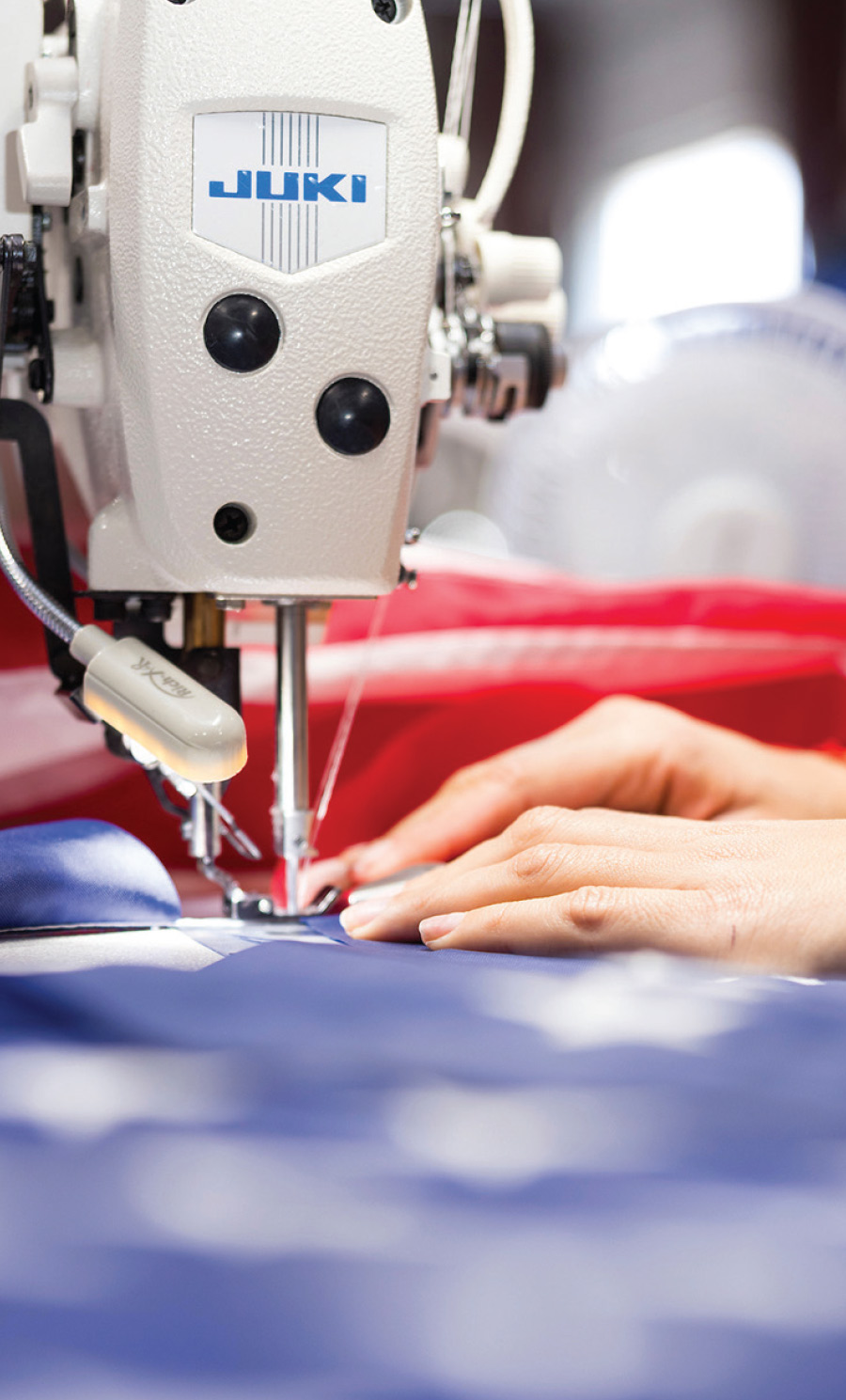
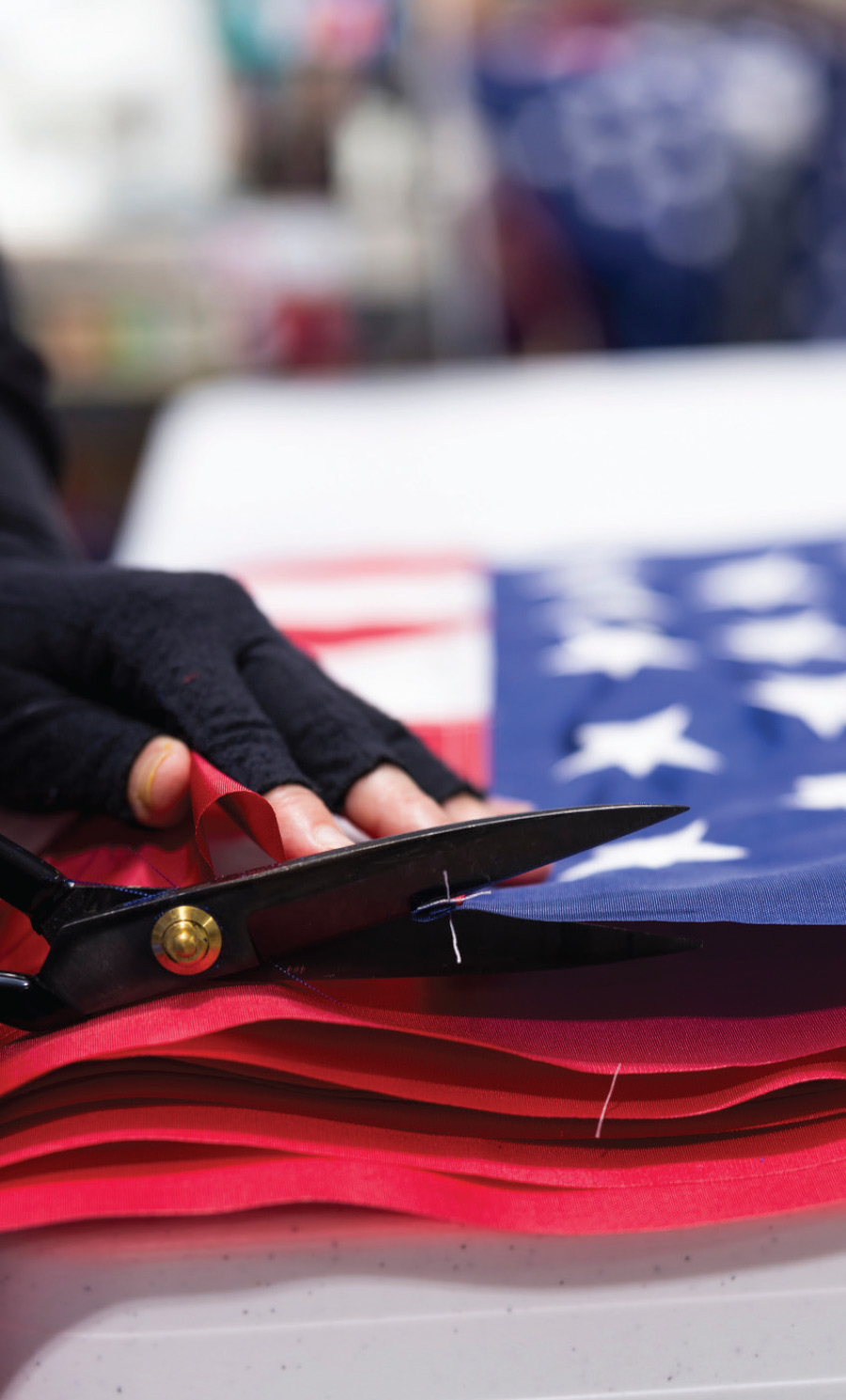
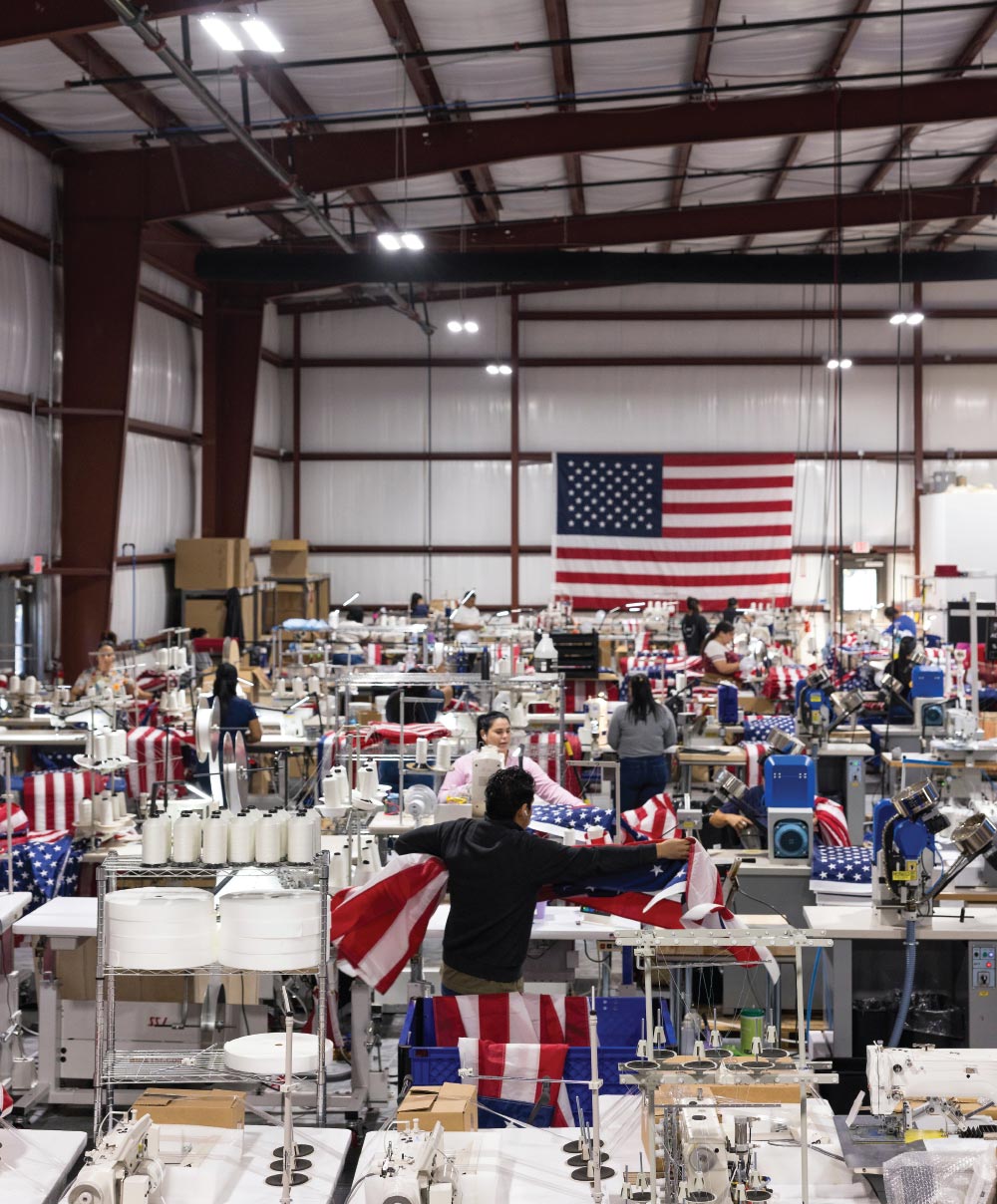
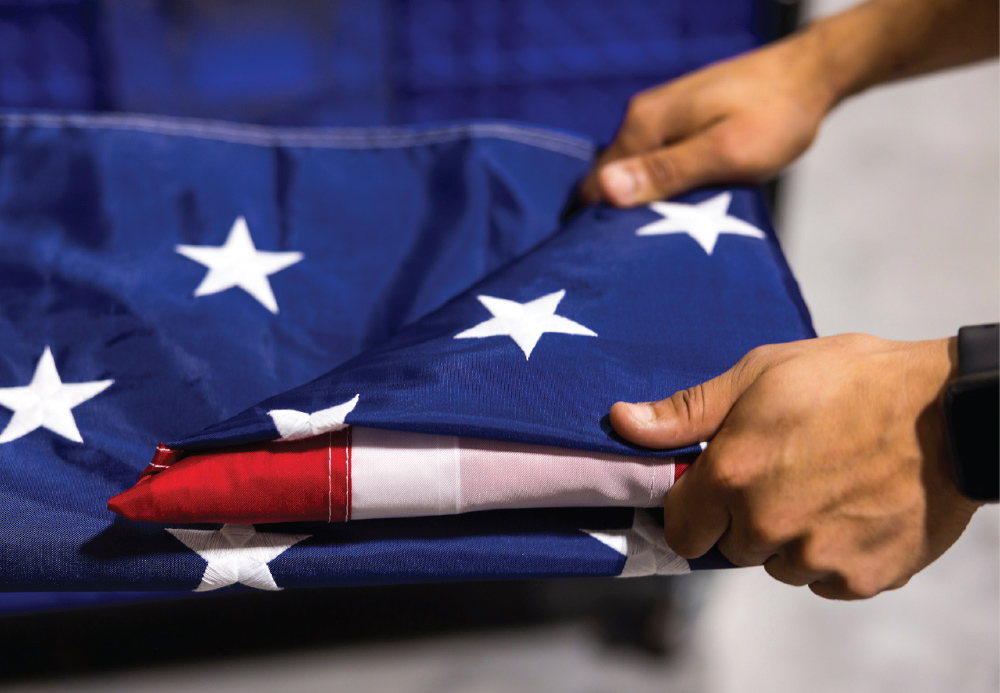
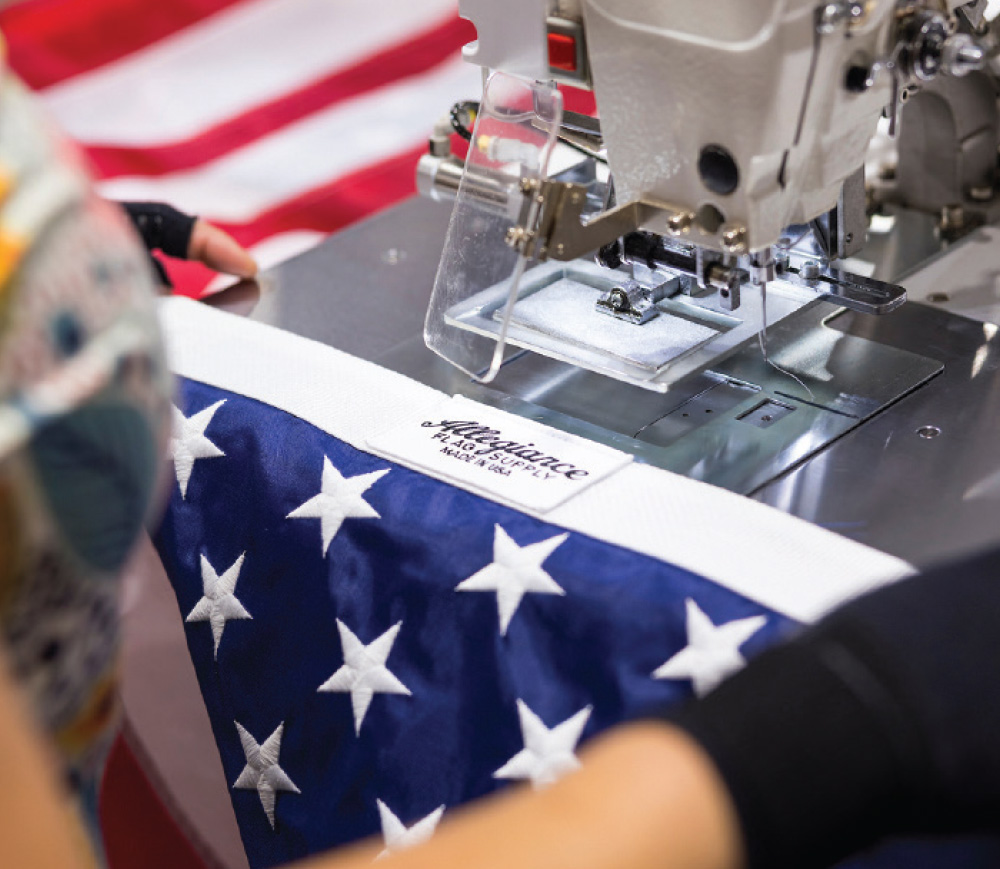
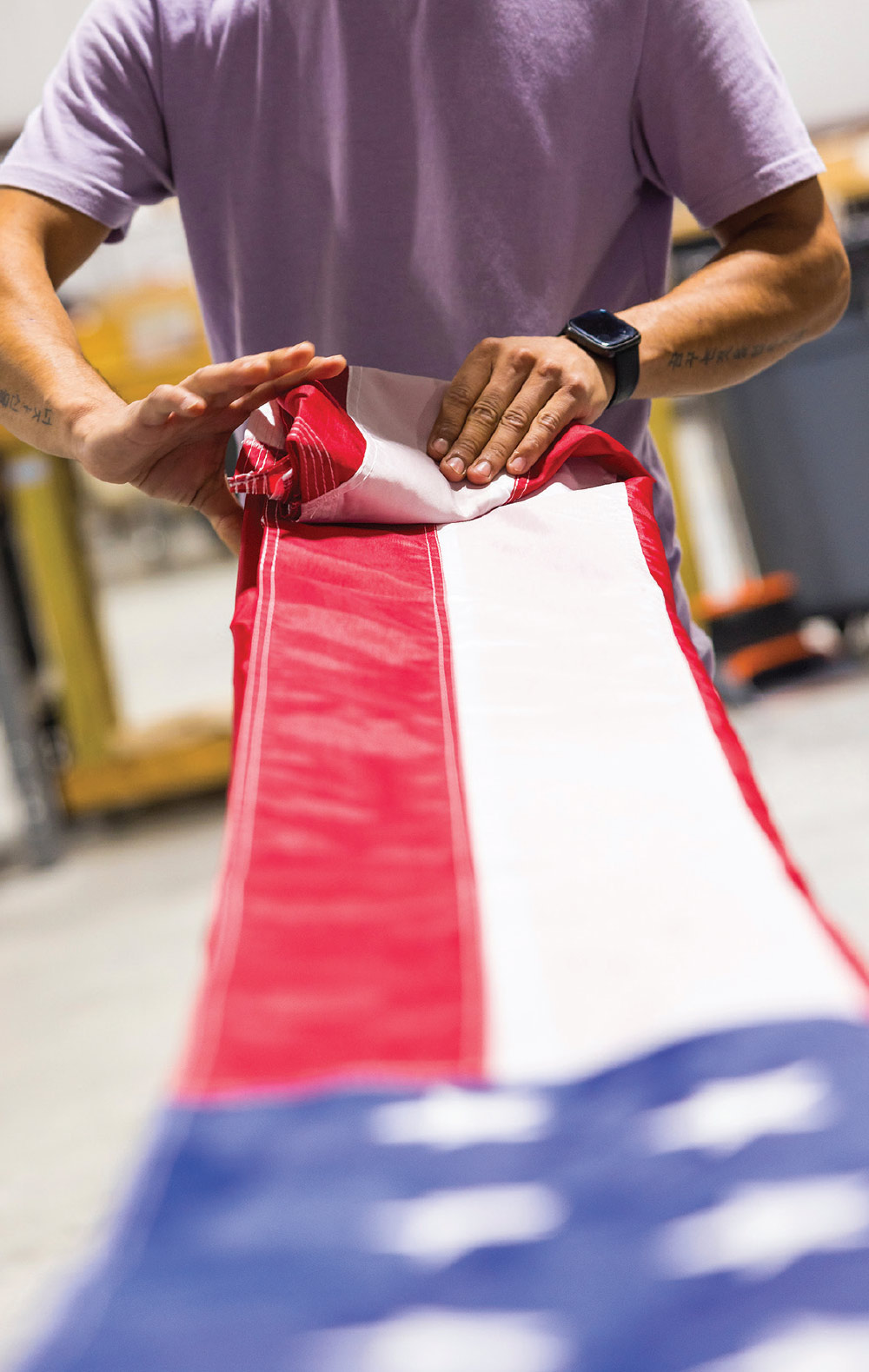
Allegiance has continued to grow like, well, amber waves of grain. After realizing they needed more capacity, the owners transitioned to manufacturing their own flags in 2021 rather than relying on a small network of sew shops. Despite their new facility in North Charleston, they’re already bursting at the seams, says Katie. “We say as soon as the ink is dry, we start looking for another spot.” The company has hired 32 employees in just the last year.
Meanwhile, the trio has remained friends all along and grown their families alongside Allegiance: Katie and Wes have two sons with another on the way, and Max and his wife, Sydney, have a son and a daughter with one on the way as well.
Max admits he didn’t know what to expect when they started the business together out of the Lyons’ garage. Before the MBA program, he says, “I was making $10 an hour working the front desk at a hotel, and now I think all three of us have carved out our own American dream. It’s very rewarding, and I highly doubt this would have happened if we hadn’t met at the College.”