


Charleston 2.0
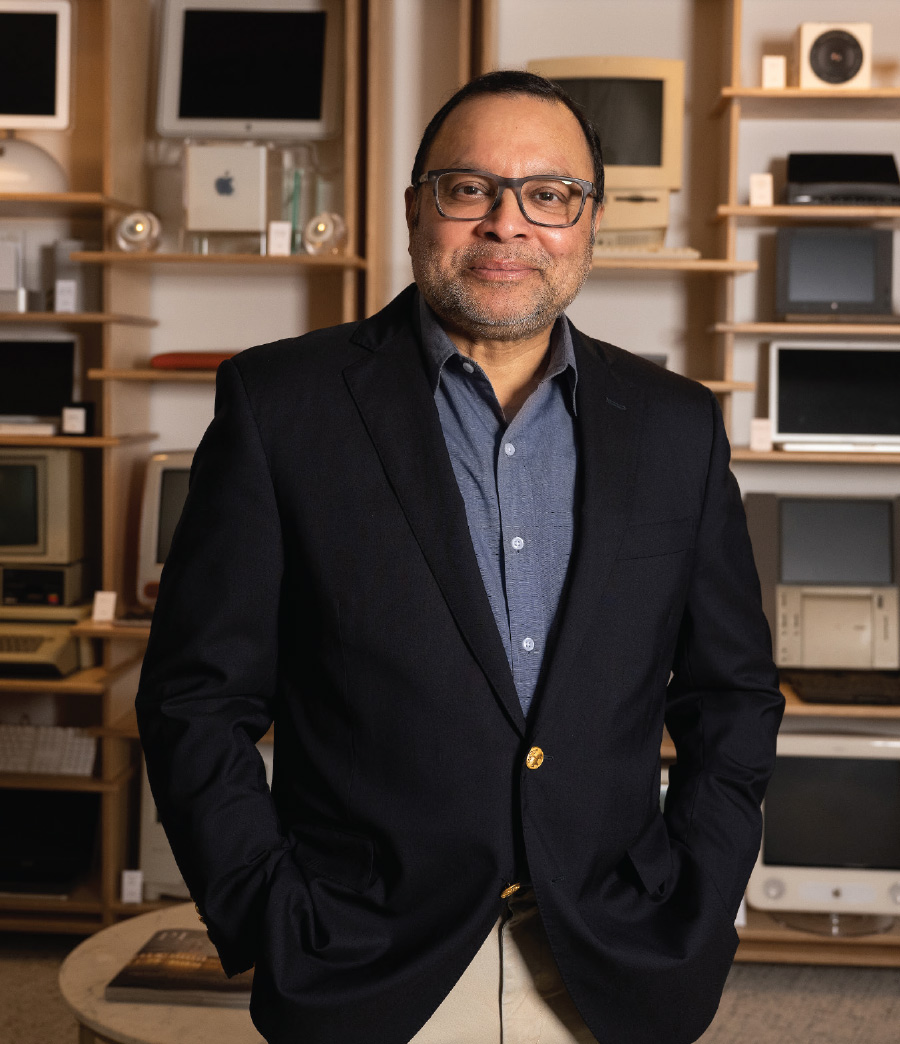
“The College of Charleston was perfect for me – an urban campus in an attractive, historic setting,” says Andrade. “It made me feel at home.”
Andrade set his sights on working in the business world until an encounter with Sam Hines, the dean of the School of Humanities and Social Sciences at the time, who said the public sector was becoming more business-oriented and therefore needed business-minded people. Andrade pivoted from getting an MBA to pursuing a Master of Public Administration.
Andrade’s time in the College’s M.P.A. program included an internship with the city of Charleston’s housing and community development department. By applying the business skills he learned, Andrade got on then-Mayor Joe Riley’s radar and was offered a position.
Andrade proposed consolidating Charleston’s surrounding areas into the city. Seeing how this could maximize efficiency and be more cost-effective, Riley assigned Andrade to coordinate annexation. Andrade expanded the city from 38 square miles to 100 square miles.
Andrade then looked at the industries in Charleston.
“I saw that Southern states were tied to promoting cheap labor, land and utilities, which led to a trend of wages flatlining,” says Andrade. “We needed more competitive, higher-salary jobs; we needed to draw in intellectually driven industries.”
Riley cautiously embraced Andrade’s plan to develop a strategy to create a tech economy.
“Mayor Riley was an amazing visionary,” says Andrade. “He wanted to create greater economic resilience in the city and was bringing life back to the peninsula.
“He and the city’s chief of police, Reuben Greenberg, were my mentors,” he adds. “Having leaders who want the best and who are risk-takers let me position Charleston for tech companies. Today, we have a city that embraces and supports tech companies at a level higher or better than most.”
After studying how other states were positioning themselves, reading their reports and interviewing people in the tech industry, Andrade worked to create the optimal business and cultural environment for them. In 2001, with 18 companies on board, Andrade established the Charleston Digital Corridor – and in 2004, the CDC Education Foundation was formed to provide entrepreneurs with the necessary augmentative education resources.
Andrade retired from the city and became the full-time CDC director in 2015, and he always keeps his eye on the future. Recognized as a model for high-wage, tech-focused economic development, the Charleston region now boasts more than 700 tech companies.
“You can’t be complacent; we are always a work in progress,” says Andrade. “I learned from Riley and Greenberg to always want better or what’s next. They taught me that community success isn’t measured in dollars, but in validation.”