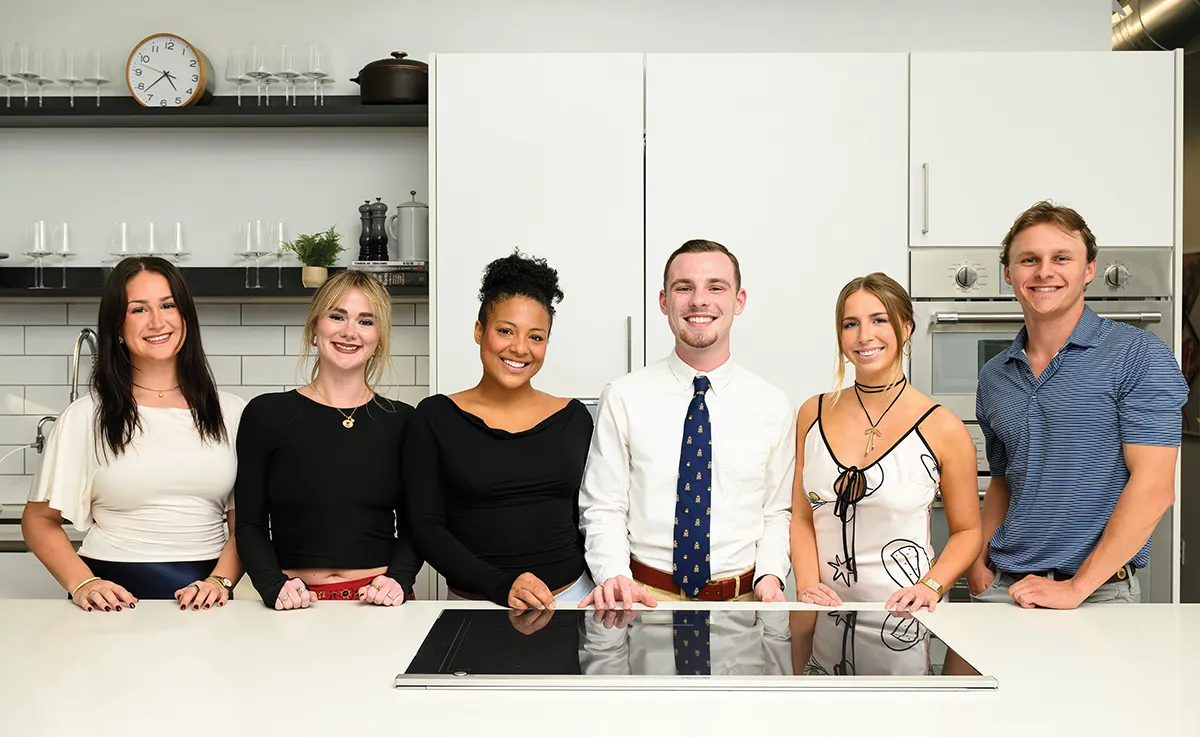


Giving Students Agency

And, when the Charleston Wine + Food Festival (CHSWF) and the College of Charleston’s Strategic Communication Campaigns capstone course first got a taste of how they’d work together back in 2015, they knew they’d created the perfect pairing.
The partnership began when Amanda Ruth-McSwain, associate professor of communication, met up with her former graduate student Alyssa Maute Smith ’13 (M.A.), who was working on some marketing ideas for Charleston Wine + Food.
“Hey, I think we have an opportunity here to involve students in a much more significant way than just an internship,” Smith told Ruth-McSwain, who was in the midst of transitioning her Strategic Communication Campaigns capstone from one semester to a yearlong course.
“My idea was to hopefully find an opportunity where we could actually execute a campaign from start to finish,” says Ruth-McSwain, explaining that the capstone course provides a hands-on experience for communication students to take an integrated communications plan from the research phase through campaign execution and post-campaign measurement and evaluation. “And so, that’s how it was born. It has been an amazing opportunity for our students, but also deemed a success by Charleston Wine + Food.”
Ten years later, the partnership is still going strong – so much so that the capstone has transitioned from being the local agency of record for just CHSWF to The COMM Agency, a full-service, student-run agency with multiple clients, including CHSWF.
“What’s fun about our partnership is that Charleston Wine + Food knows the drill,” says Ruth-McSwain. “But they give so much agency and autonomy to the students. It’s pretty incredible. The Charleston Wine + Food team looks for the students to jump in, conduct client discovery and formative research, develop a strategic direction for the campaign and then pitch their ideas, so there’s a lot of client interaction throughout the process.
“Even during the first client meeting of the year, Charleston Wine + Food loves to hear the strengths and experiences present on the student team,” continues Ruth-McSwain. “There’s a real and special commitment to understanding how the student team can fill in the gaps that they’re experiencing on the Charleston Wine + Food side.”
Kate Hanlon appreciates the kind of attention that CHSWF gives her and her classmates as they work on the campaign for the 20th CHSWF this spring.
“The CHSWF team has been so generous and enthusiastic about sharing their work with us,” says Hanlon, the account manager for the client. “It’s truly a once-in-a-lifetime opportunity.”
But the collaboration provides a unique opportunity for CHSWF, too.
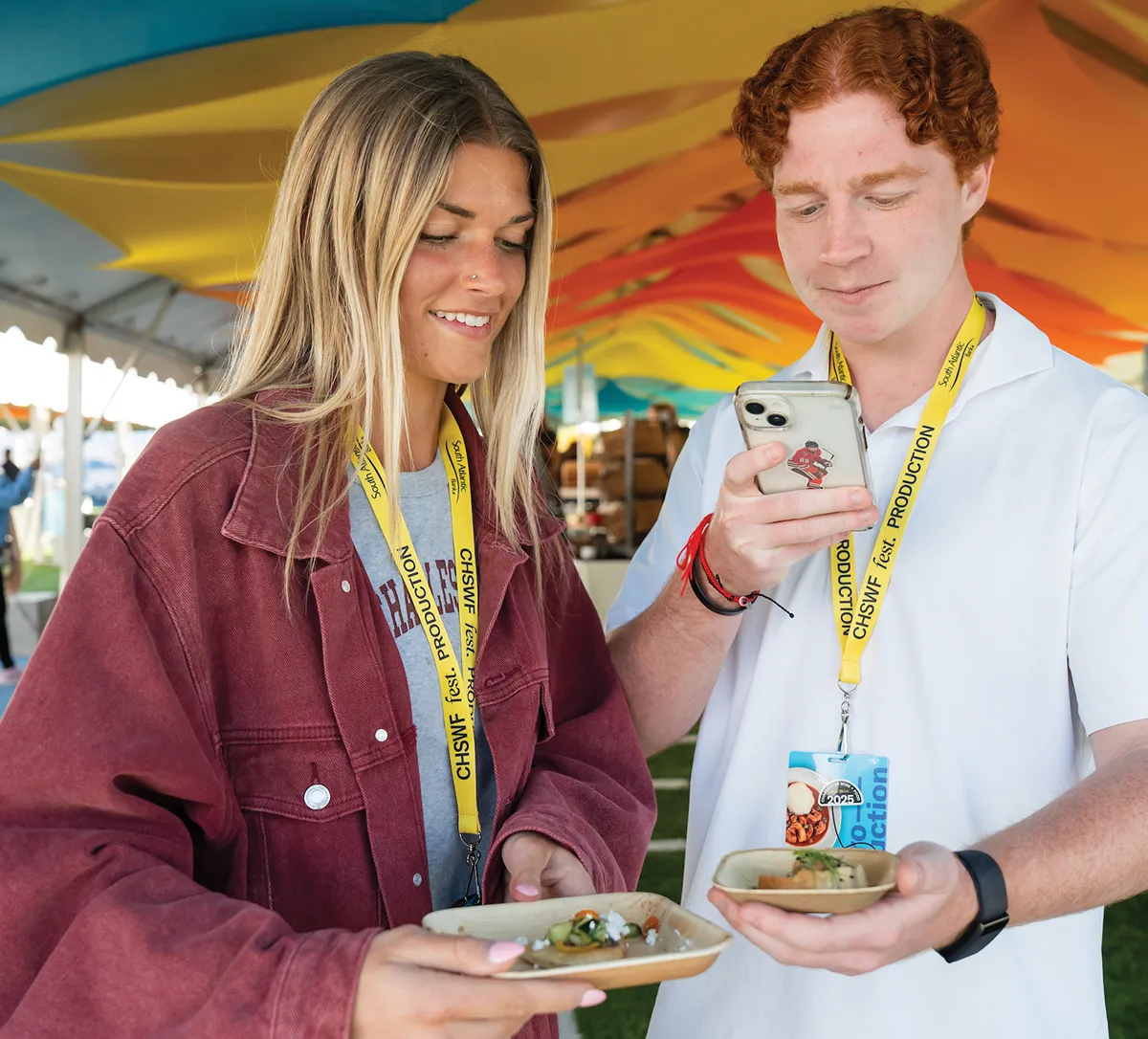
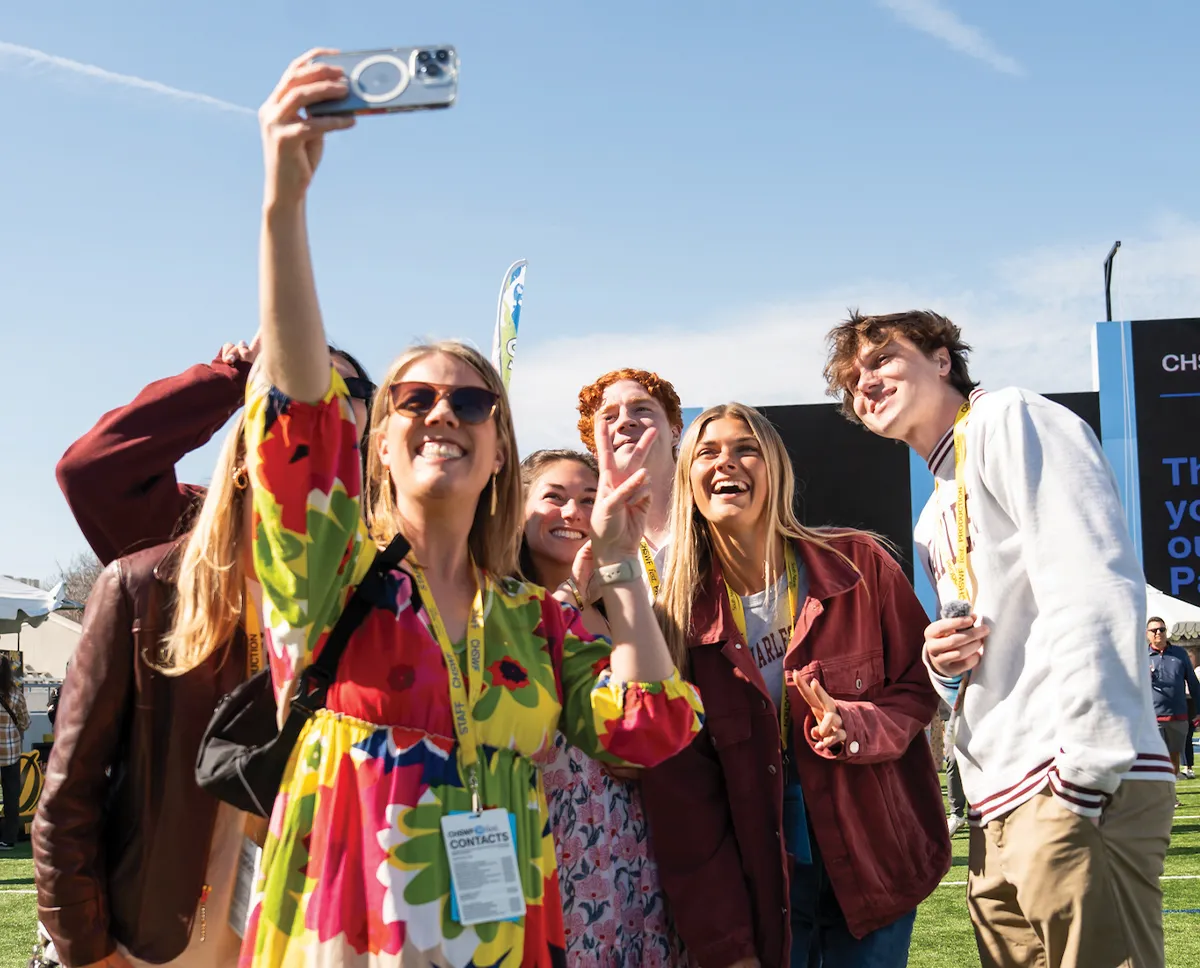
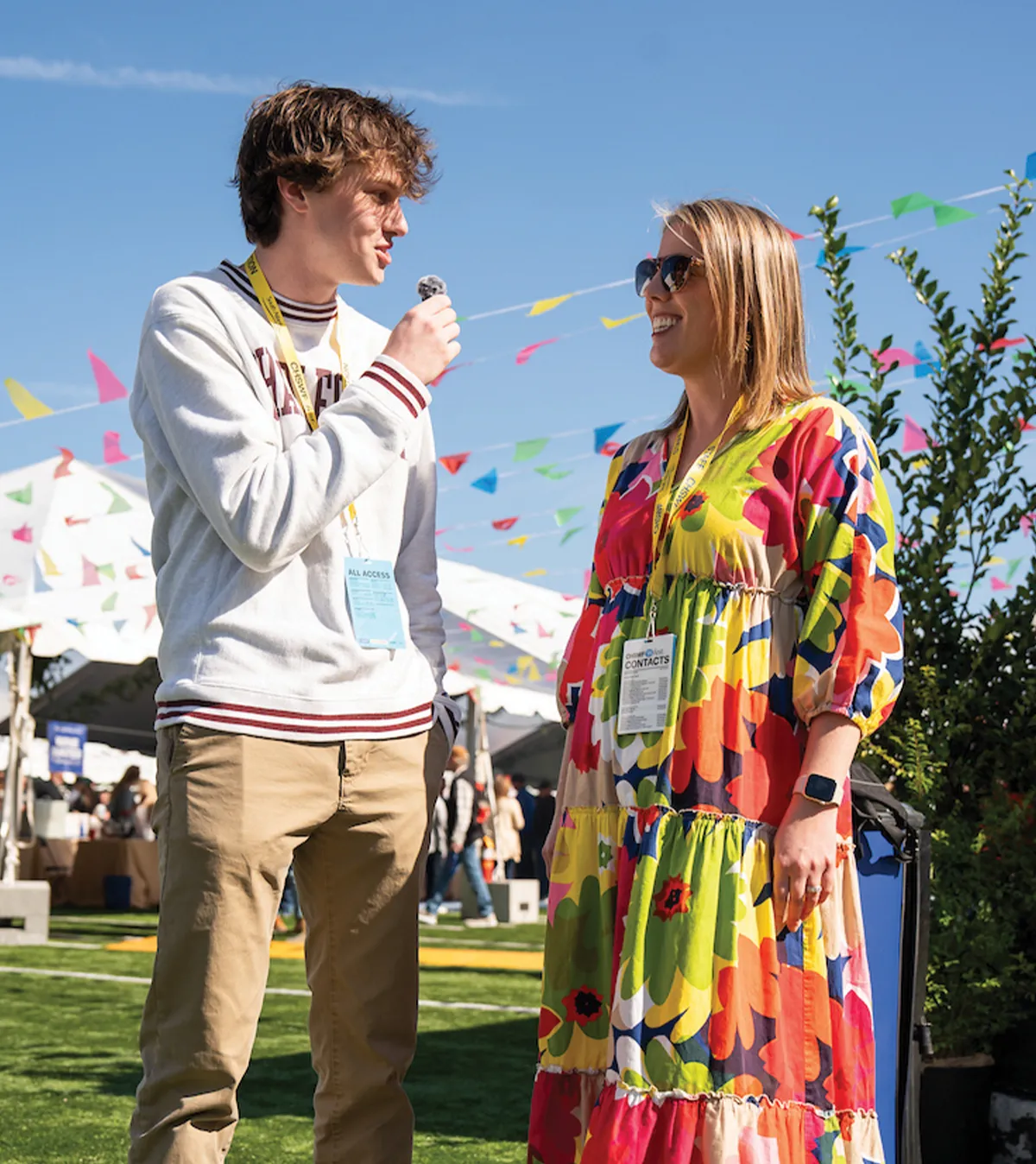
The students bring more than just a young perspective to the table – they’ve been gearing up for this moment for their four years as communication majors.
“What’s fairly unique and neat about the capstone is our students learn that, in all these different contexts and in different classes, this field theyʼve been studying boils down to their ability to read their audience, craft a message and deliver that message in the most efficient and effective way,” says Ruth-McSwain. “It brings the strategic planning process of communication to life. This one experience shows them these key concepts of communication that are present in everything they do.”
Seeing theory put to a real-world test is exciting for the students.
“This program was designed to give students the rare opportunity to apply their marketing and creative skills in a true client setting,” says Smith. “They produce work that is not only conceptual, but actually implemented by our nonprofit organization.”
At the end of the first semester, the students present their research and develop a campaign brief that includes their proposed strategies and tactics bef0re they pitch the campaign. And, says Ruth-McSwain, even if it doesn’t go well, it serves as a valuable learning opportunity for the students.
“The actual portfolio of work is secondary to the fact that the students are in a working environment that holds them accountable to something very real,” she says. “They can feel proud that they stepped into and worked through the highs and lows of professional situations and eventually came out of a pretty rigorous professional experience that helped them test the waters in a safe place.”
Confidence is key.
“Beyond building their portfolios, students gain invaluable professional experience: learning how to lead and participate in client meetings, present and pitch ideas, incorporate feedback, pivot creative concepts and navigate the dynamics of real-world collaboration,” says Smith. “These are lessons that can’t be taught in a traditional classroom but are essential for success in any career.”